$150 – $375That is the typical chimney sweep cost in 2026 for a wood-burning fireplace with a masonry chimney, cleaning and a level 1 inspection included. A gas fireplace costs $80 to $150 to sweep, and a wood or pellet stove $130 to $300. HomeGuide puts the national average at about $275. Two other recent guides land in the same area or higher: This Old House gives $129 to $380 for a standard cleaning and inspection, and Fixr gives $100 to $500 with a $400 average.
The price depends mostly on what burns in your fireplace, how many flues the chimney has, and how much buildup has collected since the last cleaning. Below are the prices by chimney type, what each inspection level costs, what the sweep may find on the way, and how often the national safety standard says the job should be done.
Chimney sweep cost by chimney type
| Chimney or appliance | HomeGuide (level 1 included) | Fixr (level 1 or 2 included) |
|---|---|---|
| Wood-burning fireplace (masonry chimney) | $150 – $375 | $300 – $1,000 |
| Gas fireplace | $80 – $150 | $85 – $250 |
| Prefabricated (factory-built) chimney | $90 – $175 | not listed |
| Wood stove | $130 – $300 | $200 – $500 |
| Pellet stove | $130 – $300 | $175 – $350 |
| Oil or gas furnace chimney | not listed | $125 – $400 |
Wood-burning masonry chimneys sit at the top of the range. The quoted price applies to a brick or stone chimney with one main flue on a one-story home with easy roof access, and covers cleaning the firebox and smoke shelf and vacuuming the debris. A heavy load of ash in the firebox raises the price (HomeGuide).
Gas fireplaces cost less because gas burns cleaner and leaves less residue (HomeGuide). Cheaper does not mean optional: the Chimney Safety Institute of America says chimneys serving gas appliances should be checked every year too, because nests or other debris can block the flue.
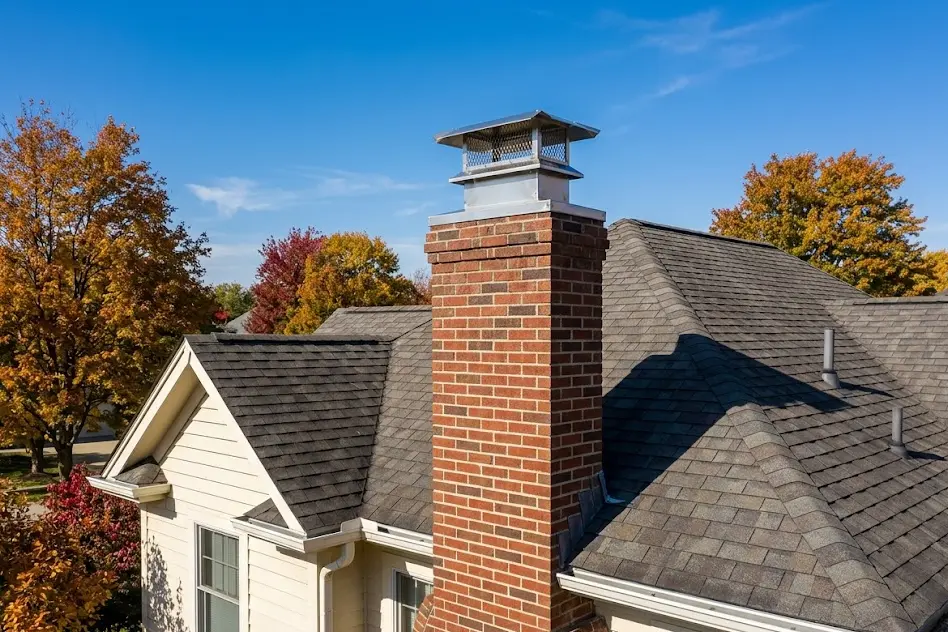
Prefabricated chimneys, with a metal flue and a metal vent through the roof, cost $90 to $175 because there is no brick or stone to deal with. Wood and pellet stoves cost $130 to $300 for the common setup of a stove connected to a stainless-steel liner running through the chimney; the technician also checks the stove parts for damage (HomeGuide).
The sources disagree most on wood-burning fireplaces. Fixr’s $300 to $1,000 is far above HomeGuide’s $150 to $375, partly because Fixr’s figures cover level 1 and level 2 inspections, and level 2 costs more (see below). For a routine yearly sweep with a level 1 inspection, HomeGuide’s range and This Old House’s $129 to $380 are the closer match (Fixr, This Old House).
Furnace chimneys serving an oil or gas furnace cost about $125 to $400 to clean, according to Fixr, which notes that an oil furnace does not produce creosote but still leaves soot. Fixr also lists two small add-ons for stoves: pulling out a wood stove insert without a full-height liner adds about $50, and removing insert pipes for cleaning adds about $20.
Chimney sweep cost calculator
Use the tables above to estimate your cost. The interactive calculator needs JavaScript.
The calculator uses HomeGuide’s ranges for a sweep of one flue with a level 1 inspection, and Fixr’s for the furnace chimney and the stove add-ons. If you have more than one flue, use the table below instead.
Cost by number of flues
| Flues | Average cost |
|---|---|
| 1 | $100 – $250 |
| 2 | $250 – $400 |
| 3 | $400 – $700 |
Each extra flue adds to the bill, but the price per flue drops. HomeGuide advises having every flue checked, even the ones you no longer use (HomeGuide).
Our estimate: dividing the ranges above by the number of flues gives about $100 to $250 per flue for one, $125 to $200 per flue for two, and $133 to $233 per flue for three. This is simple arithmetic on HomeGuide’s ranges, not a measured price.
Chimney inspection levels 1, 2 and 3
Inspection levels come from NFPA 211, the National Fire Protection Association’s standard on chimneys, fireplaces, vents and solid fuel-burning appliances. The Chimney Safety Institute of America says a level 1 inspection is detailed in that standard, and suggests asking for a level 1 inspection together with the sweeping.
| Level | HomeGuide | Fixr (cleaning included) | What it covers |
|---|---|---|---|
| 1 | $100 – $250 | $85 – $950 | Visual inspection and cleaning of an accessible chimney in regular use |
| 2 | $250 – $600 | $150 – $1,000 | Video inspection of the flue plus roof and crawl space or basement; typical when buying a home, after repairs or when changing the fireplace connections |
| 3 | $900 – $5,000 | $500 – $5,000 | Removal of parts of the chimney or wall (cap, bricks, drywall) to find the source of structural damage |
Most homeowners only need a level 1 with the yearly sweep. A level 2 or level 3 usually comes up when the sweep finds signs of damage, and the fees rise with it (HomeGuide). Fixr’s level 1 and 2 ranges are wider because they span chimneys with one or several flues. It describes level 3 as rare and needed only when there is structural damage, and says levels 1 and 2 take 30 minutes to an hour while level 3 takes more than a day (Fixr).
Creosote removal
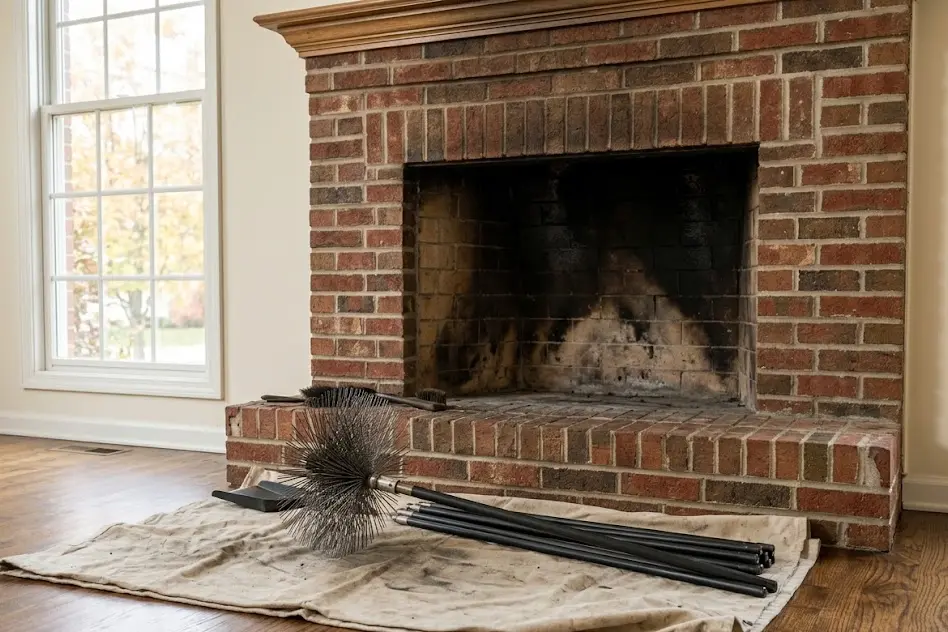
Creosote is the deposit wood smoke leaves in the flue. The Chimney Safety Institute of America recommends sweeping masonry fireplaces once sooty buildup reaches 1/8 inch, and sooner if any glazed creosote is present. It considers that enough buildup to cause a chimney fire able to damage the chimney or spread to the house. Factory-built fireplaces should be swept whenever appreciable buildup appears, because the deposit is acidic and can corrode the components.
Removal gets harder as the deposit changes form. According to the CSIA, crusty creosote that fractures when hit can often be removed with rotary cleaning. Gummy, glazed creosote usually needs a chemical treatment that turns it into something a brush can remove, or an acid application, which is less common because it is harder to apply and has to be neutralized a few days later.
HomeGuide lists heavy creosote or soot buildup, and a long gap since the last cleaning, among the factors that make the job take longer and cost more (HomeGuide). We did not find a verifiable published price for chemical creosote treatment, so we do not quote one.
Repairs the sweep may find
The inspection is where extra costs appear, and the sweeping price does not cover repairs. HomeGuide lists general chimney repair at $200 to $850 and a new chimney liner at $1,500 to $4,000 (HomeGuide). If the sweep recommends work on the cap, crown, masonry or liner, ask for a written, itemized quote.
Liners matter for stoves in particular. The CSIA says liners serving gas- and oil-fired appliances do not need insulation, but liners serving solid-fuel appliances do.
How often should a chimney be swept?
The Chimney Safety Institute of America follows NFPA 211, which it quotes as saying that chimneys, fireplaces and vents “shall be inspected at least once a year”. Cleaning, maintenance and repairs follow when needed. The yearly rule applies even to chimneys that are rarely used, because animals can nest in the flue and the structure can deteriorate.
Government safety agencies give the same advice. The U.S. Fire Administration tells homeowners to have heating equipment and chimneys cleaned and inspected every year by a professional, and EPA Burn Wise says fire officials recommend a yearly professional inspection of the wood-burning appliance, chimney and vent, including a look for cracks that can let smoke into the house.
The risk is real. The U.S. Fire Administration reports that heating was the second leading cause of home fires in 2021, with an estimated 32,200 home heating fires, 190 deaths, 625 injuries and $442 million in property loss.
Signs your chimney needs a sweep
- The fire is hard to start or burns weakly, or smoke comes into the room when you light it (HomeGuide).
- Soot collects in and around the fireplace, or black or white deposits form on the flue walls (HomeGuide).
- An unpleasant smell comes from the fireplace when it is not in use. The CSIA attributes this to creosote deposits, often worse in humid summer weather.
- You smell smoke in the house. EPA Burn Wise says to shut the appliance down, open a window, make sure the flue is open and call a chimney sweep or stove installer.
- More than a year has passed since the last cleaning (HomeGuide).
How to keep the bill down
- Book in late spring or summer. HomeGuide says demand and prices are lower then, while fall brings longer waits and higher prices (HomeGuide).
- Ask about a maintenance plan. Some sweeps offer lower off-season rates if you sign up for annual cleaning (HomeGuide).
- Burn only dry, split, well-seasoned wood. EPA Burn Wise says to season it for at least six months and notes wood burns best below 20 percent moisture.
- Never burn household trash, cardboard, plastics, or painted, treated or glued wood (EPA Burn Wise).
- Build hot fires rather than smoldering ones, which EPA Burn Wise calls neither safe nor efficient for most appliances.
- Do not skip years. The longer since the last cleaning, the longer and more involved the job becomes (HomeGuide).
- If you qualify for heating assistance, ask your local heating assistance office: EPA Burn Wise says it may cover cleaning or repairing your wood heater and chimney.
Questions to ask before you sign
- Are you certified? EPA Burn Wise points homeowners to the CSIA and the National Fireplace Institute to check credentials.
- Does the price include a level 1 inspection, and will you sweep the whole flue and smoke chamber, not just the firebox? The CSIA notes that a complete sweeping includes the flue and smoke chamber.
- Is there an extra charge for a two- or three-story home, a steep roof or extra flues?
- If you recommend a level 2 inspection or a repair, can I see video of the problem?
- Will I get a written report with any recommended repairs?
Sources
- HomeGuide, How Much Does a Chimney Sweep Cost?, February 9, 2026.
- Fixr, Cost to Sweep a Chimney, updated January 31, 2025.
- This Old House, How to Clean Your Chimney, updated May 26, 2026 (cost data from contractor estimates used by Angi).
- Chimney Safety Institute of America, Homeowner Resources and FAQs, quoting NFPA 211.
- U.S. Fire Administration (FEMA), Heating Fire Safety, page last reviewed May 4, 2023.
- U.S. Environmental Protection Agency, Burn Wise, Wood-Burning Installation and Maintenance and Best Wood-Burning Practices. The program ended in 2025 and the pages are kept as a historic record.