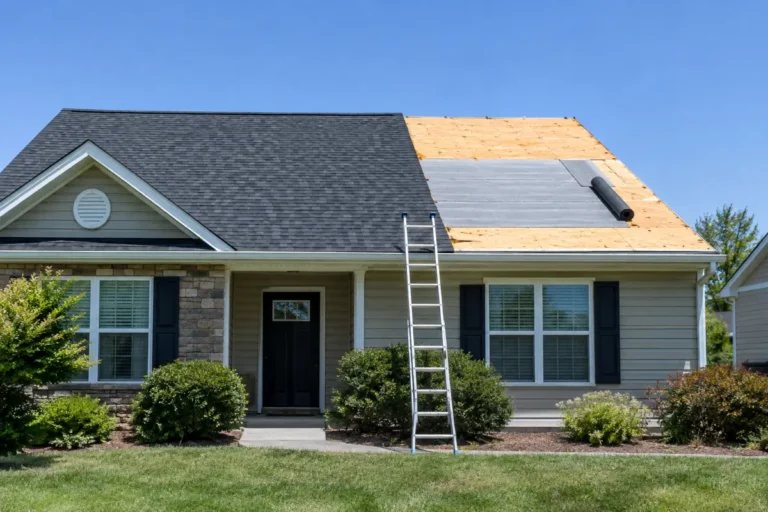
$4,000 – $21,000That is the typical flat roof replacement cost in 2026, or $3 to $14 per square foot installed, labor and materials included. HomeGuide puts the usual range at $4,000 to $16,800 and Fixr at $4,000 to $21,000. The membrane you choose, the size of the roof and whether the old layers have to be torn off decide where your quote lands.
Flat roofs are common on garages, additions, porches and modern homes, and they are priced differently from a shingled roof. Instead of shingles, the roof is covered with a continuous membrane or a stack of bonded layers, and the cost depends heavily on which system goes on and what lies underneath it. The tables below break the price down by roof size, by material, and by the extra lines that tend to appear on a quote, with the figures from each cost guide side by side.
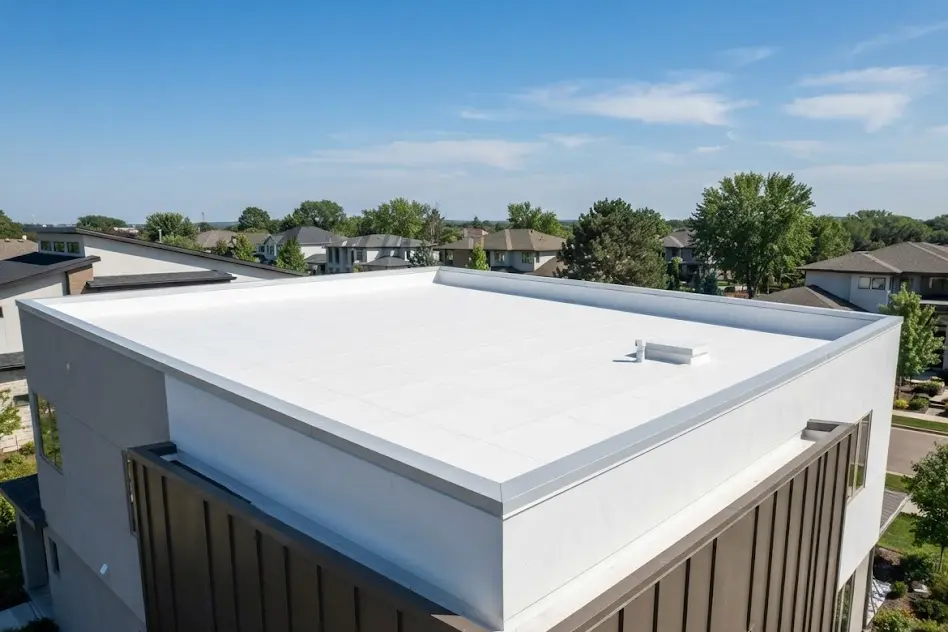
Flat roof replacement cost by roof size
| Roof size | HomeGuide (all materials) | Fixr (all materials) | This Old House (modified bitumen) |
|---|---|---|---|
| 1,000 sq ft | $3,000 – $11,000 | $4,000 – $14,000 | $6,760 – $9,121 |
| 1,500 sq ft | $4,500 – $16,500 | $6,000 – $21,000 | $10,059 – $13,569 |
| 2,000 sq ft | $6,000 – $22,000 | $8,000 – $28,000 | $13,357 – $18,018 |
| 2,500 sq ft | $7,500 – $27,500 | $10,000 – $35,000 | $16,656 – $22,466 |
| 3,000 sq ft | $9,000 – $33,000 | $12,000 – $42,000 | $19,954 – $26,915 |
The three guides do not agree on the average. HomeGuide gives a national average of about $10,800, with small jobs starting near $1,000 and large ones reaching $30,000; roofers usually price by the “square”, which is 100 square feet of roof (HomeGuide). Fixr gives an average of $8,000 for a standard 1,000 to 1,500-square-foot roof in modified bitumen, with a low end of $2,000 and a high end of $42,000 for a large roof in a more expensive material (Fixr). This Old House, working from Homewyse data, puts the average much higher, at $24,510, with a range of $11,311 to $37,709 (This Old House). Its figures assume a 2,000-square-foot roof, so they are not directly comparable with a national average across all roof sizes.
Our estimate: the headline range takes the lowest typical figure ($4,000, given by both HomeGuide and Fixr) and the highest (Fixr’s $21,000); the per-foot range takes HomeGuide’s low of $3 and Fixr’s high of $14. We left This Old House out of the headline because its numbers describe a 2,000-square-foot roof at medium labor rates rather than a national range. This is a combination of published ranges, not a measured figure.
A garage is one of the most common small flat roofs. Replacing one costs $850 to $3,100 for a one-car garage, $1,200 to $4,400 for a two-car garage and $2,500 to $9,200 for a three-car garage (HomeGuide).
Cost per square foot by membrane
| Roofing system | Material only (HomeGuide) | Installed (HomeGuide) | Installed (Fixr) | Installed (This Old House) |
|---|---|---|---|---|
| Rolled asphalt | $0.15 – $0.50 | $2.00 – $5.00 | Not listed | Not listed |
| EPDM rubber membrane | $0.50 – $2.50 | $3.50 – $10.00 | $4 – $13 | $9 – $13 |
| TPO membrane | $1.00 – $2.50 | $4.00 – $10.00 | $4 – $14 | $8 – $11 |
| PVC membrane | $1.50 – $3.00 | $5.00 – $12.00 | $5 – $16 | Not listed |
| Modified bitumen | $0.70 – $2.20 | $4.00 – $7.50 | $4 – $8 | $7 – $9 |
| Built-up (tar and gravel) | $1.50 – $2.70 | $3.50 – $7.50 | $4 – $10 | $7 – $9 |
| Fiberglass / GRP | $0.20 – $2.40 | $3.50 – $7.50 | $4 – $6 | Not listed |
| Spray foam | $1.50 – $3.00 | $3.50 – $7.00 | Not listed | Not listed |
| Metal | $3.00 – $8.00 | $5.00 – $16.00 | $4 – $16 (up to $30 for copper) | $15 – $21 |
HomeGuide and Fixr start most systems at $3.50 to $5 per square foot, but Fixr’s upper ends are higher, and This Old House’s prices sit above both at the low end. The gap is widest for metal: up to $16 per square foot in the first two guides and $15 to $21 in the third.
EPDM is a synthetic rubber sheet and the cheapest of the single-ply membranes; a typical EPDM roof runs $6,200 to $16,000 installed. TPO, a blend of plastic and rubber, comes in at $7,700 to $14,000 installed. PVC is the most expensive of the three membranes per square foot (HomeGuide). Fixr adds that EPDM installs faster than built-up or modified bitumen but has glued seams that are prone to leaking, and that TPO’s white surface reflects sunlight, which helps reduce cooling costs in hot climates (Fixr).
Modified bitumen costs $4,900 to $14,600 installed. It is often applied with heat, although self-adhesive rolls exist. Built-up roofing, made of layers of asphalt sheets, tar and felt topped with gravel, costs $4,500 to $12,600 installed (HomeGuide). Fixr and This Old House both name modified bitumen as the most affordable flat roof material (Fixr; This Old House). The U.S. Department of Energy describes a built-up roof as a base sheet, fabric reinforcement layers and a protective surface layer, usually a cap sheet or ballast (U.S. Department of Energy).
Our estimate: subtracting HomeGuide’s material price from its installed price in the table above leaves roughly $2 to $9 per square foot for labor and overhead, depending on the system. That is a simple subtraction of published ranges, not a measured figure, and real quotes split the two differently.
Estimate your flat roof replacement cost
Use the tables above to estimate your cost. The interactive calculator needs JavaScript.
Our estimate: for each system the calculator takes the lower of the HomeGuide and Fixr low prices and the higher of their high prices from the table above (copper metal excluded), and the same method for tear-off ($1 to $2 at HomeGuide, $1 to $5 at Fixr) and the permit ($150 to $500 and $150 to $600). Its labor split of 35% is the midpoint of Fixr’s statement that labor is around 20% to nearly half of the total. These are combinations of published ranges, not measured figures or quotes.
How long each flat roof lasts
| Roofing system | Average lifespan (HomeGuide) | Lifespan (Fixr) |
|---|---|---|
| Rolled asphalt | 5 – 20 years | Not listed |
| Modified bitumen | 10 – 20 years | About 20 years |
| TPO membrane | 10 – 25 years | 20 – 30 years |
| EPDM membrane | 15 – 25 years | Up to 30 years |
| PVC membrane | 20 – 30 years | 20 – 30 years |
| Built-up | 20 – 30 years | 15 – 30 years |
| Fiberglass / GRP | 25 – 50 years | 20 – 30 years |
| Spray foam | 40 – 50 years | Not listed |
| Metal | 30 – 80 years | 50 – 70 years (some materials) |
The cheapest system per square foot is not always the cheapest per year of service. Rolled asphalt costs least up front and has the shortest life; PVC and built-up roofs cost more and last longer. Fixr puts the average flat roof at about 20 years and notes that lifespan also depends on climate, foot traffic and blown debris (Fixr).
Our estimate: dividing the midpoint of each HomeGuide installed range by the midpoint of its HomeGuide lifespan gives about $0.28 per square foot per year for rolled asphalt ($3.50 over 12.5 years), $0.34 for EPDM ($6.75 over 20 years) and $0.34 for PVC ($8.50 over 25 years). This is our own arithmetic on HomeGuide’s ranges, not a measured figure, and it ignores repairs and energy use.
Tear-off, insulation and drainage
| Work | HomeGuide | Fixr |
|---|---|---|
| Tearing off and disposing of the old roof | $1 – $2 per sq ft | $1 – $5 per sq ft |
| Polyiso insulation boards, installed | $0.50 – $3.00 per sq ft | Not listed |
| Spray foam insulation | $1.50 – $5.00 per sq ft | Not listed |
| Extra underlayment | $0.75 – $4.00 per sq ft | Not listed |
| Roof drain | $70 – $340 each | Not listed |
| Roof vent | $200 – $700 each | Not listed |
| Replacing and resealing all flashing | $400 – $1,000 | Not listed |
| Roofing permit | $150 – $500 | $150 – $600 |
Tear-off. Complete removal is necessary when the roof is 10 to 15 years old or needs extensive repairs (HomeGuide). Fixr puts removal and disposal at around $1,000 to $5,000 for an average-sized roof, more for heavy materials such as concrete or green roofs, and notes that some contractors include it in their overall estimate while others do not (Fixr). This Old House adds that most building codes limit a roof to two layers, which means a full tear-off after the second replacement (This Old House).
Our estimate: on a 1,000-square-foot roof, tear-off adds $1,000 to $2,000 at HomeGuide’s $1 to $2 per square foot, or up to $5,000 at the top of Fixr’s range. That is the published per-foot price multiplied by the area, not a quote.
Hidden damage. Once the old roof is off, the roofer may find damage from leaks or age; replacing underlayment, insulation or decking can add hundreds or even thousands of dollars (Fixr).
Insulation. Rubber membrane roofs usually go over polyiso boards, while spray foam suits most other flat roofs. Where the insulation sits also matters: a “warm” roof puts it on top of the deck, which is energy-efficient but adds height to the roof, while a “cold” roof puts it between the rafters, which costs less but insulates less effectively (HomeGuide).
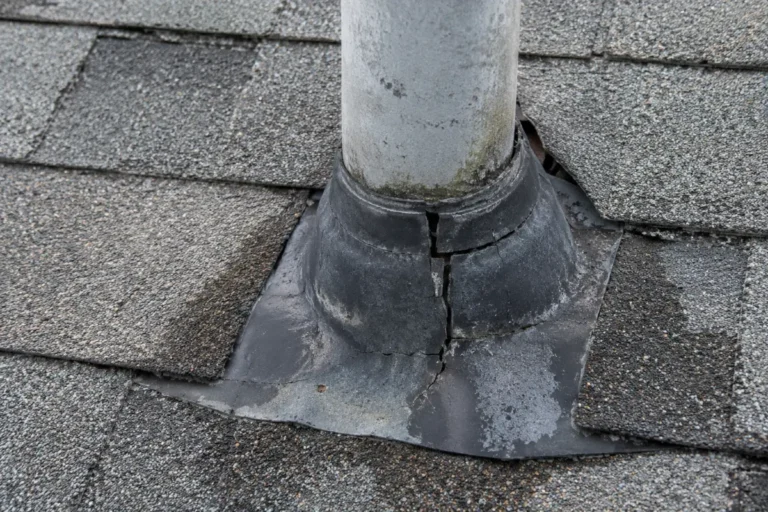
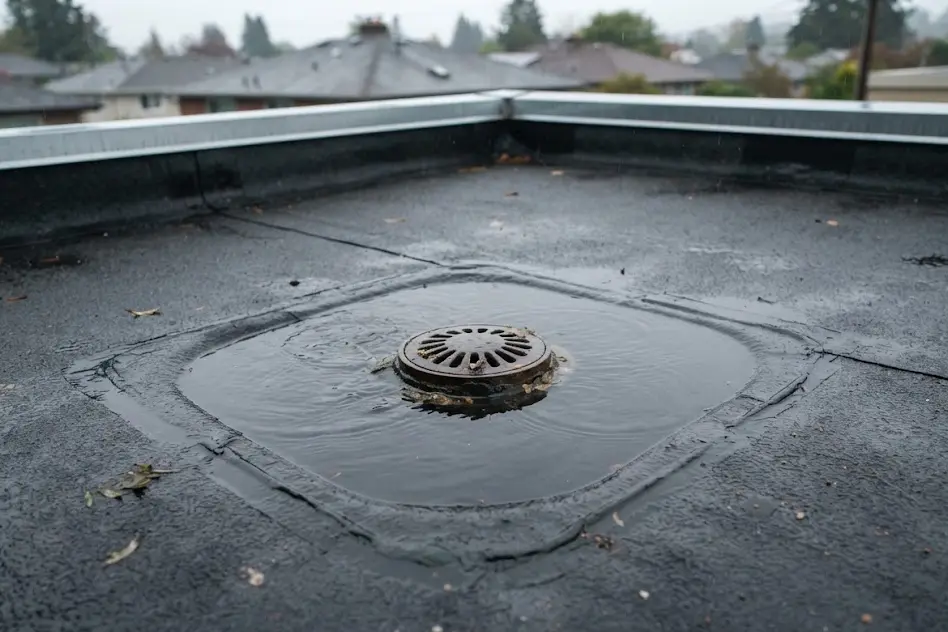
Drainage and ponding. Flat roofs are prone to pooling water. Roof drains prevent pooling, and a tapered insulation system builds a slight slope into the roof so excess water drains away (HomeGuide). The type of drain changes the price: homes in cold climates need internal drains with heating elements to prevent ice dams, while scuppers, which direct water off the roof’s edge, are a cheaper option in dry climates (This Old House). If your current roof holds puddles, ask for drainage to be priced into the replacement while the old layers are off.
Is a cool roof worth it?
A cool roof reflects more sunlight than a conventional one. The Department of Energy notes that a conventional roof can reach 150°F or more on a sunny summer afternoon, while a reflective roof under the same conditions could stay more than 50°F cooler. That can lower air conditioning bills and may extend the service life of the roof (U.S. Department of Energy).
The same source says cool roofing products usually cost no more than comparable conventional products, and that the easiest and least expensive time to go cool is when the existing covering needs replacing. White products reflect about 60 to 90% of sunlight. For low-slope roofs, the options are a membrane factory-colored in light or cool pigments or light-colored ballast, a reflective cap sheet on built-up or modified bitumen roofs, or a field-applied reflective coating. There is a trade-off: a cool roof can increase heating needs in winter (U.S. Department of Energy).
What the labor line pays for
The guides put labor at different levels. HomeGuide gives $2.00 to $4.50 per square foot, depending on the material, location and job complexity (HomeGuide). Fixr gives $3 to $7 per square foot, or $30 to $130 an hour where roofers charge by the hour, with an average of about $75; it puts labor at around 20% to nearly half of the total, higher for built-up roofing, which is built entirely on site, and lower for TPO (Fixr).
Complex shapes, multiple stories, many penetrations and hard-to-reach roofs all raise labor (HomeGuide). The two guides disagree on the attachment method: HomeGuide says adhered systems cost more than ballasted or mechanically fastened ones, while Fixr ranks ballasted as the cheapest, fully adhered in the middle and mechanically fastened as usually the most expensive, because every penetration has to be sealed (HomeGuide; Fixr). Ask each roofer which method they are pricing.
For comparison, the median roofer in the United States earned $26.65 an hour, or $55,440 a year, in May 2025, according to the Bureau of Labor Statistics. The billed rate covers far more than the wage: insurance, equipment, disposal and the contractor’s overhead. For pitched roofs and shingles, see our guide to roof replacement cost.
Repair, recoat or replace?
Not every leaking flat roof needs replacing. Flat roof repairs average $300 to $1,100; a minor leak repair costs $150 to $500, while extensive leaks and structural damage cost $1,200 to $3,000 to fix. Coating a roof costs $1 to $4 per square foot, or $500 to $2,000 total, and increases its lifespan (HomeGuide). Fixr puts the average repair at around $700 and says a repair is usually the better option when the roof is less than a decade old and the damage is localized; ongoing leaks, widespread damage or a roof near the end of its life point to replacement (Fixr). If the roof is already past the lifespan shown for its material, compare the cost of repeated repairs with the cost of a new roof.
How to keep the bill down
- Compare quotes per square foot and on the same membrane and attachment method.
- Ask for tear-off, disposal and the permit as separate lines so you can see what each quote leaves out.
- Price drainage and insulation into the replacement rather than adding them later.
- If you cool your home in summer, choose a light-colored or reflective covering now; the Department of Energy says it usually costs no more.
- If the roof is not leaking, consider scheduling for late winter or early spring: roofers are busiest in summer and fall, and Fixr says off-season work can bring discounts (Fixr).
- Get three or more written quotes and avoid large upfront payments.
Questions to ask before you sign
- Which material do you recommend for my roof and climate, and why?
- Will you tear off the old roof, and is disposal included in the price?
- Will the membrane be ballasted, fully adhered or mechanically fastened?
- What insulation goes under the new roof, and does the quote include drains or tapered insulation where water pools?
- What additional costs should I expect if you find damage underneath?
- Will you obtain the permit, and what does your warranty include?
Sources
- U.S. Bureau of Labor Statistics, Occupational Outlook Handbook: Roofers, pay data for May 2025.
- U.S. Department of Energy, Energy Saver, Cool Roofs. The page has been removed from energy.gov; the link is an archived copy of January 1, 2026.
- HomeGuide, How Much Does a Flat Roof Replacement Cost?, November 5, 2025.
- Fixr, How Much Does a Flat Roof Replacement Cost?, updated January 27, 2026.
- This Old House, How Much Does Flat Roof Replacement Cost?, updated March 16, 2026. Its cost figures come from Homewyse.