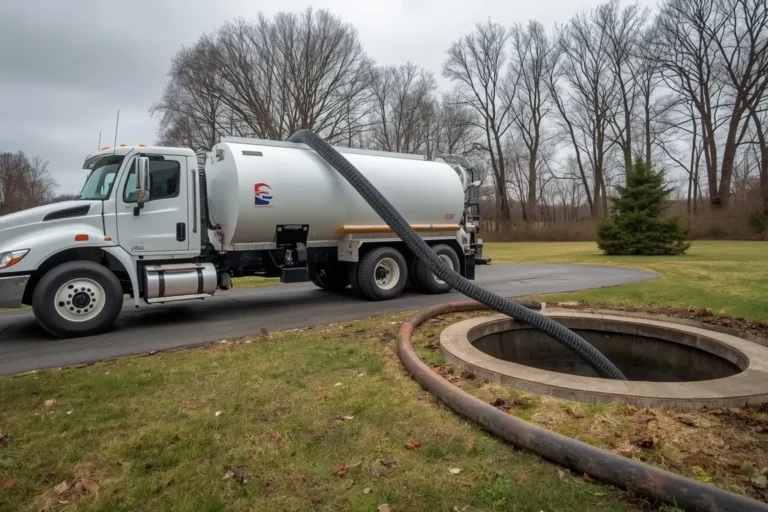
$100 – $800That is the typical drain cleaning cost in 2026 for a professional visit. HomeGuide puts a single sink, tub or toilet clog at $100 to $275 and a main line at $175 to $800; Fixr’s figures run higher, at $250 to $400 for a kitchen sink and $350 to $650 for a main sewer line. Where the clog sits, how packed it is and when you call set the final bill.
Most drain calls are quick jobs with a predictable price. The expensive ones are main line stoppages, clogs that need a camera to find, and anything booked at night or on a weekend. The figures below show what each kind of job costs and which extras can appear on the invoice. Prices come from three published cost guides: HomeGuide (updated December 19, 2025), Fixr’s guides to toilet, kitchen sink, main sewer line and sewer line cleaning (updated January and August 2025), and Homewyse (September 2026). Each figure names its source.
Drain cleaning cost by type of job
| Job | HomeGuide (2025) | Fixr (2025) | Homewyse (2026) |
|---|---|---|---|
| Basic cleaning – one tub, shower, toilet, sink or vent | $100 – $275 | — | $139 – $347 |
| Multiple fixtures or main line | $175 – $600 | $200 – $600 | — |
| Main drain cleaning with hydro jetting | $300 – $800 | $350 – $600 | — |
| Storm drain, French drain or drain tile | $200 – $600 | $200 – $600 | — |
| AC condensate drain line | $75 – $250 | — | — |
The guides agree closely on the main line and on storm drains. For a single drain, Homewyse puts basic cleaning at $139 to $347 per drain in September 2026, with labor making up $115 to $316 of that; its estimate covers removing and clearing the trap and augering one drain line to the main waste line, with a 30-day warranty.
Cost by drain: sink, tub, toilet and main line
| Clog location | HomeGuide (2025) | Fixr (2025) |
|---|---|---|
| Toilet | $100 – $275 | $200 – $700 |
| Kitchen sink | $100 – $220 | $250 – $400 |
| Bathroom sink, tub or shower | $100 – $250 | — |
| Laundry drain | $150 – $250 | — |
| Main line | $175 – $800 | $350 – $650 |
The two guides disagree on single fixtures, and the gap is wide. Fixr’s typical toilet bill of $200 to $700, averaging $350, assumes a plumber clears the clog with an electric auger; its low end is $100 for simple snaking and its high end $1,000 for hydro jetting a neglected clog that has caused a sewer backup (Fixr). For a kitchen sink, Fixr’s average is $300 with an electric snake, with $100 at the low end for a minor clog outside the main line (Fixr). HomeGuide’s ranges for the same fixtures top out at $220 to $275. Expect quotes anywhere in that spread: a plunger-and-hand-snake visit sits near HomeGuide’s figures, a power auger or a clog deep in the line nearer Fixr’s.
A clog in one branch line only affects the fixture it serves. A main line clog affects the whole house and can be harder to find and clear. Several drains backing up at the same time is a common sign that the main line is the problem (HomeGuide). Fixr puts a toilet and sink clogged together at $200 to $500, which can point to a clog in the main drain line or in a drain line the two share (Fixr).
Access matters too. Clogs far down the line take longer to reach, and a toilet sometimes has to be pulled off the floor and reset to get at the blockage, which adds labor and materials. Plumbers who charge a flat rate usually charge per clog, so every separate blockage is billed on its own (HomeGuide). Fixr prices removing the toilet to clear a clog at $200 to $550 (Fixr).
Cost calculator
Use the tables above to estimate your cost. The interactive calculator needs JavaScript.
Our estimate: for each drain, the calculator uses the lowest and the highest figure that HomeGuide and Fixr give between them (for a toilet, HomeGuide’s $100 low and Fixr’s $700 high), and multiplies it by the number of clogged drains because flat-rate plumbers charge per clog (HomeGuide). The labor share of 67% comes from Fixr’s kitchen sink breakdown, where about $200 of a $300 average job is labor (Fixr); on a main sewer line Fixr puts labor at about $400 of $475 (Fixr). These are our own combinations, not measured figures, and a single visit to clear several drains may cost less than separate calls.
Main sewer line cleaning cost
Cleaning the main sewer drain costs $200 to $500 on average. When the blockage is severe enough to need hydro jetting, the price rises to $600 to $1,400 (HomeGuide). Fixr’s figures land in the same area: sewer line cleaning runs $200 to $600, with most people paying about $250 when the cleanout is easy to reach (Fixr), and unclogging a main sewer line costs $350 to $650, averaging $475 for a mid-sized clog cleared by hydro jetting (Fixr).
| Main line problem | HomeGuide (2025) | Fixr (2025) |
|---|---|---|
| Main sewer drain cleaning | $200 – $500 | $200 – $600 |
| Clogged main sewer line | — | $350 – $650 |
| Hydro jetting the main line | $600 – $1,400 (severe blockage) | $250 – $1,000 |
| Tree roots in the line | — | $100 – $800 |
| Sagging (bellied) or broken section replaced | — | $1,500 – $3,000 |
If cleaning shows the pipe itself is broken, the job changes from cleaning to repair: HomeGuide puts main sewer line repair at $1,600 to $7,200 and full replacement at $2,000 to $10,000, or $50 to $250 per linear foot (HomeGuide). Fixr gives the same $50 to $250 per linear foot for replacing a section (Fixr).
Snaking vs. hydro jetting
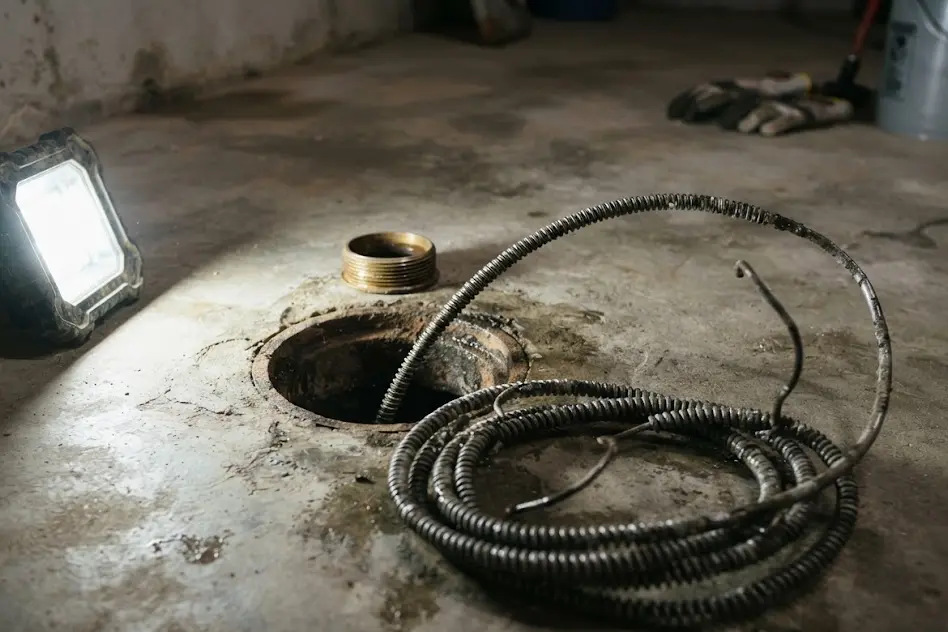
Snaking works a cable through the pipe to break up the blockage. A manual snake handles most small clogs; larger ones need a plumber’s power auger. Snakes and augers work best on hair, food, toilet paper, hygiene products, leaves and small tree roots (HomeGuide). Fixr adds that snaking does not remove the buildup on the sides of the pipe and will not show what caused the clog (Fixr).
Hydro jetting cleans the pipe with high-pressure water. It costs more, but it is often needed for large tree roots, compacted sewer sludge, and grease and oil buildup (HomeGuide). The water pressure can damage older pipes and cause leaks (Fixr).
| Snaking | Hydro jetting | |
|---|---|---|
| Main line, typical (HomeGuide) | $175 – $600 | $300 – $800 |
| Severe main sewer blockage (HomeGuide) | — | $600 – $1,400 |
| Main sewer line (Fixr) | $100 – $500 | $350 – $600 |
| Sewer line (Fixr) | $150 – $375 | $250 – $1,000 |
| Kitchen sink (Fixr) | $100 – $300 | $300 – $500 |
| Toilet (Fixr) | $100 – $250 | $250 – $800 |
| Best for | Hair, food, paper, small roots | Large roots, sludge, grease |
Between the two methods, Fixr also lists rodding, which pushes flexible rods through the pipe and is strong enough for roots: $150 to $600 on a main sewer line and $150 to $400 for a toilet (Fixr; Fixr).
Camera inspection cost
A sewer camera inspection costs $125 to $500. It lets the plumber locate and assess the blockage without digging up the yard or breaking through walls (HomeGuide). Fixr’s figures vary with how much pipe is filmed: $250 to $450 to inspect a toilet drain (Fixr), $100 to $800 extra on a main sewer line job and up to $1,500 to inspect a home’s whole sewer system (Fixr). That makes it worth asking for when a main line keeps clogging or before you agree to a repair that costs thousands: the video shows whether the pipe needs cleaning or fixing.
Emergency and after-hours rates
Plumbers charge $45 to $150 an hour, and most have a minimum call-out fee of $50 to $200 during normal business hours. After-hours emergency rates are often 2 to 3 times standard pricing (HomeGuide). Most jobs take 1 to 3 hours, depending on the clog’s type, size and location. Fixr gives $45 to $200 an hour for drain work, or a flat rate of $150 to $500, plus a service call fee of $50 to $300 that may be waived if the same plumber does the repair (Fixr).
For nights, weekends and holidays, Fixr adds a call-out fee of $50 to $100 and a premium of $45 to $200 an hour, which brings the hourly rate to $90 to $400. It puts an emergency visit to unclog a sink at $450 to $800 (Fixr) and an emergency toilet visit at $400 to $700 (Fixr).
Our estimate: applying HomeGuide’s 2 to 3 times after-hours multiplier to its $100 to $275 range for a single-fixture clog gives roughly $200 to $825 for the same job at night or on a weekend (2 × $100 to 3 × $275). This is our own multiplication, not a measured figure; Fixr’s measured emergency figures of $400 to $800 fall inside the upper half of that range, and actual emergency pricing varies by company.
For comparison, the median plumber in the United States earned $30.67 an hour in May 2025, according to the Bureau of Labor Statistics. The billed rate also covers the truck, equipment, licensing and insurance.
DIY drain cleaning costs
| Method | Average cost |
|---|---|
| Plunger | $4 – $20 |
| Liquid drain cleaner | $5 – $70 |
| Water-powered pulsating valve | $15 – $30 |
| Toilet auger | $10 – $50 |
| Snake rental | $30 – $80 per day |
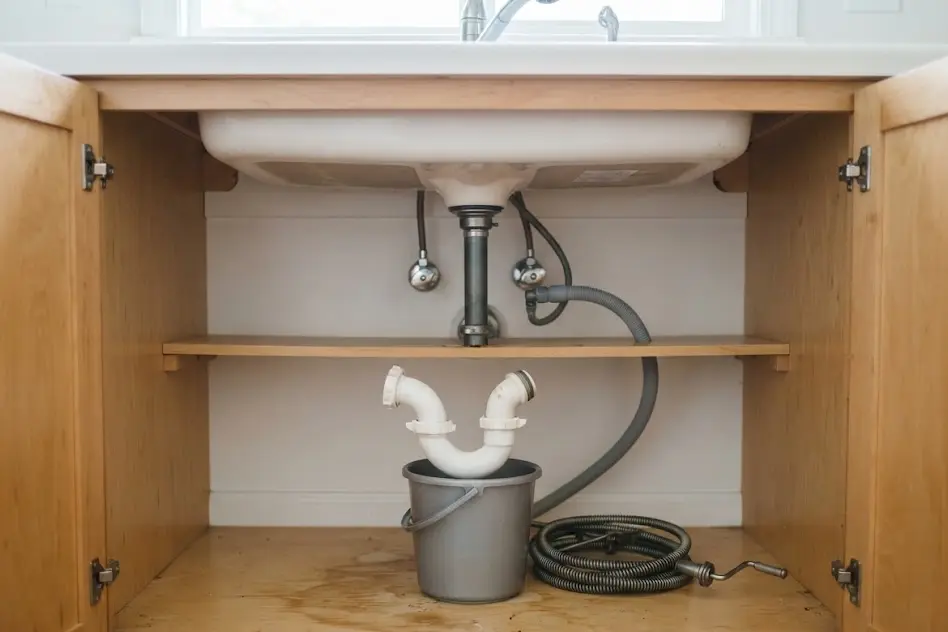
A plunger works for toilet and sink clogs close to the drain opening. Some sink and tub clogs sit in the P-trap, the U-shaped pipe under the fixture, and removing and cleaning it may solve the problem. DIY has limits: a snake used incorrectly can push the clog deeper or puncture the pipe (HomeGuide).
Chemical drain cleaner hazards
Many liquid drain cleaners contain highly concentrated corrosive chemicals: sulfuric or hydrochloric acid, or sodium or potassium hydroxide. Swallowing a non-enzymatic drain cleaner can cause serious burns, permanent tissue damage and death, and caustic products can burn skin on contact. Splash-back is one way people get hurt, especially when the product is poured from too high or too much is poured into a drain that is completely blocked (Poison Control).
- Wear goggles and rubber gloves, and pour carefully and close to the drain.
- Keep containers tightly closed and out of children’s sight and reach.
- If someone swallows drain cleaner, gets it on their skin or breathes the fumes, call Poison Control at 1-800-222-1222 or use its online tool. Help is free, confidential and available 24 hours a day.
Poison Control also notes that baking soda and vinegar do not build up enough pressure to push out a clog, and are unlikely to be strong enough to clear tough grease clogs (Poison Control). HomeGuide adds that some older or damaged pipes cannot handle harsh chemical cleaners, while enzyme cleaners dissolve clogs without harming the pipe (HomeGuide).
What not to pour down drains
New York City’s Department of Environmental Protection says only pee, poop, vomit and toilet paper should be flushed. Wet wipes, including ones labeled “flushable,” go in the trash, along with condoms, feminine products and paper towels. Cooking grease should be left to cool, sealed in a container and thrown away (NYC Department of Environmental Protection).
The reason: grease poured down a sink clings to the inside of pipes and can build up until it blocks them completely, and wipes that clear the toilet can still get caught in household plumbing. The result can be a sewage backup into your home. The same agency puts the cost of repairing a sewer line in New York City at $10,000 to $15,000 (NYC DEP). Your own water or sewer utility may publish its own list.
How often drains need cleaning
HomeGuide suggests professional cleaning every 1 to 2 years, more often for larger households, and calling a plumber when water drains slowly, drains smell, pipes gurgle, water pools at basement drains or backs up into a tub, shower, toilet or sink (HomeGuide). Fixr gives a similar interval for the sewer line, every 18 to 22 months, closer to 18 in a busy household and 22 or more in a smaller home with one bathroom (Fixr). If other plumbing is due at the same time, see our guide to water heater replacement cost.
How to keep the bill down
- Call during business hours when the clog allows it; after-hours rates are often 2 to 3 times higher.
- Try a plunger first on a single slow sink or toilet.
- Keep grease and wipes out of the drains so the clog does not come back.
- Ask for a camera inspection before agreeing to any sewer line repair.
- Ask whether the service call fee is credited if the same plumber does the work.
- Get a written contract that breaks down all the fees before work begins, and never pay in full up front.
Questions to ask before you sign
- Is the price flat-rate per clog or hourly, and is there a call-out fee?
- How much more do you charge for emergencies during off hours?
- Will you snake or hydro jet this line, and why?
- Is a camera inspection included, and will I get to see the video?
- Are you licensed, bonded and insured, and do you offer a warranty on the work?
Sources
- HomeGuide, How Much Does Drain Cleaning Cost?, December 19, 2025.
- Fixr, How much does it cost to unclog a toilet?, updated January 31, 2025.
- Fixr, How much does it cost to unclog a kitchen sink?, updated August 29, 2025.
- Fixr, How much does it cost to unclog main sewer line?, updated January 31, 2025.
- Fixr, How much does it cost to clean the sewer line?, updated January 31, 2025.
- Homewyse, Cost to Clean Drain, September 2026.
- Poison Control (National Capital Poison Center), What’s in drain cleaner and what happens if you drink it?
- New York City Department of Environmental Protection, Trash It. Don’t Flush It.
- U.S. Bureau of Labor Statistics, Occupational Outlook Handbook: Plumbers, Pipefitters, and Steamfitters, pay data for May 2025.