$400 – $2,500That is the typical well pump installation cost in 2026, pump and labor included, when replacing the pump in an existing well. A submersible pump for a deep well runs $1,000 to $2,500 installed and a jet pump for a shallow well $400 to $1,400. HomeGuide puts the national average at about $1,800; This Old House gives $900 to $2,500 for a replacement and Forbes Home $1,000 to $2,750, so the three guides agree on the upper end.
Most people searching for this price are replacing a pump that has stopped working, not drilling a new well. The figures below cover both situations: what a replacement costs by pump type, what changes when the well is new, which parts can fail without the whole pump going, and why the water should be tested once the job is done.
Well pump cost by type
| Pump type | HomeGuide (installed) | Forbes Home | Best for |
|---|---|---|---|
| Submersible | $1,000 – $2,500 | $200 – $1,200 | Deep wells |
| Jet pump (deep well) | $500 – $1,400 | $400 – $1,500 | Wells 50 to 100 feet deep |
| Jet pump (shallow well) | $400 – $1,000 | $300 – $1,000 | Wells up to 25 feet deep |
| Constant pressure | $2,000 – $5,000 | $2,000 – $5,000 | Steady pressure at several fixtures |
| Hand pump | $200 – $2,000 | $150 – $1,500 | Very shallow wells, low demand |
| Solar | $1,500 – $6,500 | $1,500 – $6,500 | Sunny, off-grid sites |
| Windmill | $4,000 – $20,000 | $5,000 – $20,000 | Windy, off-grid sites |
The pump alone costs $150 to $1,700; the rest of the bill is labor, pipe and wiring. HomeGuide reports a minimum of about $200 and a maximum near $20,000 across the jobs it tracks, with most falling between $1,000 and $2,500 (HomeGuide). This Old House puts the pump alone at $200 to $500 for common models, based on retail prices: about $200 for a shallow-well jet pump, $300 for a deep-well jet pump and $500 for a submersible (This Old House).
The guides disagree most on submersible pumps. HomeGuide lists $1,000 to $2,500 installed, while the older Forbes Home guide (October 2024) lists $200 to $1,200 in its installation section, closer to the price of the pump alone. For a whole replacement job, Forbes Home reports $250 to $5,000 with an average of $1,750 (Forbes Home), in line with HomeGuide’s $1,800 average and This Old House’s $900 to $2,500 (This Old House). Use the HomeGuide column as the installed price and the lower Forbes figures as the floor for a simple swap.
Estimate your well pump installation cost
Use the tables above to estimate your cost. The interactive calculator needs JavaScript.
Submersible vs jet pump
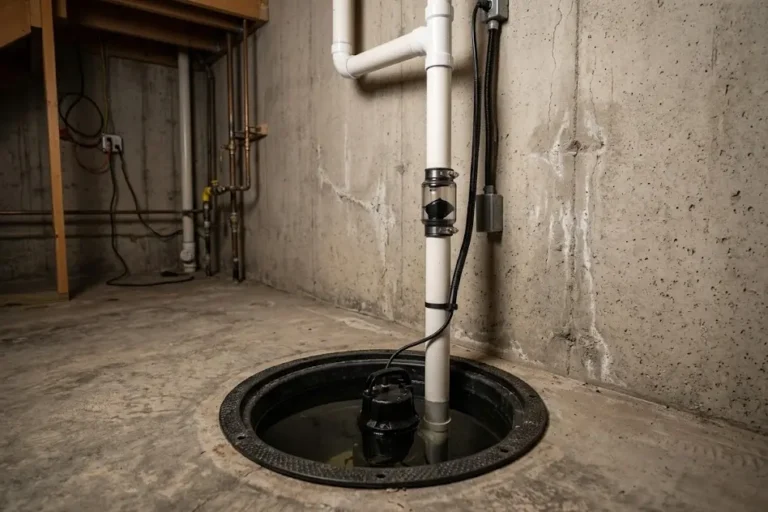
Submersible pumps sit down inside the well. They are the most common type today because they are efficient, quiet and durable, and they are the usual choice for deep wells. They are also the pricier of the two common types, at $1,000 to $2,500 installed (HomeGuide).
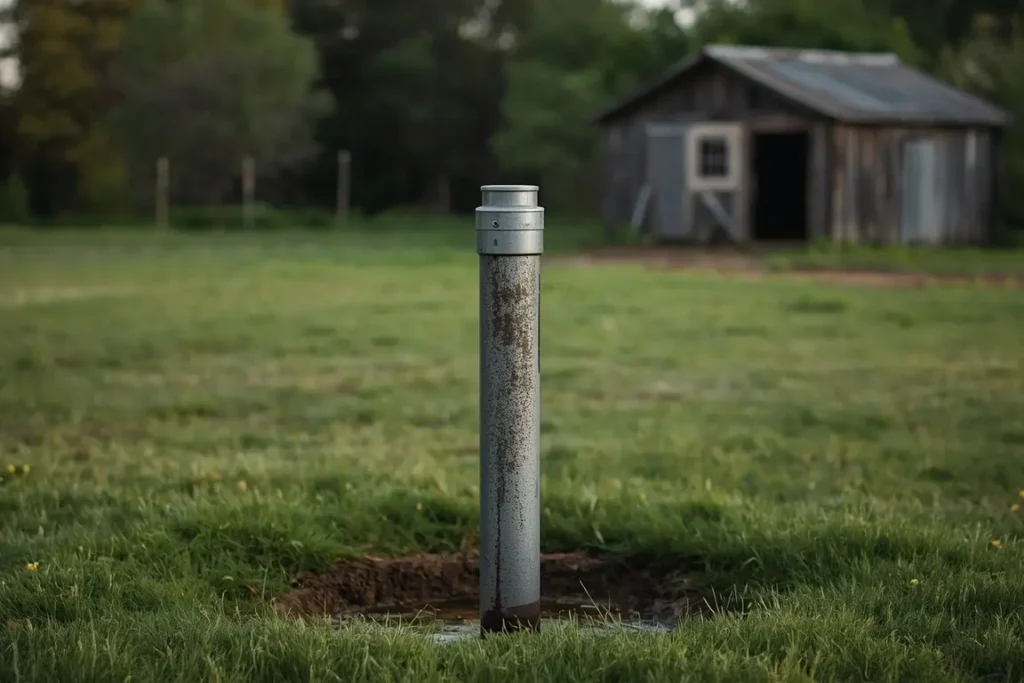
Jet pumps sit above ground next to the well and use water and air pressure to draw water up. They suit wells less than 100 feet deep and cost $400 to $1,400 installed. A shallow-well jet pump works for wells up to about 25 feet; a deep-well jet pump covers 50 to 100 feet. Both are cheaper than a submersible but noisier and less efficient, and deep-well jet pumps are more likely to need repairs (HomeGuide).
The type is usually decided by your well, not by preference. A constant pressure pump is an upgrade: it uses a variable frequency drive to hold the same water pressure no matter how many taps are open, and costs $2,000 to $5,000 installed (HomeGuide).
Replacement vs new installation
Installing a pump in a new well usually costs more than replacing one, because the first installation takes more labor. An existing pump can sometimes be upgraded rather than fully replaced (HomeGuide).
If there is no well yet, the pump is the small part of the bill. Drilling a well costs $6,000 to $16,000 at an average depth of 200 feet, depending on soil and well diameter. Rural homes that need both a well and a septic system typically spend $6,000 to $20,000 on the pair. The well itself can last more than 40 years with care, while the pump will need replacing every 10 to 15 years (HomeGuide).
What drives the price: depth, horsepower and labor
Well depth and pump size are the two biggest factors. A deeper well needs a longer drop pipe and a more powerful pump to lift water to the surface, and a larger household that uses more water needs a bigger pump, which costs more to buy and to install (HomeGuide).
| Labor item | Typical cost |
|---|---|
| Plumbing labor to install the pump | $250 – $800 (over $1,000 on difficult jobs) |
| Electrician for new wiring or repairs | $50 – $130 per hour |
| Time on site for a replacement | About 3 – 6 hours |
For context on labor rates, the U.S. Bureau of Labor Statistics puts the median pay of plumbers, pipefitters and steamfitters at $30.67 an hour, or $63,800 a year, in May 2025, and notes that most states require plumbers to be licensed (BLS). The hourly rate a contractor bills is a different number from the wage the worker earns.
A deep well or a hard-to-reach wellhead adds time; a replacement can run past the usual 3 to 6 hours when the well is deep or difficult to access (HomeGuide). If the wiring to the pump needs replacing or repair, the electrician’s hours are added on top.
Pressure tank and other parts
Not every well problem needs a new pump. Swapping a failed component costs $25 to $2,000, and the pressure switch, pressure tank, motor, tank bladder or booster pump are the usual culprits (HomeGuide).
| Part | Replacement cost | What it does |
|---|---|---|
| Pressure switch | $25 – $100 | Turns the pump on and off as pressure falls and rises |
| Tank bladder | $50 – $100 | Separates the water in the tank from the air |
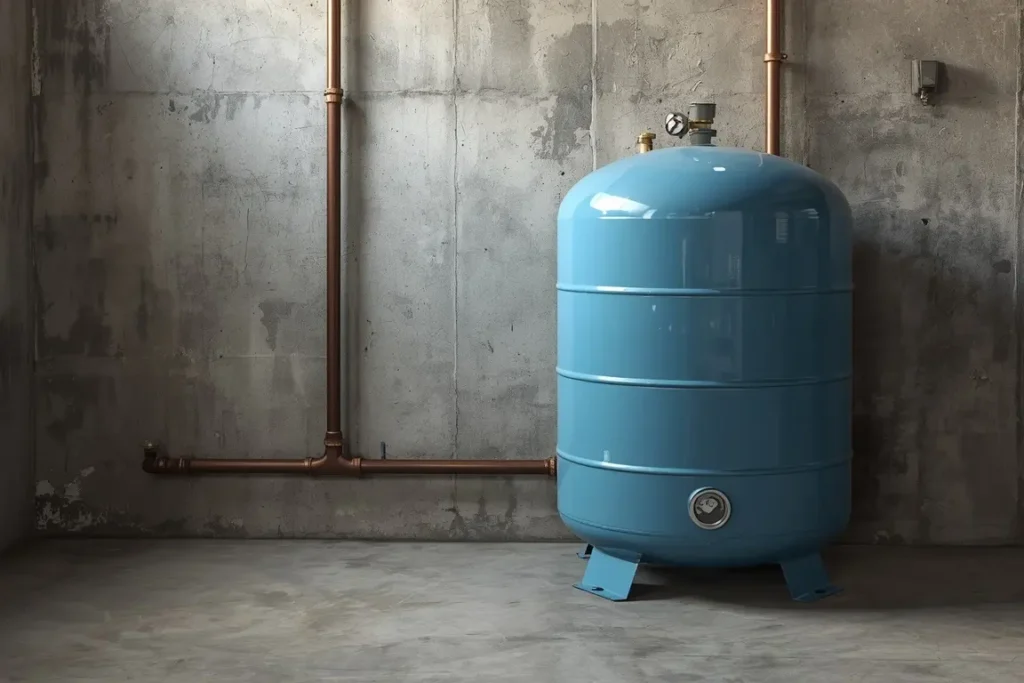
| Pressure tank | $500 – $1,000 | Stores water and keeps the system under pressure |
| Pump motor | $500 – $1,000 | Powers the pump |
| Booster pump | $1,000 – $2,000+ | Raises water pressure in the house |
Pressure tank prices differ between the guides: HomeGuide lists $500 to $1,000, Forbes Home $750 to $4,000 depending on capacity and type (Forbes Home). A large tank can therefore cost several times the HomeGuide figure.
The pressure tank matters because it tells the pump when to run. When a tap opens, tank pressure drops, the pressure switch starts the pump, and the pump refills the tank until pressure reaches a preset level, when the switch shuts it off (HomeGuide).
Our estimate: replacing a submersible pump and the pressure tank in the same visit comes to roughly $1,500 to $3,500. We added HomeGuide’s $1,000–$2,500 installed submersible range to its $500–$1,000 pressure tank range. This is our calculation, not a measured figure; doing both in one visit may cost less than two separate jobs.
Signs your well pump is failing
A pump lasts 10 to 15 years with proper care. If yours is past 10 years or has been neglected, these are the signs to watch for (HomeGuide):
- Water pressure dropping.
- Low flow or no water at all.
- Faucets that spit, a sign of air in the lines.
- Cloudy or dirty water carrying sediment.
- Unusual noises from the pump or the tank.
- A higher electric bill because the pump is working harder than it should.
Common causes of failure are age and wear, overheating from overwork or running dry, repeated power surges or outages, and corrosion from mineral-heavy water. An inspection every 1 to 2 years costs $250 to $550 and can catch a failing part before the whole pump has to go (HomeGuide).
Test your water after the work
With a private well, water safety is your job. The EPA rules that protect public drinking water systems do not apply to privately owned wells, and government officials do not regulate, treat or monitor their water (CDC).
The EPA advises testing a well immediately when you replace or repair any part of the well system, and every year for total coliform bacteria, nitrates, total dissolved solids and pH. It recommends hiring a certified well driller for any new well construction or modification, and using only laboratories certified for drinking water testing; your local health department may test private wells for free (EPA). The CDC gives the same yearly list and suggests asking your health department which other germs or chemicals to test for where you live (CDC).
A new pump often comes up alongside other plumbing work. If your water heater is also near the end of its life, see our guide to water heater replacement cost.
How to keep the bill down
- Find out what actually failed. A $25–$100 pressure switch or a $50–$100 bladder costs far less than a new pump.
- Ask whether your existing pump can be upgraded instead of fully replaced.
- Have the well inspected every 1 to 2 years so worn parts are caught early.
- Get several written quotes for the same type of pump so the totals are comparable.
- Check whether your health department tests private wells for free before paying a lab.
Questions to ask before you sign
- What pump type and size do you recommend for my well depth and household, and why?
- Have you confirmed the pump itself failed, or could it be the switch, tank or wiring?
- Does the written estimate include pipe, wiring, electrical work and disposal of the old pump?
- Are you licensed and insured, and does my county require a permit for this work?
- What warranty covers the pump, and what warranty covers your work?
Sources
- U.S. Environmental Protection Agency, Protect Your Home’s Water.
- Centers for Disease Control and Prevention, Guidelines for Testing Well Water, July 1, 2024.
- U.S. Bureau of Labor Statistics, Occupational Outlook Handbook: Plumbers, Pipefitters, and Steamfitters, pay data for May 2025.
- HomeGuide, How Much Does a Well Pump Cost To Replace or Install?, August 7, 2025.
- This Old House, Well Pump Cost and Installation Guide (2026), updated March 5, 2026.
- Forbes Home, How Much Does Well Pump Installation And Replacement Cost?, older guide (October 31, 2024).