$600 – $2,500That is the typical sump pump installation cost in 2026 for a new pump installed by a pro, based on three published cost guides that put the average between $1,400 and $1,600. Swapping a pump in an existing pit costs less, roughly $350 to $1,000, while cutting a new pit through a concrete floor can push the total to $2,500 to $5,000.
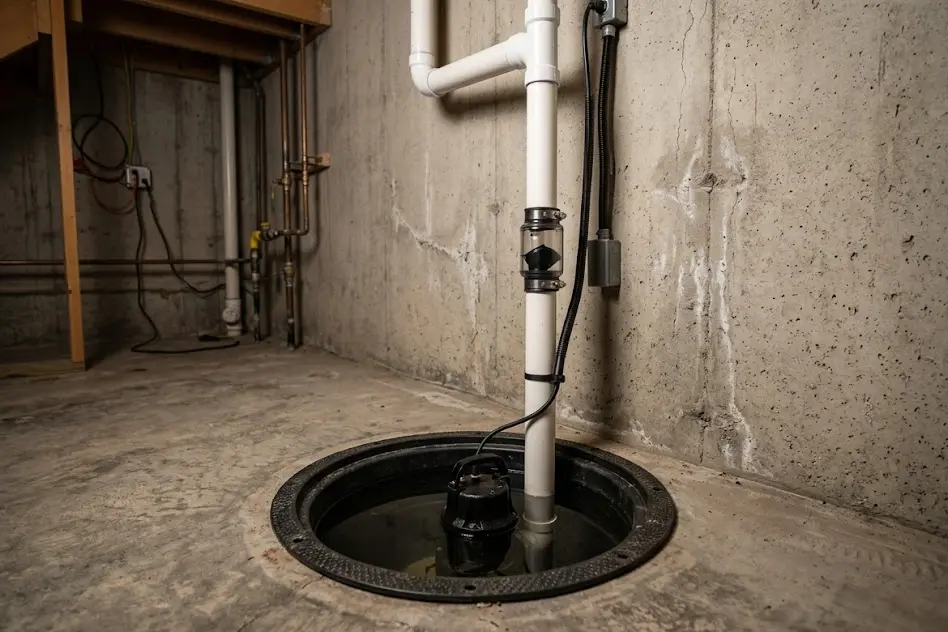
A sump pump sits in a pit below the basement or crawl space floor and pushes water out before it reaches your belongings. Below is what the job costs by pump type, why a new pit costs several times more than a replacement, what a backup pump adds, and what flood insurance does and does not cover when water gets in anyway.
Sump pump installation cost at a glance
The three guides we checked broadly agree on the middle of the market. Fixr, updated January 31, 2025, puts most installations at $800 to $2,000 with an average of $1,400 (Fixr). This Old House, updated March 11, 2026, gives $500 to $4,000 with the same $1,400 average; it says its cost data comes from Fixr and Angi, so it is not fully independent of Fixr (This Old House). HomeGuide, an older guide (August 2023), puts the national average at $1,600, with most jobs between $600 and $2,500 and a full range of $450 to $4,000. By HomeGuide’s figures the pump itself is the cheap part, $100 to $800 for the unit against $500 to $1,700 for labor, and labor is often 65% to 80% of the total bill (HomeGuide).
| Job | Fixr (2025) | This Old House (2026) | HomeGuide (2023) |
|---|---|---|---|
| Replace a pump in an existing pit | $350 – $1,000 | — | $400 – $700 |
| New pump installed (typical range) | $800 – $2,000 | $500 – $4,000 | $600 – $2,500 |
| National average, new install | $1,400 | $1,400 | $1,600 |
| Digging the pit (pit only) | $500 – $1,200 | — | — |
| New pit cut through a concrete floor (total job) | — | — | $2,500 – $5,000 |
| Labor for pump and drainage pipes | $300 – $4,000 | $300 – $4,000 | $500 – $1,700 |
| New or updated drainage system | — | — | $4,000 – $12,000 |
Our estimate: the $600–$2,500 headline range is HomeGuide’s typical range, which contains Fixr’s $800–$2,000 typical range; This Old House’s wider $500–$4,000 spans the cheapest to the most complex jobs. The $350–$1,000 replacement range combines Fixr’s range with HomeGuide’s narrower $400–$700. These are our readings of the published figures, not measured prices.
Estimate your sump pump installation cost
Use the tables above to estimate your cost. The interactive calculator needs JavaScript.
Cost by type: pedestal vs submersible
There are two main designs. A pedestal pump has its motor on a column above the pit, with only the base in the water. A submersible pump sits completely underwater in the basin. HomeGuide describes pedestal units as cheaper and longer-lasting, and submersibles as quieter and more powerful, but more expensive because they must be built from more durable materials (HomeGuide).
| Pump type | Unit only (Fixr / This Old House) | Unit only (HomeGuide) | Typical lifespan | Typical repair |
|---|---|---|---|---|
| Pedestal | $80 – $800 | $100 – $400 | 10 – 30 years | $100 – $480 |
| Submersible | $90 – $1,000 | $100 – $800 | 5 – 20 years | $200 – $1,000 |
| Water-powered backup | $200 – $900 | $100 – $700 | — | — |
| Battery-powered / primary with battery | $150 – $2,000 | $150 – $800 | Battery: 3 – 5 years | — |
| Combination (electric + water) | $500 – $1,500 | — | — | — |
Pump material matters too: metal pumps are more durable than plastic ones but cost about double. Horsepower follows the job. HomeGuide says drier areas may only need a 0.25 hp pump, while homes that flood often need 0.33 to 0.5 hp, and the farther the water has to be pushed, the more power you need (HomeGuide).
New pit vs replacing a pump in an existing pit
This is the biggest swing in the price. If you already have a sump basin, the installer only removes the old pump and sets a new one, with no digging or electrical work, which is why a replacement runs $400 to $700 by HomeGuide’s older figures (HomeGuide). Fixr gives $350 to $1,000 for a replacement including pump and labor, taking 1 to 3 hours, because the basin and pipework should already be in place (Fixr). An installer may still recommend a new basin if the old one is cracked, warped or flimsy.
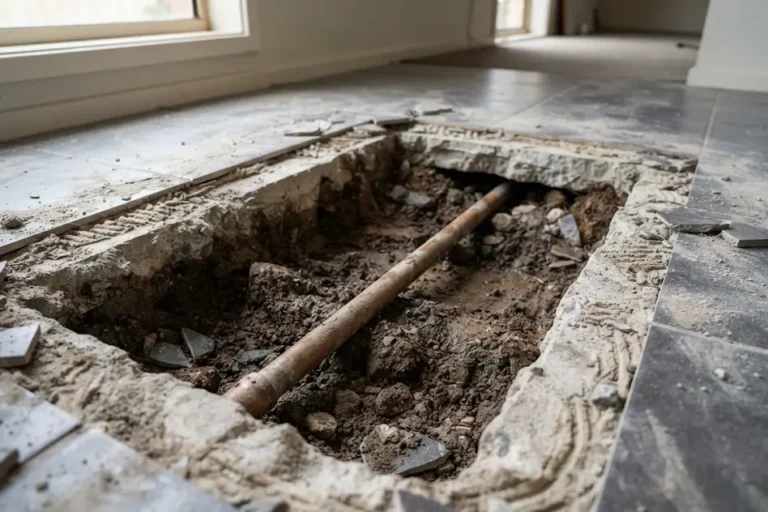
A first-time installation means digging the pit. A dirt floor is easier and faster. If the crew has to break a concrete slab with a jackhammer or concrete saw, HomeGuide’s older guide puts the total at $2,500 to $5,000. Fixr prices digging the pit alone at $500 to $1,200, on top of the pump and the rest of the labor (Fixr). A crawl space or a hard-to-reach basement also costs more than an open or walkout basement, and a home that already has water damage may need drying out first. A simple installation takes 8 to 10 hours, longer when there is concrete, extra plumbing or electrical work (HomeGuide).
A sump pump is often one piece of a wider moisture fix. If your crawl space is the problem, compare it with the cost of crawl space encapsulation. Where water has to be collected along the foundation, a new or updated drainage system costs $4,000 to $12,000 on its own (HomeGuide).
Battery and water-powered backup
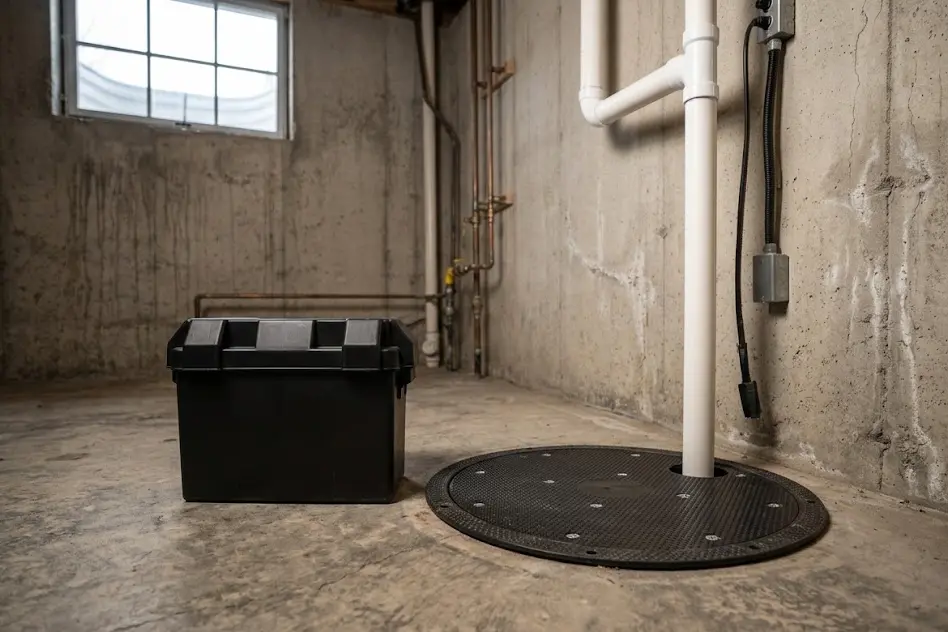
A primary pump that runs on household power stops when the power does. FEMA’s flood-protection advice is to “make sure you have a sump pump with battery-operated backup in case of electrical failure” (FEMA).
| Backup system | Installed cost | How it runs |
|---|---|---|
| Battery-powered backup pump | $600 – $2,000+ | Second pump on a battery; starts in an outage or if the main pump fails |
| Water-powered backup pump | $300 – $1,000 | Uses municipal water pressure; no electricity |
| Combo primary + battery backup | $1,000 – $3,000 | Electric pump and battery backup in one unit |
For a battery system, HomeGuide breaks the bill down as $250 to $600 for the backup system, $100 to $400 for a battery that is often sold separately, $50 to $200 for fittings, discharge pipe, check valve and adapters, $150 to $600 or more for 2 to 4 hours of plumber labor, and $50 to $200 for permits and inspections. Batteries wear out: flooded deep-cycle batteries cost $100 to $200 and last 3 to 5 years, while sealed AGM or gel batteries cost $200 to $400 and last 4 to 7 years (HomeGuide).
A water-powered backup needs a steady municipal water supply and will not work in a home on well water. It is also harder to install and needs an annual inspection (HomeGuide; HomeGuide). Some backup pumps come in Wi-Fi-enabled models that alert the homeowner if the system stops working (HomeGuide).
Our estimate: a new primary pump plus a battery backup installed at the same time comes to roughly $1,200 to $4,500 or more. We added HomeGuide’s $600–$2,500 installation range to its $600–$2,000+ battery backup range. This is our calculation, not a measured figure; a single installer visit may cost less than two separate jobs.
Discharge line, check valve and other parts
The pump is only useful if the water it moves goes somewhere harmless. FEMA describes sump pumps as sending water away from the house to a place where it is no longer a problem, such as a municipal storm drain or a dry well (FEMA). The check valve on the discharge line stops water in the pipe from running back into the pit when the pump shuts off; a broken one makes the pump work too hard (HomeGuide).
| Part | Typical cost |
|---|---|
| Check valve | $10 – $30 |
| Discharge hose kit | $15 – $20 |
| Float switch | $20 – $40 |
| Sediment filter | $10 – $30 |
| Sump pump battery | $100 – $250 |
| Discharge pipe run above ground (installed) | $150 – $400 |
| Discharge pipe buried (installed) | $250 – $2,000 |
If the house needs plumbing or electrical upgrades to take a backup system, HomeGuide adds $100 to $500 or more (HomeGuide). In winter, HomeGuide recommends removing the hose between the pump and the discharge pipe so water does not freeze in it (HomeGuide).
Do not connect it to the sanitary sewer
Piping the discharge into a floor drain or sewer line may look like the cheap option, but many cities prohibit it. The City of Homer, Alaska, for example, lists sump pumps with roof drains and foundation drains as illegal connections to its sanitary sewer: they send groundwater to the treatment plant, use up costly treatment capacity, and a city study linked them to past EPA discharge violations. The city asks owners to disconnect them and planned smoke and dye testing plus code penalties (City of Homer). Rules differ by town, so ask your installer where your code allows the line to discharge.
Repair or replace?
Sump pump repair averages $200 to $870, with a national average of $540, and after-hours emergency calls cost $50 to $150 more. Because a repair can approach the price of a new pump, HomeGuide notes that plumbers often recommend replacing a failed pump instead. Sump pumps last 7 to 10 years on average with maintenance, and a pump that runs often may last only five (HomeGuide).
Before replacing the whole unit, check the cheap parts. A pump that will not turn on and off correctly may only need a float switch, and water returning to the pit after the pump stops points to the check valve (HomeGuide; HomeGuide). Signs the pump itself is failing include constant running, frequent on-off cycling, rattling or grinding noises, heavy vibration and visible rust (HomeGuide).
Labor and who does the work
Plumbers install sump pumps, and some companies specialize in them (HomeGuide). The Bureau of Labor Statistics reports a median annual wage of $63,800 for plumbers, pipefitters and steamfitters in May 2025, or $30.67 per hour, and notes that most states require plumbers to be licensed (BLS). That is what the worker earns, not what you are billed: HomeGuide lists plumber rates for sump pump work at $45 to $150 per hour, plus parts (HomeGuide), and This Old House gives $75 to $150 per hour to hook up a new pump where a basin already exists (This Old House).
What flood insurance covers
FEMA reminds homeowners that standard homeowners policies do not cover flood damage, and that National Flood Insurance Program policies generally take effect 30 days after purchase (FEMA). Basements get only limited coverage under an NFIP policy. FloodSmart, the NFIP’s official site, says that with building coverage, basement items are covered if they are connected to power and installed, and it lists sump pumps among them alongside furnaces, central air conditioners and outlets (FloodSmart).
A pump that simply fails is a different matter. HomeGuide notes that homeowners insurance typically does not cover sump pump failure or the resulting water damage, and that separate water backup and sump pump overflow coverage has to be bought (HomeGuide). Check with your agent before you rely on either policy.
How to keep the bill down
- Reuse a sound existing basin. A pump-only swap costs $350 to $1,000 against $800 to $2,000 for a typical new install (Fixr).
- Rule out a $20–$40 float switch or a $10–$30 check valve before buying a new pump (HomeGuide).
- Keep up maintenance: clean the pit and inlet screen, test the pump quarterly with a bucket of water, and clean or replace sediment filters every six months to a year (HomeGuide).
- Get at least three written estimates and do not pay in full before the job is done (HomeGuide).
Questions to ask before you sign
- Can my existing basin be reused, and if not, why?
- Does the price include cutting the concrete, hauling debris, the check valve and the discharge line?
- Where will the water discharge, and is that allowed by local code?
- What horsepower and pump type do you recommend for my basement, and why?
- How long will a battery backup run in an outage, and what battery type does it use?
- Is a permit needed, and is it in the quote?
- Are you licensed and insured, and what warranty covers the pump and the work?
Sources
- FEMA, Be Flood Smart. Protect Your Property, July 16, 2019.
- FloodSmart (National Flood Insurance Program), Start a Claim.
- U.S. Bureau of Labor Statistics, Occupational Outlook Handbook: Plumbers, Pipefitters, and Steamfitters.
- City of Homer, Alaska, Public Works, Illegal Connections to Sanitary Sewer System Affects Us All.
- Fixr, Sump Pump Installation Costs, updated January 31, 2025.
- This Old House, How Much Does Sump Pump Installation Cost? (2026 Guide), updated March 11, 2026.
- HomeGuide, Sump Pump Installation Cost, older guide, August 26, 2023.
- HomeGuide, Sump Pump Battery Backup Cost, July 2, 2025.
- HomeGuide, Sump Pump Repair Cost, February 6, 2026.