$450 – $1,500 per windowThat is the typical window replacement cost in 2026 for a standard single-hung window in a vinyl or aluminum frame, installed. The published averages run from about $800 (Fixr, Forbes Home) to $900 (HomeGuide) per window, and a whole house of 10 to 15 windows usually lands between $4,500 and $22,500.
Three things move that number more than anything else: the frame material, the window type, and whether the installer can slide the new window into the old frame or has to tear the whole thing out. A quote that looks high usually has one of those three behind it.
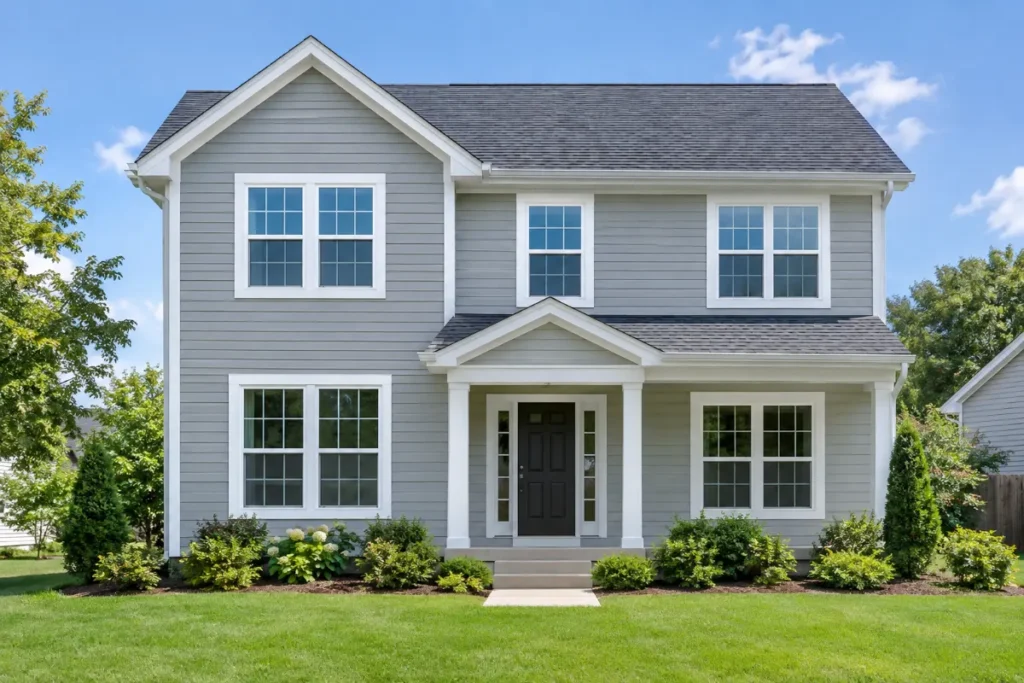
Cost to replace every window in a house
| Number of windows | Total installed |
|---|---|
| 1 | $450 – $1,500 |
| 5 | $2,250 – $7,500 |
| 10 | $4,500 – $15,000 |
| 15 | $6,750 – $22,500 |
| 20 | $9,000 – $30,000 |
| 25 | $11,250 – $37,500 |
Other guides group whole-house jobs differently. Fixr (January 2026) puts 5 to 10 windows at $2,250 to $12,000 and 11 to 20 windows at $4,950 to $24,000, close to the table above. Forbes Home (May 2025) is much lower at the top end: $4,000 to $7,000 for 6 to 10 windows and $6,000 to $11,000 for 11 to 15. The gap is real, so treat the Forbes Home figures as a floor for basic windows rather than a typical price.
The table multiplies a per-window price, but real quotes rarely scale that neatly. Replacing all the windows in one visit usually lowers the price per window, because the crew, the setup and the disposal trip are paid once.
Cost by frame material
| Frame | HomeGuide | Fixr | Forbes Home |
|---|---|---|---|
| Aluminum | $175 – $1,000 | $200 – $800 | $400 – $700 |
| Vinyl | $200 – $1,500 | $350 – $800 | $450 – $900 |
| Fiberglass | $400 – $2,000 | $400 – $1,500 | $450 – $1,100 |
| Composite | $400 – $2,300 | $300 – $2,500 | $600 – $2,500 |
| Wood | $800 – $3,800 | $600 – $2,000 | $550 – $1,950 |
| Steel | — | — | $850 – $3,000 |
The three guides agree on the order: aluminum and vinyl at the bottom, fiberglass and composite in the middle, wood at the top. They disagree most on the high end. HomeGuide’s ceilings are the widest because its ranges cover sizes from small picture windows up to large casements, so a wood window can reach $3,800 there against about $2,000 in the other two.
Estimate your window replacement cost
Use the tables above to estimate your cost. The interactive calculator needs JavaScript.
Cost by window type
| Type | HomeGuide | Fixr |
|---|---|---|
| Picture (fixed) | $300 – $1,300 | $300 – $1,600 |
| Single-hung | $300 – $2,100 | $250 – $700 |
| Sliding | $300 – $2,300 | $700 – $1,500 |
| Double-hung | $350 – $2,500 | $300 – $1,000 |
| Awning | $400 – $2,000 | $300 – $800 |
| Casement | $400 – $3,000 | $400 – $1,200 |
| Hurricane (impact) | $400 – $1,200 | — |
| Bay | $2,000 – $6,000 | $900 – $4,500 |
| Egress (basement) | $3,000 – $7,000 | $300 – $1,500 |
| Bow | $3,000 – $8,000+ | $1,500 – $8,000 |
The biggest disagreement is the egress window: HomeGuide’s $3,000 to $7,000 includes the excavation and window well a basement egress opening needs, while Fixr’s $300 to $1,500 is in line with the window alone. Budget with the HomeGuide figure if you are cutting a new basement opening. Sliding windows also split the guides, with Fixr’s floor more than twice HomeGuide’s.
Fixed windows are the cheapest because nothing opens. Every moving sash, crank and lock adds cost, and projecting windows like bays and bows add structural work on top.
Insert or full-frame replacement
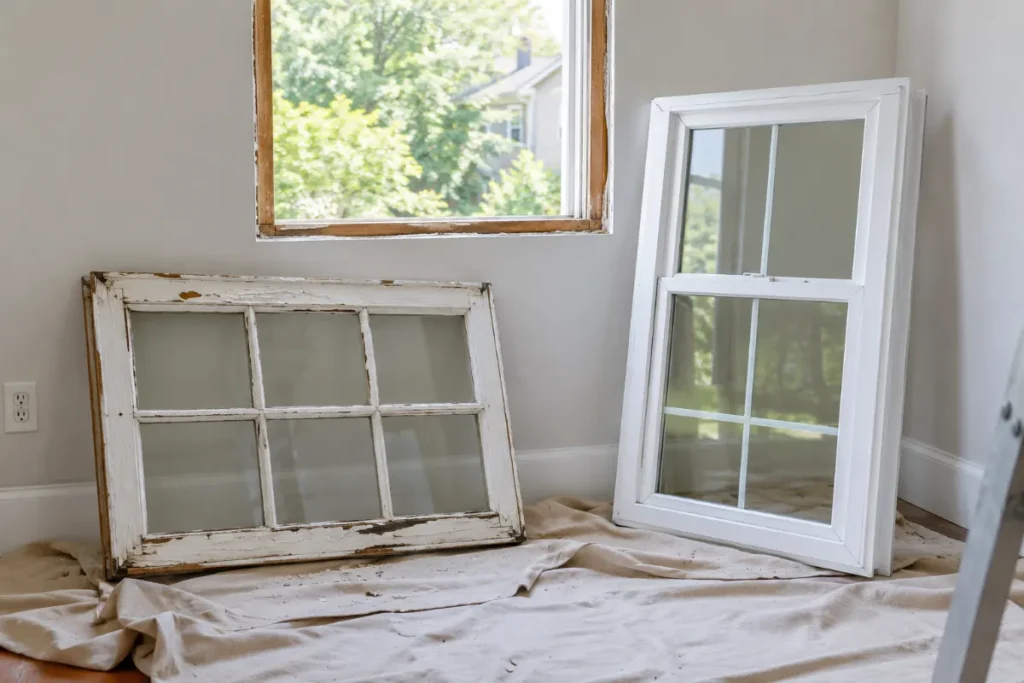
An insert (or pocket) replacement fits a new window inside the existing frame. It is quicker and cheaper, and it is the usual choice when the old frame is sound and the new window is the same size and style. The Department of Energy suggests asking your retailer and installer whether this option will work for your house (U.S. Department of Energy).
A full-frame replacement removes everything down to the rough opening. It costs more, but it is the only honest fix when the frame is rotten or the wall around it is wet. Two lines often ride along with it:
- Permit: $50 to $200 when the opening changes size. A same-size swap typically needs none.
- Siding repair: $2 to $14 per square foot where rot has spread past the frame (both figures: HomeGuide).
What the labor line pays for
The window itself is 65% to 75% of the bill; labor is the other 25% to 35%, or about $100 to $500 per window (HomeGuide). The national estimate from Homewyse for September 2026 prices one basic, builder-grade window at $842 to $1,330 in total, of which $290 to $497 is labor for 3.1 hours of work.
For comparison, the median glazier in the United States earned $27.44 an hour in May 2025, according to the Bureau of Labor Statistics.
Our estimate: dividing the Homewyse labor range by its 3.1 hours gives a billed rate of about $94 to $160 an hour, roughly 3.4 to 5.8 times the median glazier’s wage. The difference covers a second installer for heavy units, travel, insurance, disposal of the old windows and the hours spent measuring and ordering. It is a calculation from the published figures, not a measured rate.
If your house was built before 1978
Pulling out old windows disturbs paint, and window sills are one of the places where lead paint wears into dust. About three-quarters of U.S. homes built before 1978 still contain some lead-based paint. Federal rules require anyone paid to disturb painted surfaces in those homes to be certified and trained in lead-safe work practices, and the firm itself must be certified (EPA).
In practice: ask the installer for their EPA lead-safe certification before you sign. The containment and cleanup it requires can add to the price, and a quote that is much cheaper than the others may be leaving it out.
Replace, or fix what you have?
Heat gain and heat loss through windows account for 25% to 30% of the energy a home uses for heating and cooling. Even so, the Department of Energy notes that if your windows are in good condition, improving them may be the most cost-effective way to gain comfort and save on energy (U.S. Department of Energy). Weatherstripping and caulking cost little, and a storm window fitted over an existing one runs about $150 to $400 installed (HomeGuide).
If only a pane is cracked or fogged, replacing the glass in the existing frame costs about $300 to $650 (HomeGuide). Full replacement makes sense when frames are rotten, sashes will not open or lock, or you have single-pane windows in a climate with real winters or summers.
No federal tax credit in 2026
The Energy Efficient Home Improvement Credit paid up to $600 a year for exterior windows and skylights that met ENERGY STAR Most Efficient requirements. It only covers property placed in service before December 31, 2025 (IRS). If a salesperson counts a federal credit into the price of a 2026 installation, ask them to show it in writing. Some states and utilities still run their own rebates.
How to keep the bill down
- Replace in one project if you can. The per-window price falls when the crew does the whole house.
- Keep the same sizes and openings. Resizing means reframing, a permit and interior and exterior patching.
- Choose inserts where the frames are sound, full-frame only where they are not. A good installer will say which is which.
- Match the window to the room. A fixed picture window costs less than an operable one where you never open it anyway.
- Get at least three written quotes with the window model, frame material, installation method and disposal listed per window.
Questions to ask before you sign
- Is this an insert or a full-frame replacement, and why for each window?
- What happens, and what does it cost, if you find rot once the old window is out?
- Is your firm EPA lead-safe certified? (Required if the house was built before 1978.)
- Does the price include removal and disposal of the old windows, trim and interior finishing?
- Who covers the warranty on installation, as opposed to the manufacturer’s warranty on the window?
Sources
- U.S. Environmental Protection Agency, Lead Renovation, Repair and Painting Program.
- U.S. Bureau of Labor Statistics, Occupational Outlook Handbook: Glaziers, pay data for May 2025.
- U.S. Department of Energy, Energy Saver, Update or Replace Windows. The link is the archived copy of January 1, 2026.
- Internal Revenue Service, Energy Efficient Home Improvement Credit.
- HomeGuide, Window Replacement Cost, February 2026.
- Fixr, How Much Does Window Replacement Cost?, updated January 21, 2026.
- Forbes Home, How Much Does Window Replacement Cost?, audited May 20, 2025.
- Homewyse, Fair Cost Estimate: Windows, national estimate for September 2026.