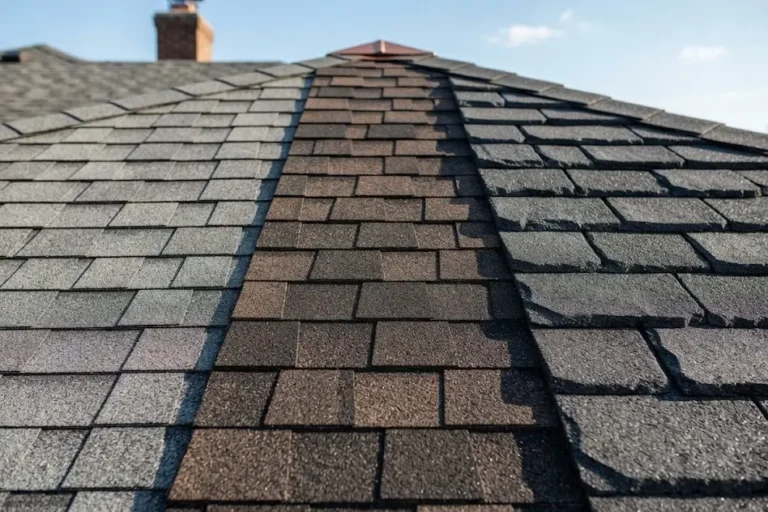
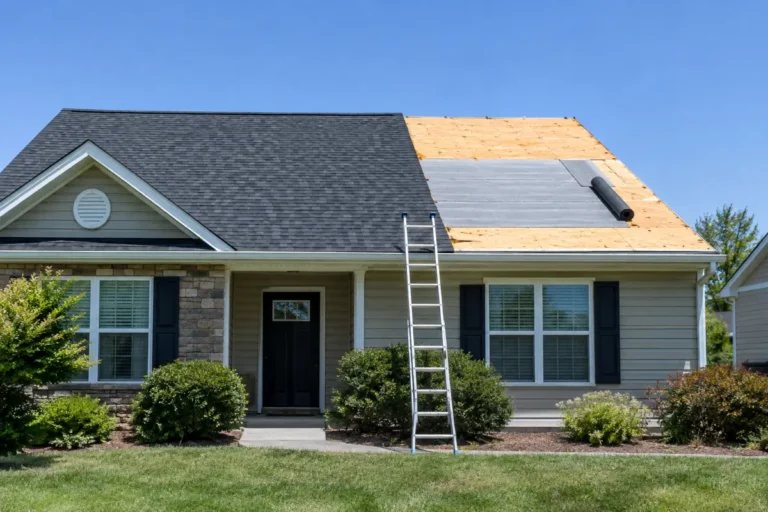
15 – 30 yearsThat is the short answer to how long does a roof last when it is covered in asphalt shingles, the most common roof in the US: 15 to 20 years for 3-tab shingles and 20 to 30 for architectural ones. Metal lasts 30 to 80+ years, tile 30 to 100+ and slate 50 to 200+. Flat roofs range from 5 years for rolled asphalt to 50 or more for spray foam and concrete. Those ranges are from HomeGuide; Fixr gives a similar picture: 20 to 30 years for asphalt shingles, 50 to 70 for metal, up to 100 for clay and concrete tile and up to 150 for slate.
Those ranges are typical service lives, not promises. Where your roof lands inside them depends on the material, the climate it sits in, how well the attic below it is sealed and ventilated, and how it is looked after. This guide goes through each of those, the signs that a roof is near the end, and what replacing it costs in 2026.
Roof lifespan by material
| Roof material | Lifespan (HomeGuide) | Lifespan (Fixr) | Material cost per square, 100 sq ft (HomeGuide) |
|---|---|---|---|
| Asphalt 3-tab shingles | 15 – 20 years | 20 – 30 years (asphalt shingles) | $80 – $130 |
| Architectural shingles | 20 – 30 years | 20 – 30 years (asphalt shingles) | $100 – $250 |
| Wood shakes / cedar | 25 – 30 years | Not given | $300 – $700 |
| Solar shingles / tiles | 25 – 30 years | Not given | $1,000 – $2,500 |
| Metal | 30 – 80+ years | 50 – 70 years | $100 – $800 |
| Tile | 30 – 100+ years | Up to 100 years (clay, concrete) | $300 – $2,500 |
| Slate / stone | 50 – 200+ years | Up to 150 years (slate) | $600 – $1,600 |
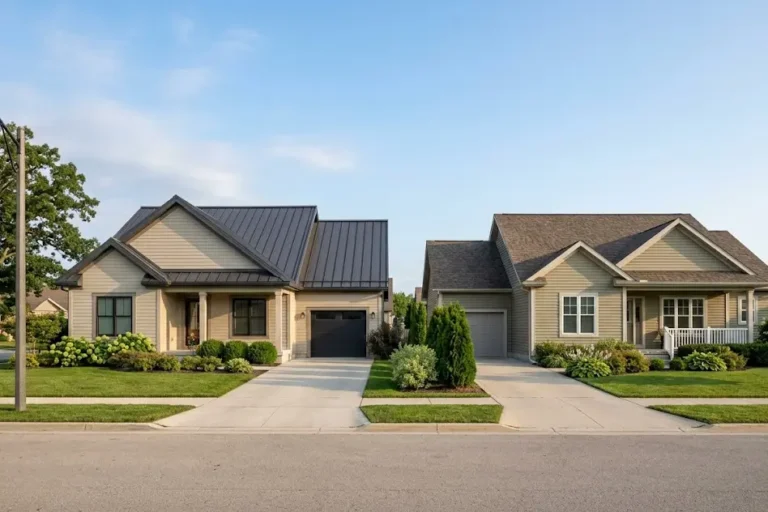
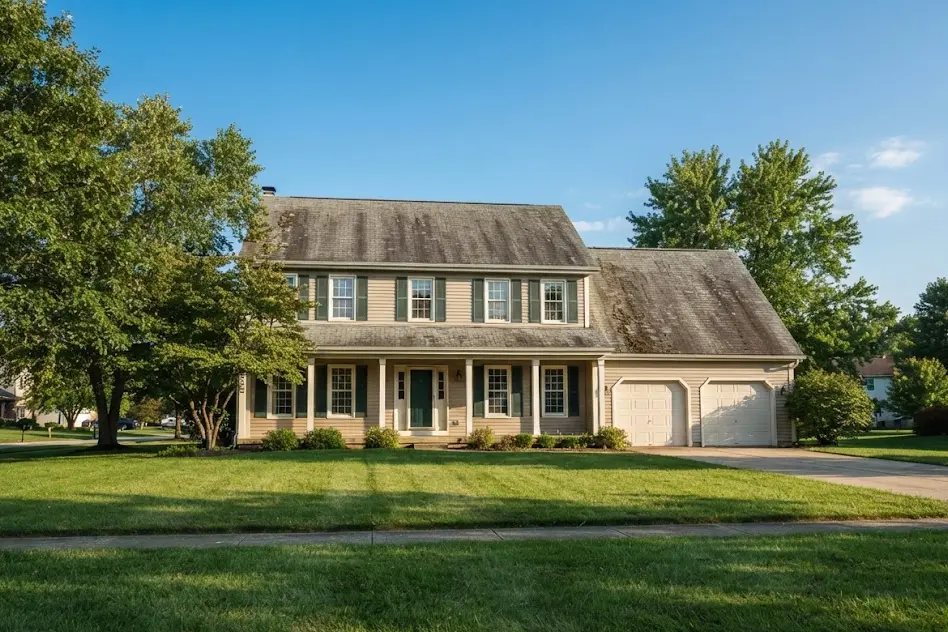
The pattern is simple: the materials that cost least up front wear out first. Architectural shingles are thicker than 3-tab shingles and last longer. Within metal, galvalume and galvanized steel are the budget options, while copper, zinc and stainless steel cost the most and typically last longer. Among tiles, concrete is the cheapest but may need sealing, and synthetic slate is lighter and more impact resistant than natural slate but does not last as long (HomeGuide). The two guides agree on architectural shingles; for metal and slate, Fixr’s figures sit inside HomeGuide’s wider ranges. Fixr gives a single 20 to 30 year range for all asphalt shingles, so it does not separate out 3-tab shingles, which HomeGuide puts as low as 15 years.
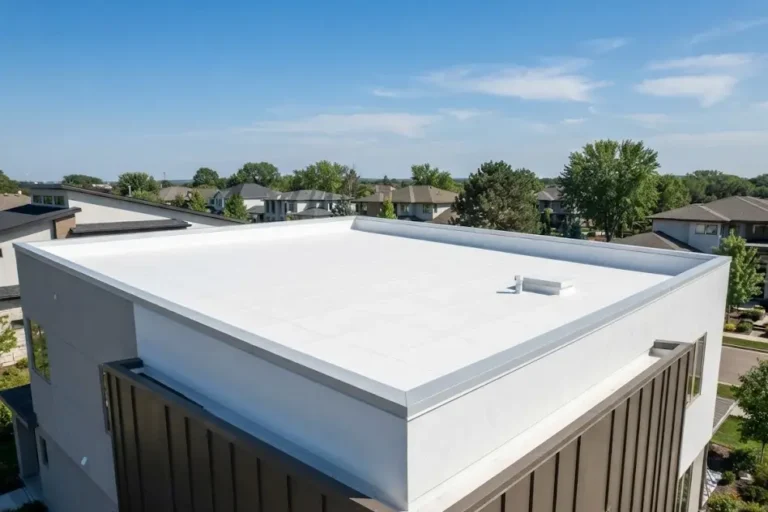
How long a flat roof lasts
| Flat roof system | Average lifespan |
|---|---|
| Rolled asphalt | 5 – 20 years |
| Modified bitumen | 10 – 20 years |
| TPO membrane | 10 – 25 years |
| EPDM (rubber) membrane | 15 – 25 years |
| PVC membrane | 20 – 30 years |
| Built-up | 20 – 30 years |
| Fiberglass / GRP | 25 – 50 years |
| Metal | 30 – 80 years |
| Spray foam | 40 – 50 years |
| Concrete | 50 – 60 years |
Rolled asphalt is the cheapest flat roof and the shortest lived; PVC, metal and concrete cost more and last longest (HomeGuide). If a low-slope roof is on the lower half of its range and already patched, price a replacement before the next leak rather than after it.
How climate shortens or stretches a roof’s life
Sun and heat. A conventional roof can reach 150°F or more on a sunny summer afternoon, while a reflective “cool” roof under the same conditions can stay more than 50°F cooler. The Department of Energy lists lower roof temperature as a benefit that may extend a roof’s service life, and advises against installing a cool roofing product before the existing roof reaches the end of its service life, because that could be wasteful (U.S. Department of Energy).
Wind and weathering. The Insurance Institute for Business & Home Safety has been weathering shingles outdoors in South Carolina, Wisconsin and Ohio since 2013. Its 10-year results, released in September 2026, found that most asphalt shingle products gain wind resistance in their first few years but begin to decline between years five and ten, at rates that vary widely by product. Shingles coming unsealed, losing the bond that holds them flat, was the single greatest driver of wind vulnerability. Sun, temperature cycles and latitude all changed how the shingles aged, even among products that carried the industry’s highest wind rating (IBHS).
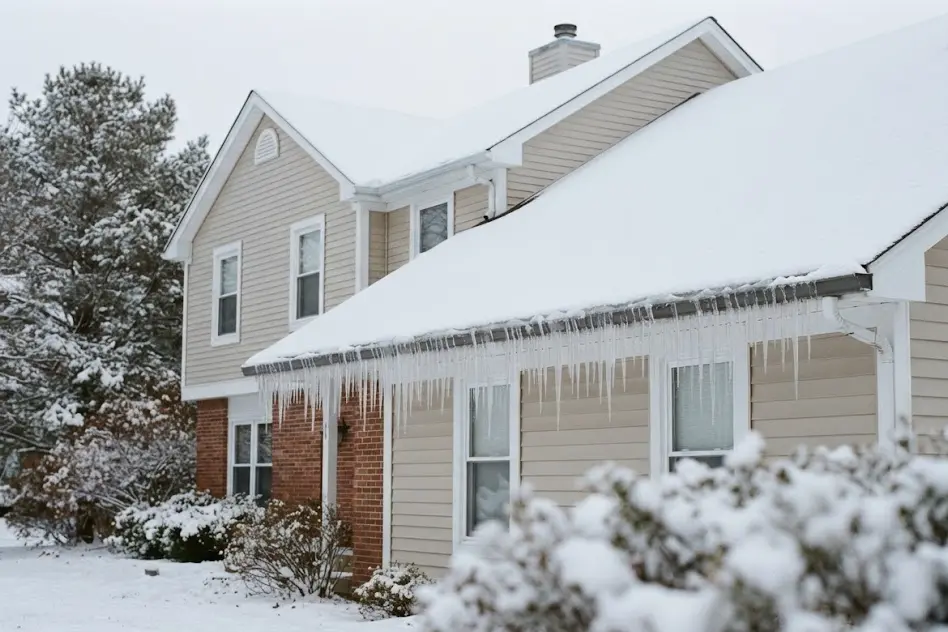
Snow and ice. In cold climates the danger is ice dams: a ridge of ice at the roof edge that stops melting snow from draining. The water that backs up behind it finds cracks and openings in the roof covering and leaks into the attic, walls and ceilings. Ice dams form when upper parts of the roof are above freezing while the edges are below, and the heat that causes it comes mainly from the house (University of Minnesota Extension).
Attic ventilation and insulation
What happens under the roof deck affects the roof itself. The University of Minnesota Extension says ice dams are prevented by controlling heat loss from the home: a continuous air barrier through the ceiling, with no air leaking from the house into the attic, and insulation that meets or exceeds state code. Recessed lights, skylights, complex roof shapes and heating ducts in the attic all raise the risk (University of Minnesota Extension).
Natural attic ventilation is still needed to dry the attic and remove heat buildup in summer. More airflow is not automatically better, though: the same source does not recommend powered attic ventilators as an ice dam fix, because they can create other attic moisture problems and pull the house into negative pressure. An energy professional can run a blower door test and use an infrared camera to find where heat is escaping into the attic (University of Minnesota Extension).
Maintenance that helps a roof reach its full life
Insurers inspect roofs before writing a policy and may charge more or refuse cover based on what they see. The Texas Department of Insurance recommends this checklist (Texas Department of Insurance):
- Remove tree limbs that hang over or near the roof.
- Check for missing or damaged shingles after every storm.
- Check the chimney for loose bricks that could fall on the roof.
- Keep gutters clean so water does not damage the roof.
- Have a roof inspector look at it every few years to catch problems early.
Stay off the roof in winter. Anyone on a snowy or icy roof, or working on it from below, risks injury and can damage the roof and house; that job belongs to professionals (University of Minnesota Extension).
Signs your roof is near the end of its life
- Its age. A roof already past the top of the range for its material in the tables above is living on borrowed time.
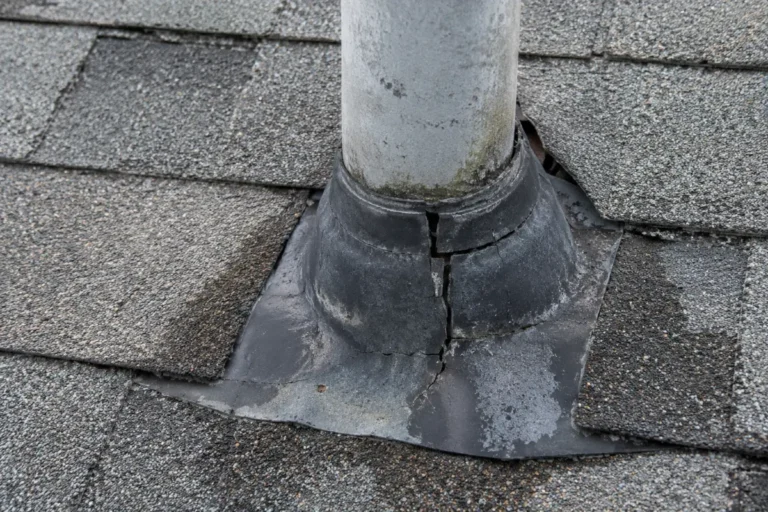
- Missing, damaged or lifted shingles. Shingles that have lost their seal are the main source of wind failure in aging asphalt roofs (IBHS).
- Stains on ceilings or wet insulation, the path water takes once it gets through the roof covering (University of Minnesota Extension).
- Your insurer changes the roof coverage. As roofs age, some companies switch roof coverage to actual cash value, and a roof in poor condition may not be covered at all (Texas Department of Insurance).
Age alone is not always a reason to replace. HomeGuide’s rule of thumb is to consider repairing instead when less than 25% of the roof is damaged, the repair costs less than 30% of a new roof, and the roof is under 20 years old (HomeGuide).
Roof age, insurance and warranties
Homeowners insurance pays for damage from storms, falling trees and similar events. It will not pay for a new roof just because the old one is old or worn out (Texas Department of Insurance). If your policy pays actual cash value on the roof, it pays less as the roof ages, so check what changed each time you renew, and ask your agent whether wind and hail carry a separate deductible.
Some states set rules on roof age. In Florida, an insurer may not refuse to issue or renew a homeowner’s policy solely because of the age of a roof that is less than 15 years old. For a roof of 15 years or more, the insurer must let the homeowner have it inspected, at the homeowner’s expense, before requiring replacement, and may not refuse the policy on roof age alone if the inspector finds at least 5 years of useful life left. The roof’s age counts from the last date 100% of its surface was built or replaced to code (Florida Statutes, s. 627.7011).
A warranty is a separate thing from both the lifespan and your insurance. Get the contractor’s written estimate, contract and warranty before work starts, and ask how long the warranty runs and what it includes (HomeGuide). Keep the paperwork that shows when the roof was finished; in Florida, that date is what sets the roof’s age for insurance.
What a replacement costs, and the cost per year of roof
| Roof type | Installed per sq ft (HomeGuide) | Typical total (HomeGuide) | Typical total (Fixr) |
|---|---|---|---|
| 3-tab asphalt shingles | $3 – $5 | $5,700 – $12,000 | $6,000 – $10,000 (asphalt shingles) |
| Architectural shingles | $4 – $6 | $7,500 – $16,000 | $8,000 – $32,000 |
| Metal | $5 – $16 | $7,500 – $40,000 | $14,000 – $38,000 |
| Tile | $7 – $25 | $10,500 – $62,500 | $14,000 – $28,000 (concrete, clay) |
| Natural slate | $10 – $30 | $22,000 – $70,000 | $20,000 – $60,000 |
| Flat roof | $3 – $11 | $4,000 – $16,800 | $8,000 – $30,000 (rubber) |
The two guides agree closely at the low end but not at the top: for architectural shingles HomeGuide tops out at $16,000 and Fixr at $32,000. Fixr puts the national average at $10,000, with most jobs between $7,500 and $14,000 (Fixr). For a basic asphalt shingle job, Homewyse’s national calculator gives $5.21 to $6.82 per square foot in September 2026, including tear-off and disposal, for a small example roof of 125 square feet; that sits just above HomeGuide’s $3 to $6 range, which is expected because fixed costs weigh more on a small roof.
Across all materials, HomeGuide puts the average roof replacement at $5,700 to $16,000, or $300 to $600 per square installed. Laying new shingles over the old ones saves the tear-off but reduces the new roof’s lifespan, and most cities allow no more than two layers (HomeGuide). For a full breakdown by size, pitch and labor, see our roof replacement cost guide.
Estimate your roof replacement cost
Use the tables above to estimate your cost. The interactive calculator needs JavaScript.
Our estimate: dividing each installed total above by its lifespan range (cheapest roof over the longest life, most expensive over the shortest) gives a rough cost per year of service: 3-tab shingles about $285 to $800 ($5,700 ÷ 20 to $12,000 ÷ 15), architectural shingles $250 to $800 ($7,500 ÷ 30 to $16,000 ÷ 20), metal $94 to $1,333 ($7,500 ÷ 80 to $40,000 ÷ 30), tile $105 to $2,083 ($10,500 ÷ 100 to $62,500 ÷ 30) and slate $110 to $1,400 ($22,000 ÷ 200 to $70,000 ÷ 50). These are our calculations from published ranges, not measured figures, and they ignore repairs, financing and how long you will stay in the house.
A long-lived roof only pays off if you are there to use those years. HomeGuide puts the resale return on a new roof at 60% to 70% for asphalt shingles and up to 85% for metal (HomeGuide).
How to keep the bill down
- In cold climates, fix attic air leaks and heat loss along with the roof; interior repairs made without fixing the heat loss get damaged again (University of Minnesota Extension).
- Repair rather than replace when damage is limited and the roof is still young, using the 25% / 30% / 20-year rule above.
- If you want a cool roof, choose it when the old roof is due, not before (U.S. Department of Energy).
- Ask your insurer whether wind-, hail- or fire-resistant materials earn a discount before choosing one (Texas Department of Insurance).
- Get at least three estimates from licensed roofing contractors and compare them line by line (HomeGuide).
Questions to ask before you sign
- How many years should this material last in our climate, and what could shorten that?
- Will you tear off the old roof or lay over it? How many layers are on it now?
- Does the quote include checking attic ventilation and fixing it if needed?
- How long is the warranty, what does it cover, and who stands behind it: you, the manufacturer, or both?
- Will you give me a document with the completion date for my insurer?
Sources
- Insurance Institute for Business & Home Safety, IBHS Research Reveals Critical Links in Asphalt Shingle Wind Performance After 10 Years of Aging, September 22, 2026.
- University of Minnesota Extension, Dealing with and preventing ice dams, reviewed 2022.
- U.S. Department of Energy, Energy Saver, Cool Roofs. Archived copy of June 18, 2026.
- Texas Department of Insurance, Insurance and your roof: What to know when buying a policy or filing a claim.
- Florida Legislature, 2025 Florida Statutes, s. 627.7011.
- HomeGuide, Roof Replacement Cost, November 2025.
- HomeGuide, Flat Roof Replacement Cost, November 2025.
- Fixr, How Much Does a Roof Replacement Cost?, updated February 4, 2026.
- Homewyse, Cost to Install Asphalt Shingle Roof, September 2026.