$7,500 – $68,000That is the spread three published cost guides give for a metal roof installed in 2026, and the other side of the metal roof vs shingles cost comparison is $5,500 to $16,000 for asphalt shingles. Metal costs more up front on almost every house. Whether it costs less in the long run depends on how long it lasts and how long you stay.
The guides agree on shingles but not on metal, as the first table shows. Below the numbers are broken down by type, compared on an identical roof, and spread over the years each roof is expected to last, with the math shown so you can redo it with your own quotes.
What three cost guides say
| Source | Asphalt shingles | Metal |
|---|---|---|
| HomeGuide (Nov 2025) | $5,700 – $16,000 | $7,500 – $40,000 |
| Forbes Home (Feb 2025) | $5,500 – $12,000 (average $8,500) | $8,800 – $68,000 (average $13,200) |
| This Old House (Sep 2026) | About $14,000 for 2,000 sq ft | About $56,000 for 2,000 sq ft |
On shingles the three guides land close together. On metal they do not: This Old House’s average for a 2,000-square-foot roof, about $28 per square foot, is well above the top of HomeGuide’s range, while Forbes Home’s average of $13,200 sits near the low end of it. Part of the gap is which metals each guide prices: This Old House lists steel at about $20 and copper at about $35 per square foot (This Old House), and Forbes Home’s material prices run from steel at $300 to $1,500 per square up to copper at $1,800 to $3,800 (Forbes Home). Treat any single “average metal roof” figure with caution and compare quotes for the same metal and panel style.
Our estimate: the headline ranges are the lowest low and the highest high across the three guides ($7,500 to $68,000 for metal, $5,500 to $16,000 for shingles). We did not average them; this is a span of published figures, not a measured price.
Installed cost by roof type
| Roof type | Installed, per sq ft | Typical total |
|---|---|---|
| 3-tab asphalt shingles | $3 – $5 | $5,700 – $12,000 |
| Architectural asphalt shingles | $4 – $6 | $7,500 – $16,000 |
| Corrugated / sheet metal (exposed fasteners) | $5 – $12 | $6,000 – $22,000 |
| Metal shingles | $6 – $14 | $9,000 – $35,000 |
| Stone-coated steel | $7 – $13 | $12,200 – $25,900 |
| Standing seam metal (hidden fasteners) | $9 – $16 | $13,500 – $40,000 |
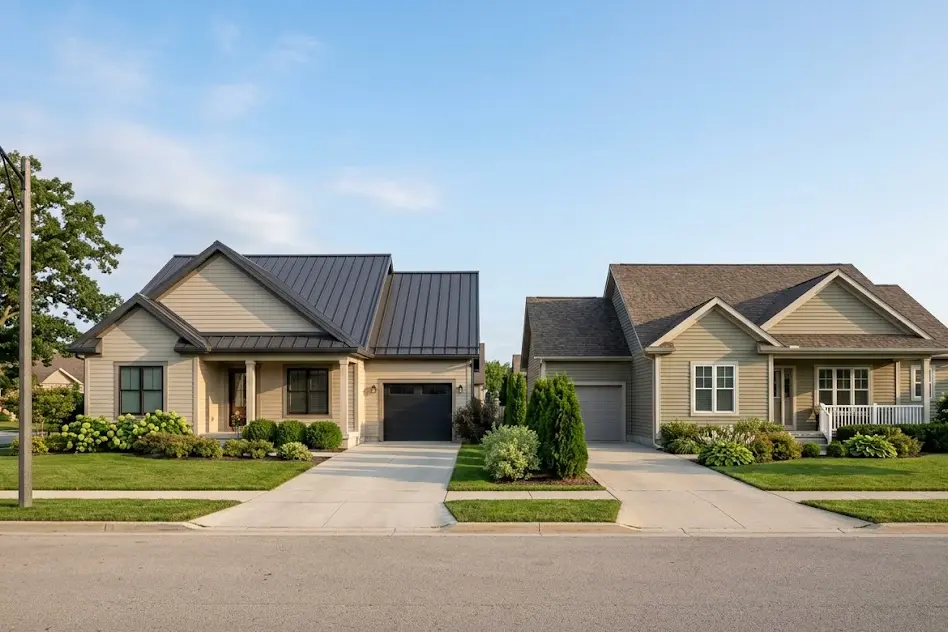
The ranges overlap at the bottom: a basic corrugated metal roof can price close to a premium shingle job. The real gap is between architectural shingles, which most houses get today, and standing seam, which is what most people picture when they say “metal roof”. For a full breakdown of the shingle side of the bill, see our guide to roof replacement cost.
Estimate your roof cost
Use the tables above to estimate your cost. The interactive calculator needs JavaScript.
The same roof priced both ways
Cost guides quote each material over a spread of house sizes, so their ranges are not a clean head-to-head. The 2025 Cost vs Value report is. It prices one identical job twice: a 3,000-square-foot rectangular hip roof, torn off to the bare sheathing, with two skylights to flash and a vented ridge. With 30 squares of fiberglass asphalt shingles and new underlayment, the national average was $31,871. With prefinished standing-seam metal, an ice-barrier membrane at the edges and premium synthetic underlayment, it was $51,865 (Journal of Light Construction).
Our estimate: on that identical roof, metal costs $19,994 more, or about 63% more than shingles ($51,865 minus $31,871, divided by $31,871). Per square foot of roof, that works out to roughly $10.60 for shingles and $17.30 for metal. This is our arithmetic on the report’s averages, not a measured figure. Both are above the ranges in the first table because the report’s project is large and includes skylight flashing and ridge work.
Standing seam or exposed fastener?
| Metal roof style | Installed, per square (100 sq ft) | How it is attached |
|---|---|---|
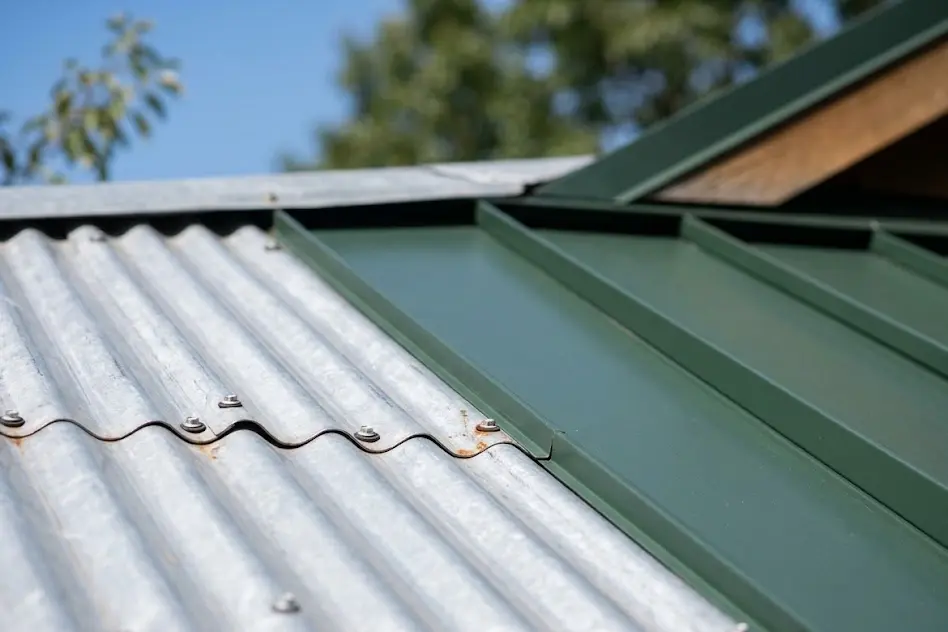
| Exposed fastener (corrugated or ribbed sheet) | $500 – $1,200 | Visible screws or bolts through the panels |
| Concealed fastener (standing seam) | $900 – $1,600 | Fasteners hidden under the panels |
Exposed fastener panels are the cheapest way to get a metal roof, but every screw is a hole through the roof that sits out in the weather. HomeGuide notes that these roofs wear faster and need more maintenance, and that expansion and contraction of the metal can let water in around the fasteners. Standing seam hides the fasteners under the seams, which makes a more watertight surface and a longer-lasting roof, and it costs more to buy and to install (HomeGuide).
Thickness matters too. Metal is sold by gauge, and a lower gauge number means thicker metal. Most homes use 24- or 26-gauge panels: 26-gauge is suited to mild and moderate climates, while 24-gauge, at $3 to $7 per square foot for the material, is the one listed for areas with severe weather (HomeGuide).
Where the price gap comes from
| Line (per square, 100 sq ft) | Asphalt shingles | Metal |
|---|---|---|
| Materials | $80 – $250 | $100 – $800 |
| Installation labor | $150 – $300 | $400 – $800 |
| Removing the old roof | $100 – $300 | $100 – $300 |
Labor is where metal pulls away: the installation line for metal starts where the shingle line ends. Within metal, standing seam takes more time and expertise than corrugated panels (HomeGuide). A shingle roof is usually done in 1 to 3 days and a metal roof in 1 to 5 (HomeGuide). For comparison, the median roofer in the United States earned $26.65 an hour in 2025, according to the Bureau of Labor Statistics, which publishes one figure for all roofers, whatever the material.
Tear-off costs the same for both. A metal roof can sometimes go on over existing shingles, which saves the removal and disposal, but HomeGuide warns that it may add too much weight or leave damage underneath that can no longer be fixed. Replacing rotten decking, if the crew finds any, adds $2 to $5 per square foot whichever material goes on top (HomeGuide).
How long each roof lasts, and the cost per year
| Roof type | HomeGuide | Forbes Home |
|---|---|---|
| 3-tab asphalt shingles | 15 – 20 years | 15 – 30 years (asphalt) |
| Architectural shingles | 20 – 30 years | 15 – 30 years (asphalt) |
| Metal | 30 – 80+ years | 40 – 70 (steel), 50 – 80 (aluminum), 100+ (copper, zinc) |
The metal range is wide for a reason. How long it lasts depends on the metal, the type of roof and the climate: in high-humidity areas, HomeGuide puts corrugated metal at 30 to 50 years, with standing seam lasting longer. Correct installation and upkeep are part of that estimate (HomeGuide).
Our estimate: on the identical Cost vs Value roof, shingles at $31,871 lasting 20 to 30 years (HomeGuide’s range for architectural shingles) cost about $1,060 to $1,590 per year of service. For the $51,865 metal roof to cost the same per year, it has to last roughly 33 to 49 years ($51,865 divided by each yearly figure). Metal’s published range of 30 to 80+ years covers that, but not by a wide margin at the bottom. This is our calculation, not a measured figure. It uses today’s prices for both roofs and leaves out inflation, the cost of money, repairs and energy use.
The per-year view only pays off for whoever owns the house for those decades. If you expect to sell long before a shingle roof would wear out, most of metal’s extra lifespan goes to the next owner, and the resale numbers below show how little of it you get back.
What each roof returns at resale
| Project | Job cost | Resale value added | Cost recouped |
|---|---|---|---|
| Roof replacement, asphalt shingles | $31,871 | $21,501 | 68% |
| Roof replacement, metal | $51,865 | $25,972 | 50% |
Our estimate: the metal roof adds $4,471 more resale value than the shingle roof ($25,972 minus $21,501) for $19,994 more cost, so about 22 cents of every extra dollar comes back at sale. This is our arithmetic on the report’s national averages, not a measured figure, and a local market can differ.
Energy: a cool roof is about color, not metal
The Department of Energy’s guidance is that what makes a roof “cool” is how much sunlight its outer surface reflects, and that there are cool options for nearly all types of roof covering, asphalt shingles and metal included. On a sunny summer afternoon a conventional roof can reach 150°F or more, while a reflective roof under the same conditions could stay more than 50°F cooler. White products reflect about 60 to 90% of sunlight; “cool colored” darker products with special pigments reflect about 30 to 60% (U.S. Department of Energy).
The same page says cool roofing products usually cost no more than comparable conventional ones, which makes a replacement the cheapest moment to choose one. It also warns that savings are largest in hot climates, and that in cold climates a cool roof can raise heating costs by more than it saves on cooling. How much you save depends on your climate, the insulation under the roof and your heating and cooling equipment, so the DOE gives no single figure, and neither do we.
You will not find an ENERGY STAR label on either material any more. The EPA ended the ENERGY STAR specification for roof products effective June 1, 2022, after which brand owners had to stop using the mark on roofing (U.S. EPA). A quote that promises ENERGY STAR savings on a new roof is using an outdated claim.
Hail, insurance discounts and fire
Impact resistance is a rating on the product, not a property of the material. The Texas Department of Insurance explains that shingles, tiles, shakes and formed metal panels can all be tested for impact resistance and classified as Class 1, 2, 3 or 4, with Class 4 earning the highest premium credit. The size of the discount is set by each insurance company, as are the tests, labels and paperwork it accepts (Texas Department of Insurance). Because the credit follows the class, a Class 4 shingle and a Class 4 metal panel are on equal footing, and a metal roof with no impact rating has nothing to claim.
Metal is not immune to hail either: HomeGuide lists denting and rust in thinner metals among its drawbacks (HomeGuide). If you live where hail is common, call your insurer before choosing a product and ask which ratings and documents it needs.
On fire, the two are closer than many people assume. CAL FIRE’s home-hardening advice singles out wood shingle roofs as high risk and recommends composite, asphalt, metal, clay or tile roofing to resist fire, along with sealing gaps where embers can blow in and clearing debris off the roof (CAL FIRE).
Upkeep and repairs
| Job | HomeGuide | Forbes Home (average) |
|---|---|---|
| Asphalt shingle roof repair | $350 – $1,500 | $710 |
| Metal roof repair | $300 – $1,500 | $1,300 |
| Coating a metal roof | $0.50 – $4.00 per sq ft | not listed |
| Painting a metal roof | $1.20 – $2.70 per sq ft | not listed |
HomeGuide’s repair ranges are about the same for either roof, while Forbes Home’s averages put a metal repair at nearly twice a shingle one. The difference is in matching: metal is difficult to color-match for repairs, so a patched panel may stand out (HomeGuide). A metal roof can also be recoated or repainted instead of replaced when its finish wears, at the per-square-foot prices above.
No federal tax credit for either roof in 2026
The Energy Efficient Home Improvement Credit covered improvements placed in service through December 31, 2025, and the building envelope items it listed were exterior doors, windows and skylights, and insulation and air sealing, not roofing (IRS). Treat any quote that counts a federal credit toward a new roof with suspicion, and ask your utility or state separately about local programs.
How to keep the bill down
- Decide on the horizon first. If you plan to sell long before a shingle roof would need replacing, metal’s longer life mostly benefits the next owner.
- If you want metal on a budget, price exposed fastener panels and standing seam side by side, and weigh the lower price against more fasteners to maintain.
- Ask for the same gauge, underlayment and trim in every metal quote. Otherwise you are comparing different roofs.
- Choose a cool color at replacement time if you live in a hot climate, when it usually costs no more.
- Check with your insurer which impact rating earns a discount before you buy, not after.
Questions to ask before you sign
- Is this standing seam or exposed fastener, and what gauge is the metal?
- Does the price include tearing off the old roof, or are you installing over it? If over it, has anyone checked the decking and the weight?
- What impact class is the product rated, and will you provide the paperwork my insurer asks for?
- What underlayment and ice barrier are included, and what is the price per sheet if decking has to be replaced?
- What does your workmanship warranty cover, separately from the manufacturer’s warranty on the panels or shingles, and does it transfer if I sell?
Sources
- HomeGuide, Metal Roof Cost, November 21, 2025.
- HomeGuide, Roof Replacement Cost, November 7, 2025.
- Forbes Home, How Much Do Metal Roof Vs. Shingles Cost?, updated February 7, 2025.
- This Old House, Shingles vs. Metal Roof Cost (2026 Guide), updated September 9, 2026.
- Journal of Light Construction, Cost vs Value Report 2025, national averages, with the project descriptions for asphalt shingle and metal roofing replacement.
- U.S. Bureau of Labor Statistics, Occupational Outlook Handbook: Roofers, 2025 median pay.
- U.S. Department of Energy, Energy Saver, Cool Roofs. The page is no longer on energy.gov; the link is an archived copy of June 18, 2026.
- U.S. Environmental Protection Agency, ENERGY STAR Roof Products Sunset, letter of May 28, 2019.
- Texas Department of Insurance, Products qualifying for impact-resistant roofing credits, as of February 24, 2023.
- CAL FIRE, Ready for Wildfire, Hardening Your Home.
- Internal Revenue Service, Energy Efficient Home Improvement Credit.