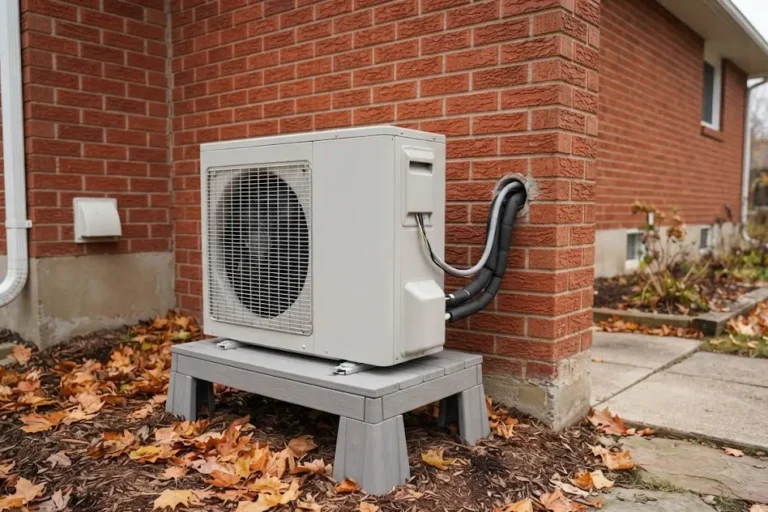
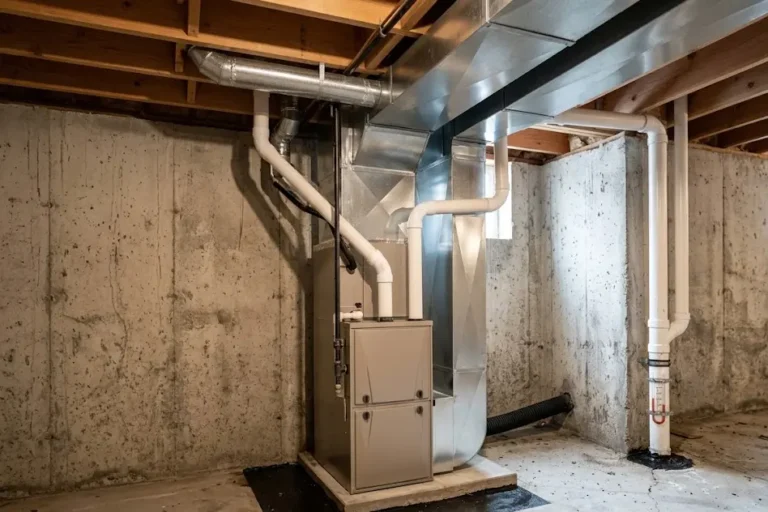
$5,000 – $8,300That is the typical AC unit replacement cost in 2026 for a standard-efficiency central air conditioner in a 2,000 sq ft home, equipment and installation included. Mid-range two-stage systems run $8,300 to $12,500, and high-end variable-speed systems $12,500 to $14,000 or more. Swapping only the outdoor condenser costs $1,200 to $4,200, when the indoor side allows it. Other 2026 guides land close by: ConsumerAffairs puts a central AC replacement at $3,000 to $8,000, and This Old House at $6,345 to $10,575.
The price of a new air conditioner depends mostly on three things: its size in tons, its efficiency rating, and whether you replace the whole split system or just the outdoor half. Federal efficiency rules and the refrigerant transition now shape that last choice more than they used to. The figures below come from published cost data and from the federal rules themselves, so you can check a quote line by line.
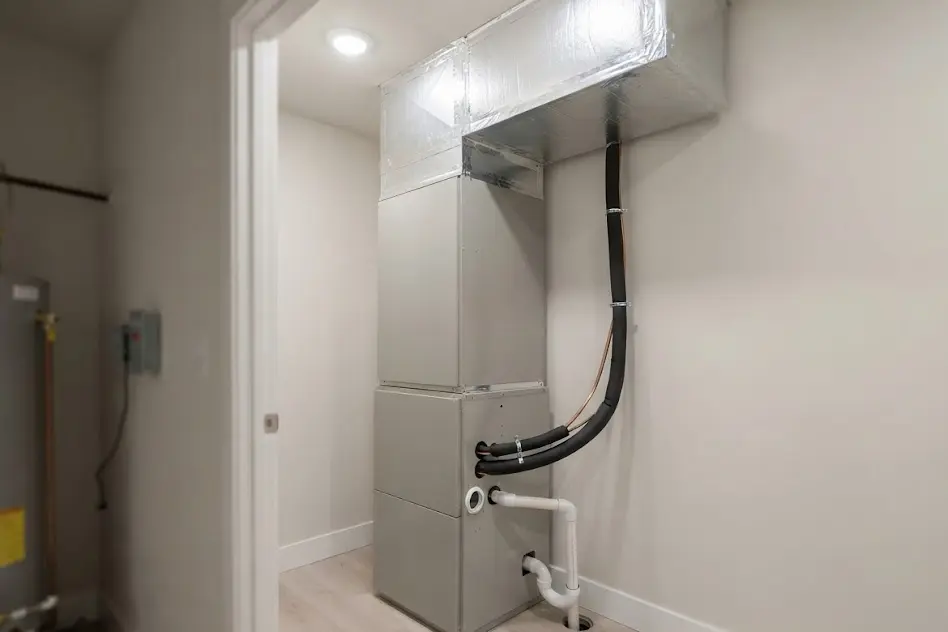
AC replacement cost by efficiency level
| Level | Compressor | HomeGuide | ConsumerAffairs |
|---|---|---|---|
| Entry-level | Single-stage | $5,000 – $8,300 | $2,500 – $6,500 |
| Mid-range | Two-stage | $8,300 – $12,500 | $6,500 – $9,500 |
| High-end | Variable-speed | $12,500 – $14,000+ | $9,500 – $12,500+ |
The two guides agree on the order of the tiers but not on the level: ConsumerAffairs runs roughly $1,000 to $3,000 lower in each tier. This Old House, whose figures are based on Homewyse estimates and a 2026 survey of 1,000 homeowners, sits at the upper end of HomeGuide’s entry-level range and into its mid-range (This Old House). Treat any single number as a midpoint, not a price.
A single-stage compressor runs at full capacity whenever it is on. A two-stage unit has a lower setting for mild days, and a variable-speed unit adjusts its output continuously, which costs the most but gives the best humidity control and efficiency (HomeGuide). The Department of Energy describes variable-capacity systems the same way: they run often but at efficient low speeds, with less noise and better dehumidification in spring and fall (U.S. Department of Energy).
AC unit replacement cost by tonnage
| Size | Unit only (HomeGuide) | Installed (HomeGuide) | Installed (This Old House) |
|---|---|---|---|
| 1.5 tons (18,000 BTU) | $2,200 – $3,500 | $4,700 – $6,500 | $4,853 – $18,657 |
| 2 tons (24,000 BTU) | $2,500 – $3,800 | $5,000 – $6,800 | $4,940 – $18,854 |
| 2.5 tons (30,000 BTU) | $2,900 – $4,200 | $5,400 – $7,200 | $4,940 – $19,051 |
| 3 tons (36,000 BTU) | $3,300 – $4,800 | $5,800 – $7,800 | $5,026 – $19,051 |
| 3.5 tons (42,000 BTU) | $3,700 – $5,300 | $6,200 – $8,300 | $5,026 – $19,249 |
| 4 tons (48,000 BTU) | $4,000 – $5,800 | $6,500 – $8,800 | $5,762 – $37,017 |
| 5 tons (60,000 BTU) | $4,500 – $6,500 | $7,000 – $9,500+ | $5,892 – $39,286 |
The low ends of the two sources are close, but This Old House’s upper ends are two to four times higher, because its ranges run up to premium brands and full-system work. Its averages are $8,448 to $8,723 for 1.5 to 3.5 tons, $13,136 for 4 tons and $16,312 for 5 tons (This Old House). The sources disagree a lot at the top of the market, so get quotes with the same scope before comparing.
Estimate your AC replacement cost
Use the tables above to estimate your cost. The interactive calculator needs JavaScript.
One ton of cooling equals 12,000 BTU and cools roughly 500 to 600 square feet, but layout, ceiling height, insulation, climate and sun exposure all change the answer (HomeGuide). The Department of Energy asks contractors to size equipment with an ACCA Manual J load calculation and a Manual S equipment selection, and warns that an oversized unit will not remove enough humidity while an undersized one will not keep up on the hottest days (U.S. Department of Energy). Replacing “same size as before” is only safe if the old unit was sized correctly and the house has not changed.
SEER2 ratings and the regional efficiency standards
Central air conditioners manufactured since January 1, 2023 are rated in SEER2 rather than the older SEER. The federal minimum for a split-system air conditioner manufactured on or after that date is 13.4 SEER2 anywhere in the country. On top of that, split and packaged air conditioners installed in two regions must meet stricter levels (10 CFR 430.32):
- Southeast (Alabama, Arkansas, Delaware, Florida, Georgia, Hawaii, Kentucky, Louisiana, Maryland, Mississippi, North Carolina, Oklahoma, South Carolina, Tennessee, Texas, Virginia, the District of Columbia, Puerto Rico and the U.S. territories): split air conditioners need 14.3 SEER2, or 13.8 SEER2 at 45,000 Btu/h and above.
- Southwest (Arizona, California, Nevada, New Mexico): the same SEER2 levels, plus a minimum EER2, a measure of efficiency at a 95 °F outdoor temperature. Packaged air conditioners there need at least 10.6 EER2.
- North (every other state): the national 13.4 SEER2 minimum applies.
The rule is enforced at installation: an outdoor unit whose certified combination is rated below its region’s standard cannot be installed in that region (10 CFR 430.32). In a southern state, that means a unit that is legal in a northern state may not be legal for your house.
| Old SEER | SEER2 | Installed cost |
|---|---|---|
| 13 – 14 | Up to 13.4 | $5,300 – $7,900 |
| 15 – 16 | 14.0 – 14.7 | $6,700 – $9,300 |
| 17 – 18 | 15.0 – 17.2 | $7,500 – $10,600 |
| 19 – 21 | 16.5 – 18.5 | $9,100 – $12,200 |
| 22 – 26 | Up to 25.8 | $11,400 – $17,300+ |
The Department of Energy notes that newer systems reach SEER ratings as high as 26, and that an air conditioner in an average-sized home can use more than 2,000 kilowatt-hours of electricity a year (U.S. Department of Energy). The more hours your system runs, the faster a higher rating pays back its extra price.
The refrigerant transition and what it means for your quote
The American Innovation and Manufacturing (AIM) Act directs the EPA to phase down U.S. production and consumption of hydrofluorocarbons (HFCs), the family of refrigerants that includes R-410A, by 85 percent by 2036 (EPA). Under the same law, the EPA caps the global warming potential (GWP) of refrigerants in new residential air conditioning and heat pump systems at 700, starting with a manufacture and import compliance date of January 1, 2025 (EPA).
Two details in the EPA rules matter for a homeowner in 2026:
- There is no installation deadline for new systems whose specified components were all manufactured or imported before January 1, 2025. A contractor can still legally install one from existing stock (EPA).
- The restrictions apply to new field-assembled systems. Components used to repair existing systems are not subject to them (EPA).
So a 2026 quote may be for a system built around one of the newer lower-GWP refrigerants, or for an older R-410A system from pre-2025 stock. Both can be legal. Ask which refrigerant each quote uses, so you compare like with like and know what future service will involve.
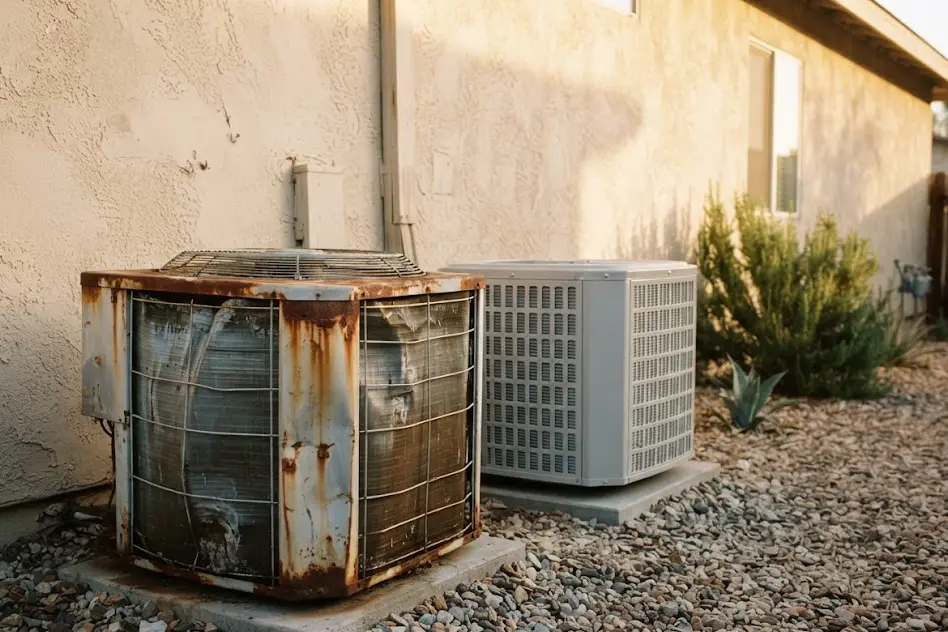
Condenser only or the full system?
| Size | Condenser unit only | Condenser replaced |
|---|---|---|
| 1.5 tons | $850 – $1,100 | $1,200 – $2,300 |
| 2 tons | $950 – $1,300 | $1,300 – $2,500 |
| 2.5 tons | $1,000 – $1,700 | $1,300 – $2,900 |
| 3 tons | $1,100 – $1,900 | $1,400 – $3,100 |
| 3.5 tons | $1,200 – $2,200 | $1,500 – $3,400 |
| 4 tons | $1,300 – $2,500 | $1,600 – $3,700 |
| 5 tons | $1,600 – $3,000 | $1,900 – $4,200 |
Replacing only the outdoor condenser is much cheaper, and labor alone runs $300 to $1,200. Under a manufacturer’s parts warranty, you typically pay only that labor (HomeGuide). The catch is compatibility. The indoor coil and air handler must match the new condenser in size and rating; mismatched halves lead to lower efficiency and early failure, and replacing only one half may void the warranty (HomeGuide). The federal rule adds a second test: the outdoor unit has to meet your region’s standard as a certified combination (10 CFR 430.32).
For a condenser more than 10 years old, replacing the whole system is typically needed so the indoor and outdoor components stay compatible (HomeGuide). Replacing the air handler costs $1,500 to $3,400, and an evaporator coil $2,500 to $4,500 or more outside warranty (HomeGuide).
Our estimate: for a 3-ton system, adding HomeGuide’s condenser replacement range ($1,400 – $3,100) to its out-of-warranty evaporator coil range ($2,500 – $4,500) gives $3,900 – $7,600, against $5,800 – $7,800 for a complete 3-ton replacement. Once both halves need work, the saving from piecemeal replacement largely disappears. This is our own sum of published ranges, not a measured figure.
Repair or replace?
A typical AC repair costs $150 to $650. HomeGuide lists these signs that replacement makes more sense: the system is more than 10 to 12 years old, a repair would cost at least half the price of a new unit, it breaks down often, cooling is uneven, or energy bills keep climbing (HomeGuide). A new system lasts 15 to 20 years on average (HomeGuide).
| Repair | Typical cost |
|---|---|
| Capacitor | $100 – $250 |
| Condenser fan motor | $200 – $700 |
| Control board | $150 – $700 |
| Condenser coil leak | $200 – $1,500 |
| Compressor | $600 – $2,500 |
Our estimate: applying the 50 percent rule to HomeGuide’s installed range for a 3-ton system ($5,800 – $7,800) puts the break-even repair at about $2,900 – $3,900. A capacitor or fan motor is well below that; a compressor at the top of its range approaches it on an older unit. This is our own calculation, not a measured figure.
Extras that change the total
Most replacements reuse the existing ducts, but sealing and minor repairs cost $300 to $1,500, and full ductwork replacement $1,400 to $5,600 or more. A permit for an AC replacement costs $100 to $250 by HomeGuide’s figures; ConsumerAffairs puts permits at $250 to $400 and new ductwork at $500 to $2,000 (ConsumerAffairs). Prices also rise from May through August, when installers are busiest, and fall in late fall and early spring (HomeGuide). Technicians bill $75 to $150 an hour (HomeGuide); for context, the median annual wage for heating, air conditioning and refrigeration mechanics and installers was $61,010 in May 2025 (U.S. Bureau of Labor Statistics).
The federal Energy Efficient Home Improvement Credit, which covered 30 percent of qualifying expenses, applies only to improvements made through December 31, 2025 (IRS). A unit installed in 2026 does not qualify, so do not let a quote count on it.
How to keep the bill down
- Replace outside the summer peak if your system allows it; late fall and early spring are the off-season.
- Insist on a Manual J load calculation instead of copying the old unit’s size.
- Buy the efficiency your climate and hours of use justify; the step from entry-level to high-end adds several thousand dollars.
- Compare quotes on the same size, efficiency and refrigerant, and check whether removal of the old unit and the permit are included.
- If only the condenser failed and the indoor side is young and compatible, ask for a condenser-only price alongside the full-system quote.
Questions to ask before you sign
- Will you do a Manual J load calculation to size the system?
- What is the SEER2 rating of the matched system, and does it meet my region’s standard?
- Which refrigerant does it use?
- Are the indoor coil and air handler being replaced, and if not, is the combination certified?
- Does the quote include the permit, removal of the old unit and any duct sealing?
- What warranty covers the equipment, and what covers your labor?
Sources
- Electronic Code of Federal Regulations, 10 CFR 430.32, Energy and water conservation standards, up to date as of September 24, 2026.
- U.S. Environmental Protection Agency, Technology Transitions HFC Restrictions by Sector, updated August 28, 2026, and HFC Allowance Allocation and Reporting, updated September 11, 2026.
- U.S. Department of Energy, Energy Saver, Central Air Conditioning. The page has been removed from energy.gov; the link is an archived copy of June 14, 2026.
- Internal Revenue Service, Energy Efficient Home Improvement Credit.
- U.S. Bureau of Labor Statistics, Occupational Outlook Handbook: Heating, Air Conditioning, and Refrigeration Mechanics and Installers, pay data for May 2025.
- HomeGuide, AC Replacement Cost, July 2025, and AC Condenser Replacement Cost, August 2025.
- ConsumerAffairs, Cost to Replace Air Conditioner, updated January 4, 2026.
- This Old House, How Much Does an Air Conditioner Cost?, updated September 11, 2026 (figures based on Homewyse estimates and a 2026 homeowner survey).