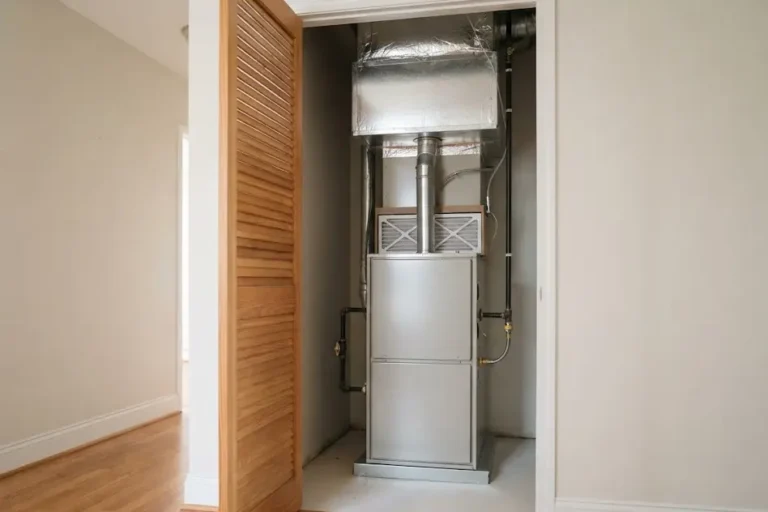
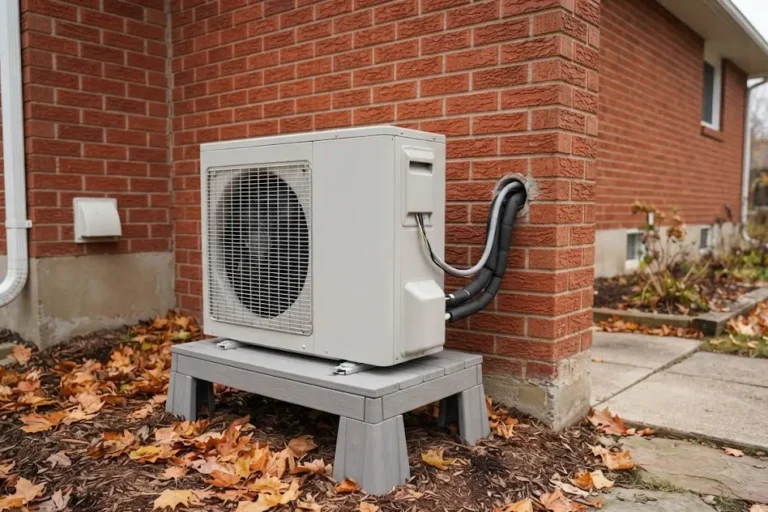
$5,000 – $15,000That is the typical HVAC replacement cost in 2026 for a new furnace and central air conditioner, installed, when the existing ductwork can be reused. Three published cost guides put the typical range at $5,000 to $11,000, $5,000 to $12,500 and $8,000 to $15,000, with averages of about $8,000 and $11,500. If the ducts have to be replaced as well, expect $7,000 to $16,000, and $9,500 to $18,500 with add-ons such as zoning or a whole-house humidifier.
Our estimate: the $5,000 – $15,000 headline is simply the lowest low and the highest high of the three typical ranges in the table below (HomeGuide, This Old House and ConsumerAffairs). It is not a measured figure, and the sources disagree noticeably: ConsumerAffairs starts $3,000 higher than the other two.
Replacing heating and cooling is one of the largest bills a homeowner faces, and the price swings widely with the size of the house, the type of system, its efficiency rating and the state of the ducts. The tables below break the cost down by each of those, then cover the rules that changed recently: refrigerants, federal minimum efficiency, and the end of the federal tax credit.
Average HVAC replacement cost
| Project | HomeGuide | This Old House | ConsumerAffairs |
|---|---|---|---|
| Furnace + AC, existing ducts | $5,000 – $11,000 | $5,000 – $12,500 | $8,000 – $15,000 |
| Average | $8,000 | — | $11,500 |
| Replacement with new ductwork | $7,000 – $16,000 | — | — |
| With ductwork and add-ons | $9,500 – $18,500 | — | — |
| Larger homes, premium efficiency | up to $18,500 | over $22,000 | — |
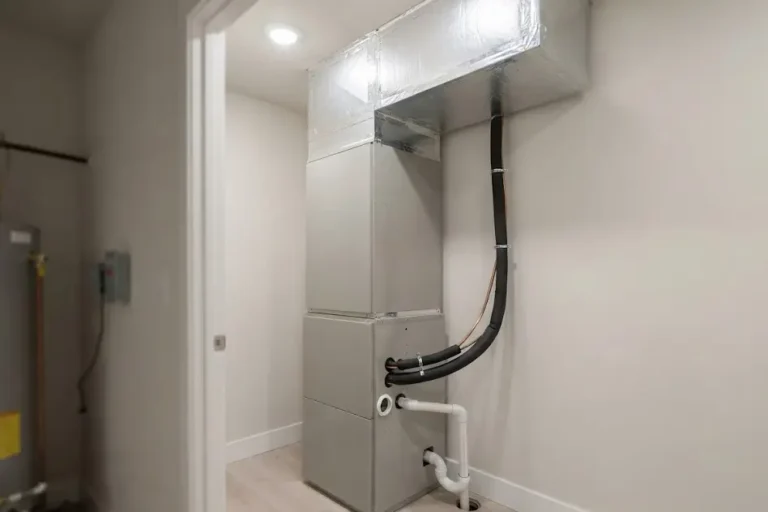
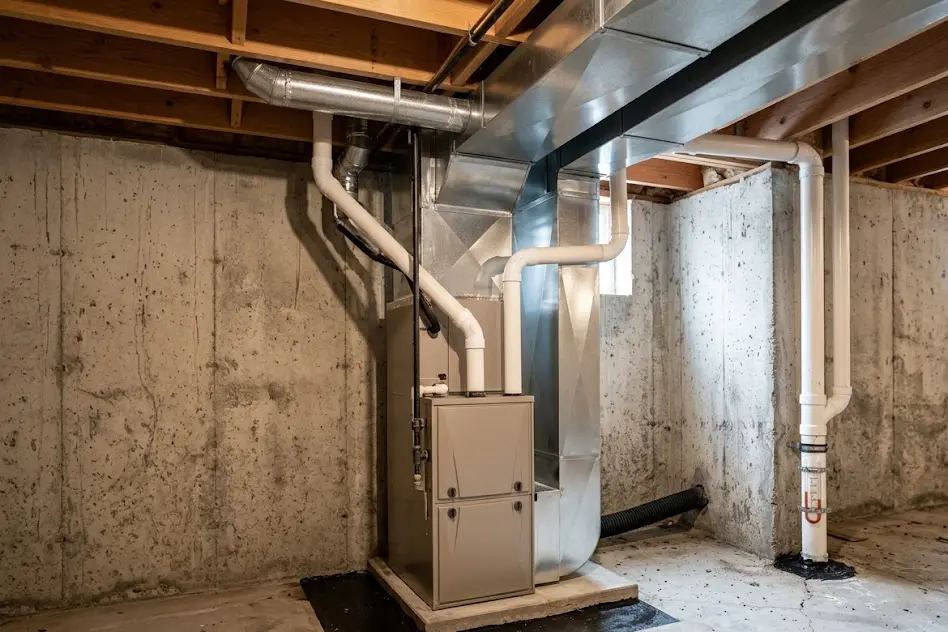
ConsumerAffairs adds that ductwork repairs can add about 10% to the total and that installing new ductwork can double the replacement cost (ConsumerAffairs). Of HomeGuide’s $5,000 to $11,000 for a change-out, the equipment accounts for $4,000 to $8,000 and installation labor for $1,000 to $3,000. A change-out typically takes one day; a job with new ductwork takes three to five days, and one with add-ons four to seven (HomeGuide).
Cost by type of system
| Equipment | HomeGuide | This Old House | ConsumerAffairs |
|---|---|---|---|
| Central air conditioner | $2,500 – $7,500 | $4,000 – $8,000 | $4,000 – $7,500 |
| Furnace | $2,000 – $5,400 | $2,000 – $10,000 | $4,000 – $7,500 |
| Air-source heat pump | $3,800 – $8,200 | $4,500 – $8,000 | $8,000 – $16,000 |
| Ductless mini-split | $3,000 – $10,000 | $1,300 – $8,000 | $3,000 – $10,000 per zone |
| Boiler | $2,200 – $10,000 | — | $4,000 – $7,500 (boiler or furnace) |
| Hybrid (heat pump + furnace) | — | — | $10,000 – $18,000 |
| Geothermal heat pump | $15,000 – $35,000 | $6,000 – $20,000 | $20,000 – $40,000 |
Fuel changes the furnace price: replacing a gas furnace runs $3,800 to $12,000, an electric furnace $1,900 to $5,600, and an oil furnace $2,500 to $6,000 (HomeGuide).
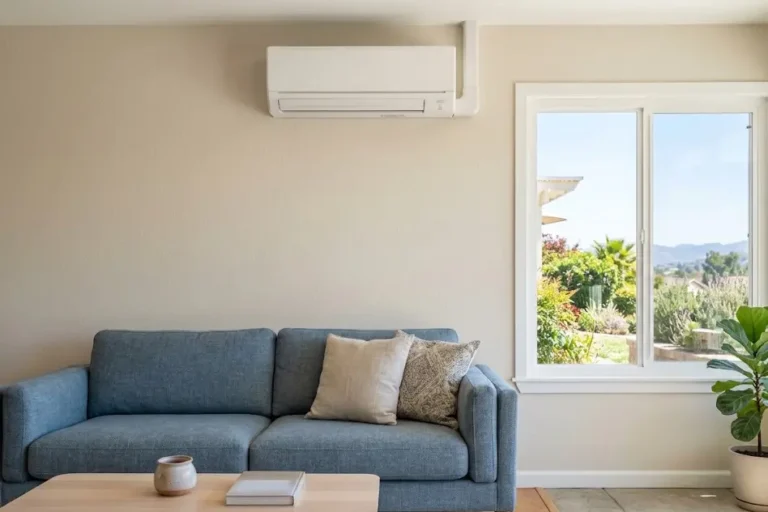
A heat pump heats and cools with one outdoor unit. According to ENERGY STAR, a ducted air-source heat pump can connect to the forced-air ductwork most American homes already have, and in most climate zones it can go in as a drop-in replacement when either the central AC or the furnace needs replacing. If the furnace is fairly new and only the air conditioner has failed, ENERGY STAR suggests considering a heat pump in its place, which creates a dual-fuel system for a modest extra cost over an AC.
Estimate your HVAC replacement cost
Use the tables above to estimate your cost. The interactive calculator needs JavaScript.
Our estimate: each system range in the calculator runs from the lowest low to the highest high the three guides give for that system in the table above, and the extras are HomeGuide’s ranges from the extras table further down. The result is a rough budget, not a quote.
Cost by home size and tonnage
| House size | Furnace + AC installed |
|---|---|
| 1,000 sq ft | $3,000 – $6,000 |
| 1,200 sq ft | $3,600 – $7,200 |
| 1,600 sq ft | $4,800 – $9,600 |
| 2,000 sq ft | $6,000 – $12,000 |
| 2,500 sq ft | $7,500 – $15,000 |
| 3,000 sq ft | $9,000 – $18,000 |
| AC size | BTU | Unit only | Installed |
|---|---|---|---|
| 1.5 tons | 18,000 | $1,000 – $3,800 | $2,000 – $5,000 |
| 2 tons | 24,000 | $1,200 – $4,000 | $2,500 – $5,500 |
| 2.5 tons | 30,000 | $1,500 – $4,500 | $2,700 – $6,000 |
| 3 tons | 36,000 | $1,700 – $5,000 | $3,000 – $6,500 |
| 3.5 tons | 42,000 | $1,800 – $5,200 | $3,100 – $7,000 |
| 4 tons | 48,000 | $2,000 – $5,500 | $3,500 – $7,500 |
| 5 tons | 60,000 | $2,500 – $6,000 | $4,000 – $8,000 |
Size should come from a load calculation, not a rule of thumb. ENERGY STAR says your contractor should verify the right size with a “Manual J” calculation, and that equipment that is either too large or too small will struggle to keep the home comfortable (ENERGY STAR).
Cost by efficiency rating
| Efficiency | AC unit price | Class |
|---|---|---|
| 13 – 14 SEER | $1,000 – $4,200 | Standard |
| 15 – 16 SEER | $1,500 – $5,700 | High |
| 17 – 18 SEER | $1,800 – $6,100 | High |
| 19 – 21 SEER | $2,500 – $7,500 | Very high |
| 22 – 26 SEER | $3,700 – $8,500 | Maximum |
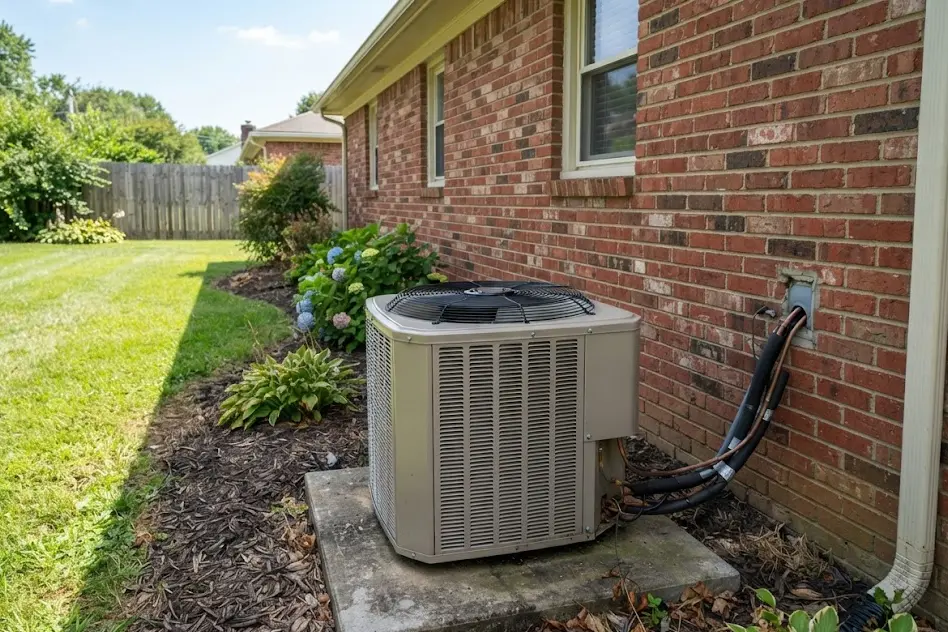
Cooling efficiency is rated in SEER2 (the current test standard), heat pump heating in HSPF2, and furnaces in AFUE, the share of fuel turned into heat. The federal minimums below come from the Department of Energy’s standards in 10 CFR 430.32:
| Equipment | Federal minimum |
|---|---|
| Split central AC, North | 13.4 SEER2 |
| Split central AC, Southeast and Southwest | 14.3 SEER2 (13.8 at 45,000 Btu/h and up) |
| Split heat pump | 14.3 SEER2, 7.5 HSPF2 |
| Packaged heat pump | 13.4 SEER2, 6.7 HSPF2 |
| Packaged AC | 13.4 SEER2 |
| Non-weatherized gas furnace | 80% AFUE; 95% for units made on or after December 18, 2028 |
The Southeast standard covers Alabama, Arkansas, Delaware, Florida, Georgia, Hawaii, Kentucky, Louisiana, Maryland, Mississippi, North Carolina, Oklahoma, South Carolina, Tennessee, Texas, Virginia, the District of Columbia, Puerto Rico and the U.S. territories. The Southwest covers Arizona, California, Nevada and New Mexico, where air conditioners must also meet an EER2 minimum. An outdoor unit rated below its region’s standard cannot be installed there (10 CFR 430.32).
Is higher efficiency worth it? ENERGY STAR says certified heat pumps and air conditioners, installed correctly, can save up to 20 percent on heating and cooling costs, and that an ENERGY STAR furnace is 15 percent more efficient than a conventional one (ENERGY STAR). It also warns that improper installation can cut system efficiency by up to 30 percent (ENERGY STAR), so the quality of the install matters as much as the rating on the unit.
Ductwork, removal, permits and other extras
| Item | Typical cost |
|---|---|
| Ductwork replacement | $1,400 – $5,600 |
| New ductwork | $2,400 – $6,600 |
| Removing the old equipment | $100 – $200 |
| Permit, replacement | $100 – $250 |
| Permit, new install with ductwork | $250 – $1,500 |
| Thermostat | $140 – $350 |
| Zoning system | $2,000 – $6,500 |
| Whole-house humidifier | $400 – $1,200 |
| Whole-house dehumidifier | $1,500 – $3,500 |
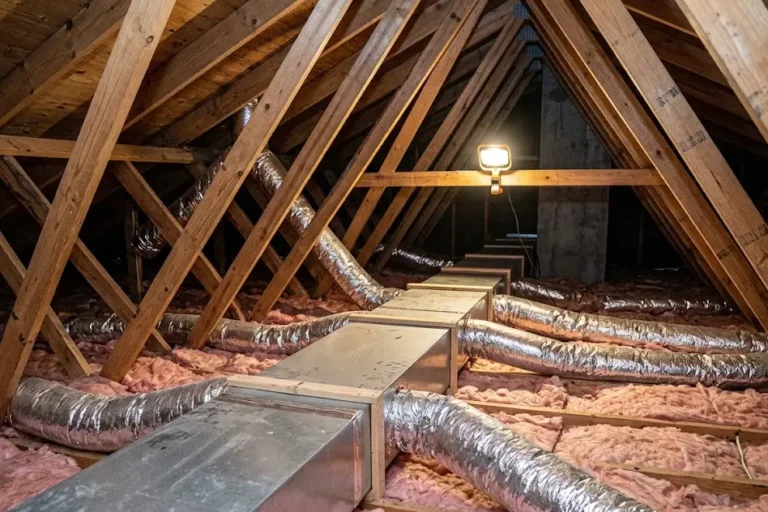
Most ducts need work when the system being replaced is more than 15 years old or when you upgrade to a bigger or higher-efficiency unit (HomeGuide). Before paying for new equipment, ENERGY STAR advises fixing big air leaks in the house and the duct system first, because they are sometimes the real source of the problem; sealing and insulating ducts can improve system efficiency by as much as 20 percent (ENERGY STAR).
Our estimate: for a 2,000 sq ft home whose ducts also need replacing, adding HomeGuide’s ductwork replacement range ($1,400 – $5,600) to its furnace-plus-AC range for that size ($6,000 – $12,000) gives roughly $7,400 – $17,600. This is our own sum of two published ranges, not a measured figure.
Labor runs $75 to $150 per hour and costs more where access is hard, such as rooftops, tight crawl spaces and attics (HomeGuide). For context on what installers earn, the median annual wage for heating, air conditioning and refrigeration mechanics and installers was $61,010 in May 2025, or $29.33 an hour (U.S. Bureau of Labor Statistics). In homes built before 1986, asbestos removal may be required, at $5 to $15 per square foot inside the home (HomeGuide).
The refrigerant change
Under its Technology Transitions Program, the EPA limits the global warming potential (GWP) of the HFC refrigerants used in new equipment. For residential and light commercial air conditioning and heat pump systems, such as unitary systems and mini-splits, the limit is a GWP of 700, with a manufacture and import compliance date of January 1, 2025. There is no installation compliance date for systems whose specified components were all manufactured or imported before January 1, 2025 (EPA).
In practice, that means a system quoted in 2026 may use either a newer lower-GWP refrigerant or an older one from pre-2025 stock. Ask each contractor which refrigerant the quoted system uses, and compare quotes on that basis too.
Tax credits and rebates in 2026
The federal Energy Efficient Home Improvement Credit, which paid 30 percent of qualifying costs and up to $2,000 a year for qualified heat pumps, covers improvements made through December 31, 2025, according to the IRS. A system installed in 2026 does not qualify. Utility and state rebates are separate: check the ENERGY STAR rebate finder on its heat pump page with your ZIP code.
When to replace instead of repair
ENERGY STAR suggests calling a contractor about replacement if your heat pump or air conditioner is more than 10 years old, or your furnace or boiler is more than 15, and also if the equipment needs frequent repairs while energy bills rise, some rooms stay too hot or too cold, or the system is noisy (ENERGY STAR). HomeGuide puts typical lifespans at 15 to 30 years for a furnace, 15 to 20 for an AC unit and 10 to 20 for a heat pump (HomeGuide).
If the furnace is more than 15 years old, or you are upgrading to a higher-SEER air conditioner, replacing both at once avoids paying for two separate installations and keeps the indoor and outdoor equipment matched (HomeGuide).
How to keep the bill down
- Schedule the replacement for spring or fall, when HVAC contractors are less busy.
- Reuse the ductwork only if it is in excellent condition.
- Insist on a Manual J load calculation. An oversized system costs more to buy and to run.
- Before paying for a high-SEER2 unit, compare its yearly energy savings with the price difference.
- Look for utility rebates and manufacturer promotions; the federal credit no longer applies to 2026 installs.
- Get at least three written quotes for equipment of the same size and efficiency, so you compare like with like.
Questions to ask before you sign
- What size do you recommend, and can I see the Manual J calculation behind it?
- What SEER2, HSPF2 or AFUE rating does the quoted equipment have, and does it meet the minimum for my region?
- Which refrigerant does the system use?
- Can my existing ductwork be reused? Will you inspect it for leaks, mold and asbestos?
- Does the price include removal of the old equipment, the permit, a new line set and a thermostat?
- How long is the equipment warranty, and what does your labor warranty cover?
More hvac cost guides
- AC Unit Replacement Cost in 2026: By Tonnage, SEER2 and Refrigerant
- Attic Insulation Cost in 2026: Prices by Type and R-Value
- Ductwork Replacement Cost in 2026: Price per Foot and by Duct Type
- Furnace Replacement Cost in 2026: Gas, Electric and Oil Prices
- Heat Pump Installation Cost in 2026: Air-Source, Geothermal and Ductless
- Mini Split Installation Cost in 2026: Prices by Zone and Size
Sources
- HomeGuide, How much does a new HVAC system cost to install or replace?, August 27, 2025.
- This Old House, How Much Does HVAC Installation Cost? (2026 Pricing), updated June 12, 2026.
- ConsumerAffairs, How Much Does HVAC Replacement Cost?, updated May 20, 2026.
- Electronic Code of Federal Regulations, 10 CFR 430.32, Energy and water conservation standards, up to date as of September 24, 2026.
- U.S. Environmental Protection Agency, Technology Transitions HFC Restrictions by Sector, last updated August 28, 2026.
- ENERGY STAR, Heat & Cool Efficiently, When is it time to replace? and Air-Source Heat Pumps.
- Internal Revenue Service, Energy Efficient Home Improvement Credit.
- U.S. Bureau of Labor Statistics, Occupational Outlook Handbook: Heating, Air Conditioning, and Refrigeration Mechanics and Installers, pay data for May 2025.