$2,500 – $6,000That is the typical mini split installation cost in 2026 for a single-zone ductless system: one outdoor unit and one indoor head, equipment and labor included. A two-zone system runs $4,500 to $8,000, and multi-zone systems that heat and cool most of a house cost $6,500 to $15,000 or more. Those are HomeGuide‘s ranges; other 2025–2026 guides start lower for one zone ($500) because they include bargain equipment, and put the national average range for a typical job at $4,577 to $8,328 (Fixr).
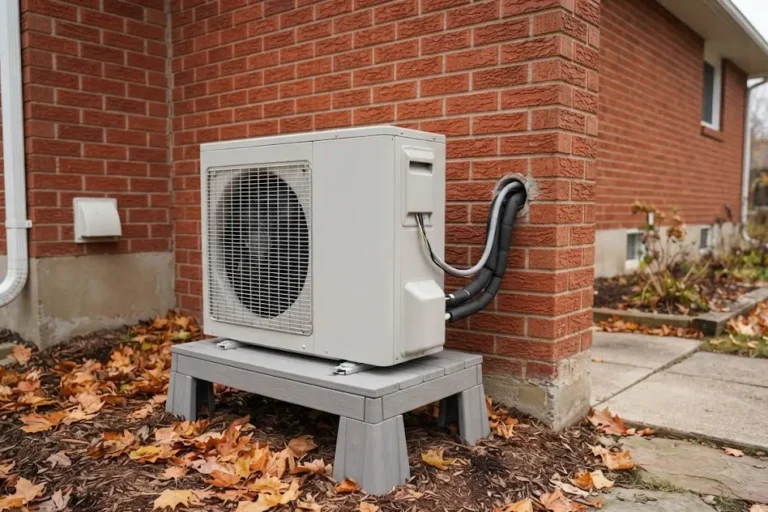
A mini split (also called a ductless heat pump) links an outdoor compressor to one or more indoor air handlers through a small conduit that carries the power cable, refrigerant tubing and condensate drain (U.S. Department of Energy). Because there are no ducts to build, the price depends mostly on how many rooms you want to condition, how big each unit is, and how far the lines and wiring have to run. The tables below break those pieces down.
Cost by number of zones
Each zone is one indoor unit with its own thermostat. Every extra head adds equipment, another line set and another wall penetration, so the total climbs quickly.
| Zones (indoor units) | HomeGuide (Oct 2025) | This Old House (Aug 2026) | Today’s Homeowner (Mar 2025) | Forbes Home (Dec 2024) |
|---|---|---|---|---|
| 1 | $2,500 – $6,000 | $500 – $5,000 | $500 – $5,000 | $2,400 – $5,500 |
| 2 | $4,500 – $8,000 | $1,400 – $7,700 | $2,650 – $10,250 | $3,100 – $7,800 |
| 3 | $6,500 – $11,000 | $1,800 – $9,100 | $3,300 – $13,000 | $3,800 – $10,100 |
| 4 | — | $2,600 – $10,700 | $3,950 – $15,750 | $4,500 – $12,400 |
| 5 | $10,000 – $15,000 | $4,400 – $12,000 | $4,600 – $18,500+ | $5,200 – $14,700 |
| 8 | $18,000 – $20,000+ | — | — | — |
The guides agree on the shape of the curve but not on the floor. HomeGuide starts a single zone at $2,500, while This Old House and Today’s Homeowner both start at $500; Today’s Homeowner says the lowest prices only apply to bargain models of dubious quality, and puts the typical single-area job at about $3,000 (Today’s Homeowner). This Old House gives an average of $2,750 for one zone and says its figures are based on estimates from Angi, HomeGuide and Homewyse (This Old House), so it is not fully independent of HomeGuide. At the top end, Fixr reports a low of $1,916 for one unit in a small house and $21,827 or more for a large home with several zones (Fixr, January 2025).
Our estimate: we keep HomeGuide’s $2,500 to $6,000 as the headline for one zone because it is the only range in the table that sits inside the other guides’ spread at both ends without relying on bargain equipment: it overlaps Forbes Home’s $2,400 to $5,500 and Fixr’s $4,577 to $8,328 average range. This is our editorial choice between published ranges, not a measured figure.
Estimate your mini split installation cost
Use the tables above to estimate your cost. The interactive calculator needs JavaScript.
A single-zone system has one compressor and one indoor unit; a dual-zone system has one compressor and two indoor units; a multi-zone system uses one or two compressors for three or more indoor units (HomeGuide). The Department of Energy notes that many models can run as many as four indoor units from one outdoor unit (U.S. Department of Energy).
Cost by size (BTU)
| Capacity | HomeGuide (Oct 2025) | Forbes Home (Dec 2024) |
|---|---|---|
| 6,000 BTU (0.5 ton) | $2,500 – $3,500 | $450 – $1,600 |
| 9,000 BTU (0.75 ton) | $3,000 – $4,200 | — |
| 12,000 BTU (1 ton) | $3,500 – $5,000 | $600 – $2,700 |
| 18,000 BTU (1.5 ton) | $4,500 – $6,500 | $1,000 – $4,200 |
| 24,000 BTU (2 ton) | $6,000 – $8,000 | $1,100 – $5,200 |
| 30,000 BTU (2.5 ton) | $7,000 – $9,500 | $1,600 – $5,700 |
| 36,000 BTU (3 ton) | $8,000 – $11,000 | $1,800 – $7,300 |
| 48,000 BTU (4 ton) | $12,000 – $15,000 | — |
| 60,000 BTU (5 ton) | $15,000 – $18,000 | — |
The two columns disagree sharply: Forbes Home’s figures by size are a fraction of HomeGuide’s, and the lowest ones are below any installed price other guides give for one zone. Fixr (January 2025) also prices units by size well below HomeGuide, for example $545 to $2,595 for 12,000 BTU, but presents those as the cost of the air conditioner, not the finished job. Forbes Home’s page does not say what its size figures leave out, so for a finished installation HomeGuide’s column is the one consistent with the zone table above.
As a rough coverage guide, HomeGuide pairs a half-ton unit with up to 250 square feet, 1 ton with 400 to 550 square feet, 1.5 tons with 550 to 1,000, and 2 tons with 1,000 to 1,600 square feet (HomeGuide, older guide, September 2024). Fixr’s rule of thumb is similar: 1 ton for 400 to 600 square feet (Fixr). Treat that only as a starting point. ENERGY STAR says the contractor should confirm the size with a Manual J load calculation, because a system that is too large or too small will struggle to keep the home comfortable (ENERGY STAR). The Department of Energy adds that oversized or badly placed indoor units short-cycle, which wastes energy and controls humidity poorly (U.S. Department of Energy).
Wall, ceiling cassette, floor or ducted
| Indoor unit style | HomeGuide (Oct 2025), single zone | Forbes Home (Dec 2024) |
|---|---|---|
| Wall-mounted | $2,500 – $5,000 | $1,200 – $4,300 |
| Floor-mounted | $3,000 – $5,000 | $1,300 – $3,700 |
| Ceiling cassette | $3,500 – $6,000 | $2,000 – $6,000 |
| Concealed ducted | $4,000 – $7,500 | — |
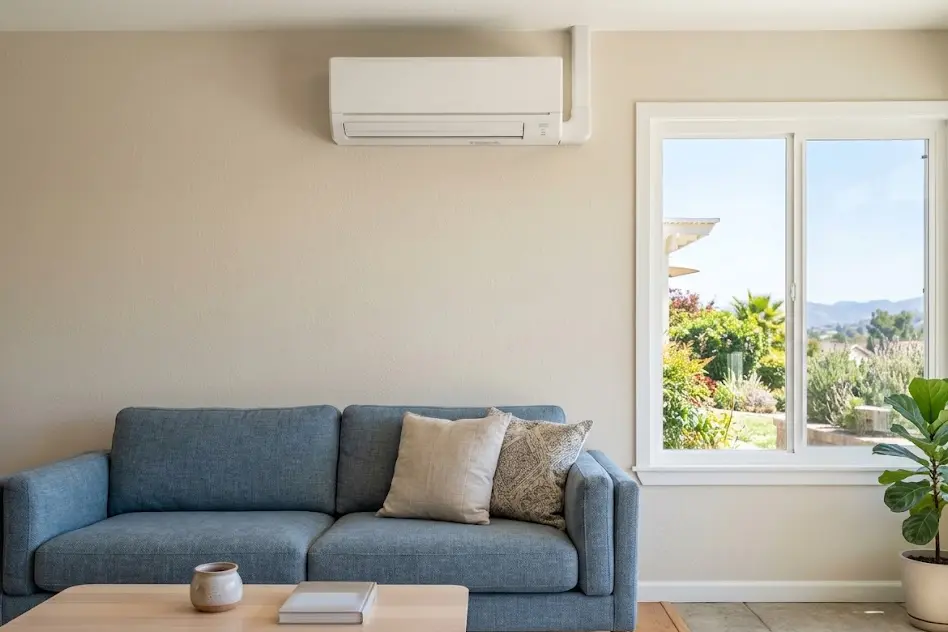
- Wall-mounted heads hang high on a wall. They are the most common style and the cheapest to install.
- Floor-mounted units sit low on the wall, which suits rooms with big windows, sloped ceilings or little upper wall space.
- Ceiling cassettes are set into the ceiling and blow air in all directions. The installation is more complex, which is why they cost more.
- Concealed ducted units hide in a ceiling or attic and use short ducts to serve several nearby rooms.
Descriptions and prices from HomeGuide. The Department of Energy notes most indoor units are about seven inches deep, and that some people dislike their look compared with the built-in appearance of a central system (U.S. Department of Energy).
What the installation labor covers
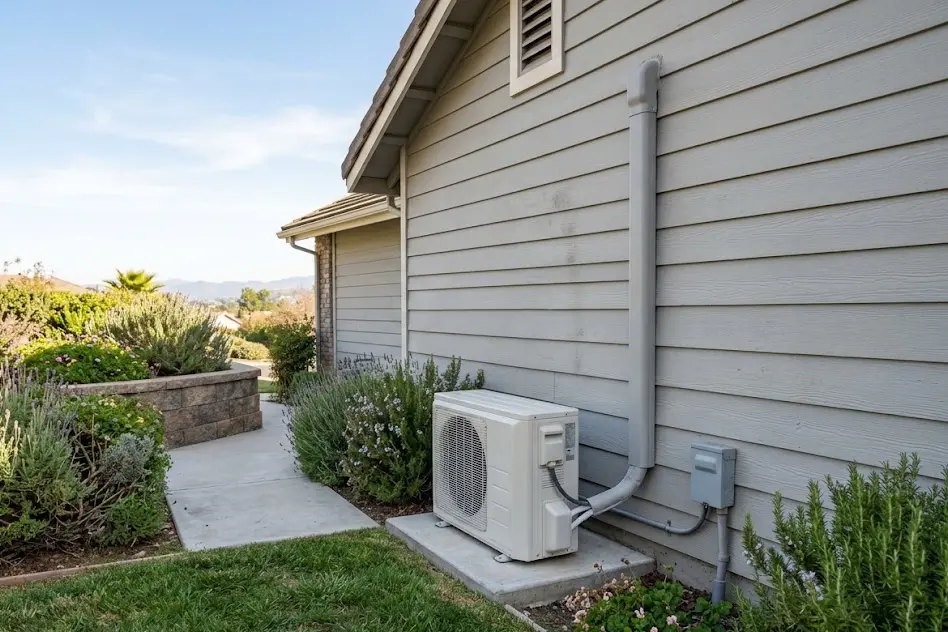
Most mini split quotes include the outdoor unit, the indoor unit or units, labor, basic electrical connections, mounting brackets or a pad, the refrigerant line, basic system testing and a standard line set of about 15 feet; longer runs cost more (HomeGuide). The extra lines that most often appear are these:
| Item | HomeGuide (Sep 2024) | Fixr (Jan 2025) | Today’s Homeowner (Mar 2025) |
|---|---|---|---|
| Total installation labor | $1,000 – $5,000 | — | $700 – $3,000 |
| HVAC labor | $75 – $150 per hour | $86 – $157 per hour | — |
| Electrician labor | $40 – $100 per hour | $101 – $183 per hour | $50 – $100 per hour |
| New dedicated 220V circuit / electrical work | $250 – $900 | — | $250+ |
| Permits and inspections | $250 – $400 | — | $250 – $400 |
Hourly rates for electricians differ most between the guides: Fixr’s range starts where the other two end. Today’s Homeowner says labor runs from $700 in warmer regions to $3,000 in areas with strict HVAC codes, and that most jobs need an electrician to install a dedicated circuit (Today’s Homeowner). HomeGuide’s older guide (September 2024) puts total labor at $1,000 to $5,000 and says a typical job takes an HVAC professional 4 to 6 hours, depending on how many indoor units are involved (HomeGuide). In This Old House’s 2026 survey, 72% of respondents who replaced a ductless mini split paid $150 an hour or more in labor (This Old House).
Our estimate: 4 to 6 hours × $75 to $157 per hour (the lowest and highest HVAC rates from HomeGuide and Fixr) = $300 to $942 of HVAC technician time for a simple job. This is our own multiplication of published figures, not a measured price; it leaves out the electrician, the permit and any extra line set or wall work, which is why the total labor ranges above are higher.
For context on wages, the U.S. Bureau of Labor Statistics reports a median pay of $61,010 a year, or $29.33 an hour, for heating, air conditioning and refrigeration mechanics and installers in May 2025 (BLS). That is what the worker earns, not what the company bills per hour.
Line set. The hook-up between the indoor and outdoor units generally needs only a three-inch hole through the wall, and the outdoor unit can be placed as far as 50 feet from the indoor unit when needed (U.S. Department of Energy). Runs longer than the standard length included in the quote cost more (HomeGuide), so a spot for the outdoor unit close to the indoor heads keeps the price down. There must also be a place to drain condensate water near the outdoor unit (U.S. Department of Energy).
Permit and DIY. Most localities require a permit, since the job involves electrical and refrigerant work. HomeGuide advises against DIY installation because refrigerant handling, vacuuming and leak testing need a licensed professional, and a bad installation can cause leaks and void the manufacturer’s warranty (HomeGuide).
Efficiency and cold-climate models
A mini split heat pump heats and cools with the same system. ENERGY STAR says certified mini split heat pumps use up to 60% less energy than standard electric radiators, and that they suit homes with costly electric heat, older homes with no ductwork, homes with high fuel costs, and additions or rooms where extending ducts is hard (ENERGY STAR).
Skipping ducts also avoids duct losses. The Department of Energy says those losses can account for more than 30% of the energy used for space conditioning, especially when ducts run through an attic or other unconditioned space (U.S. Department of Energy).
If winters regularly drop below freezing where you live, ask for an ENERGY STAR certified cold climate model. That certification requires third-party verified heating performance tested down to 5°F. These units keep working below 5°F, but ENERGY STAR recommends pairing them with a backup heat source for the coldest days (ENERGY STAR). Efficiency is rated with SEER for cooling and HSPF for heating, and higher-rated models cost more up front (HomeGuide).
Is there still a tax credit in 2026?
Not for a new installation. The federal Energy Efficient Home Improvement Credit paid 30% of qualified costs, up to $2,000 a year for qualified heat pumps, but the IRS says it applies to improvements made through December 31, 2025 (IRS). A mini split installed in 2026 does not qualify. Some ENERGY STAR pages still describe the credit as running to 2032; the IRS page is the one to trust.
Local help may still exist: ENERGY STAR notes that many utilities offer incentives for certified heat pumps and keeps a rebate finder by ZIP code (ENERGY STAR).
How to keep the bill down
- Only condition the rooms you use. Each zone has its own thermostat, so you pay to heat or cool occupied spaces only (U.S. Department of Energy), and every head you leave out lowers the installed cost.
- Choose wall-mounted heads where the room allows; they are the cheapest style to install (HomeGuide).
- Insist on a Manual J load calculation so you do not pay for more capacity than you need (ENERGY STAR).
- Place the outdoor unit close to the indoor heads to stay within the standard line set length.
- Check your utility for rebates on ENERGY STAR certified models before you choose one.
- Get at least three itemized quotes, and do not choose on price alone (HomeGuide).
Questions to ask before you sign
- What size system do you recommend, and did you base it on a Manual J calculation?
- How many zones do I need, and where will each indoor unit go?
- Is the model ENERGY STAR certified, and is it a cold climate model if I need one?
- How long is the line set included in the price, and what does each extra foot cost?
- Does the quote include the new electrical circuit, the permit and removal of old equipment?
- Are you licensed and insured, and what does your warranty cover?
Sources
- U.S. Department of Energy, Energy Saver, Ductless Mini-Split Heat Pumps. The page has been removed from energy.gov; the link is an archived copy of June 1, 2024.
- ENERGY STAR, Ductless Heating & Cooling.
- Internal Revenue Service, Energy Efficient Home Improvement Credit.
- U.S. Bureau of Labor Statistics, Occupational Outlook Handbook: Heating, Air Conditioning, and Refrigeration Mechanics and Installers, pay data for May 2025.
- HomeGuide, Ductless Mini-Split AC Cost, October 2025, and Ductless Heat Pump Cost, older guide (September 2024).
- This Old House, How Much Does Split AC Installation Cost?, updated August 28, 2026.
- Today’s Homeowner, How Much Does Mini-Split AC Installation Cost?, updated March 4, 2025.
- Fixr, How Much Does It Cost to Install a Ductless Air Conditioner?, updated January 31, 2025.
- Forbes Home, How Much Does It Cost To Install A Mini Split AC System?, older guide (audited December 1, 2024).