$9,581 – $10,798 a monthThat is the national median nursing home cost in the latest CareScout Cost of Care Survey (2025 data, published March 2026): $9,581 a month for a semi-private room and $10,798 for a private one, or $114,975 to $129,575 a year. Two other national surveys land close by: the Federal Long Term Care Insurance Program averages $308 to $348 a day, and SeniorLiving.org puts the June 2026 medians at $9,842 to $11,294 a month. Where you live matters more than the room: state medians run from $5,627 to $27,831 a month.
Most families meet this bill in one of two ways: as a short rehab stay after a hospital admission, which Medicare can pay for, or as long-term care, which Medicare does not cover and which Medicaid ends up paying for most residents. The figures below show what each room type costs, how much it varies by state, what the daily rate includes and who pays.

Nursing home cost per day, month and year
| Room and period | CareScout (median) | FLTCIP (average) | SeniorLiving.org (median) |
|---|---|---|---|
| Semi-private, per day | $315 | $308 | $328 |
| Semi-private, per month | $9,581 | — | $9,842 |
| Semi-private, per year | $114,975 | $112,420 | $118,104 |
| Private, per day | $355 | $348 | $376 |
| Private, per month | $10,798 | — | $11,294 |
| Private, per year | $129,575 | $127,020 | $135,528 |
The three surveys are close: for each room type, their daily rates differ by $28 or less. They are not measuring quite the same thing: CareScout and SeniorLiving.org report medians, the federal program reports averages, and each was collected at a different time. Growth has slowed: CareScout found semi-private rates up 2% and private rooms up 1% in 2025 (CareScout), while the federal survey had recorded jumps of 11.2% and 10.0% between 2023 and 2024 (FLTCIP). SeniorLiving.org says its figures come from its own research into senior care facilities and that the site is supported by commissions from providers it lists (SeniorLiving.org).
Our estimate: a private room costs about $40 a day more than a semi-private one at the CareScout national medians ($355 minus $315), which is $1,217 a month ($10,798 minus $9,581). This is a subtraction of two published medians, not a measured price difference at any one facility.
Estimate your nursing home cost
Use the tables above to estimate your cost. The interactive calculator needs JavaScript.
Nursing home cost by state
The state is the biggest single driver of the bill. These are the ten most expensive and the cheapest states for a semi-private room in the CareScout survey, with SeniorLiving.org’s June 2026 figures beside them.
| Most expensive states | CareScout semi-private | CareScout private | SeniorLiving.org semi-private | SeniorLiving.org private |
|---|---|---|---|---|
| Alaska | $27,831 | not enough data | $32,220 | $32,220 |
| Oregon | $16,760 | $18,448 | $16,781 | $18,135 |
| New York | $15,528 | $16,729 | $15,619 | $16,506 |
| Hawaii | $15,473 | $16,395 | $16,006 | $17,361 |
| Connecticut | $15,208 | $16,729 | $15,973 | $17,586 |
| Delaware | $14,494 | $15,132 | $15,037 | $15,796 |
| Massachusetts | $14,448 | $15,817 | $15,327 | $16,489 |
| Vermont | $14,113 | $15,528 | $14,522 | $16,134 |
| Maine | $13,976 | $14,904 | $13,714 | $14,731 |
| Washington | $13,155 | $15,969 | $13,488 | $14,683 |
| Least expensive states | CareScout semi-private | CareScout private | SeniorLiving.org semi-private | SeniorLiving.org private |
|---|---|---|---|---|
| Texas | $5,627 | $7,604 | $5,808 | $7,519 |
| Missouri | $6,741 | $7,604 | $6,740 | $7,583 |
| Oklahoma | $7,026 | $7,756 | $6,840 | $8,067 |
| Arkansas | $7,452 | $8,060 | $7,583 | $8,180 |
| Louisiana | $7,604 | $8,076 | $7,938 | $8,067 |
| Illinois | $8,304 | $9,216 | $8,389 | $9,681 |
| Alabama | $8,334 | $8,787 | $8,649 | $9,036 |
| Arizona | $8,365 | $11,437 | $8,067 | $11,133 |
| Nebraska | $8,377 | $9,216 | $8,890 | $10,649 |
| Kansas | $8,669 | $9,064 | $8,229 | $9,036 |
| Utah | $8,669 | $10,646 | $8,874 | $11,294 |
The two sources agree closely almost everywhere except Alaska, where CareScout’s semi-private median is $4,389 a month below SeniorLiving.org’s and CareScout had too little data to publish a private-room figure at all. The federal survey, which reports by city rather than by state, found an average of $453 a day for a semi-private room in Anchorage and $269.68 outside the metro areas (FLTCIP). Treat any Alaska figure as a rough guide and get local quotes.
Our estimate: a semi-private room in Alaska costs about five times what it costs in Texas at the CareScout medians ($27,831 divided by $5,627 is 4.9). This is a ratio of two published state medians, not a measured figure.
State Medicaid agencies publish an official cross-check. Federal law sets the penalty for giving assets away before applying for Medicaid by dividing the amount given by “the average monthly cost to a private patient of nursing facility services in the State” (Social Security Act §1917), so states have to publish that average. New York’s 2026 figures run from $13,765 a month in the Western region to $15,675 in the Rochester region (New York State Department of Health), a little under CareScout’s New York median. Indiana uses $8,027 a month for applications filed from July 1, 2026 (Indiana Family and Social Services Administration), below CareScout’s Indiana median of $8,942 for a semi-private room.
What the daily rate covers, and what costs extra
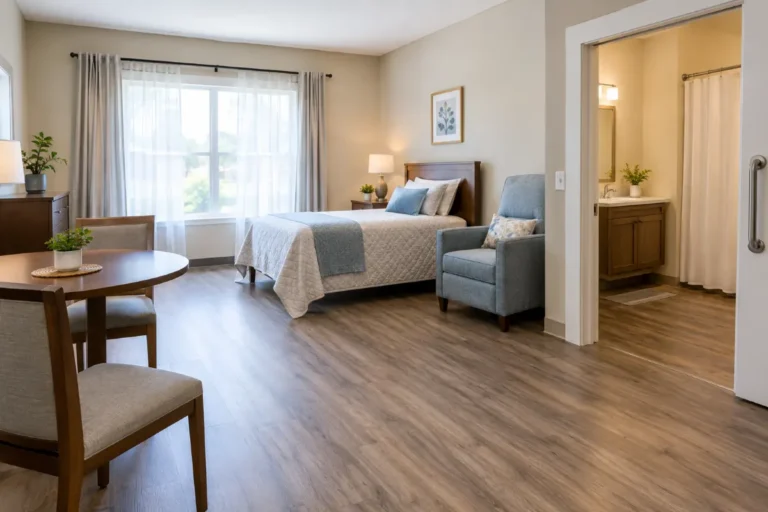
Nursing homes focus more on medical care than assisted living does. Their services typically include nursing care, 24-hour supervision, three meals a day and help with everyday activities, with physical, occupational and speech therapy also available (National Institute on Aging). Some homes quote an all-inclusive rate; others bill separately for services such as physical therapy, speech therapy and memory care (SeniorLiving.org).
Federal rules for homes certified by Medicare or Medicaid draw a clear line. During a covered Medicare or Medicaid stay the home cannot charge the resident for nursing services, food and nutrition, the activities program, room maintenance, medically related social services or routine personal hygiene items, which include toiletries, incontinence supplies, over-the-counter drugs, bathing assistance and basic personal laundry (42 CFR 483.10). The same rule lists what a home may charge extra for, but only if the resident asks for it, it is not part of the care plan, and the resident is told about the charge in advance:
- Telephone, television, radio or a computer for personal use
- Personal comfort items, personal clothing and reading matter
- Cosmetic and grooming services beyond what Medicare or Medicaid pays for
- Social events and entertainment outside the regular activities program
- Privately hired nurses or aides
- A private room, unless it is medically needed, for example to isolate an infection
- Specially prepared food the resident requests instead of the regular meals (food a clinician orders cannot be charged)
The home must tell the resident about each such charge orally and in writing, and it cannot make requesting an extra a condition of admission (42 CFR 483.10).
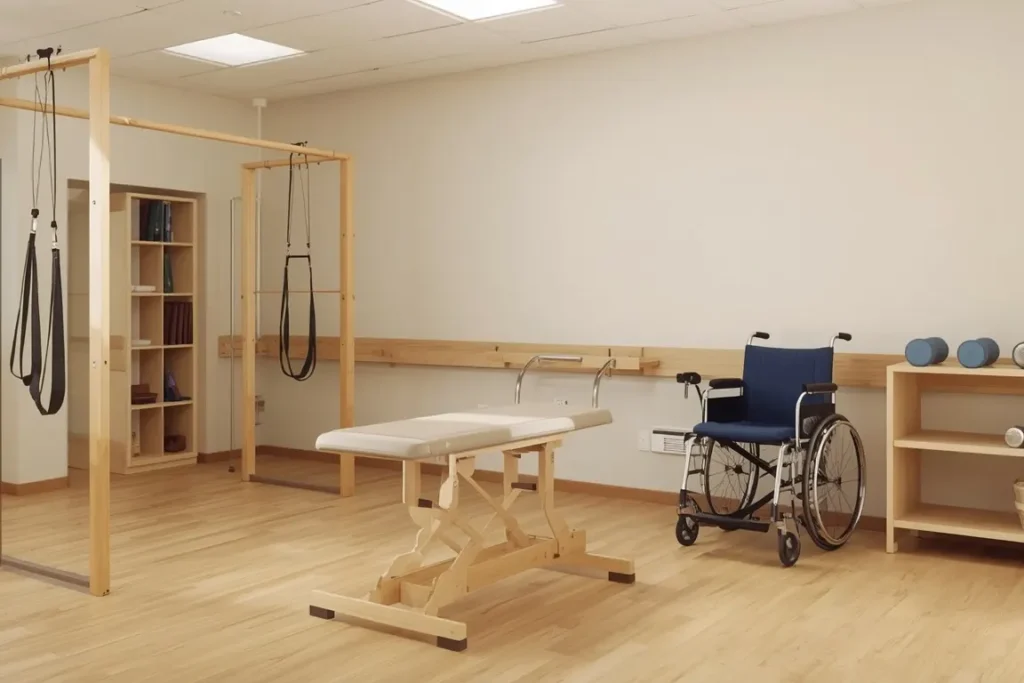
Short-term rehab vs. long-term care
The same building often provides both, but they are paid for very differently. Short-term skilled care is nursing or therapy that has to be given by, or supervised by, professionals, such as intravenous medication or physical therapy after a hospital stay. Medicare Part A covers it in a Medicare-certified skilled nursing facility, including a semi-private room, meals, nursing, therapy, medications and supplies, but only after a qualifying inpatient hospital stay of at least three days in a row, and generally if you enter the facility within 30 days of leaving the hospital (Medicare.gov).
| Days in the skilled nursing facility | What you pay in 2026 (Original Medicare) |
|---|---|
| Days 1–20 | $0 a day, after the $1,736 Part A deductible (not owed again if already paid for a hospital stay in the same benefit period) |
| Days 21–100 | $217 a day |
| Day 101 and beyond | All costs |
Our estimate: if you use all 80 coinsurance days (days 21 to 100) in one benefit period, the coinsurance comes to $17,360 (80 × $217), on top of the Part A deductible if it was not already paid. This is a calculation from the published 2026 rate, not a measured figure; supplemental coverage can change what you owe.
Two details catch many families out. Time spent in the hospital under observation, or in the emergency room before being admitted, does not count toward the three days, even overnight. And Medicare only keeps paying while you need daily skilled care (Medicare.gov).
Long-term custodial care is help with bathing, dressing, using the bathroom and other everyday tasks for someone who lives in the home. Medicare, and Medicare Supplement (Medigap) policies, do not pay for it; you pay all costs unless another program or policy does (Medicare.gov). That is the stay the monthly figures above describe.
How a nursing home is paid for
Personal funds. Many people pay at least part of the cost themselves, from savings, pensions, investment income or the sale of a home (National Institute on Aging).
Medicaid is the main payer. Of the 1.2 million people living in nursing facilities in July 2024, more than 60% had Medicaid as their primary payer, and Medicaid paid for 44% of the $147 billion spent on institutional long-term care in 2023 (KFF, May 28, 2025). It covers nursing facility care beyond Medicare’s 100-day limit for people who qualify (Medicaid.gov). The rules that matter most for a nursing home stay:
- Spend-down. In states with a “medically needy” program, people whose income is too high can still qualify by incurring medical and care expenses until their income falls to the state’s limit. Thirty-six states and the District of Columbia use spend-down programs (Medicaid.gov).
- Your income still goes to the bill. Once a resident qualifies, their income, minus a personal needs allowance of at least $30 and certain allowances for a spouse or family at home, is paid toward the cost of care (Medicaid.gov).
- Protection for a spouse at home. Spousal impoverishment rules set aside part of a couple’s savings and, in some cases, income for the spouse who still lives in the community (Medicaid.gov).
- The five-year look-back. Assets given away or sold for less than they are worth in the 60 months before applying trigger a period without Medicaid payment for nursing home care; its length is the amount given away divided by the state’s average private-pay monthly cost (Social Security Act §1917).
- Estate recovery. For enrollees aged 55 or older, states must seek repayment of nursing facility costs from the estate after death, though not while a spouse, a child under 21 or a blind or disabled child survives (Medicaid.gov).
The income and asset limits are set by each state. Your state Medicaid agency, or a free State Health Insurance Assistance Program counselor at shiphelp.org, can explain how they apply to you.
Long-term care insurance covers help with daily activities in a range of settings, including nursing homes. What a policy pays and for how long depends on the policy, and the premium depends on the services covered, your age when you buy it and any optional benefits (National Institute on Aging).
Veterans can get nursing home care in VA Community Living Centers, in community nursing homes under contract with VA, or in State Veterans Homes; whether VA helps pay depends on income and service-connected disability, and a VA social worker can explain the options (VA). Veterans and survivors who receive a VA pension may also qualify for an Aid and Attendance payment on top of it if they live in a nursing home because of a loss of mental or physical abilities related to a disability (VA).
Taxes. The cost of medical care in a nursing home is a deductible medical expense, including meals and lodging when a principal reason for being there is medical care; if the stay is for personal reasons, only the medical and nursing part counts. Only medical expenses above 7.5% of adjusted gross income can be deducted (IRS Publication 502).
Nursing home vs. assisted living vs. home care
| Type of care | CareScout (median) | FLTCIP (average) | SeniorLiving.org (median) |
|---|---|---|---|
| Nursing home, semi-private room | $9,581 a month | $308 a day ($112,420 a year) | $9,842 a month |
| Nursing home, private room | $10,798 a month | $348 a day ($127,020 a year) | $11,294 a month |
| Assisted living, one bedroom | $6,200 a month | $5,511 a month | $6,313 a month |
| Care at home | $35 an hour, non-medical caregiver ($80,080 a year at 44 hours a week) | $33 an hour, home health aide ($51,480 a year at 6 hours a day, 5 days a week) | $220 a day, home health aide |
| Adult day care | $95 a day | $114 a day | — |
The settings are not interchangeable. Assisted living is for people who need help with daily care but less than a nursing home provides; residents usually have their own room or apartment and get meals, help with personal care and medications, and 24-hour supervision (National Institute on Aging). Some states also offer PACE, a combined Medicare and Medicaid program for people who would otherwise need nursing home care, which helps most participants keep living at home (National Institute on Aging).
Our estimate: care at home is priced by the hour, so the comparison depends on how many hours are needed. At CareScout’s $35 median, 44 hours a week comes to about $6,673 a month ($80,080 divided by 12), while round-the-clock care for 30 days would be $25,200 (24 hours × 30 days × $35), more than two and a half times the semi-private nursing home median. These are calculations from the published hourly rate, not measured costs.
How to compare quality before you choose
Medicare’s Care Compare website rates nursing homes from 1 to 5 stars. Each home gets an overall rating plus separate ratings for health inspections, staffing and quality measures; 5 stars means much above average quality and 1 star much below average (CMS). CMS itself cautions that the stars cannot capture everything, such as specialized rehab or dementia care, or how easy it will be for family to visit. It recommends using the ratings together with a visit to the home and information from your state’s long-term care ombudsman program (CMS).
For help finding local programs, including the ombudsman and benefits counseling, contact the Eldercare Locator at 800-677-1116 (National Institute on Aging).
How to keep the bill down
- Ask whether a semi-private room is available. At the national medians it costs about $1,217 a month less than a private room.
- Before a hospital discharge, ask whether the patient was admitted as an inpatient or kept under observation. Only inpatient days count toward the three days Medicare needs to pay for skilled nursing care.
- Ask for the base rate in writing and turn down extras you do not need. A certified home can charge for items like a phone or TV only if you request them and are told the price.
- Check Medicaid eligibility early, and do not give away money or property without understanding the five-year look-back.
- Veterans should speak to a VA social worker before choosing a home; VA-contracted and State Veterans Homes may be options.
- Keep the bills. The medical part of nursing home costs can count toward the medical expense deduction.
Questions to ask before you sign
- Is this a daily, monthly or annual rate, and is it for a private or a semi-private room?
- What is included in the base rate, and are therapy, rehab, memory care or medication management billed separately?
- Do you accept Medicare, Medicaid and long-term care insurance, and do you limit the number of Medicaid beds?
- How often do your rates go up, and what happens to the price if care needs change?
- What is your discharge and transfer policy?
- Who signs the admission agreement, and in what capacity? A certified home cannot require a family member or other third party to personally guarantee payment as a condition of admission or of staying (42 CFR 483.15).
The first five questions follow the pricing checklist published by SeniorLiving.org. This guide explains costs and options; it is not financial, legal or medical advice. For decisions about Medicaid or Medicare, talk to your state Medicaid agency or a SHIP counselor.
Sources
- CareScout, CareScout Releases 2025 Cost of Care Survey Results, March 2, 2026; Cost of Care Survey 2025: Ranked Median Costs by State Data Tables, March 6, 2026; Cost of care tool, national monthly medians for 2025.
- The Federal Long Term Care Insurance Program, 2024 Cost of Care Survey, data by illumifin, published November 2025.
- SeniorLiving.org, Nursing Home Costs in 2026, June 30, 2026.
- Medicare.gov, Skilled nursing facility care (2026 amounts) and Long-term care; Care Compare.
- Centers for Medicare & Medicaid Services, Five-Star Quality Rating System.
- Medicaid.gov, Seniors & Medicare and Medicaid Enrollees, Eligibility Policy, Spousal Impoverishment and Estate Recovery.
- Social Security Administration, Social Security Act §1917 (transfers of assets and look-back date).
- Electronic Code of Federal Regulations, 42 CFR 483.10, Resident rights and 42 CFR 483.15, Admission, transfer, and discharge rights.
- New York State Department of Health, GIS 25 MA/14: Medicaid Regional Rates for Calculating Transfer Penalty Periods for 2026, December 22, 2025.
- Indiana Family and Social Services Administration, 3006.00.00 Facility Rate Used to Calculate Penalty Period, rate in effect from July 1, 2026.
- KFF, 5 Key Facts About Nursing Facilities and Medicaid, May 28, 2025.
- U.S. Department of Veterans Affairs, Nursing homes, assisted living, and home health care and Aid and Attendance benefits and Housebound allowance (last updated May 8, 2026).
- Internal Revenue Service, Publication 502, Medical and Dental Expenses.
- National Institute on Aging, Paying for Long-Term Care and Long-Term Care Facilities: Assisted Living, Nursing Homes, and Other Residential Care, content reviewed October 12, 2023 (used for descriptions of care settings and payment options, not for prices).
- Administration for Community Living, Eldercare Locator; State Health Insurance Assistance Program.