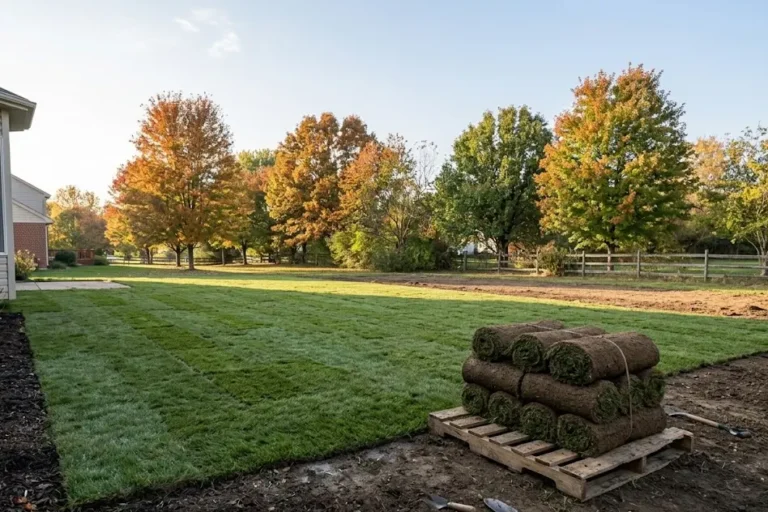
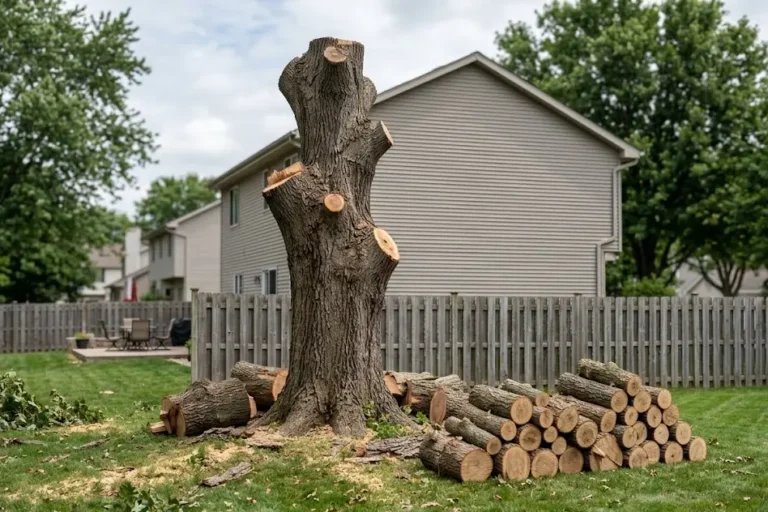
$500 – $8,000 per acreThat is the land clearing cost in 2026 across three published cost guides. Light brush and small trees sit at the bottom of the range; dense woods with large trees and thick underbrush reach the top. The guides disagree on level: HomeGuide puts one acre at $1,200 to $8,000, LawnStarter at $733 to $6,155 and Fixr at $500 to $5,000. A quarter-acre lot runs $125 to $3,000 depending on the guide.
The number on your quote depends on three things more than any other: how much is growing on the land, what you plan to do with it afterwards, and what happens to the debris. Clearing a trail through brush and preparing a building pad are very different jobs, even on the same acre. The tables below show how the price moves with each of them, and which extra costs and permits tend to show up once the trees are down.
Land clearing cost by lot size
| Property size | HomeGuide | Fixr | LawnStarter |
|---|---|---|---|
| 1/8 acre | $600 – $2,000 | — | $92 – $769 |
| 1/4 acre | $800 – $3,000 | $125 – $1,250 | $183 – $1,539 |
| 1/2 acre | $1,000 – $5,000 | $250 – $2,500 | $367 – $3,078 |
| 1 acre | $1,200 – $8,000 | $500 – $5,000 | $733 – $6,155 |
| 2 acres | $1,900 – $15,000 | $1,000 – $10,000 | $1,466 – $12,310 |
| 3 acres | $2,700 – $22,000 | $1,500 – $15,000 | — |
| 4 acres | $3,600 – $30,000 | $2,000 – $20,000 | — |
| 5 acres | $4,500 – $35,000 | — | — |
All three guides agree that the bill grows with the size of the lot, but they do not agree on the level. HomeGuide is the highest at every size: its single-acre range of $1,200 to $8,000 starts more than twice as high as Fixr’s $500 to $5,000 (HomeGuide; Fixr). LawnStarter sits in between, at $733 to $6,155 per acre from light to heavy forest (LawnStarter). Treat the spread as a sign of how much local quotes vary, and get several.
HomeGuide notes that the price per acre drops slightly as the property gets bigger. Once the crew and machines are on site, they can work across a larger area more efficiently, so a single acre costs more per acre than five (HomeGuide). Fixr’s table does not show that discount: its four-acre range is exactly four times its one-acre range (Fixr).
Our estimate: the $500 – $8,000 per-acre range at the top of this page is the lowest and the highest one-acre figure across the three guides (Fixr’s low, HomeGuide’s high), not an average. Dividing HomeGuide’s five-acre range by five gives roughly $900 to $7,000 per acre, against $1,200 to $8,000 for a single acre. Both are simple operations on the published ranges above, not measured figures, and your own quote will depend on what is growing on the land.
Cost per acre by vegetation density
| Type of clearing | What is on the land | HomeGuide | Fixr | LawnStarter |
|---|---|---|---|---|
| Light | Shrubs, underbrush and small trees | $1,200 – $2,500 | $500 – $2,000 (lightly wooded) | $733 – $2,333 (lightly forested) |
| Moderate | Thicker underbrush and medium-sized trees | $2,500 – $4,500 | — | — |
| Heavy | Dense vegetation, thick underbrush and large trees | $4,500 – $8,000 | $3,000 – $5,000 (heavily forested) | $3,395 – $6,155 (heavily forested) |
The three guides line up on the shape of the curve but not on the numbers. For heavy clearing, Fixr and LawnStarter top out at $5,000 and $6,155 an acre, while HomeGuide’s heavy tier starts at $4,500 and runs to $8,000 (Fixr; LawnStarter; HomeGuide). LawnStarter states that its forested-land prices do not include grading or leveling (LawnStarter), so check what each quote you get includes before comparing it with these tables.
Density is the biggest single driver. Grass and scattered shrubs clear quickly; overlapping canopy and thick undergrowth mean far more cutting, hauling and disposal. Hardwoods such as oak and maple take longer to cut and remove than softwoods such as pine, and large trees near property lines or buildings need more careful handling (HomeGuide).
What you cannot see matters too. Rocks and boulders under the vegetation can damage equipment and slow the job, and large ones may need excavation or even blasting. Slopes, gullies and ditches slow machines down and can call for specialized equipment, and a site without road access may need smaller machines, extra trips or a temporary access road (HomeGuide).
Estimate your land clearing cost
Use the tables above to estimate your cost. The interactive calculator needs JavaScript.
Our estimate: the calculator multiplies the area by a per-acre range taken from the tables on this page. For light and heavy clearing it uses the full span across the three guides, from the lowest low to the highest high (light: Fixr’s $500 to HomeGuide’s $2,500; heavy: Fixr’s $3,000 to HomeGuide’s $8,000). Moderate clearing is HomeGuide’s $2,500 to $4,500, the only guide with that tier. Forestry mulching runs from Fixr’s $400 to HomeGuide’s $1,000. The add-ons are per job: survey $500 to $2,000 (HomeGuide and Fixr), permit $150 to $1,500 (Fixr), grading and geotechnical report from HomeGuide. These are combinations of published ranges, not measured prices.
Brush clearing vs. forestry mulching vs. full clearing
| Service | HomeGuide | Fixr | LawnStarter |
|---|---|---|---|
| Forestry mulching | $500 – $1,000+ per acre | $400 – $600 per acre | about $400 per acre, or $150 – $250 per hour |
| Brush removal | $800 – $3,000 per acre | $500 – $5,600 per acre (trees and brush) | $20 – $200 per acre |
| Full clearing (by density) | $1,200 – $8,000 per acre | $500 – $5,000 per acre | $733 – $6,155 per acre |
| Tree removal | $400 – $1,200 per tree | — | $150 – $1,900 per tree, by height (about $630 on average) |
| Stump removal | $100 – $400 per stump (grinding and removal) | — | about $326 for the first stump, plus $40 – $83 per extra stump |
| Hourly rate | — | $110 – $250 per hour | — |
Brush removal is where the guides disagree most. LawnStarter puts it at $20 to $200 per acre, while HomeGuide’s range starts at $800 and runs to $3,000 (LawnStarter; HomeGuide). Fixr does not price brush on its own; its tree and brush removal step is $500 to $5,600 per acre (Fixr). Treat brush-only pricing as the least settled number on this page and rely on local quotes. Forestry mulching is closer: all three guides start at $400 to $500 an acre.
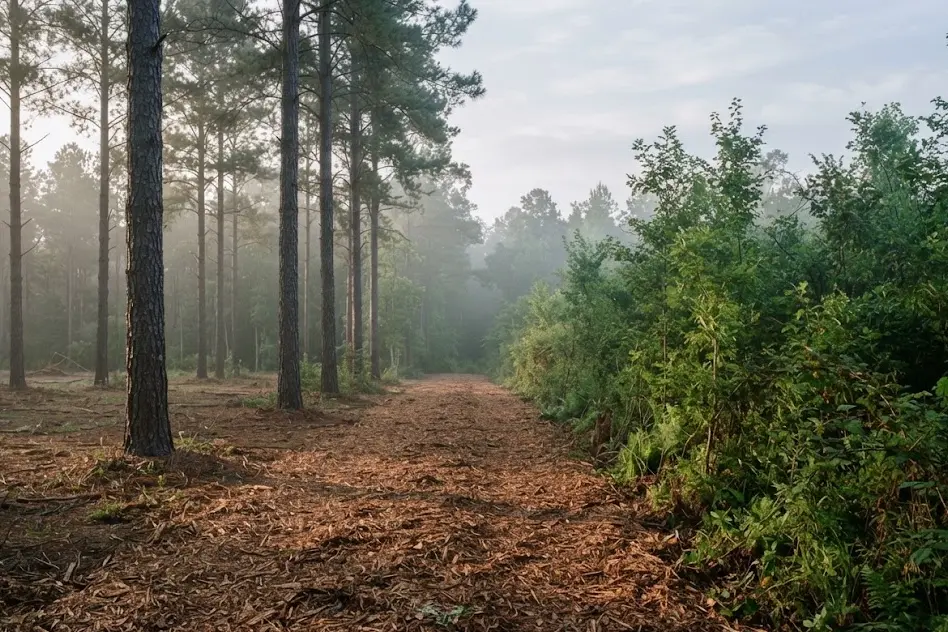
Forestry mulching grinds vegetation where it stands and leaves the mulch on the ground, where it suppresses weeds and helps prevent erosion. It suits trails, fire prevention and pasture upkeep, but not a building site (HomeGuide).
Full clearing with bulldozers and excavators removes everything above and below ground. It is the method for preparing land for construction, but it disturbs the soil the most. Selective clearing removes only chosen trees and plants; it costs more per acre, but can save on debris removal. Hand clearing with chainsaws is slower and labor-heavy, and fits small or sensitive areas where machines would do damage (HomeGuide).
Our estimate: a wooded acre with 20 trees to fell and 20 stumps to grind, priced as separate services, would come to about $10,000 to $32,000 (20 × $400–$1,200 plus 20 × $100–$400). That is well above the $4,500 to $8,000 per-acre price for heavy clearing, so on a multi-tree job it is worth asking for a per-acre quote. This is our own arithmetic on the published unit prices, not a measured figure.
Debris disposal and burning
Clearing produces a lot of wood and brush, and some contractors include disposal in the base price while others charge for it separately. The usual options are hauling it to a landfill or processing facility, chipping it on site as ground cover, or burning it where local rules allow (HomeGuide). Ask which one your quote assumes before you compare totals. Forestry mulching avoids the question, because the ground-up material stays on the land and there is no debris removal to pay for (LawnStarter).
Burning is the option with the most rules attached. In North Carolina, for example, the state Forest Service runs an online burning permit system and asks applicants to review the state’s air quality rules on open burning before applying; it also notes that careless debris burning is the leading cause of wildfires in the state (N.C. Forest Service). The same agency issues burn bans (N.C. Forest Service). Other states run their own systems, so check with your state forestry agency and local fire department before you plan on burning brush piles.
Grading and site prep after clearing
| Item | HomeGuide | Fixr | LawnStarter |
|---|---|---|---|
| Leveling or grading, small home site on mostly level land | $2,000 – $5,000 | — | — |
| Grading with rocky soil or large boulders | $50,000+ | — | — |
| Building site preparation after clearing | — | $200 – $2,000 per acre | — |
| Clearing and preparing land to build | — | — | $1.18 – $2.00 per sq. ft. |
| Soil test | $10 – $100+ (basic test) | $700 – $1,800 per acre | $801 – $1,755 |
| Geotechnical report | $1,000 – $5,000 | about $960 (to a depth of 20 ft) | — |
| Land survey | $500 – $1,500+ | $1,000 – $2,000 | about $500 |
| Permits | — | $150 – $1,500 each | about $200 for a clearing permit |
If you are clearing to build, clearing is only the first step. The site still has to be leveled and graded for drainage, and the ground has to be shown to support a foundation, which is what the soil test or geotechnical report is for (HomeGuide). Budget for these on their own line, and ask whether your clearing quote covers any of them.
The soil test figures differ because they describe different tests. HomeGuide’s $10 to $100 is a basic test; Fixr’s $700 to $1,800 per acre is the testing done before site work, which tells the builder the bearing capacity of the ground and the kind of foundation and footings needed (HomeGuide; Fixr). Preparing a lot to build also costs far more than clearing it: LawnStarter’s $1.18 to $2.00 per square foot comes to $51,401 to $87,120 for a full acre, against $733 to $6,155 to clear the same acre of forest (LawnStarter).
Permits, erosion control and wetlands
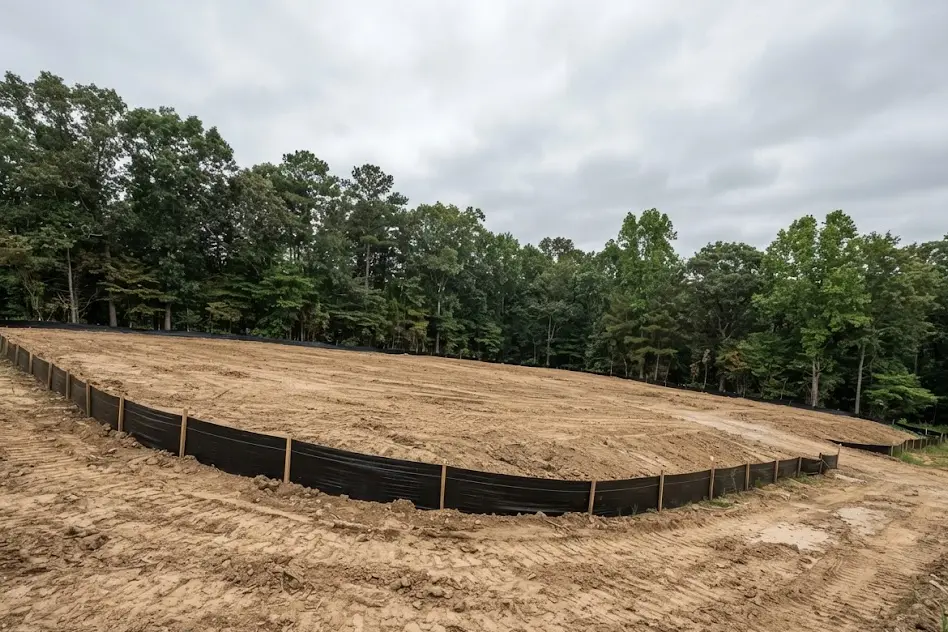
Many municipalities require a permit before land can be cleared, especially above a certain size or where protected species are present. Requirements can include tree surveys or erosion control plans, some areas restrict clearing in wildlife breeding seasons, and some ask for a land survey before issuing the permit (HomeGuide).
Stormwater. At the federal level, a Clean Water Act permit is required for stormwater discharges from construction activity that disturbs 1 acre or more of land, or less than an acre if it is part of a larger development plan that will disturb 1 acre or more. The EPA counts clearing, grading and excavating as construction activity for this purpose, and names sediment as a pollutant commonly associated with construction sites (U.S. EPA).
Wetlands. Placing dredged or fill material in waters of the United States, including wetlands, needs a permit under Section 404 of the Clean Water Act unless the activity is exempt, as certain farming and forestry activities are. The U.S. Army Corps of Engineers handles the day-to-day permit decisions and verifies jurisdiction (U.S. EPA). If any part of your land is wet, low-lying or next to a stream, find out before a machine pushes soil into it.
Call 811 before any digging
Stump removal and grading both put equipment below the surface. 811 is the national call-before-you-dig number: you call it or use your state 811 center’s website a few business days before digging, and utilities send locators to mark buried lines with paint or flags. Wait until every utility has responded; hitting a line can disrupt service, cost money to repair, or cause serious injury or death (811). Ask your contractor whether they place the request or expect you to.
How long land clearing takes
A small residential lot with light vegetation can take 1 to 3 days; heavily wooded properties of several acres can take several weeks. Rain, snow and frozen ground can hold the job up and make the site unsafe for heavy equipment (HomeGuide).
How to keep the bill down
- Match the method to the goal. If you are not building, forestry mulching or brush removal costs far less per acre than full clearing.
- Clear only the area you need. Selective clearing leaves less debris to remove.
- Keep chipped material on site as ground cover instead of paying to haul it away, and reuse or recycle what you can to avoid disposal fees (Fixr).
- Ask about scheduling the job in the contractor’s off-season (Fixr).
- Clear a larger area in one visit rather than in stages: the price per acre falls as the job gets bigger.
- Get at least three written estimates and check that each one assumes the same method and the same disposal.
Questions to ask before you sign
- Which clearing method and equipment will you use, and will stumps and roots be removed?
- What happens to the debris, and is disposal included in the price?
- Do you pull the permits, or do I? Who contacts 811?
- How do you handle buried rock or debris you find partway through?
- Do you install erosion control, and how will you protect trees and features I want to keep?
- Are you licensed and insured, and what happens if weather delays the work?
Sources
- U.S. Environmental Protection Agency, Stormwater Discharges from Construction Activities.
- U.S. Environmental Protection Agency, Permit Program under CWA Section 404.
- N.C. Forest Service, Online Burning Permit System and Fire Safety Outdoors (last modified July 3, 2026).
- 811, Before You Dig.
- HomeGuide, How Much Does It Cost to Clear Land?, November 20, 2025.
- Fixr, Cost of Clearing Land to Build, updated January 31, 2025.
- LawnStarter, Pricing Guide: How Much Does It Cost to Clear Land?, updated December 27, 2025.