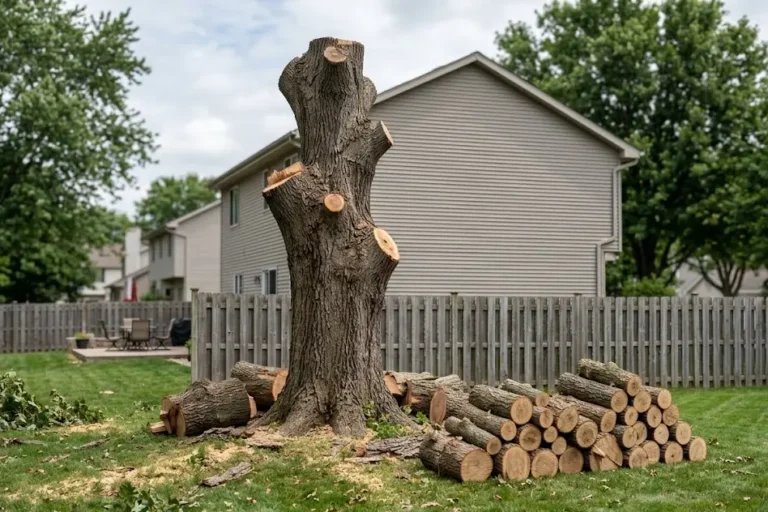
$120 – $400That is the typical stump grinding cost in 2026 for the first stump, with each additional stump on the same visit adding $30 to $60. Priced by size, grinding runs $2 to $6 per inch of diameter, and most companies charge a minimum of $80 to $160. An extra-large hardwood stump can cost $300 to $800 on its own (all figures from HomeGuide, December 2025). Other guides land in the same band: Fixr puts the national average range at $150 to $300 per stump (January 2025), and LawnStarter at $131 to $438 per job (December 2025).
Grinding is usually a separate line from cutting the tree down, so many homeowners end up pricing it on its own, either right after a removal or years later for a stump that has been sitting in the lawn. The figures below come from three published cost guides, compared side by side where they overlap. The sections that follow explain how the stump is measured, why a small stump still costs the minimum fee, what grinding leaves behind in the ground, and what you need to do before anyone digs.
Stump grinding cost by diameter
| Stump diameter | Average cost to grind |
|---|---|
| Up to 12 inches | $30 – $70 |
| 24 inches | $50 – $150 |
| 36 inches | $70 – $220 |
| 48 inches | $100 – $290 |
| 60 inches | $120 – $360 |
| 72 inches | $150 – $430 |
The other two guides group stumps into size tiers instead of exact diameters, and their tiers are not identical:
| Size tier | Fixr | LawnStarter |
|---|---|---|
| Small (Fixr: up to 12 in.; LawnStarter: up to 10 in.) | $40 – $75 | $40 – $75 |
| Medium (LawnStarter: 10 to 30 in.) | $75 – $150 | $75 – $150 |
| Large (Fixr: over 48 in.; LawnStarter: over 30 in.) | $150 – $250 | $200 – $417 |
The three guides agree closely on small and medium stumps. They disagree on large ones: LawnStarter’s large tier starts at 30 inches and runs up to $417, Fixr’s text puts stumps over 48 inches at $150 to $250 (its summary table stops at $200), and HomeGuide goes to $430 for a 72-inch stump. For a big stump, expect quotes to vary widely.
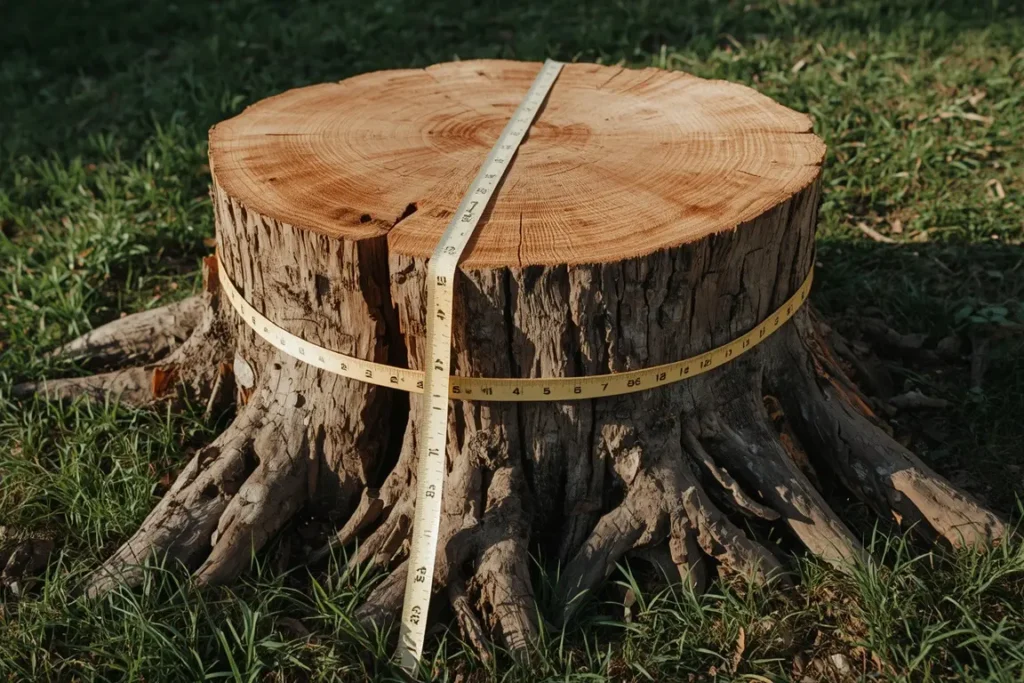
Contractors measure the diameter of the trunk’s base, not just the cut surface on top, and HomeGuide recommends measuring the widest point of the stump at ground level to get the most accurate estimate (HomeGuide). A stump that flares out at the base will be priced wider than the log that was cut from it.
How stump grinding is priced
| Pricing method | HomeGuide | Fixr | LawnStarter |
|---|---|---|---|
| Per inch of stump diameter | $2 – $6 | $2 – $5 | $2 – $5 |
| First stump | $120 – $400 | $80 – $150 base rate | about $123 |
| Each additional stump | $30 – $60 | $40 – $75 | $37 – $70 |
| Per hour | $100 – $200 | $150 – $200 | $125 – $200 |
| Per day | $800 – $1,600 | — | — |
| Minimum service fee | $80 – $160 | about $100 | about $100 |
Per hour rates are used mainly when there are many stumps on a large lot and the crew brings a heavy-duty grinder, and sometimes for unusually difficult jobs (HomeGuide). For a single stump in a yard, expect a per-inch or per-stump price.
The minimum fee matters most for small stumps. The per-inch price of a modest stump can come in lower than the minimum the company charges to bring the machine out.
Our estimate: a 20-inch stump at $2 to $6 per inch works out to $40 – $120, so with a minimum fee of $80 to $160 you would likely pay the minimum rather than the per-inch price. This is our calculation from HomeGuide’s rates, not a measured price.
Estimate your stump grinding cost
Use the tables above to estimate your cost. The interactive calculator needs JavaScript.
The calculator multiplies the diameter by the per-inch rate from the tables above. Labor is about 90% of a typical stump grinding bill, according to Fixr; the hardwood surcharge is from LawnStarter; cleanup and additional-stump prices are from HomeGuide.
Grinding several stumps at once
Reduced rates typically apply when you grind multiple stumps (HomeGuide). The first stump costs $120 to $400; each one after that on the same job costs $30 to $60 on average.
Our estimate: three average stumps on one visit would cost about $180 – $520 ($120 – $400 for the first, plus two at $30 – $60 each). Booked as three separate jobs at the first-stump price each time, the same work would cost $360 – $1,200. This is our sum of HomeGuide’s ranges, not a measured price.
If a tree service is already taking the tree down, ask for the grinding to be quoted on the same job. Combining stump grinding with related yard services gives cheaper overall costs (HomeGuide).
What raises the price
- Wood type and age. Old hardwood stumps take longer and need bigger equipment than young, rotted or softwood stumps.
- Size and roots. Wide trunks with complex root systems take longer to grind.
- Access. Stumps next to a foundation, in a tight city lot, or where equipment cannot easily reach cost more in labor.
- Terrain. Sloped or rocky ground takes extra time to work.
- Travel. Extra travel fees apply outside a company’s standard service area.
- Depth. Grinding deeper than the standard service costs more (see below).
All of the factors above are listed by HomeGuide. Grinding a single stump takes 15 minutes to 3 hours depending on its size, the hardness of the wood and where it sits; small stumps from young trees are the quickest (HomeGuide).
Root depth: how far down the grinder goes
A standard service grinds 4 to 6 inches below ground level. If you want to grow grass over the spot, HomeGuide suggests grinding 6 to 8 inches down. Grinding out the whole stump and the large roots to a depth of 18 inches is labor-intensive and costs more (HomeGuide).
Grinding does not remove the root system. Roots stay in the ground, and not all of them die until years later. Removing them means digging up and cutting the underground roots, which costs $75 to $150 per hour according to HomeGuide; Fixr prices root grinding at $100 to $200 per hour and LawnStarter prices root removal at $103 to $198 per hour. Some species, such as elms and willows, are likely to send up new sprouts from the stump and need full root removal to clear them (HomeGuide).
Grinding vs full stump removal
| Method | HomeGuide | Fixr | LawnStarter |
|---|---|---|---|
| Grinding | $120 – $400 (first stump) | $150 – $300 | $131 – $438 |
| Full stump removal / digging out | $80 – $190, plus a $150 – $350 backhoe minimum | $200 – $700 | $175 – $516 |
| Chemical rotting | $100 – $200 | — | — |
| Burning out | $50 – $200 | — | — |
Grinding is the fastest way to deal with a stump and the budget-friendly one. It leaves a smaller hole to fill and carries less risk of damage to the property. The downsides: you cannot plant a new tree over it, some hardy roots may still sprout, and decaying roots or leftover sawdust can attract pests (HomeGuide).
Full removal by digging and excavation takes the most time, can leave a hole 12 feet wide or more, adds heavy-equipment fees and needs a lot of topsoil to level the yard. In exchange, it removes the plant for good, leaves no dying roots behind, and frees the spot for a new tree (HomeGuide).
Leaving the stump alone has consequences too. A stump left in place takes 3 to 10 years to rot completely, attracts pests and fungi, may keep growing roots in some species, and is a tripping hazard and a mowing obstacle (HomeGuide).
Cleanup and backfill costs
Cleanup and disposal of the grindings costs an extra $2 to $4 per inch of stump diameter; some companies fold it into the labor price or charge a flat fee instead (HomeGuide). Ask which applies before comparing quotes.
| After-grinding item | Average cost |
|---|---|
| Cleanup and disposal | $2 – $4 per inch of diameter (LawnStarter: $2 – $3) |
| Topsoil | $10 – $50 per yard |
| Sod installation | $1 – $2 per sq. ft. |
| Landscaper labor | $50 – $100 per hour |
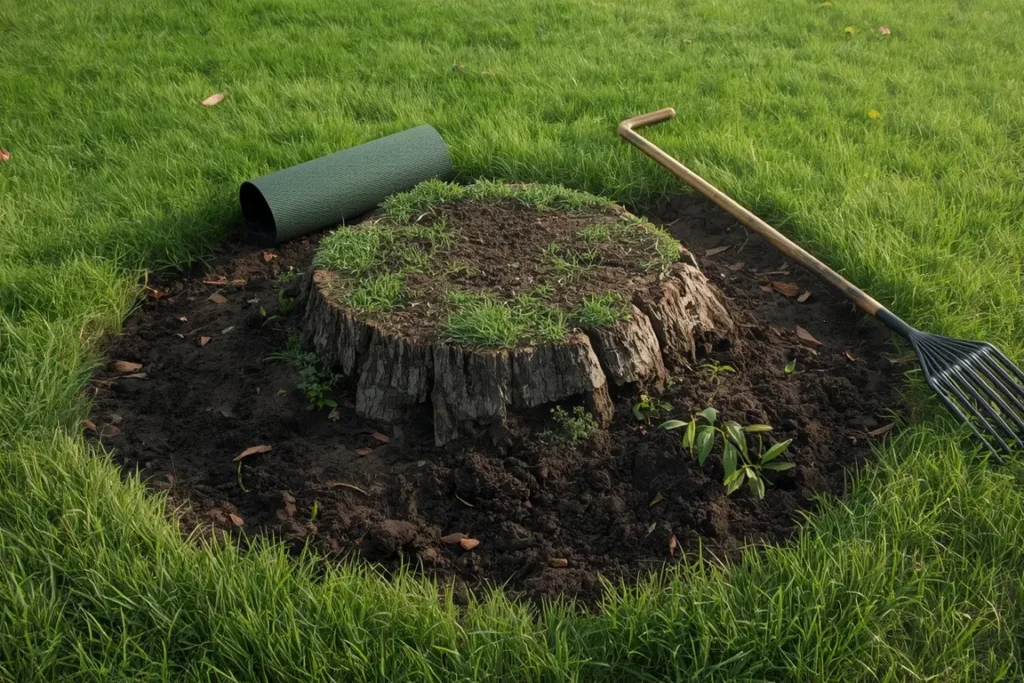
After grinding, fill the area with wood chips, topsoil or sod to grow new grass. HomeGuide advises against replanting a tree in the same spot unless all the roots are gone and new soil and fertilizer are in place (HomeGuide). If roots have damaged underground pipes, asphalt or concrete, those repairs are extra costs on top of the grinding.
Our estimate: cleanup and disposal for a 24-inch stump at $2 to $4 per inch adds $48 – $96 to the bill. This is our calculation from HomeGuide’s rate, not a measured price.
Renting a stump grinder yourself
Stump grinder rentals cost $100 to $400 per day or up to $1,000 per week, depending on the grinder type, size and rental company. Buying a new machine costs $1,600 to $10,500 (HomeGuide). For a few stumps, HomeGuide notes that renting often costs more than hiring a professional, and that the job is labor-intensive and needs safety precautions.
| Rental period | HomeGuide | Fixr | LawnStarter |
|---|---|---|---|
| Half day | — | $100 – $200 | — |
| Full day | $100 – $400 | $200 – $350 | $178 – $364 |
| Week | up to $1,000 | $600 – $1,000 | — |
LawnStarter adds that a DIY job can take 1 to 3 days (LawnStarter).
Our estimate: one day of rental ($100 – $400) overlaps almost exactly with the price of having a professional grind a first stump ($120 – $400), before you count transport, fuel or your own time. Renting only has a chance of paying off when you have several stumps to grind in the same day. This is our comparison of HomeGuide’s ranges (Fixr’s and LawnStarter’s day rates fall inside the same band), not a measured figure.
Call 811 before any grinding
A stump grinder cuts below the soil line. The national 811 program says every digging project, regardless of depth, requires contacting 811 a few days in advance, because some utilities can be buried just inches below the surface (811 Before You Dig).
The steps for homeowners are: call 811 or make an online request a few days before the work; wait for the utilities to mark their lines with paint or flags (your state sets the waiting period); confirm every utility has responded; and respect the marks. The program advises avoiding digging on top of or within 18 to 24 inches on all sides of the marks, and contacting your state 811 center about the rules if you must work near them or use machinery of any kind (811 Before You Dig). If you hire a company, ask whether they place the locate request themselves.
Safety
Stump grinders are dangerous machines. OSHA’s tree care hazards page lists caught-in accidents among the hazards of the work and links a state fatality investigation in which a laborer died after being pulled into a tree stump grinder (OSHA). If you hire the job out, ask what protective gear the crew uses and how they will protect the surrounding area. If you rent, weigh that risk against the savings.
How to keep the bill down
- Grind all your stumps on one job so you pay the first-stump price only once.
- Book the grinding together with the tree removal or other yard services rather than as a separate job.
- Keep the wood chips to fill the hole instead of paying for disposal.
- Ask for standard depth unless you plan to grow grass over the spot.
- Compare several detailed written quotes, and do not pay the full amount up front.
Questions to ask before you sign
- Is the price per inch, per stump or per hour, and what is your minimum fee?
- How far below ground will you grind, and can I plant grass over it?
- Do cleanup and debris disposal cost extra?
- Will you contact 811 to have underground lines located before you start?
- How big is your grinder, and will I need to make space for it?
- Are you licensed and insured, and what fees might not appear in this estimate?
Sources
- 811 Before You Dig, national 811 program home page and 811 Information for Homeowners.
- Occupational Safety and Health Administration, Tree Care: Hazards and Solutions.
- HomeGuide, How Much Does Stump Grinding Cost?, December 22, 2025.
- Fixr, Stump Grinding Cost, updated January 31, 2025.
- LawnStarter, Pricing Guide: How Much Does Stump Grinding Cost?, updated December 27, 2025.