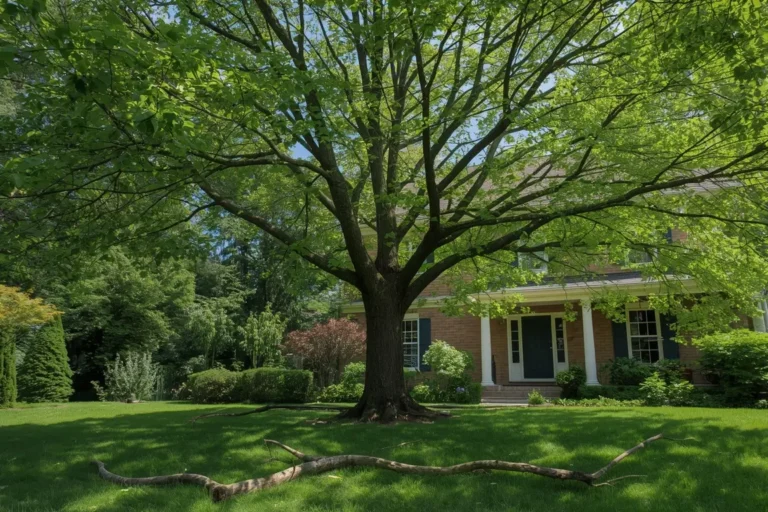
$400 – $1,200That is the typical tree removal cost in 2026 for one tree. Three published cost guides land close together: HomeGuide puts it at $400 – $1,200, Fixr at $400 – $1,100 and LawnStarter at $385 – $1,070. Their averages differ more ($850, $435 and $630). Stump grinding is usually a separate line on the bill.
The price of taking down a tree depends mostly on how tall it is, how thick the trunk is, what sits underneath it and how fast you need the job done. The figures below come from published cost data, and the sections that follow explain the extra lines that tend to appear on a quote: the stump, the wood, the permit and the emergency surcharge.
Tree removal cost by height
| Tree height | HomeGuide | Fixr |
|---|---|---|
| Small (under 30 ft) | $200 – $500 | $150 – $400 |
| Medium (30–60 ft) | $500 – $1,500 | $450 – $700 |
| Large (HomeGuide 60–80 ft; Fixr 60–100 ft) | $850 – $2,000 | $900 – $1,200 |
| Extra-large (HomeGuide over 80 ft; Fixr over 100 ft) | $1,200 – $2,500+ | $1,300 – $2,000 |
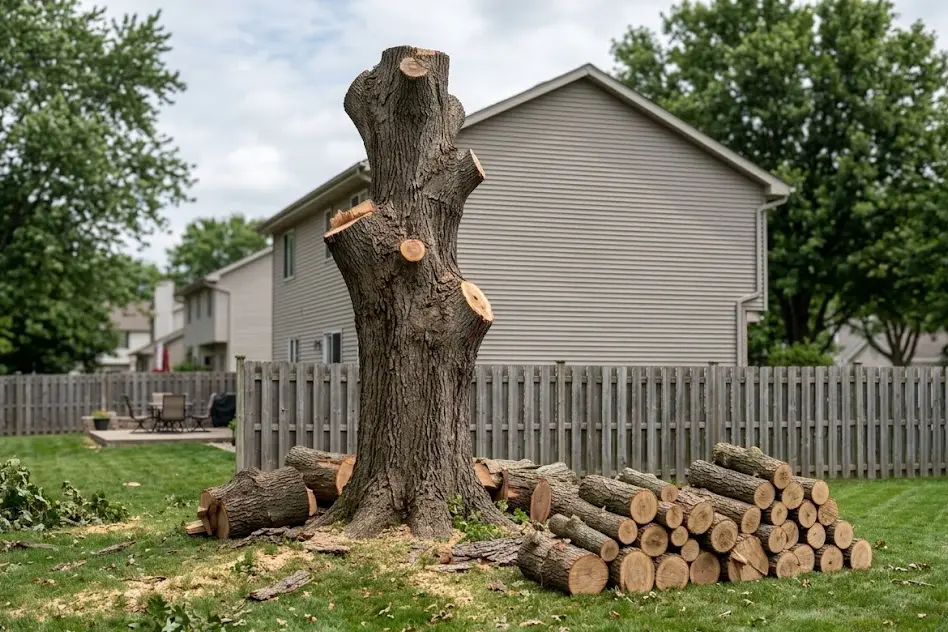
The two guides agree on small trees but not on medium ones: HomeGuide’s top figure for a 30–60 ft tree ($1,500) is more than double Fixr’s ($700), so treat the wider range as the safer planning figure. Fixr gives an overall low end of $155 for a tree under 12 feet and a high end of $2,015 for a very large tree over 36 inches in diameter, stump included (Fixr). LawnStarter puts the extremes at $150 and $1,935, or $10 to $14 per foot of height (LawnStarter).
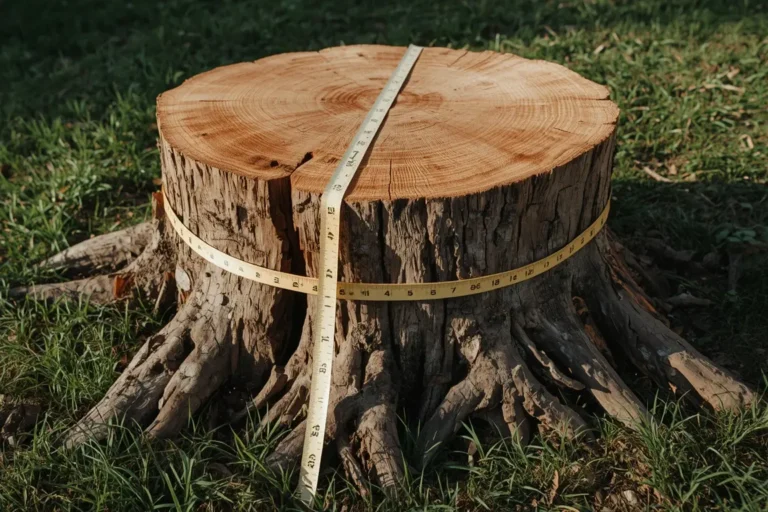
Height matters because taller trees need more equipment, more safety measures and a more experienced crew (HomeGuide). Trunk thickness matters too. Tree services measure diameter at breast height, and trunks wider than 24 inches cost significantly more to remove than smaller ones (HomeGuide).
Some companies quote a flat price per job; others bill by the hour, at anywhere from $100 to $400 or more per hour depending on location, complexity and urgency (HomeGuide).
Estimate your tree removal cost
Use the tables above to estimate your cost. The interactive calculator needs JavaScript.
Our estimate: each height option in the calculator runs from the lower of HomeGuide’s and Fixr’s low figures to the higher of their high figures, using HomeGuide’s height bands. The stump line spans HomeGuide’s $120 – $400 and LawnStarter’s $158 – $450. This is our combination of published ranges, not a measured price.
Cost by tree type
| Tree type | HomeGuide | Fixr | LawnStarter (average) |
|---|---|---|---|
| Ash | $650 – $2,000 | $500 – $1,000 | – |
| Cedar | $600 – $2,000 | $500 – $2,000 | – |
| Maple | $600 – $1,200 | $1,000 – $1,800 | $1,150 |
| Oak | $300 – $2,500 | $900 – $2,000 | $775 |
| Palm | $200 – $1,200 | $250 – $1,200 | $725 |
| Pine | $250 – $1,600 | $200 – $1,500 | $925 |
Oak and cedar tend to cost more because of their dense, heavy wood and large branch systems, while palms are lighter and simpler to take down (HomeGuide). The guides disagree on maple, though: Fixr’s range starts at $1,000, near the top of HomeGuide’s. LawnStarter notes that size matters more than species, and two trees of the same height are likely to cost about the same (LawnStarter).
What makes a removal harder and more expensive
What is under the tree. A tree standing in an open backyard costs less to remove than one wedged between a house and a fence. Trees near structures, power lines or property lines have to be taken down in pieces, and crews may need to carry tools by hand or bring specialized machinery. Steep slopes, narrow gates and poor road access all add to the price (HomeGuide).
The tree’s condition. A dead or diseased tree often costs more, not less, because brittle branches can fall without warning and the crew has to take extra precautions (HomeGuide).
Urban or rural. Contractors in cities typically charge more than in rural areas because space is limited and the risk is higher (HomeGuide).
Season. Prices can run 10% to 20% higher in summer and fall, when demand peaks, and are often lower in winter and early spring (HomeGuide).
Number of trees. Removing several trees in one visit can cut the per-tree price by 10% to 25%, because the crew and equipment are already on site. Clearing a whole lot runs $1,200 to $8,000 per acre, depending on how heavily wooded it is (HomeGuide).
Emergency and storm removal
Same-day or next-day removal of a hazardous tree often costs two to three times the standard rate (HomeGuide). A tree that has already fallen cleanly in an open area usually costs less to clear than a standing one (LawnStarter puts a fallen tree at $85 to $300, LawnStarter), but a tree lying on a structure or on power lines means emergency service and repairs on top (HomeGuide).
Our estimate: applying the two-to-three-times emergency multiplier to the typical $400 – $1,200 range gives roughly $800 – $3,600 for an urgent removal of a typical tree. This is our own calculation from HomeGuide’s figures, not a measured price.
Stump grinding and removal
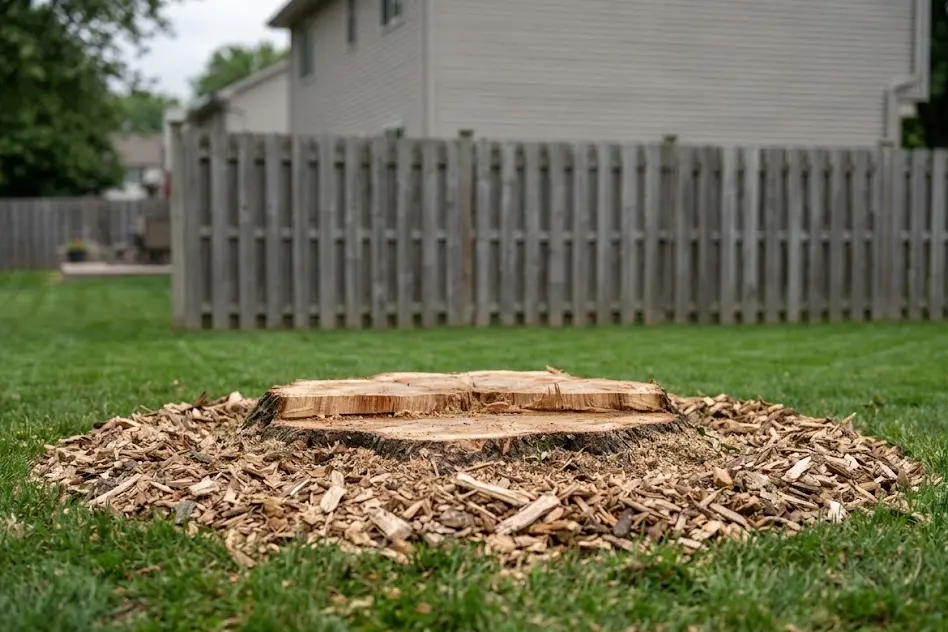
A standard tree removal price typically covers cutting, cleanup, hauling and disposal of the tree, but not the stump (HomeGuide). Grinding the stump costs $120 to $400 for the first one and $30 to $60 for each additional stump, with minimum service fees of $80 to $160. Extra-large stumps run $300 to $800 each (HomeGuide). LawnStarter gives $158 to $450 for grinding a stump and $175 to $516 for removing a stump with its root system (LawnStarter).
| Method | Typical cost |
|---|---|
| Grinding, per inch of diameter | $2 – $6 |
| Grinding, first stump | $120 – $400 |
| Grinding, each additional stump | $30 – $60 |
| Digging out | $80 – $190 per stump |
| Chemical rotting | $100 – $200 per stump |
| Root removal | $75 – $150 per hour |
Standard grinding goes 4 to 6 inches below ground. Grinding out the whole stump and large roots down to 18 inches is more work and costs more, and grinding does not include removing the roots (HomeGuide). Hauling away the grindings adds $2 to $4 per inch of stump diameter unless the company includes it (HomeGuide).
Wood, chips and hauling
Chipping branches into mulch costs about $50 to $100, and splitting logs into firewood adds $50 to $100 on average (HomeGuide). LawnStarter puts hauling the debris away at $50 to $90 when it is not included (LawnStarter). Because cleanup and hauling are normally part of the removal price, ask each company to say in writing whether the wood leaves your property or stays in a pile.
Our estimate: a medium tree ($500 – $1,500) plus grinding its stump ($120 – $400) and chipping the branches ($50 – $100) adds up to about $670 – $2,000 for the whole job. This is our sum of HomeGuide’s ranges, not a measured price.
Do you need a permit?
It depends on your city. Tree removal permits cost $75 to $450 where they are required, and removing a tree on private property does not always need one (HomeGuide). Rules vary widely. In Portland, Oregon, for example, removing any street tree requires a permit, and a private tree needs a removal permit once its trunk is 12 inches in diameter or larger measured at 4.5 feet; in certain environmental overlay zones, trees of any size may need one (City of Portland). The same page notes that owners are responsible for the care of street trees next to their property. Check with your city or county before you sign, and ask the tree service who pulls the permit.
Who pays when a tree falls
According to the Insurance Information Institute, if a tree hits your home or another insured structure, such as a detached garage, a standard homeowners policy covers the damage to the structure and its contents, including trees brought down by wind, lightning or hail. You are covered no matter who owned the tree; if it came from a neighbor’s yard, your insurer may try to recover the money from the neighbor’s insurer, and you may get your deductible back (Insurance Information Institute).
Removal of the tree itself is covered only up to a limit, generally about $500 to $1,000 depending on the insurer and policy. If the tree did not hit an insured structure, there is generally no coverage for removing it, although some insurers pay when it blocks a driveway or an accessibility ramp. Poor maintenance is not covered (Insurance Information Institute). Read your own policy for the exact limits.
Signs a tree may need to come down
Alabama Cooperative Extension defines a hazard tree as one with structural defects that could fail and hit a person, building or other target; without a target nearby, a tree does not count as a hazard (Alabama Cooperative Extension System). The defects it lists include:
- Dead or dying stems and branches, and broken branches still hanging in the canopy.
- Weak, narrow V-shaped branch unions and codominant stems of similar size growing from the same point.
- Cracks, especially ones that run across the trunk or a branch.
- Root problems: diseased or broken roots, or roots circling the base of the trunk.
- An uneven crown, or a lean that is getting worse quickly.
- Signs of wood decay, such as cavities or sap leaking through the bark.
The same publication notes that a dead tree posing no danger can be left standing as shelter for wildlife, so a defect alone does not mean the tree must go. A certified arborist can judge the risk before you pay for removal.
Never do it yourself near power lines
The federal Occupational Safety and Health Administration describes many tree care hazards as potentially fatal, naming overhead power lines and falling branches among them, and its list of investigated deaths includes several tree trimmers electrocuted while working (OSHA). The Bureau of Labor Statistics adds that tree trimmers and pruners have one of the highest rates of injuries and illnesses of all occupations (BLS). If a tree or branch is anywhere near a line, stay away and call your utility or a professional tree service.
What tree workers earn
The median hourly wage for tree trimmers and pruners was $24.50 in May 2025, according to the Bureau of Labor Statistics (BLS). That is what the worker is paid, not what you are billed: the $100 to $400+ hourly rate a company charges also covers a crew, equipment such as chippers and stump grinders, insurance and overhead.
How to keep the bill down
- Schedule non-urgent removals for winter or early spring, the off-season, instead of summer or fall.
- Have a tree looked at before it becomes an emergency; urgent removal often costs two to three times more.
- Group several trees, or a tree and its stump, into one visit to get a lower per-tree price.
- Decide whether you need the stump ground at all, and whether you want to keep the wood or chips.
- Get written quotes from at least three licensed and insured companies that list cleanup and disposal.
Questions to ask before you sign
- Are you licensed and insured, with liability and workers’ compensation coverage, and can I see proof?
- Does the price include stump grinding, cleanup, hauling and disposal of the wood?
- Does my city require a permit, and will you apply for it?
- How will you protect my house, fence, lawn and underground lines during the work?
- Is the price flat or hourly, and what could make it go up?
More yard cost guides
- Pool Installation Cost in 2026: Inground vs. Above-Ground
- Retaining Wall Cost in 2026: Per Square Foot, Material and Height
- Sod Installation Cost in 2026: Per Sq Ft, Pallet and Grass Type
- Stump Grinding Cost in 2026: Per Inch, Per Stump and Extras
- Tree Trimming Cost in 2026: Prices by Height and Tree Type
Sources
- U.S. Bureau of Labor Statistics, Occupational Outlook Handbook: Grounds Maintenance Workers, pay data for May 2025.
- Occupational Safety and Health Administration, Tree Care Industry: Hazards and Solutions.
- Alabama Cooperative Extension System, Spotting Danger: How to Identify & Assess Hazard Trees, April 2025.
- Insurance Information Institute, If a tree falls on your house, are you covered?
- City of Portland, Do I Need a Tree Permit?
- Fixr, Tree Removal Cost, updated January 31, 2025.
- LawnStarter, Pricing Guide: How Much Does Tree Removal Cost?, updated December 27, 2025.
- HomeGuide, Tree Removal Cost, February 2026, and Stump Grinding Cost, December 2025.