$1,500 – $20,000That is the typical house leveling cost in 2026 across three published cost guides. Shimming and leveling a pier-and-beam house runs $1,500 to $10,000, leveling a whole house runs $3,500 to $20,000 at $5 to $10 per square foot, and fixing moderate settling under a slab runs $4,500 to $15,000 (HomeGuide) or up to $25,000 (Fixr). Severe sinking that needs deep piers costs $10,000 to $40,000.
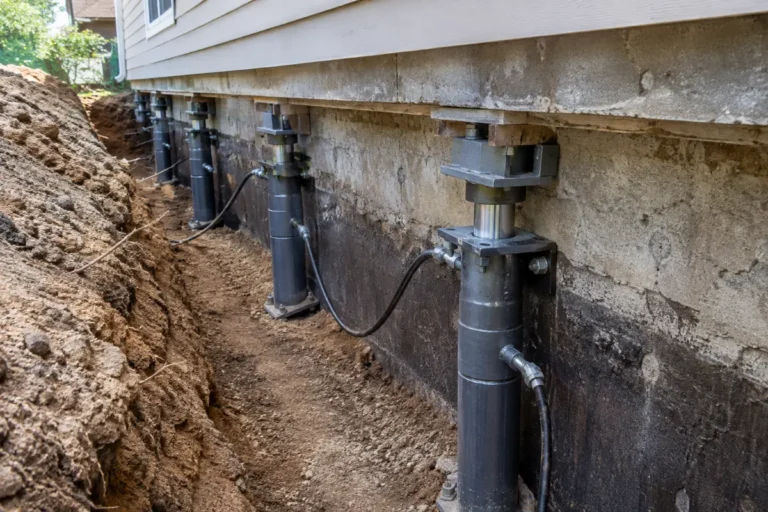
The price depends first on what your house sits on. A house on piers and beams has a crawl space a crew can work in, and the fix is often a matter of jacking and shimming. A house on a concrete slab has to be lifted from outside or below, with piers set into firmer soil or material pumped under the slab. The figures below separate the two, compare what HomeGuide, Fixr and This Old House publish, then cover the engineer’s report you should get before paying for either.
House leveling cost by foundation type
| Situation | HomeGuide | Fixr |
|---|---|---|
| Pier and beam: shimming and leveling | $1,500 – $10,000 | — |
| Pier and beam: all repairs, typical range | $1,500 – $15,000 | $2,000 – $15,000 |
| Leveling a house ($5 – $10 per sq ft) | $3,500 – $20,000 | — |
| Slab: all repairs, typical range | — | $1,000 – $10,000 |
| Moderate settling or sinking | $4,500 – $15,000 | $4,500 – $25,000 |
| Severe sinking: piers or underpinning | $15,000 – $40,000 | $10,000 – $40,000 |
| Raising the house only | $10,000 – $40,000 | $15,000 – $25,000 (1,500 sq ft, to repair a foundation) |
| Lifting the entire foundation | $50,000 – $100,000+ | $20,000 – $30,000 |
The two guides agree on the low end of most rows and split on the top. The widest gap is lifting the whole house: HomeGuide’s sinking-foundation guide puts lifting the entire foundation at $50,000 to $100,000 or more, while Fixr puts house lifting at $20,000 to $30,000 and This Old House, using Angi data, puts foundation lifting and leveling at $20,000 to $23,000. HomeGuide’s own house lifting guide prices raising the structure alone at $10,000 to $40,000 and lifting it to replace the foundation at $20,000 to $100,000 (HomeGuide). The scope behind each figure differs, so ask any contractor which of these the quote covers. Lifting a whole house is treated as a last resort for severe or widespread sinking (HomeGuide); most leveling jobs fall into one of the smaller rows above.
Our estimate: the $1,500 to $20,000 headline range is ours, not a single published figure. We took the low end from HomeGuide’s price for shimming and leveling a pier-and-beam house ($1,500) and the high end from HomeGuide’s price for leveling a house ($20,000). Fixr’s typical ranges for pier-and-beam repairs ($2,000 to $15,000) and slab repairs ($1,000 to $10,000) fall almost entirely inside it. Severe sinking and full lifts sit above it, and Fixr’s top figure for sinking or uneven settling ($25,000) runs past it.
Estimate your house leveling cost
Use the tables above to estimate your cost. The interactive calculator needs JavaScript.
Leveling a pier-and-beam house
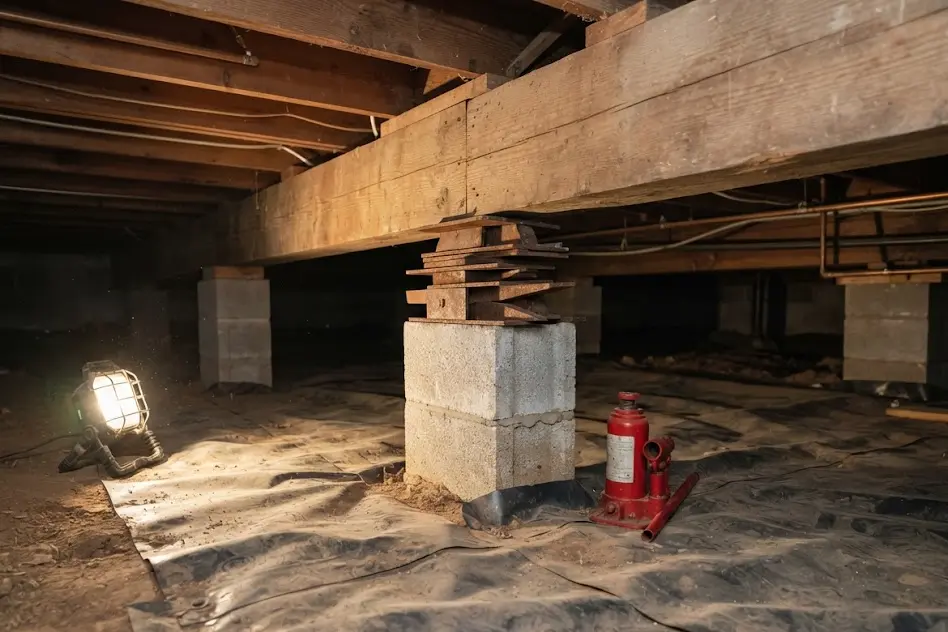
A pier-and-beam foundation carries the house on vertical piers, horizontal beams and joists, with a crawl space underneath. It is common where soils are expansive clay or where flooding is a risk (HomeGuide). The usual way to level one is to raise the house with hydraulic jacks and then add shims of steel, concrete or other materials under the beams or piers, adjusting them step by step until the floor is level (HomeGuide).
| Repair | HomeGuide | Fixr / This Old House |
|---|---|---|
| Shimming and leveling | $1,500 – $10,000 | — |
| Pier reinforcement or a new pier | $1,500 – $3,000 per pier | $1,000 – $3,000 per pier (both) |
| Beam replacement | $1,500 – $4,000 per beam | — |
| Moisture management | $3,000 – $8,000 | — |
| Support jacks | $5,000 – $10,000 | — |
| Piering or underpinning | $10,000 – $20,000+ | $10,000 – $40,000 (Fixr) |
Shimming corrects a floor that dropped because of soil compaction, moisture changes or age. When piers have deteriorated or can no longer carry the house, the crew reinforces them with steel or concrete or adds new ones, and beams damaged by moisture, pests or age are replaced or sistered with new members or steel brackets (HomeGuide). Support jacks are quicker and less invasive than piering, but they are a temporary fix; severe problems call for piers set deep in the ground (HomeGuide).
Cost by pier material
| Existing piers | Typical repair cost | Why |
|---|---|---|
| Wood piers | $1,000 – $3,000 | Easy to replace or reinforce |
| Concrete block piers | $1,000 – $4,000 | Blocks can be shimmed or swapped one at a time |
| Brick or stone piers | $2,500 – $5,000 | Original materials have to be matched |
| Steel piers | $3,000 – $7,000 | Needs skilled labor and welding |
| Drilled caissons | $5,000 – $15,000 | Concrete must be broken out to reach the pier |
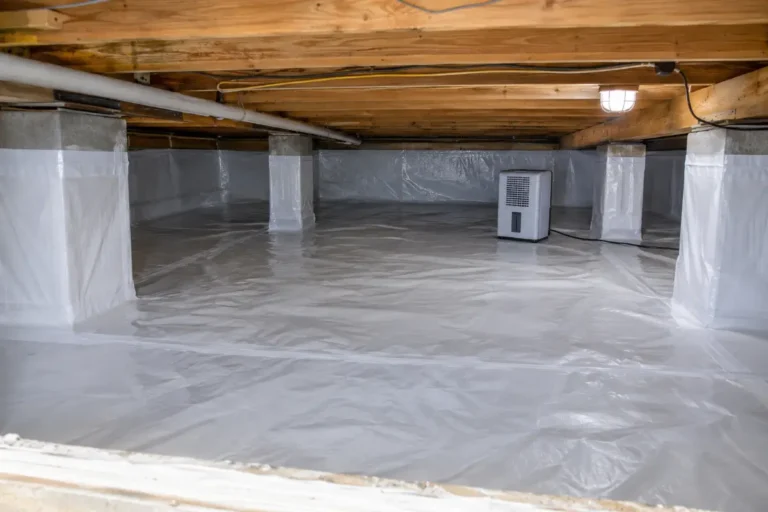
Tight crawl spaces raise the labor bill, especially if the crew has to dig to reach the piers (HomeGuide). If the crawl space is damp, fixing the moisture is part of the job: a vapor barrier and insulation help keep the wood from decaying, which we price in our guide to crawl space encapsulation cost.
Leveling a house on a slab
| Method | HomeGuide | Fixr | This Old House | Used for |
|---|---|---|---|---|
| Mudjacking | $4,500 – $9,000 | $500 – $1,900 | $550 – $1,300 | Small sunken slabs or mild settling |
| Reinforcement / stabilization | $5,000 – $15,000 | $4,000 – $12,000 (carbon fiber); $5,000 – $15,000 (tiebacks) | $4,000 – $12,000 | Bowing or buckling walls |
| Underpinning with piers | $10,000 – $30,000+ | $10,000 – $40,000 | $1,000 – $3,000 per pier | Major settlement that needs deep support |
| Lifting the whole foundation | $50,000 – $100,000+ | $20,000 – $30,000 | $20,000 – $23,000 | Severe, widespread sinking |
The sources disagree most on mudjacking. HomeGuide’s $4,500 to $9,000 is its price for mudjacking as a sinking-foundation repair (HomeGuide), while Fixr’s $500 to $1,900 and This Old House’s $550 to $1,300 are typical job prices, and neither guide says what slab area they assume (Fixr, This Old House). Priced by area, the guides are closer:
| Slab lifting, per sq ft | HomeGuide | Fixr |
|---|---|---|
| Mudjacking (cement-based slurry) | $4 – $9 | $5 – $8 (foundation jacking) |
| Polyurethane foam (polyjacking) | $8 – $25 | $20 – $25 |
Piers. Underpinning installs steel or helical piers deep into the stable soil below the foundation and gives permanent support. Helical piers cost $2,000 to $4,000 each installed, and a minor problem may need only a few (HomeGuide). Fixr and This Old House put a single pier at $1,000 to $3,000 (Fixr, This Old House). Helical piers work like large screws that spread the weight across their threads, and are usually used in shallow, sandy soils; steel piers reach down to bedrock, and concrete piers reach below the frost line to stable soil (Fixr). Pier and beam houses can also be leveled on metal or concrete posts set deep in the ground (HomeGuide).
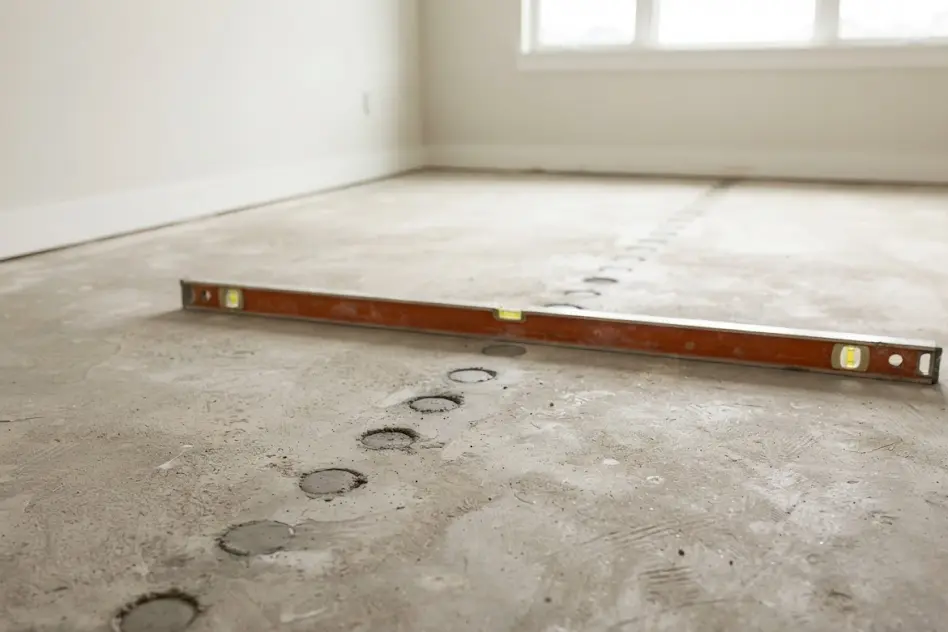
Slabjacking. Mudjacking pumps a cement-based slurry under the slab and costs $4 to $9 per square foot. Polyurethane foam, often called polyjacking, costs $8 to $25 per square foot, cures in about 15 minutes instead of 24 hours, and is light enough not to load weak soil further (HomeGuide). Mudjacking may need follow-up work if the soil underneath stays unstable (HomeGuide). Fixr adds that slab lifts of any kind are not permanent because they do not address the underlying problem, and that heavy cement-based fill can, in some cases, make it worse by adding weight to unstable soil (Fixr).
Our estimate: using HomeGuide’s per-square-foot prices, foam-lifting a 1,500-square-foot slab would come to about $12,000 to $37,500 (1,500 × $8 to $25), against $6,000 to $13,500 for mudjacking the same area (1,500 × $4 to $9). This is our arithmetic, not a measured price, and it assumes the whole slab needs lifting.
The structural engineer’s report
An independent engineer inspects the house and writes up the findings, so you know whether it needs leveling, which method fits and how extensive the job is before any contractor quotes it.
| Service | HomeGuide | Fixr | This Old House |
|---|---|---|---|
| Foundation inspection and report | $300 – $750 | $300 – $2,000 (engineer report) | $300 – $1,000 (average $600) |
| Full home inspection and report | $350 – $900 | — | — |
| Hourly rate | $100 – $220 | $100 – $500 | $100 – $500 |
| Design plans and drawings | $500 – $3,000 | — | — |
A full home inspection takes 1.5 to 3 hours depending on the size of the house (HomeGuide). Fixr’s range is wider because it depends on the scope of the assessment (Fixr). Pier-and-beam houses cost more to inspect, because the engineer has to check each pier separately (This Old House). Foundation repair companies also offer inspections for $400 to $750 and often waive the fee if you hire them for the repair (HomeGuide). This Old House recommends an independent engineer because a repair company is more likely to steer you toward its own services (This Old House). An engineer who is not selling the repair gives you a report to hold every quote against.
Other costs to budget
| Item | HomeGuide | Fixr | This Old House |
|---|---|---|---|
| Soil (geotechnical) report | — | $1,000 – $5,000 | $500 – $3,000 |
| Permit | — | $75 – $150 | $75 – $150 |
| Reserve for surprises | $1,000 – $2,500 | — | $1,000 – $2,500 |
A soil report from a geotechnical engineer can show what is causing the movement and which repair fits it (Fixr). The reserve covers things found once work starts, such as tree roots, the remains of earlier repairs or damaged utility lines (HomeGuide, This Old House). Permit fees depend on your local building department and the scope of the work (Fixr).
Signs your house is out of level
Soil movement shows up in the house before anything looks broken. Virginia’s state geology office lists jammed doors and windows, warped flooring and ruptured foundations among the damage caused by problem soils (Virginia Department of Energy). Signs worth checking:
- Doors and windows that stick or are hard to close.
- Floors that slope or warp.
- New or growing cracks in walls or in the foundation.
- Heavy parts of the house, such as a chimney, sitting at a different height from lighter parts like a patio. Heavy loads resist soil uplift while lighter ones do not, which leads to uneven settling (Virginia Department of Energy).
Minor settling that leaves hairline cracks is a normal part of a house aging. Ongoing, rapid or severe settling, or doors that are hard to close, call for action (HomeGuide).
Why houses go out of level: the soil
Clay soils swell when wet and shrink when dry. The Colorado Geological Survey notes that expansive soils can grow 10 percent or more in volume as the clay gets wet and press on foundations with 20,000 pounds per square foot or more (Colorado Geological Survey). Virginia’s geology office cites a USDA estimate that half of U.S. homes are built on expansive soils, and notes that leaking pipes, rerouted drainage, downspouts and large trees can change soil moisture locally and worsen the shrink-swell cycle. Long droughts followed by soaking rain make it worse (Virginia Department of Energy).
Other soils compress: fine-grained, loosely packed soil with organic matter, and suburban lots with buried construction waste or decaying roots (Virginia Department of Energy). You can look up the soil type under your lot for free in the USDA’s Web Soil Survey.
This matters for the bill because the soil keeps moving if the water that moved it is not dealt with. Standard homeowners insurance does not cover damage from expansive or compressive soils or frost heave (Virginia Department of Energy), so the cost is usually yours.
How to keep the bill down
- Pay for an independent engineer’s foundation inspection first. At $300 to $750 (HomeGuide) or $300 to $1,000 (This Old House), it is small next to the cost of the wrong repair.
- Fix drainage with the leveling. Gutters, downspouts and grading that move water away from the house are the first line of prevention (HomeGuide).
- Budget $1,000 to $2,500 for surprises such as tree roots, hidden earlier repairs or damaged utility lines (HomeGuide; This Old House gives the same range), so a change order does not force a rushed decision.
- Get at least three quotes from local companies with experience on your foundation type (HomeGuide).
- Keep soil moisture steady afterward: avoid over-watering or letting the ground dry out, and trim back or remove trees and large shrubs planted close to the house (HomeGuide).
Questions to ask before you sign
- What method will you use, and why does it fit my foundation?
- Does the price include permits, engineering, soil tests and cleanup?
- What happens if the damage is worse than you estimated?
- Can I live in the house during the work, and how long will it take?
- What warranty covers labor and materials?
- How will you address drainage so the house does not settle again?
- Are you licensed, bonded and insured, and can I contact recent customers?
These follow the checklists HomeGuide publishes for pier-and-beam and sinking foundation repairs, which also advise a written contract with costs, timeline and warranty, and a payment plan with the final payment due on completion.
Sources
- HomeGuide: Pier and beam foundation repair cost, December 19, 2025.
- HomeGuide: Sinking foundation repair cost, November 21, 2025.
- HomeGuide: Mudjacking cost, November 5, 2025.
- HomeGuide: Structural engineer cost, December 1, 2025.
- HomeGuide: House lifting cost, February 6, 2026.
- Fixr: Foundation repair cost, updated January 27, 2026.
- Fixr: Cost to raise a house, updated January 31, 2025.
- Fixr: Concrete leveling cost, updated January 31, 2025.
- Fixr: Structural engineer cost, updated January 31, 2025.
- This Old House: Foundation repair cost, updated March 6, 2026 (based on Angi cost data).
- This Old House: Foundation inspection cost, updated June 5, 2026.
- Colorado Geological Survey: Expansive soil and rock.
- Virginia Department of Energy: Expansive soils.
- USDA Natural Resources Conservation Service: Web Soil Survey.