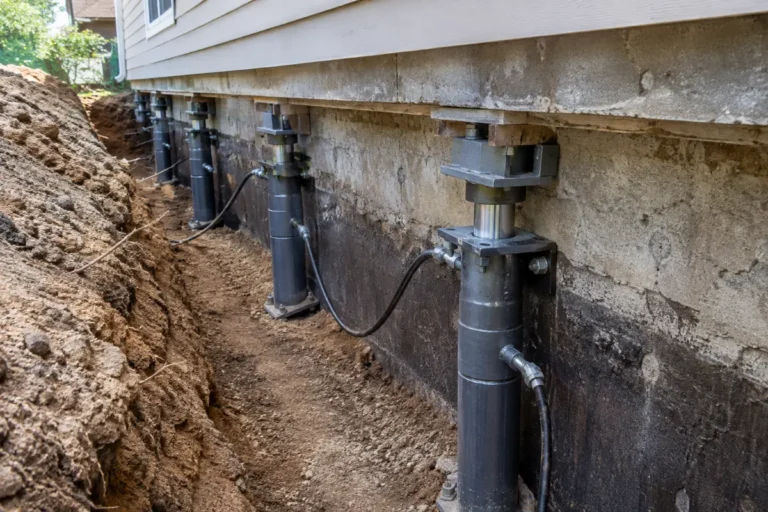
$3,000 – $18,000That is the typical basement waterproofing cost in 2026, and the published guides disagree on where in that band most jobs land. Fixr puts the common range at $3,000 to $10,000; HomeGuide prices interior systems (drains, sump pumps, sealers and crack repair) at $6,000 to $12,000 and exterior work that digs down to the foundation at $10,000 to $18,000. Small fixes like a single crack injection or regrading the yard can cost far less, and sometimes solve the problem on their own.
A wet basement is rarely one problem with one price. The right fix depends on where the water comes from, and the cheapest step is often outside the basement entirely. Below you will find what each method costs, how they compare per linear foot, and the order in which a university extension service recommends tackling the job.
Interior vs exterior waterproofing cost
| Approach | Average total cost | Typical methods |
|---|---|---|
| Interior waterproofing | $6,000 – $12,000 | Sump pumps, interior drains, sealers, crack filling (HomeGuide) |
| Exterior waterproofing | $10,000 – $18,000 | Grading, exterior drains, membranes (HomeGuide) |
| Any method, typical job | $3,000 – $10,000 | National average about $5,000; low end $1,500, high end $20,000 (Fixr) |
| Any method, per square foot of basement | $3 – $10 per sq. ft. | For example $3,000 – $10,000 for 1,000 sq. ft. (Fixr) |
Our estimate: the $3,000 to $18,000 headline range is not a single published figure. It runs from the low end of Fixr’s common range ($3,000) to the high end of HomeGuide’s exterior range ($18,000). The two guides disagree noticeably: Fixr’s typical job ($5,000) sits below HomeGuide’s cheapest interior system, so treat any single number with caution and rely on itemized quotes.
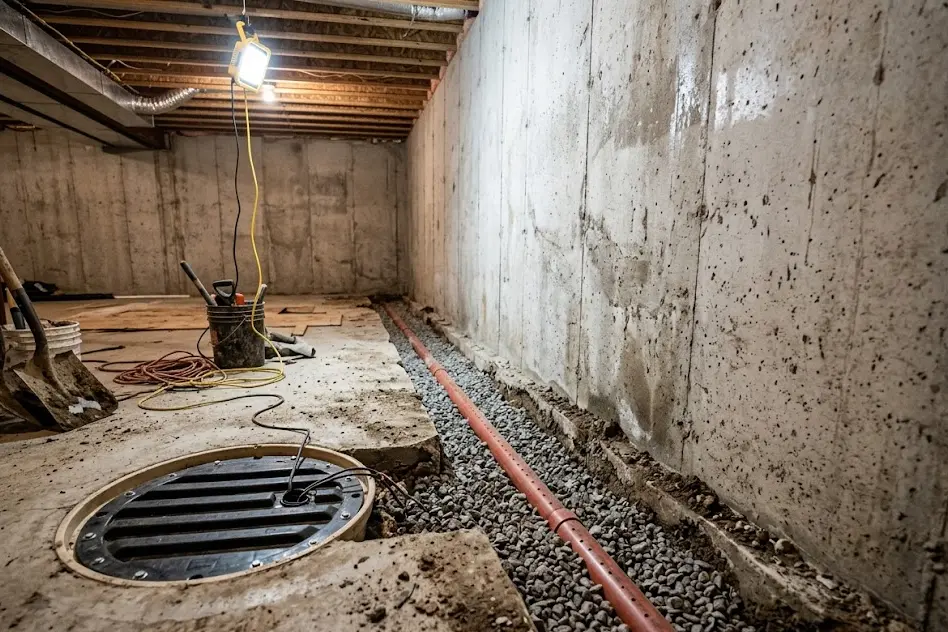
Interior systems deal with water once it reaches the foundation: a channel collects it along the base of the walls and a sump pump sends it outside. They avoid digging up the yard, which is why HomeGuide notes they typically cost less than exterior methods (HomeGuide).
Exterior work stops water before it reaches the walls. It means excavating around the house to reach the footing, which raises labor costs, and you will likely pay again to restore the landscaping afterward: HomeGuide puts replacing sod and plants at $300 to $1,000+ (HomeGuide).
Cost by waterproofing method
| Method | HomeGuide | Fixr |
|---|---|---|
| Exterior regrading | $1,000 – $5,000 | $500 – $3,000 |
| Replacing downspouts | $220 – $625 | $3 – $30 per linear ft. (gutters and downspouts) |
| Epoxy crack injection | $250 – $800+ per crack | $250 – $1,000 per crack |
| Waterproof paint or concrete sealer | $2 – $10 per sq. ft. | $1 – $8 per sq. ft. |
| Sump pump installation | $600 – $2,500+ | $600 – $2,500 |
| Interior French drain (drain tile) | $4,000 – $17,000 | $40 – $120 per linear ft. |
| Exterior drain | $30 – $90 per linear ft. | $10 – $100 per linear ft. (French drain) |
| Exterior waterproof membrane | $4 – $7 per sq. ft. | $2 – $5 per sq. ft. (sodium bentonite) |
| Foundation leak repair, minor | $250 – $5,000+ | – |
| Foundation leak repair, major | $4,500 – $15,000+ | – |
The guides broadly agree on sump pumps and crack injection, and differ most on regrading and drains, where Fixr’s per-foot ranges are wider at both ends. For the most basic job, patching cracks with hydraulic cement, coating the inside of the walls and diverting downspouts, Homewyse estimates $11.47 to $13.65 per square foot in September 2026, or $1,376 to $1,638 for a minimum 120-square-foot job, before any general contractor markup.
Cost per linear foot
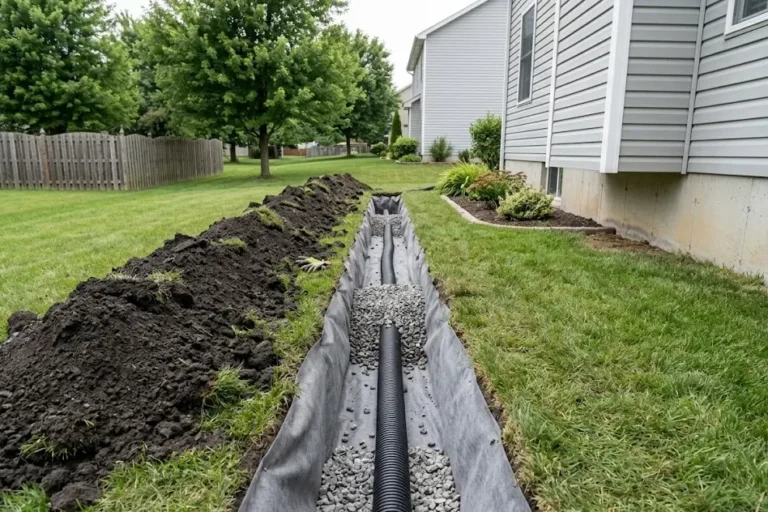
Drainage systems are priced by the length of wall they run along. HomeGuide puts an interior perimeter drain for a basement at $40 to $85 per linear foot, or $4,000 to $17,000 installed, and a deep exterior perimeter drain at $30 to $90 per foot, or $1,200 to $4,500 per side of the house (HomeGuide, February 5, 2026).
| Drain | HomeGuide, per linear foot | HomeGuide, total | Fixr, per linear foot |
|---|---|---|---|
| Interior perimeter drain, basement | $40 – $85 | $4,000 – $17,000 | $40 – $120 |
| Exterior perimeter drain / weeping tile | $30 – $90 | $1,200 – $4,500 per side | $10 – $100 (French drain) |
Our estimate: a basement measuring 30 by 45 feet has 150 feet of perimeter. At $40 to $85 per foot, an interior drain along all four walls works out to $6,000 to $12,750, and adding a sump pump at $600 to $2,500 brings it to roughly $6,600 to $15,250. This is our own multiplication of HomeGuide’s per-foot and sump pump ranges, not a measured price; at Fixr’s $40 to $120 per foot the drain alone would be $6,000 to $18,000; your basement’s shape, depth and access will change it.
Estimate your basement waterproofing cost
Use the tables above to estimate your cost. The interactive calculator needs JavaScript.
Interior drain tile and sump pump
An interior basement drain is installed by digging a trench in the floor along the walls, filling it with gravel and a perforated pipe, and connecting it to one or more sump pumps (HomeGuide). Retrofitting one means breaking up the floor around the perimeter down to the footings (HomeGuide).
The University of Minnesota Extension notes that many older houses have no drainage system under the basement at all, and that existing ones fail when the pipe collapses, clogs with silt or roots, or loses its connection to the sump; the pump itself can also fail (University of Minnesota Extension). It also recommends an airtight cover on the sump, because an open pit lets moist soil air into the basement.
You will see this kind of system sold as a “French drain”. A yard or exterior French drain is a different job with its own price range; here it only matters as part of a basement system.
Exterior excavation and membrane
A liquid or sheet membrane costs $4 to $7 per square foot installed and forms a barrier between the foundation and the soil. Crews have to excavate around the perimeter to apply it, and it works well combined with an exterior drain (HomeGuide).
Our estimate: 150 feet of foundation wall with 8 feet below grade is 1,200 square feet. At $4 to $7 per square foot, the membrane line comes to $4,800 to $8,400, before any exterior drain, landscaping or other repairs. This is our own calculation from HomeGuide’s per-square-foot range, not a measured price.
Sealants, coatings and crack injection
Waterproof paint or concrete sealer costs $2 to $10 per square foot. HomeGuide says sealers will not stop water under pressure and suit minor dampness or an extra layer inside a larger system (HomeGuide). The University of Minnesota Extension is blunter: an interior membrane or coating is cheaper than a drainage system and may seem to work for a while, but the water is still there, and eventually these systems deteriorate or push the water to another way in (University of Minnesota Extension).
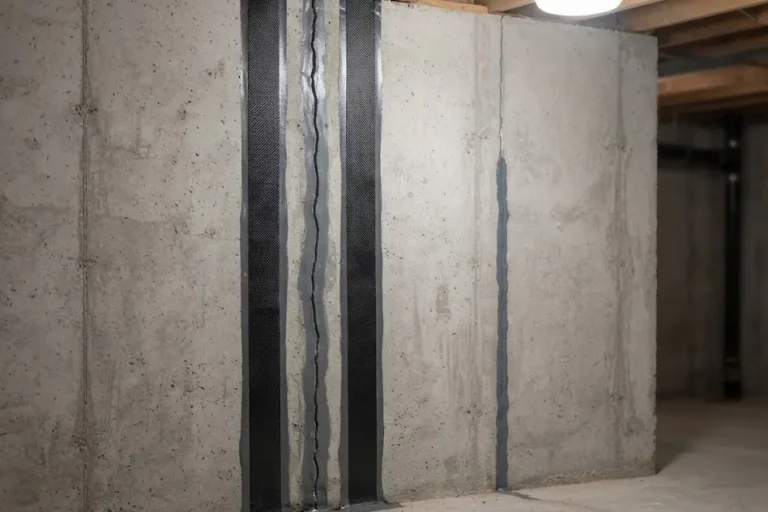
Epoxy injection costs $250 to $800+ per crack and seals minor cracks that do not threaten the home’s structure (HomeGuide). Bowed walls, warped doors or widening cracks are a different matter and belong to a structural inspection, not a sealer.
Try grading and gutters first
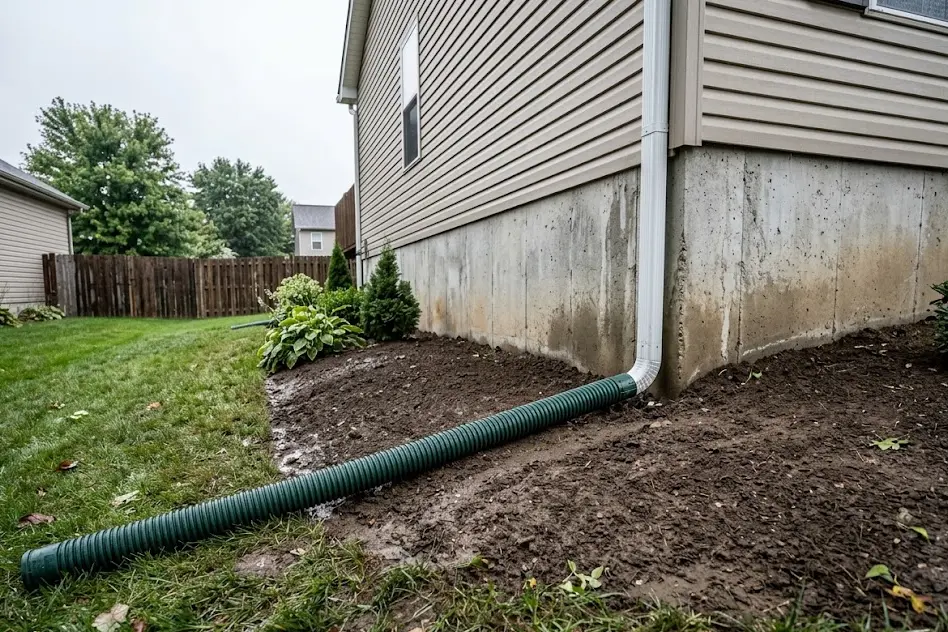
The University of Minnesota Extension recommends doing the easy, low-cost things first: remove interior moisture sources, then check gutters, downspouts and grading, which “may solve the problem” (University of Minnesota Extension). Only if water still gets in does it move on to an interior or exterior drainage system. Its guidance:
- Slope the soil away from the foundation at least 1 inch per foot for at least 6 feet.
- Use at least one downspout per 50 linear feet of roof eave, with extensions that discharge water at least 4 feet from the wall.
- A downspout without an extender or splash block is worse than none, because it dumps the roof’s water in one spot by the basement.
- In summer, do not ventilate the basement with warm, humid outside air: it condenses on cool walls and is often mistaken for a leak.
The scale matters: in a 1-inch rain, 1,250 gallons fall on the roof of a 2,000-square-foot house (University of Minnesota Extension). The EPA gives the same first advice for moisture control: clean and repair gutters regularly and make sure the ground slopes away from the foundation (EPA). HomeGuide prices regrading at $1,000 to $5,000 and new downspouts at $220 to $625 (HomeGuide), a fraction of a full drainage system.
Do you need a dehumidifier?
A dehumidifier costs $130 to $300 for a portable unit or $1,500 to $3,500 installed for a whole-house unit (HomeGuide). The EPA advises keeping indoor humidity below 60 percent, ideally between 30 and 50 percent, and notes a humidity meter costs $10 to $50 (EPA).
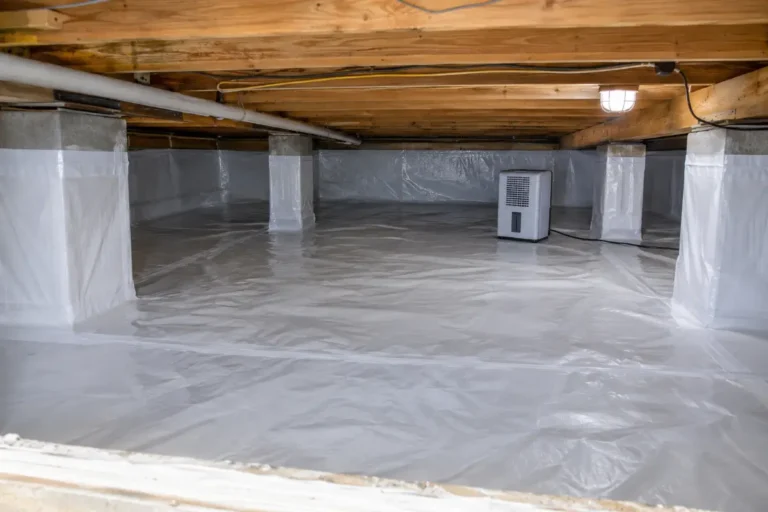
But a dehumidifier treats symptoms. The University of Minnesota Extension warns it is not a permanent solution, and in a basement with real moisture problems it can make things worse by drawing moisture in faster, damaging concrete and finishes (University of Minnesota Extension). If your home sits over a crawl space instead, the approach is different; see our guide to crawl space encapsulation cost.
What affects the price
- Foundation type. Poured concrete is generally easier and cheaper to waterproof than block, which has more joints; stone foundations cost the most (HomeGuide).
- Basement size. More wall and floor means more material and labor.
- Severity. Minor dampness costs less to fix than flooding, several entry points or structural damage.
- Location. Labor costs vary by region, and high water tables or heavy rainfall can call for more extensive systems.
- Extra work. Mold remediation runs $1,500 to $15,000 if the water has already done damage (HomeGuide).
Insurance rarely helps: HomeGuide notes standard homeowners policies do not cover waterproofing or damage from seepage and groundwater (HomeGuide). Check your own policy before assuming either way.
How long waterproofing lasts
HomeGuide puts the life of a quality system at 10 to 30 years or more: exterior membranes typically 10 to 15 years, and interior drains with sump pumps 20 to 30 years with regular upkeep (HomeGuide). That upkeep is why the warranty terms matter as much as the price.
How to keep the bill down
- Fix grading, gutters and downspouts first. They are the cheapest steps and the ones the University of Minnesota Extension puts first.
- Rule out condensation and indoor moisture sources before paying for a drainage system.
- Do not pay for a coating alone to cure water coming through the walls; it treats the surface, not the source.
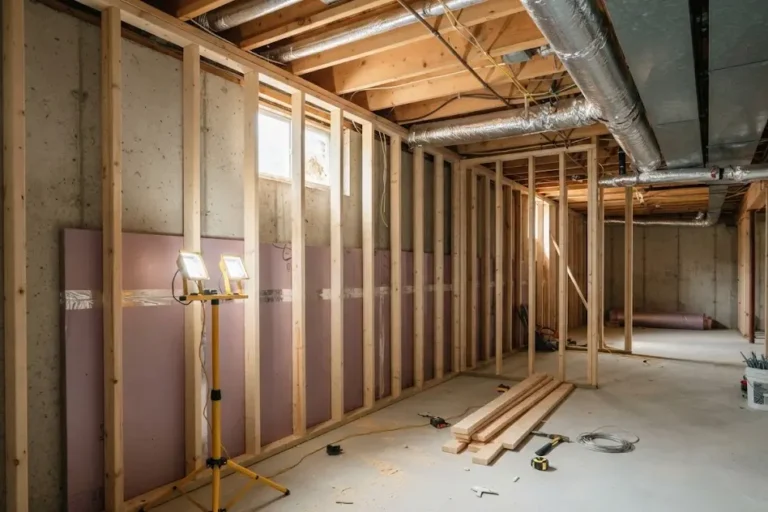
- Deal with the water before finishing the basement, as the extension service recommends.
- Get at least three itemized quotes, and confirm each contractor is licensed and insured (HomeGuide).
Questions to ask before you sign
- How is water getting into my basement, and how did you determine that?
- Have you checked grading and downspouts, and would fixing them be enough?
- Which methods do you recommend, and why interior rather than exterior (or the reverse)?
- Are there structural problems that could cause the walls to fail?
- Does the estimate cover materials, labor, cleanup and landscaping repair?
- What does the warranty cover, for how long, and does it transfer to a buyer? Is the sump pump covered separately?
- What maintenance does the system need to keep the warranty valid?
Sources
- University of Minnesota Extension, Moisture in basements: causes and solutions.
- U.S. Environmental Protection Agency, A Brief Guide to Mold, Moisture and Your Home.
- HomeGuide, Basement Waterproofing Cost, January 23, 2026.
- HomeGuide, French Drain Cost, February 5, 2026.
- Fixr, How Much Does It Cost to Waterproof a Basement?, updated February 6, 2026.
- Homewyse, Cost to Waterproof a Basement, September 2026.