$7,000 – $50,000That is the basement finishing cost in 2026 for turning a typical unfinished 1,000-square-foot basement into living space, and the published guides disagree widely on where in that range you will land: This Old House puts it at $7 to $23 per square foot, Fixr at $15,000 to $30,000 for a 900-square-foot basement, and HomeGuide at $30 to $50 per square foot. Adding bedrooms, a bathroom or a kitchenette pushes the price up; a basement bathroom on its own adds $10,000 to $25,000 (HomeGuide).
The number that matters most is not on the contractor’s quote: whether the basement is dry. This guide covers finishing a bare, unfinished basement: framing, insulation, drywall, flooring and egress. Updating a basement that is already finished is a different job with different prices. Finishing over a moisture problem hides it behind drywall and carpet. The figures below show what each part of the job costs, what the building code asks of a basement you plan to live or sleep in, and what to check before any framing goes up.
Basement finishing cost per square foot
| Basement size | Open plan | Three rooms |
|---|---|---|
| 300 sq ft | $9,000 – $12,000 | $12,000 – $15,000 |
| 500 sq ft | $15,000 – $20,000 | $20,000 – $25,000 |
| 800 sq ft | $24,000 – $32,000 | $32,000 – $40,000 |
| 1,000 sq ft | $30,000 – $40,000 | $40,000 – $50,000 |
| 1,200 sq ft | $36,000 – $48,000 | $48,000 – $60,000 |
| 1,500 sq ft | $45,000 – $60,000 | $60,000 – $75,000 |
| 2,000 sq ft | $60,000 – $80,000 | $80,000 – $100,000 |
| Source (date) | Per sq ft | Typical basement |
|---|---|---|
| This Old House (April 6, 2026) | $7 – $23 | $7,000 – $23,000 for 1,000 sq ft |
| Fixr (January 30, 2025) | — | $15,000 – $30,000 for 900 sq ft |
| HomeGuide (February 6, 2026) | $30 – $50 | $30,000 – $50,000 for 1,000 sq ft |
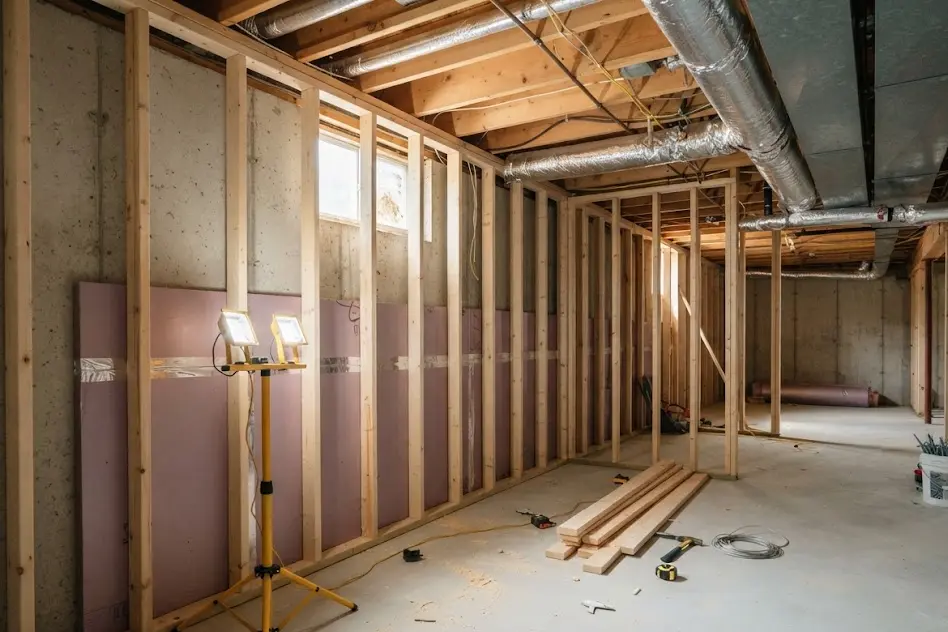
The three guides do not agree. This Old House’s top figure is below HomeGuide’s bottom one, so the gap is not rounding: the guides price different scopes. This Old House notes that a completely unfinished basement needs framing, insulation and system upgrades that raise the price (This Old House), and Fixr separates finishing an unfinished basement ($15,000 to $30,000 for 900 square feet) from remodeling one that is already finished ($27,000 to $81,000) (Fixr). Read the low end as a basic open room and the high end as divided rooms with full systems work.
Our estimate: the $7,000 – $50,000 headline range for 1,000 square feet is the lowest and highest figure across the three guides (This Old House’s $7 and HomeGuide’s $50 per square foot, times 1,000). Fixr’s $15,000 – $30,000 for 900 square feet works out to roughly $17 – $33 per square foot by our division. These are our calculations, not measured figures.
Estimate your basement finishing cost
Use the tables above to estimate your cost. The interactive calculator needs JavaScript.
An open plan costs less because every interior wall means more lumber, drywall and insulation. Labor usually runs $6 to $20 per square foot, or 20% to 40% of the total, and materials are the biggest share of the bill at 60% to 80% (HomeGuide). Doing the work yourself costs $10,000 to $30,000 depending on size, and HomeGuide recommends hiring professionals for the plumbing and electrical work.
Cost by room
| Room | Average cost to finish |
|---|---|
| Living area | $6,000 – $16,000 |
| Bedroom (each) | $3,000 – $12,000 |
| Bathroom | $2,500 – $12,500 |
| Kitchenette | $5,000 – $20,000 |
| Hallway | $1,000 – $2,500 |
Finishing just part of the basement costs $2,500 to $20,000, with living rooms and kitchenettes usually the most expensive rooms to add (HomeGuide). Finishing in phases is one way to spread the cost over several years.
Framing, drywall, flooring and ceiling
| Item | Unit cost (HomeGuide) | Total (HomeGuide) | Total (This Old House) |
|---|---|---|---|
| Framing | $18 – $24 per linear ft | $1,100 – $4,500 | $700 – $1,400 |
| Insulation | $1 – $3 per sq ft | $600 – $4,600 | $1,500 – $4,000 |
| Drywall | $1.50 – $3.50 per sq ft | $750 – $8,300 | $800 – $3,000 |
| Painting | $1 – $3 per sq ft | $800 – $2,500 | $1,250 – $3,500 |
| Drywall ceiling | $2 – $4 per sq ft | $1,000 – $6,000 | $1,600 – $3,600 (any ceiling) |
| Drop ceiling | $4 – $20 per sq ft | — | — |
| Flooring | $4 – $15 per sq ft | $1,000 – $36,000 | $2,000 – $12,000 |
| Electrical | $4 – $9 per sq ft | $2,000 – $13,500 | $1,300 – $12,000 |
| Plumbing | — | — | $2,500 – $15,000 |
| HVAC | — | $5,000 – $11,000 | $2,000 – $11,000 |
| Waterproofing | — | $1,900 – $6,300 | $1,900 – $6,500 |
| Egress window | — | $2,000 – $5,000 | $2,500 – $5,300 |
| Basement bathroom addition | — | $10,000 – $25,000 | — |
The component totals line up better than the headline figures: both guides put HVAC at up to $11,000 and waterproofing at about $1,900 to $6,500. The gaps are in framing, drywall and flooring, where HomeGuide’s upper totals are two to three times This Old House’s (HomeGuide; This Old House).
Ceiling. A drywall ceiling is cheaper per square foot; a drop ceiling costs more but keeps utilities reachable (HomeGuide). Either way, the model residential code requires habitable basement space and its hallways to have a ceiling height of at least 7 feet, and 6 feet 8 inches in bathrooms and laundry rooms (International Residential Code 2021, section R305.1). Measure under ducts and beams before you plan rooms.
Heating. A finished basement must be heated for its square footage to count toward the home’s living space. Adding ductwork to a basement typically costs $1,800 to $3,100 (HomeGuide).
| Floor material | Installed, per sq ft | Total for 500 – 1,500 sq ft |
|---|---|---|
| Carpet | $2 – $8 | $1,000 – $12,000 |
| Epoxy coating | $3 – $7 | $1,500 – $10,500 |
| Laminate | $3 – $8 | $1,500 – $12,000 |
| Polished concrete | $3 – $15 | $1,500 – $22,500 |
| Hardwood | $6 – $15 | $3,000 – $22,500 |
| Tile | $7 – $24 | $3,500 – $36,000 |
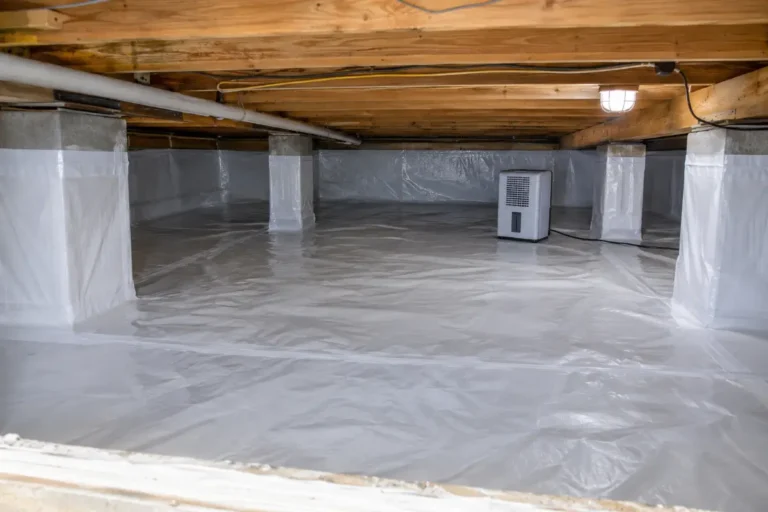
Carpet is the cheapest floor, but it is a poor fit for a basement that is not reliably dry: the University of Minnesota Extension notes that mold and mildew can grow in damp carpets, and that slabs must be warm and dry before carpeting (University of Minnesota Extension).
Fix moisture before you finish
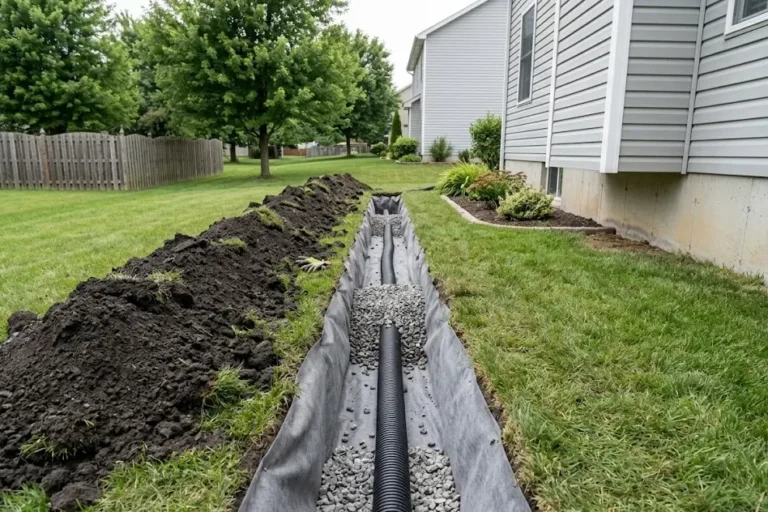
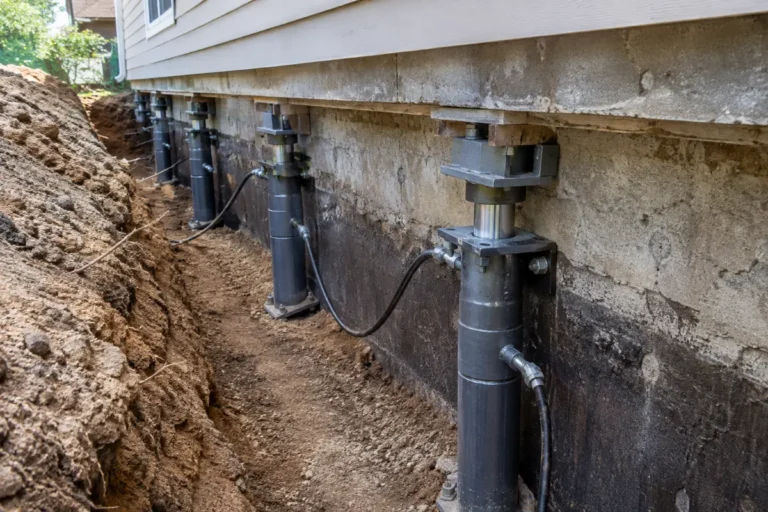
Finishing a basement without first dealing with moisture can make health conditions worse and cause significant damage, according to the University of Minnesota Extension. Its recommended order is to remove indoor moisture sources, correct gutters, downspouts and grading, and only then move to an interior or exterior drainage system. Walls must be dry before they are insulated (University of Minnesota Extension). Its specific fixes:
- Grade soil so it slopes away from the foundation at least 1 inch per foot for at least 6 feet.
- Extend downspouts so they discharge at least 4 feet beyond the wall.
- Put an airtight cover on the sump pit.
- Do not rely on a dehumidifier or an interior coating alone: the Extension calls the first a way to reduce symptoms and the second a temporary solution.
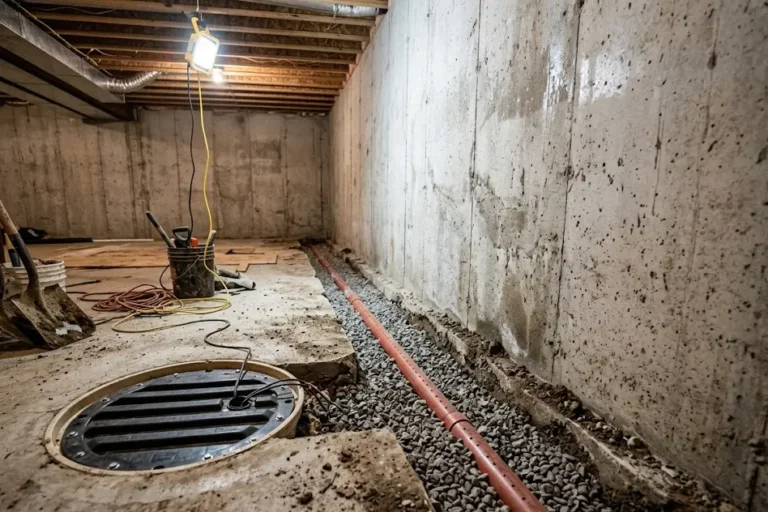
If water still gets in, budget for it before the finish. HomeGuide puts waterproofing at $1,900 to $6,300 as a line item within a finishing project, and a full waterproofing job with wall sealing, a pump and a drain at $6,000 to $18,000 (HomeGuide). This Old House gives $1,900 to $6,500 for waterproofing and $600 to $1,600 for a sump pump (This Old House).
Test for radon first
Radon is responsible for about 21,000 lung cancer deaths a year in the U.S. (EPA). The EPA recommends fixing a home when the radon level is 4 picocuries per liter or higher, and says that if you begin occupying a lower level of your home, such as a basement, you should retest on that level (EPA, A Citizen’s Guide to Radon).
Testing is cheap next to the finish itself: short-term test kits cost $20 to $350 and a professional inspection $100 to $400 (Fixr, January 31, 2025). An older HomeGuide guide (August 2023) gave similar figures: $10 to $50 for a kit and $125 to $400 for a professional test (HomeGuide). The same EPA guide notes that a typical mitigation system has a single pipe running through the basement floor, which is worth knowing before you lay out rooms and ceilings.
Egress windows and building code
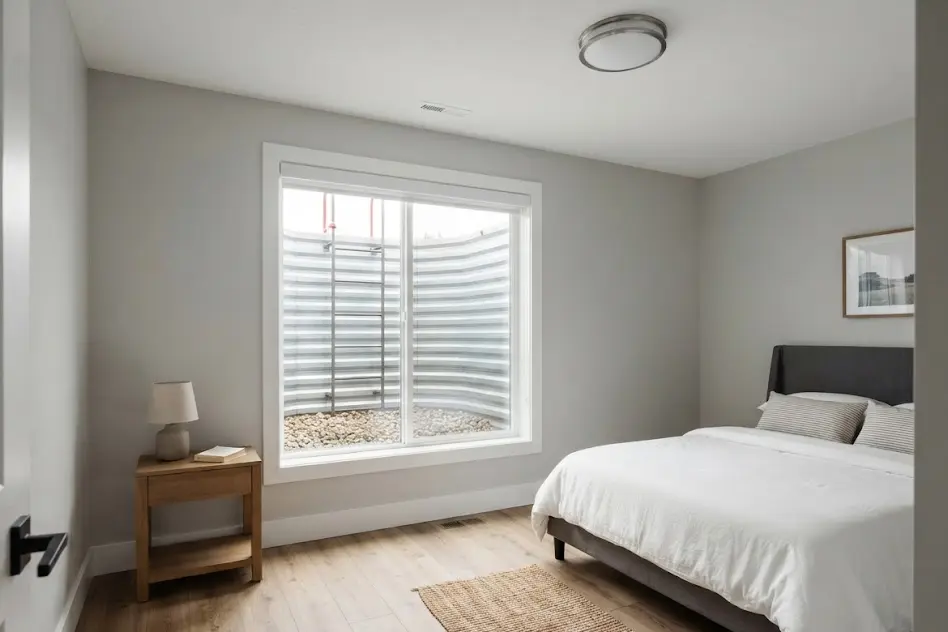
An egress window costs $2,000 to $5,000 installed according to HomeGuide, and $2,500 to $5,300 according to both This Old House and Fixr. Under the 2021 International Residential Code, basements need at least one emergency escape and rescue opening, and when a basement contains bedrooms, each bedroom needs its own (IRC 2021, section R310). The code sets these minimums:
- Net clear opening of at least 5.7 square feet.
- At least 24 inches high and 20 inches wide when opened normally.
- Bottom of the opening no more than 44 inches above the floor.
- A window well of at least 9 square feet, projecting at least 36 inches, with a fixed ladder or steps if it is deeper than 44 inches.
The code is a model that each jurisdiction adopts, so confirm which edition and amendments apply with your local building department. A room also needs a window, closet and door to count as a bedroom (HomeGuide).
Permits
You need a permit before finishing a basement. It costs $200 to $1,000, or 1% to 2% of the project cost in cities that charge a percentage (HomeGuide). This Old House adds that permit costs depend on the scope, especially when plumbing, electrical or HVAC work extends into the space (This Old House). According to HomeGuide, a finished basement adds square footage to a home only if it is properly finished, heated and has the required egress windows or exits (HomeGuide). HomeGuide also puts the timeline at 4 to 16 weeks depending on size and scope.
Adding a basement bathroom
A basement bathroom addition costs $10,000 to $25,000 depending on size. New plumbing runs $450 to $1,800 per fixture, or $4 to $6 per square foot to rough in piping, and plumbers charge $45 to $150 an hour (HomeGuide). Fixr puts adding a basement bathroom higher, at $20,000 to $30,000 (Fixr). A small basement may only need a half bath, while one with bedrooms may need a full bathroom.
Our estimate: an 800-square-foot basement split into three rooms ($32,000 to $40,000) plus a bathroom addition ($10,000 to $25,000) comes to roughly $42,000 to $65,000, adding HomeGuide’s two ranges. This is our calculation, not a measured figure, and it may double-count some framing and drywall that both ranges include.
A kitchenette adds $5,000 to $20,000 and a wet bar $2,000 to $30,000 (HomeGuide).
How to keep the bill down
- Choose an open plan. Fewer walls means less lumber, drywall and insulation.
- Fix grading and downspouts before paying for a drainage system; the Extension lists them first for a reason.
- Test for radon before framing, while the floor is still open to plan around.
- Pick stock fixtures and prefabricated materials over custom ones.
- Finish in phases if the budget is tight.
- Compare at least two written quotes that cover the same scope.
Questions to ask before you sign
- Will you pull the permit, and is its fee in the quote?
- Does the plan meet ceiling-height and egress requirements for every bedroom?
- How will you check for and handle moisture before insulating the walls?
- Does the quote include HVAC, electrical and plumbing, or are those separate subcontracts?
- What unexpected costs usually come up on a basement like mine?
- What is your warranty on the work, and how long will it take?
Sources
- International Code Council, 2021 International Residential Code, Chapter 3: Building Planning, sections R305 and R310.
- University of Minnesota Extension, Moisture in basements: causes and solutions.
- U.S. Environmental Protection Agency, Health Risk of Radon.
- U.S. Environmental Protection Agency, A Citizen’s Guide to Radon, EPA 402/K-12/002, 2016.
- HomeGuide, How Much Does It Cost to Finish a Basement?, February 6, 2026.
- HomeGuide, How Much Does Radon Testing Cost?, August 23, 2023 (older guide).
- This Old House, How Much Does It Cost To Finish a Basement?, updated April 6, 2026.
- Fixr, Cost to Remodel a Basement (finishing vs. remodeling section), updated January 30, 2025.
- Fixr, Radon Testing Prices, updated January 31, 2025.