$4,500 – $20,000That is the typical foundation repair cost in 2026 for a house that is settling, sinking or has bowed walls. A single crack sealed with epoxy costs far less, $250 to $800, while lifting a house and replacing the foundation can reach $100,000. The method your foundation needs, not the size of the crack, decides most of the bill. Across all repair types, This Old House puts the typical job at $2,224 to $8,134 (average $5,179) and Forbes Home at $2,250 to $8,600 (average $5,400).
Foundation quotes vary more than almost any other home repair, because two contractors can look at the same crack and propose very different fixes. The figures below show what each type of damage and each repair method usually costs, what an independent inspection costs, and what homeowners insurance usually will and will not pay for.
Foundation repair cost by type of damage
| Problem | HomeGuide | This Old House | Forbes Home | Common fixes |
|---|---|---|---|---|
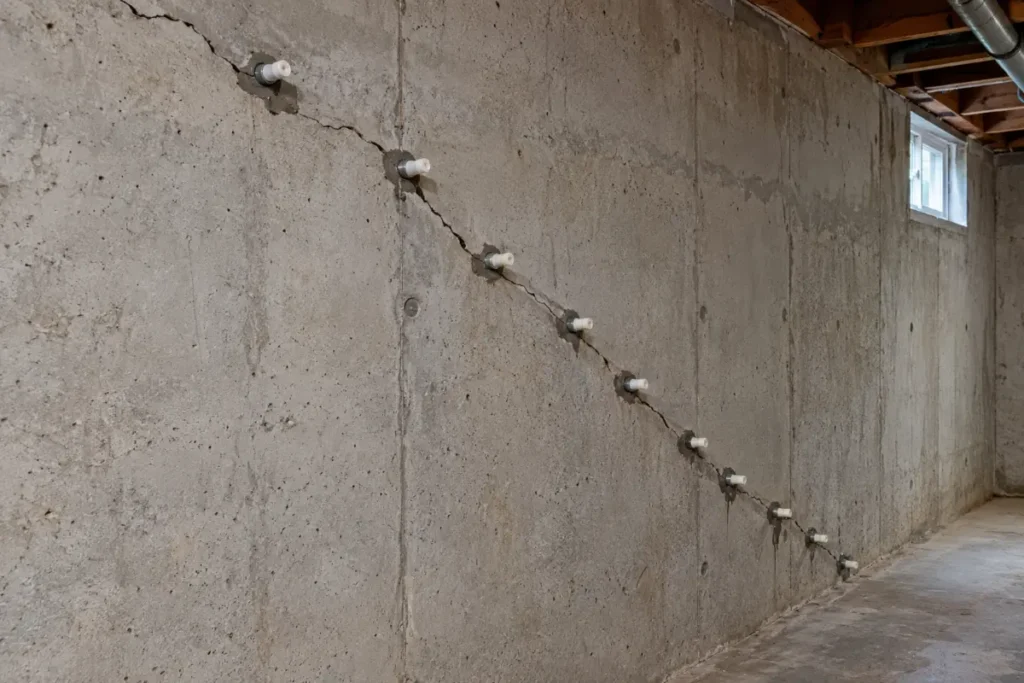
| Foundation crack | $250 – $800 per crack | $200 – $800 (hairline crack) | $35 – $1,000 | Epoxy injection, crack stitching |
| Foundation leak | $2,000 – $12,000 | $2,300 – $7,300 (sealing and waterproofing) | $2,000 – $7,300 | Crack sealing, drainage, waterproofing |
| Settling or sinking foundation | $4,500 – $20,000 | — | $5,300 – $17,000 | Mudjacking, piering, helical piers |
| Bowed foundation walls | $5,000 – $15,000 | $4,000 – $12,000 (12 reinforcement strips) | $4,300 – $13,000 | Wall anchors, carbon fiber straps, helical tiebacks |
The three guides broadly agree on cracks and bowed walls. They disagree most on leaks: HomeGuide’s upper figure of $12,000 is well above the $7,300 ceiling in the other two, because it includes jobs that add drainage or full exterior waterproofing.
Small to medium cracks are usually injected with epoxy to fill and seal them; larger cracks are stitched with steel rods (HomeGuide). A crack that lets water in is a leak problem as much as a structural one, and the price climbs quickly once drainage or exterior waterproofing is involved.
Cost by repair method
| Repair method | HomeGuide | Other sources |
|---|---|---|
| Epoxy injection or crack stitching | $250 – $800 per crack | $200 – $800 (This Old House) |
| Foundation sealing | $1,500 – $7,300 | $2,300 – $7,300 with waterproofing (This Old House) |
| Foundation leveling | $1,000 – $10,000 | $600 – $4,000 (Forbes Home) |
| Mudjacking or slab jacking | $4,500 – $9,000 | $550 – $1,300 (This Old House); $600 – $1,600 for minor settling (Forbes Home) |
| Stabilization (braces or anchors) | $5,000 – $10,000 | $4,000 – $12,000 for 12 strips (This Old House) |
| Basement waterproofing | $4,500 – $15,000 | — |
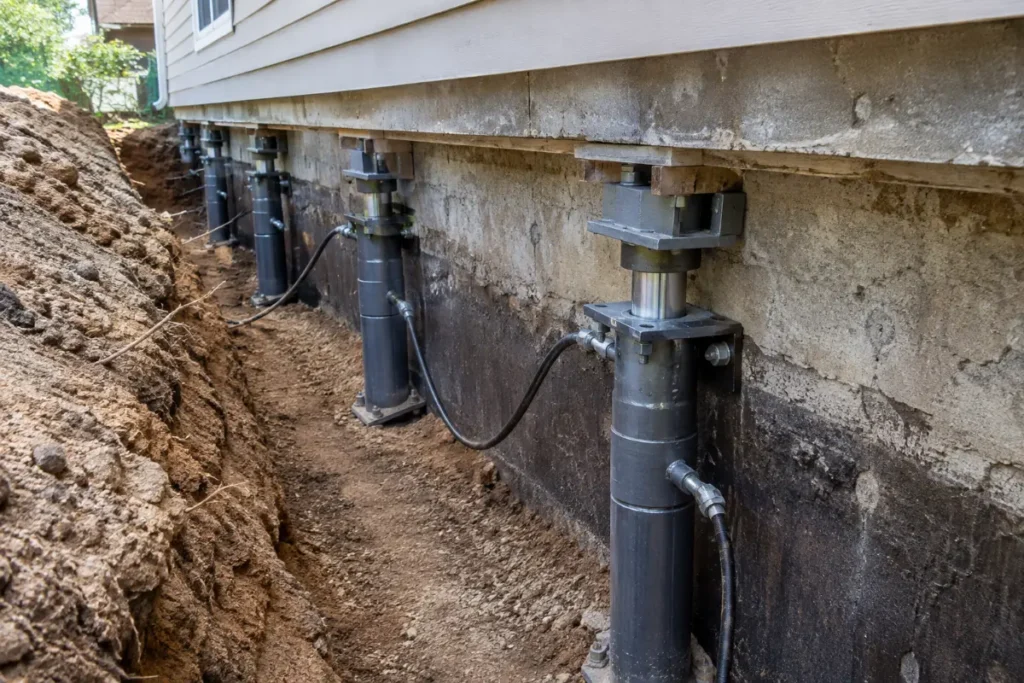
| Underpinning or piering | $10,000 – $20,000 | $12,000 – $52,500 (Forbes Home); $1,000 – $3,000 per pier (This Old House) |
| House lifting | $10,000 – $40,000 | $20,000 – $23,000 lifting and leveling (This Old House) |
| House lifting with foundation replacement | $20,000 – $100,000 | $20,000 – $100,000 replacement (Forbes Home) |
The biggest gap is mudjacking. HomeGuide’s $4,500 to $9,000 describes lifting a whole house slab, while the much lower This Old House and Forbes Home figures fit a smaller area of sunken concrete. Underpinning also varies widely: Forbes Home’s top figure of $52,500 is more than double HomeGuide’s, which reflects how much the number of piers changes the bill.
Sealing from the outside includes around $3,000 of excavation to reach the foundation wall. Leveling with shims costs $1,000 to $3,500, but extensive damage that needs underpinning runs $10,000 to $20,000 (HomeGuide).
Estimate your foundation repair cost
Use the tables above to estimate your cost. The interactive calculator needs JavaScript.
Slab jacking: mudjacking vs. polyurethane foam
Both methods lift sunken concrete by drilling holes in the slab and pumping material underneath. Mudjacking uses a cement slurry of water, soil, sand and cement; polyjacking uses lightweight polyurethane foam (HomeGuide).
| Mudjacking | Polyurethane foam | |
|---|---|---|
| Cost per square foot | $4 – $9 | $8 – $25 |
| Curing time | 24 hours | 15 minutes |
| Injection hole size | 1.5 – 2.0 inches | 0.50 – 0.63 inches |
| Weight on the soil | Heavy | Very light |
For a 1,500-square-foot foundation, mudjacking comes to $6,000 to $13,500, and most contractors charge a minimum job fee of $300 to $700 (HomeGuide). Foam costs more but adds little weight, which matters when the soil underneath is already weak. Slab jacking lifts concrete; it does not reach down to stable soil, so it is a poor fit when the ground keeps moving.
Cost per pier: helical and steel piers
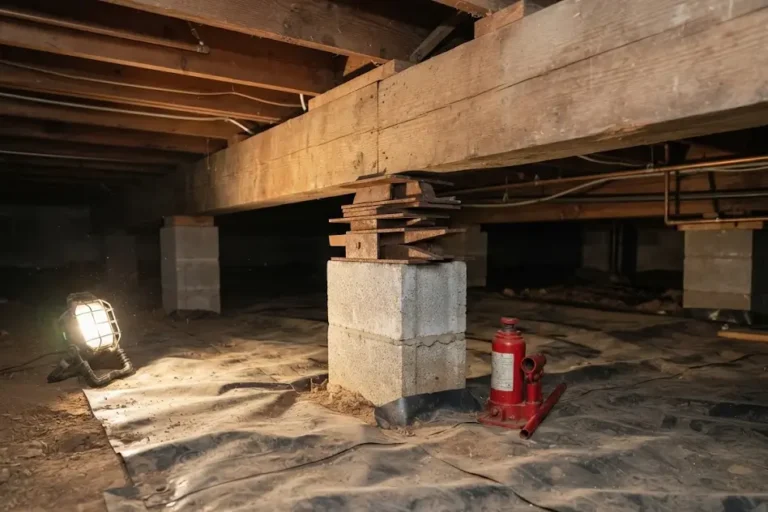
When the soil under a footing can no longer carry the house, the fix is underpinning: piers driven or screwed down to firmer soil, with the house resting on them. Helical piers, screw-shaped piers turned into the ground, cost $2,000 to $4,000 each installed (HomeGuide, November 2025). This Old House puts piering at $1,000 to $3,000 per pier (This Old House, March 2026). Steel piers used to replace rotted wood piers under a pier-and-beam house cost $1,000 to $1,600 per pier (HomeGuide, February 2026).
| Job | Piers | Typical cost |
|---|---|---|
| Single pier | 1 | $1,000 – $3,000 |
| Minor settlement | 2 – 4 | $2,000 – $12,000 |
| Moderate settlement | 5 – 8 | $6,000 – $25,000 |
| Severe settlement | 8 – 10+ | $10,000 – $30,000+ |
Our estimate: a job needing six helical piers would cost about $12,000 to $24,000 in piers alone (6 × $2,000 to 6 × $4,000), before permits, engineering or landscaping repairs. This is a simple multiplication of the per-pier price above, not a measured figure; the number of piers is set by the engineer or contractor.
Bowing wall repair: anchors, braces and straps
Basement walls bow inward when soil pressure outside pushes on them. Repair costs $5,000 to $15,000, depending on how far the wall has moved and the method (HomeGuide):
- Wall anchors: metal rods or brackets tie the wall to the ground outside to stop further bowing.
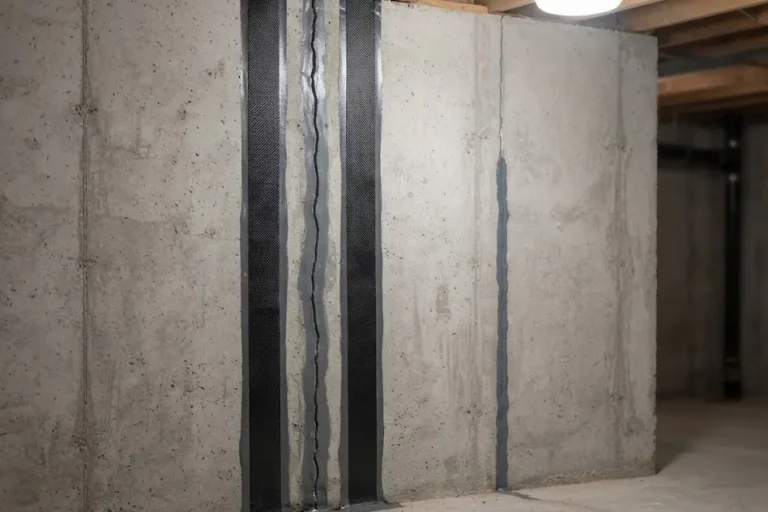
- Carbon fiber straps: strips bonded to the wall reinforce it; suited to mild bowing.
- Helical tiebacks: screw anchors driven into the soil behind the wall help pull it back into place.
Steel reinforcement is the more durable option for serious movement, while carbon fiber suits mild bowing (HomeGuide). Stabilizing with braces or anchors costs $5,000 to $10,000 and can be temporary or permanent depending on severity (HomeGuide).
Inspection, engineer and permit costs
| Item | Typical cost |
|---|---|
| Foundation inspection | $400 – $750 |
| Structural engineer report | $500 – $3,000 |
| Soil compaction test | $10 – $100 per sample |
| Other soil testing | $10 – $500 |
| Permit | $75 – $150 |
Most foundation repairs count as structural work and need a permit (HomeGuide). Many contractors waive their inspection fee if you hire them, and it is worth budgeting an extra $1,000 to $2,500 for surprises such as tree roots, old repairs or buried utilities (HomeGuide). An engineer who is not selling the repair is the one who can tell you whether you need piers at all.
What drives the labor bill
Much of foundation work is digging, hauling and setting material by hand. The median construction laborer in the United States earned $46,680 a year, or $22.44 an hour, in May 2025, according to the Bureau of Labor Statistics. The billed price adds hydraulic equipment, materials, engineering, insurance and warranty. Access matters too: damage under a deck may mean removing and rebuilding the deck (HomeGuide).
Warning signs your foundation needs repair
Signs inside the house include doors and windows that stick, cracks in interior walls or ceilings, sagging or uneven floors, water spots on basement floors or walls, and a musty smell. Outside, look for crumbling concrete, cracks in foundation walls, leaning walls, uneven ground around the foundation and water pooling next to it (HomeGuide).
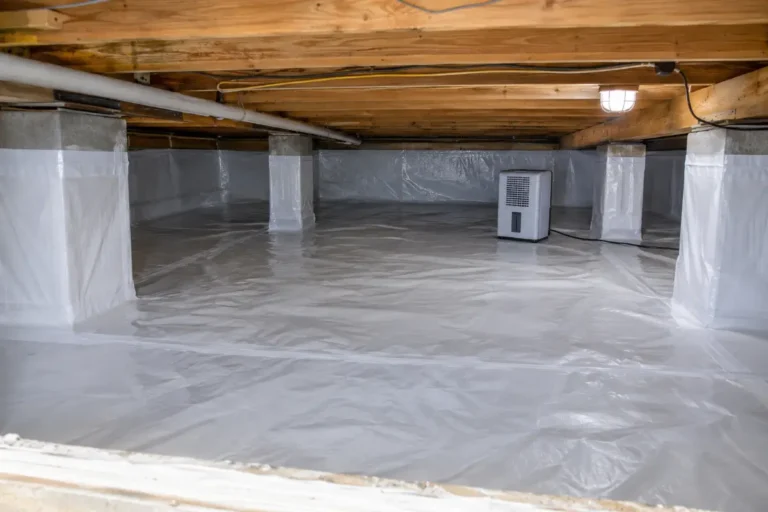
Soil is often the cause. The Colorado Geological Survey describes swelling soil as a geologic hazard capable of causing severe damage to houses, damage that may build slowly over time (Colorado Geological Survey). If your house sits over a damp crawl space, moisture control is part of the fix; see our guide to crawl space encapsulation cost.
Does homeowners insurance cover foundation repair?
Usually not. The Texas Department of Insurance lists wear and tear, earthquakes or earth movement, flooding and continuous water leaks among the damages most policies do not cover, while sudden and accidental release of water is typically covered. It also lists damage to foundations or slabs as a common endorsement, an add-on you buy separately (Texas Department of Insurance). Coverage varies by company and state, so read your own policy.
How to keep the bill down
- Act early. A sealed crack costs hundreds; a sinking footing that needs piers costs thousands.
- Pay for an independent structural engineer before accepting a pier plan from the company that sells piers.
- Fix drainage: grading around a foundation costs $500 to $5,000 (HomeGuide), less than repairing the damage water causes.
- Keep trees and shrubs away from the foundation to prevent root intrusion.
- Get at least three written bids and compare the method, the number of piers and the warranty, not only the total.
Questions to ask before you sign
- What is causing the movement, and does your repair address the cause or only the symptom?
- Why this method, how many piers or anchors, and how deep will they go?
- Does the quote include the permit, engineering, excavation, landscaping repair and cleanup?
- What happens to the price if the damage is worse than expected?
- What does the warranty cover, for how long, and does it transfer if I sell the house?
More foundation cost guides
- Basement Finishing Cost in 2026: Price per Square Foot and by Room
- Basement Waterproofing Cost in 2026: Interior vs Exterior
- Crawl Space Encapsulation Cost in 2026: Price, Pre-Work and Real Payback
- Foundation Crack Repair Cost in 2026: Price by Crack Type and Method
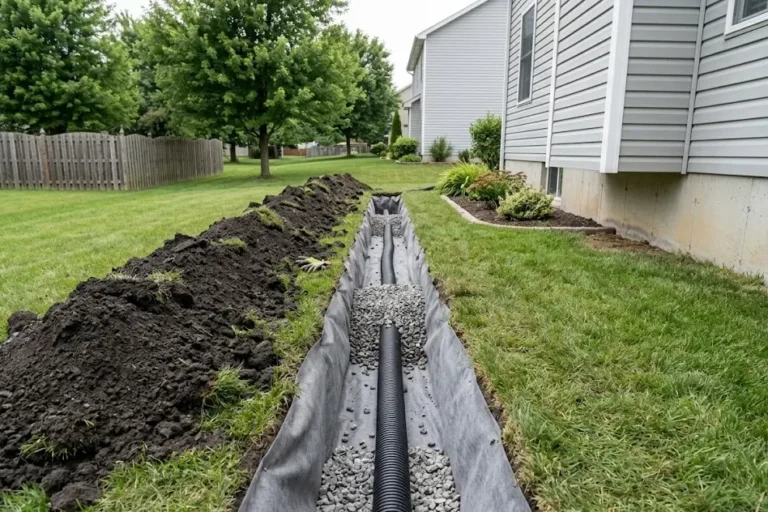
- French Drain Cost in 2026: Yard vs Basement, Per Foot
Sources
- U.S. Bureau of Labor Statistics, Occupational Outlook Handbook: Construction Laborers and Helpers, pay data for May 2025.
- Texas Department of Insurance, Home insurance guide.
- Colorado Geological Survey, SP-43 A Guide to Swelling Soils for Colorado Homebuyers and Homeowners, 2nd ed., 2007.
- HomeGuide, Foundation Repair Cost, February 6, 2026.
- HomeGuide, Sinking Foundation Repair Cost, November 21, 2025.
- HomeGuide, Mudjacking Cost, November 5, 2025.
- HomeGuide, Underpinning Foundation Cost, November 26, 2024.
- This Old House, How Much Does Foundation Repair Cost?, updated March 6, 2026 (figures based on Angi cost data).
- Forbes Home, Average Foundation Repair Cost, December 1, 2024.