$200 – $1,000That is the typical foundation crack repair cost in 2026 for one non-structural crack sealed by a professional, usually with epoxy or polyurethane injection, across three published cost guides: $250 to $800 or more (HomeGuide), $200 to $800 (This Old House) and $200 to $1,000 (Today’s Homeowner). Cracks that are part of a structural problem cost $1,000 to $5,000 or more for minor repairs, and $10,000 to $30,000 or more when the foundation itself has to be stabilized (HomeGuide).
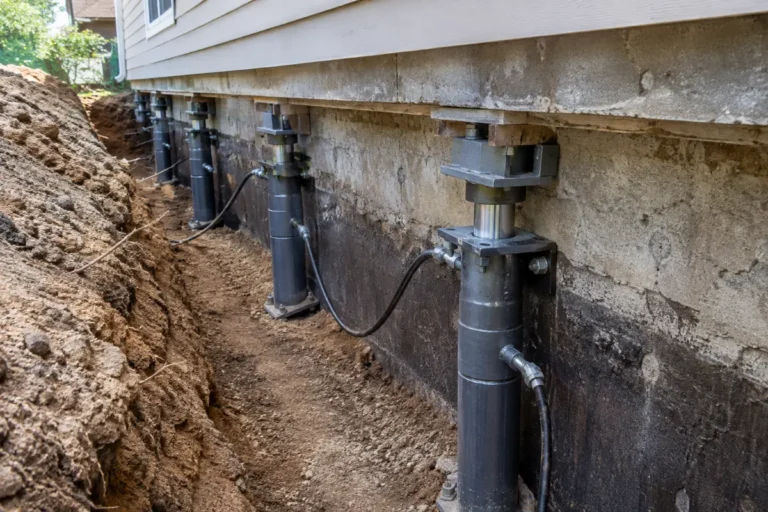
The price of a crack repair depends less on the crack than on what caused it. A thin vertical crack from concrete shrinkage is a few hours of work. A crack that is the visible sign of a wall being pushed in by soil, or of part of the house settling, is a structural job, and sealing it alone does not fix anything. The figures below show what each method costs, which crack patterns tend to point to bigger problems, and when paying an engineer first saves money.
Foundation crack repair cost by severity
| Severity | Typical crack types | HomeGuide | Other sources |
|---|---|---|---|
| Non-structural | Hairline, vertical or diagonal | $250 – $800+ per crack | $200 – $800 for a hairline crack (This Old House); $200 – $1,000 for a small crack under 1/8 inch (Today’s Homeowner) |
| Structural, minor | Horizontal or stair-step | $1,000 – $5,000+ | — |
| Structural, major | Horizontal or stair-step, with wall or foundation movement | $10,000 – $30,000+ | $10,000 – $15,000 or higher once a crack has widened into structural problems (This Old House) |
Our estimate: the $200 – $1,000 range at the top of this page runs from the lowest to the highest per-crack figure the three guides give for a non-structural crack ($200 from This Old House and Today’s Homeowner, $1,000 from Today’s Homeowner). It is not an average and not a measured figure; HomeGuide’s narrower $250 – $800 sits inside it.
One source puts the typical bill much higher. Thumbtack, using estimates that pros on its platform give customers, puts the national average cost to fix a cracked foundation at $1,982 to $7,290, with $780 at the low end and $17,944 at the high end (Thumbtack, June 4, 2026). That figure does not separate cosmetic cracks from structural ones, so it mixes simple injections with reinforcement and stabilization work. The gap between the guides is large, and it is one more reason to find out whether your crack is structural before comparing quotes.
For basement walls specifically, HomeGuide puts hairline and vertical cracks at $250 to $800 or more per crack, wide, horizontal or stair-step cracks at $1,000 to $5,000 or more per crack, and cracks that come with a bowed wall at $5,000 to $15,000 or more, rising past $30,000 for major structural problems (HomeGuide, February 2026).
Cost by repair method
| Method | HomeGuide | Other sources | Typically used for |
|---|---|---|---|
| Sealing or patching (slab) | $250 – $800 per crack | $15.16 – $18.13 per linear foot for basic patching of cracks up to 1/4 inch wide (Homewyse) | Hairline or cosmetic surface cracks |
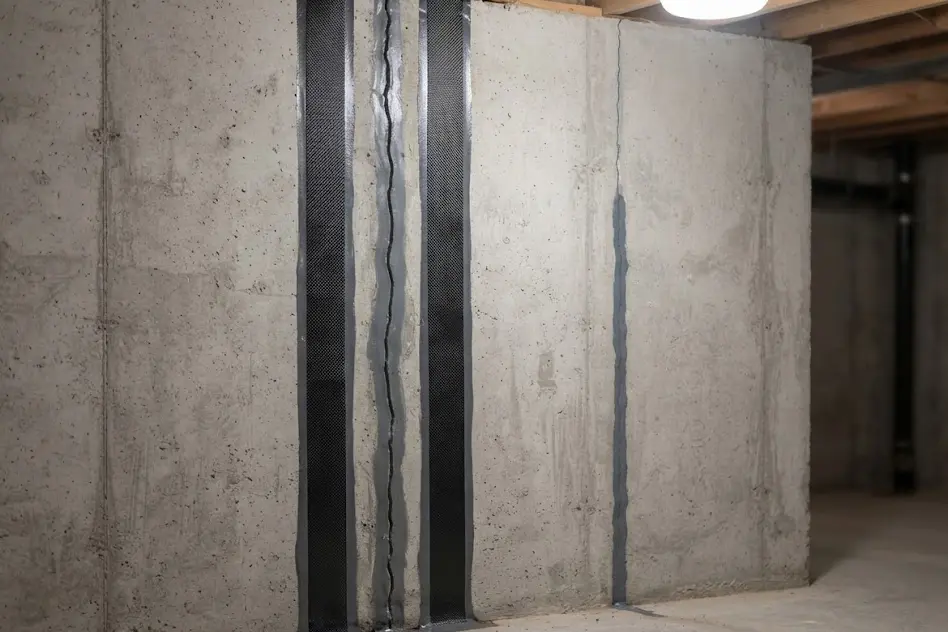
| Epoxy or polyurethane injection (basement wall) | $250 – $800+ per crack | $200 – $800 for a hairline crack (This Old House); $200 – $1,000 for epoxy on a crack under 1/8 inch (Today’s Homeowner) | Hairline to moderate, non-structural cracks |
| Epoxy or polyurethane injection (slab) | $400 – $1,500 per crack | — | Wider cracks with no movement |
| Crack stitching (steel staples or carbon fiber) | $500 – $2,000 per crack | — | Slab cracks that are no longer moving |
| Carbon fiber straps | $900 – $2,000+ per crack | $4,000 – $12,000 for 12 strips (This Old House); $5,000 – $12,000 for 12 strips (Today’s Homeowner); $85 – $275 per foot (Today’s Homeowner) | Cracks with movement; walls starting to bow |
| Wall anchors | $500 – $1,000 each | $80 – $150 per foot, usually placed every 5 feet (Today’s Homeowner) | Bowed or bulging walls |
Our estimate: the guides price reinforcement in different units, so they are hard to compare directly. This Old House’s $4,000 – $12,000 for 12 strips works out to about $330 to $1,000 per strip ($4,000 ÷ 12 and $12,000 ÷ 12), while HomeGuide quotes $900 to $2,000 or more per crack, which may cover more than one strip. This is our arithmetic on the published ranges, not a measured figure.
Homewyse’s figure is a calculator estimate for basic patching with patching concrete under favorable conditions; it leaves out permits and general contractor markup, and does not cover injection (Homewyse).
Epoxy injection. A contractor pumps liquid resin into the crack under pressure. Epoxy is meant for stable cracks that are not moving: it hardens and bonds the two sides of the concrete back together (HomeGuide). Epoxy does not bond properly to wet surfaces, so it suits dry cracks (Thumbtack).
Polyurethane injection. Polyurethane stays flexible after it cures, which suits cracks that open and close a little with the seasons, and it expands to fill voids and stop water coming through (HomeGuide; HomeGuide). For cracks that are damp or actively leaking, polyurethane foam is usually the more effective choice (Thumbtack).
Patching. Surface sealing or patching is the cheapest line on a slab, at $250 to $800 per crack, and is meant for hairline or cosmetic cracks (HomeGuide). Wider cracks with no movement are quoted as injections instead, at $400 to $1,500.
Carbon fiber straps and stitching. Straps are bonded across the wall, usually after the crack has been injected. They do not repair the crack itself; they stop it from widening and hold the wall against further movement (HomeGuide). Today’s Homeowner notes they are anchored at the top and bottom of the wall and generally installed every four feet (Today’s Homeowner). On slabs, crack stitching with steel staples or carbon fiber does the same job for cracks that have stopped moving, and is often paired with epoxy injection (HomeGuide).
Most single crack repairs take 2 to 4 hours; larger cracks or ones that need reinforcement can take a day or more (HomeGuide).
Estimate your foundation crack repair cost
Use the tables above to estimate your cost. The interactive calculator needs JavaScript.
Vertical, horizontal and stair-step cracks
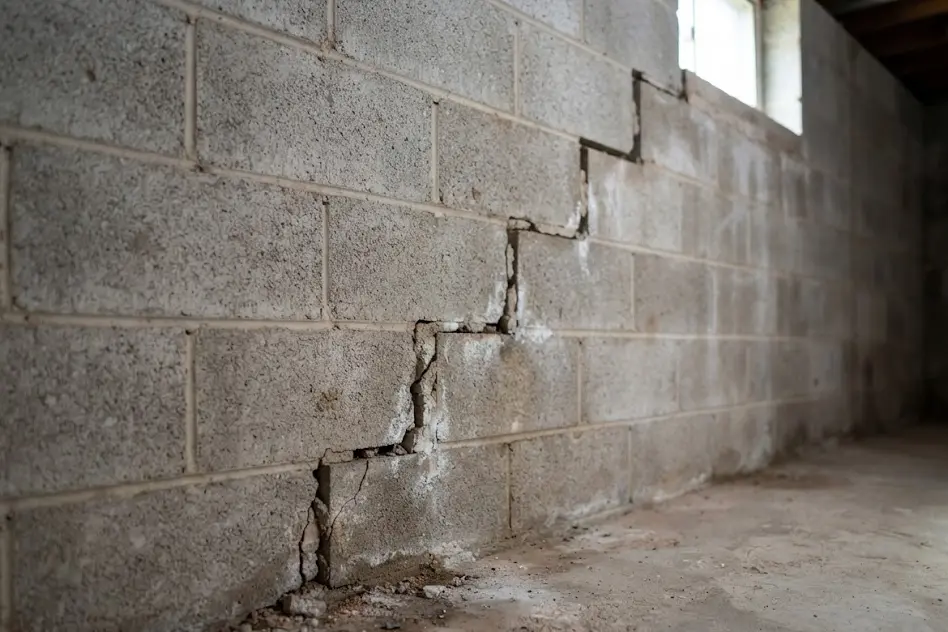
The direction of a crack is the first thing a contractor looks at, because it changes both the method and the price. The descriptions below come from cost publishers, not from an engineering standard, and they do not replace an inspection of your own wall.
- Hairline and vertical cracks are among the most common and often appear within the first year of a new build, from settling or from the concrete drying. They are usually cosmetic and are sealed with injection (HomeGuide).
- Horizontal cracks signal more serious foundation movement, often from water pressure or soil pushing on the wall. Repairs combine injection with reinforcement such as carbon fiber straps or wall anchors (HomeGuide).
- Stair-step cracks in block walls follow the mortar joints and often point to settlement or movement (HomeGuide). This Old House adds that horizontal or stair-step cracks in brick or block walls wider than 1/4 inch suggest structural strain, and that diagonal cracks running from doors and windows, especially ones wider at one end, often mean movement (This Old House).
Soil is behind much of this. Virginia’s state geology office notes that soils which shrink and swell with moisture cause more damage to U.S. structures than any other natural hazard, that standard homeowner’s insurance does not cover that damage, and that leaking pipes, rerouted drainage, downspouts and large trees can make the swelling and shrinking worse (Virginia Department of Energy, Geology and Mineral Resources). The Colorado Geological Survey adds that these forces can push on a structure upward, sideways, or both (Colorado Geological Survey).
Dry spells matter too. North Dakota State University Extension explains that clay soils shrink as they dry, pulling away from the basement wall, and that uneven foundation movement can stress the concrete enough to crack a basement wall. For cracks caused by shrinkage, it advises waiting until soil moisture returns to normal before repairing wall and ceiling cracks, and not filling the gap next to the wall with soil, because wet soil expands and can push hard enough to crack the wall (NDSU Extension).
When to hire a structural engineer, and what it costs
A contractor who sells repairs will also diagnose them. A structural engineer only diagnoses, which makes the report useful when two contractors propose very different fixes. HomeGuide lists these warning signs as reasons for immediate professional evaluation: horizontal cracks longer than 12 inches, cracks wider than 1/8 inch, cracks with water coming through, doors or windows that stop closing, a wall that bows or leans, and several new cracks appearing at once (HomeGuide). It also suggests marking and dating the ends of a crack in pencil to see whether it keeps growing.
| Service | HomeGuide | This Old House |
|---|---|---|
| Structural engineer foundation inspection | $300 – $750 | $300 – $1,000 (about $600 on average) |
| Full home inspection and report by an engineer | $350 – $900 | — |
| Engineer’s hourly rate | $100 – $220 | $100 – $500 |
| Engineering design plans and drawings | $500 – $3,000 | — |
This Old House adds that most inspections take one to two hours for an accessible foundation, and that finished basements or small crawl spaces take longer (This Old House). Foundation repair companies charge $400 to $750 for an inspection, according to HomeGuide, and may deduct it from the repair if you hire them; permits for foundation work run from about $75 for a minor repair to $1,000 or more for major structural work (HomeGuide). This Old House, by contrast, says foundation repair companies often provide free inspections (This Old House), so ask before you book.
Our estimate: an engineer’s foundation inspection ($300 – $750 from HomeGuide, $300 – $1,000 from This Old House) costs about the same as sealing one non-structural crack ($200 – $1,000). Against a minor structural repair quoted at $1,000 – $5,000, HomeGuide’s inspection range adds between 6% ($300 on $5,000) and 75% ($750 on $1,000); with This Old House’s upper figure, the inspection can equal the whole $1,000 repair. This is our arithmetic on the published ranges, not a measured figure.
Waterproofing a leaking crack
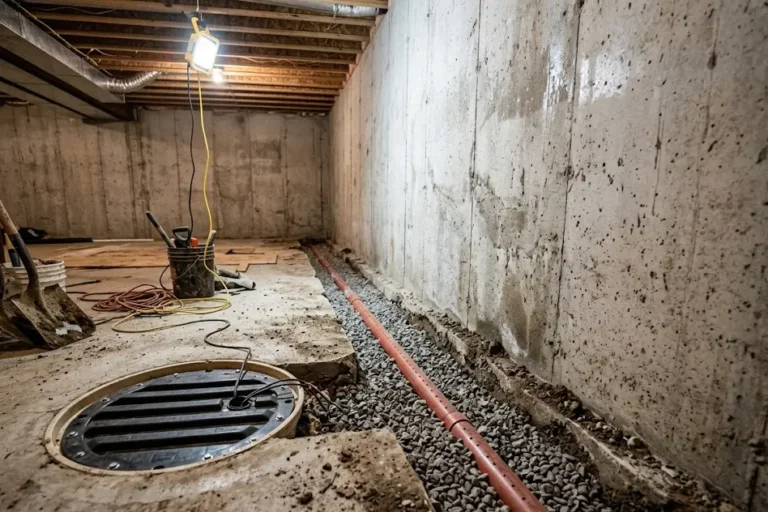
A single leaking crack is normally sealed by injection. Contractors drill ports along the crack and inject sealant under pressure, a method HomeGuide describes as suited to cracks up to 1/8 inch wide with no structural concerns, at $250 to $800 or more each (HomeGuide, February 2026). When water comes through in more than one place, the fix moves from the crack to the whole basement:
| Work | HomeGuide | Other sources |
|---|---|---|
| Seal one leaking crack by injection | $250 – $800+ | — |
| Leak sealing and waterproofing, general | — | $2,300 – $7,300 (This Old House); $2,000 – $8,000 (Today’s Homeowner) |
| Interior waterproofing | $4,500 – $10,000+ | — |
| Exterior waterproofing | $10,000 – $15,000+ | — |
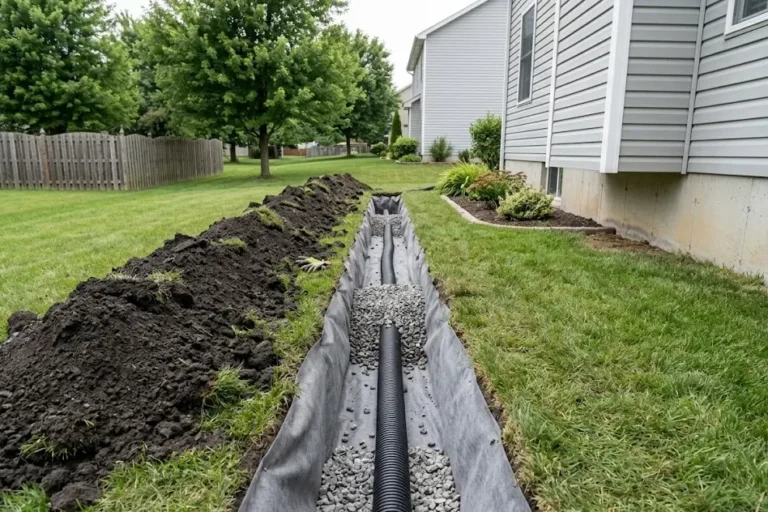
Interior systems manage the water after it gets in and need no digging; exterior waterproofing requires excavation around the foundation and dry weather (HomeGuide). NDSU Extension points out that a gap between the soil and a basement wall lets rainwater run down the wall into the basement, and that drainage pipe along the footing and a drainage plane on the outside of the wall help keep soil moisture steady (NDSU Extension).
Can you fix a foundation crack yourself?
Hardware stores sell epoxy kits for basement wall cracks, but HomeGuide notes they lack the durability, strength and warranty of a professional repair, and recommends having the crack assessed first to find out whether it is minor or a sign of something bigger (HomeGuide). We could not find a published, dated price for these kits from a source we trust, so we do not quote one. NDSU Extension’s advice is narrower: fill small cracks to keep water out, and use the size of basement wall cracks to decide whether you need a contractor (NDSU Extension).
The cost guides draw the line in the same place. This Old House says small vertical cracks no wider than 1/8 inch can be sealed by buying epoxy and doing it yourself, and that larger cracks should be assessed by a professional (This Old House). Thumbtack limits DIY to minor, non-structural hairline cracks that are not growing or leaking, and recommends a pro for any large, horizontal or stair-step crack; it also warns that using the wrong filler or ignoring the water problem behind a crack can lead to a failed repair that costs more later (Thumbtack).
What else changes the price
- Length and width. Longer or wider cracks take more material and labor (HomeGuide).
- Old patches. A crack that was patched before can cost more, because the old repair has to come out first (HomeGuide).
- Access. Cracks in corners, crawl spaces, behind finished walls or behind landscaping take longer to reach (HomeGuide). Obstacles like landscaping or decks can raise the price (Thumbtack).
- Foundation type. Poured concrete is the easiest to inject; block walls may need individual blocks replaced; brick and stone need mortar work or specialized techniques (HomeGuide).
- The cause. The bill rises if the root cause also has to be fixed, such as poor drainage or soil grading around the house (Thumbtack).
- Location and climate. Homes on expansive clay soils are more likely to need costly piering, and colder climates bring freeze-thaw cracking and shifting (This Old House).
How to keep the bill down
- Mark and date both ends of a crack and check it over the seasons, so you can tell a contractor whether it is growing.
- Seal small cracks early to keep water out (NDSU Extension). This Old House notes that a hairline crack caught early might cost $200 to $800, while waiting until it has widened and caused structural issues can push repairs to $10,000 to $15,000 or more (This Old House).
- Deal with the water around the house: leaking pipes, drainage and downspouts all affect how much expansive soil moves (Virginia Department of Energy).
- Get several quotes, and be wary of bids that look too low (Thumbtack).
- Clear the area around the crack, such as stored items or overgrown bushes, so the crew can reach it (Thumbtack).
- If two quotes disagree on whether the crack is structural, pay for an engineer’s report before paying for the repair.
- Ask whether an inspection fee is credited against the repair if you go ahead.
Questions to ask before you sign
- Do you consider this crack structural or not, and what tells you that?
- Which material will you inject, epoxy or polyurethane, and why for this crack?
- What caused the crack, and does your price include fixing that cause?
- Does the quote include the permit, cleanup and restoring any finished wall?
- What does the warranty cover if the crack leaks again or reopens, and is it transferable if I sell?
Sources
- Virginia Department of Energy, Geology and Mineral Resources, Expansive Soils.
- Colorado Geological Survey, Expansive Soil and Rock.
- North Dakota State University Extension, Dry Soil May Cause Building Problems, June 30, 2017.
- HomeGuide, Foundation Crack Repair Cost, July 9, 2025.
- HomeGuide, Basement Wall Crack Repair Cost, February 2026.
- HomeGuide, Cracked Slab Foundation Repair Cost, March 2026.
- HomeGuide, Foundation Leak Repair Cost, February 2026.
- HomeGuide, Structural Engineer Cost, December 2025.
- This Old House, How Much Does Foundation Repair Cost?, updated March 6, 2026 (based on Angi cost data).
- This Old House, How Much Does a Foundation Inspection Cost?, updated June 5, 2026.
- Today’s Homeowner, What Does Foundation Repair Cost?, April 9, 2025.
- Today’s Homeowner, Bowing Basement Wall Repair Costs, May 28, 2025.
- Thumbtack, Foundation Crack Repair Cost, June 4, 2026.
- Homewyse, Cost to Repair Cracked Concrete, September 2026.