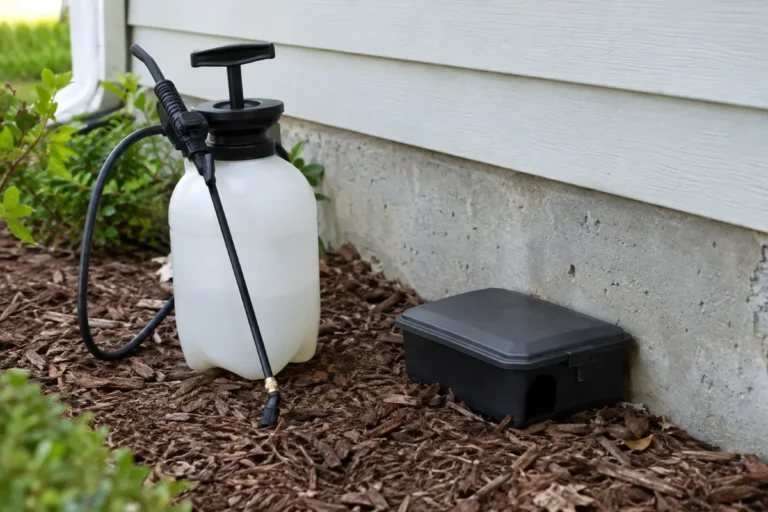
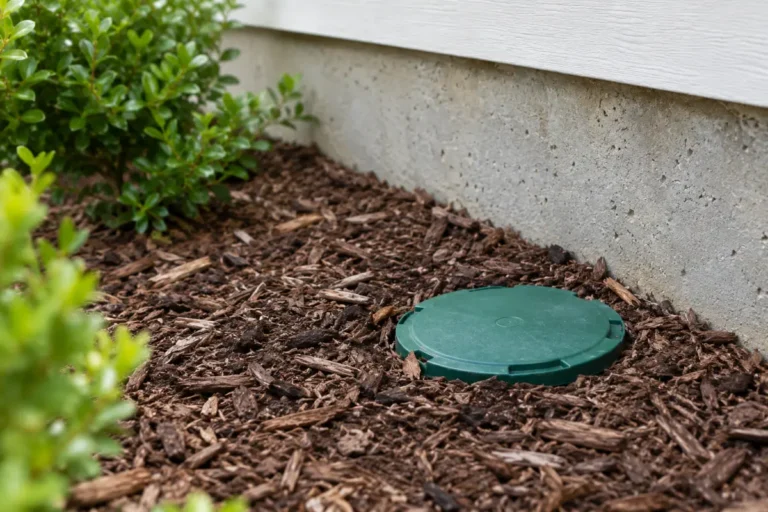
$200 – $600That is the typical wildlife removal cost in 2026 for one nuisance animal, such as a raccoon, squirrel, opossum or skunk, trapped or evicted by a professional (HomeGuide). Fixr puts wildlife removal at $250 to $1,000 depending on the animal and where it is (Fixr). An infestation in the attic costs $500 to $1,500, or $1,500 to $3,500 for a large one with a week of trapping and repairs, and an inspection adds $100 to $300 (HomeGuide).
The removal itself is often the smallest part of the bill. Sealing the entry points, cleaning droppings out of the attic and repairing what the animals chewed can cost more than the trapping, and bats come with a calendar that may make you wait. The tables below break down each line by animal, then cover the health and legal rules that shape the price. If the problem turns out to be insects rather than animals, see our guides to pest control cost and termite treatment cost.
Wildlife removal cost by animal
| Animal | HomeGuide | Today’s Homeowner | Fixr | Bob Vila (older guide) |
|---|---|---|---|---|
| Raccoon | $200 – $300 per animal | $200 – $600 | — | $400 – $600 |
| Squirrel | $300 – $600 | $200 – $600 | $275 – $600 | $200 – $600 |
| Bat | $250 – $600 (up to 5 bats) | $400 – $1,500 | — | $230 – $700 |
| Opossum | $150 – $500 | — | $200 – $400 | $250 – $500 |
| Skunk | $300 – $700 | $300 – $600 | $400 – $500 | $300 – $600 |
| Snake | $150 – $600 | $150 – $500 | $300 – $400 | — |
| Bird | $250 – $750 (2 to 5 birds) | $350 – $650 | — | $100 – $300 |
The guides broadly agree on squirrels and skunks, but not on raccoons or bats. HomeGuide prices a raccoon at $200 to $300 for each animal trapped and released, and adds $100 to $150 for every extra raccoon (HomeGuide); Today’s Homeowner says most homeowners pay around $400 for a single raccoon (Today’s Homeowner). For bats, Today’s Homeowner starts higher because its range assumes a small attic colony rather than one stray bat. Two other figures help with context: Fixr puts typical opossum removal at about $250 for a family in a chimney (Fixr), and HomeGuide’s own opossum guide gives a wider range than the $250 to $350 in its summary table, which is why we show the per-animal page above. Mice and rats are a separate job, usually handled with lethal traps rather than live removal (HomeGuide).
Estimate your wildlife removal cost
Our estimate: the published ranges above multiplied out for your inputs. Not a quote. Animal ranges run from the lowest to the highest figure in HomeGuide (Jan and Feb 2026), Today's Homeowner (Mar to May 2025) and Fixr (Jan 2025). Extras from HomeGuide (Sep 2025 to Feb 2026). Repairs are not included. State adjustment: BLS construction wages (May 2025), applied to an assumed 50% labor share. How we calculate
Our estimate: each animal range in the calculator runs from the lowest low to the highest high of the three current guides in the table above (HomeGuide, Today’s Homeowner and Fixr); the older Bob Vila figures are left out. It is our own combination, not a measured price, and it covers one removal job. A large bat colony or a week of attic trapping costs more, as the sections below show.
Inspection, trapping and exclusion: what each line costs
A wildlife job usually has three parts: an inspection to find the animal and every way in, getting the animal out by trap or one-way door, and sealing the building so it cannot come back. Companies price these differently, which is why quotes are hard to compare.
| Line on the quote | Cost | Source |
|---|---|---|
| Wildlife inspection | $100 – $300 | HomeGuide |
| Bat inspection | $100 – $325 / $75 – $400 | HomeGuide / This Old House |
| Raccoon inspection | $80 – $150 | HomeGuide |
| Each extra raccoon trapped and released | $100 – $150 | HomeGuide |
| Each extra live trap set for raccoons | about $50 | Today’s Homeowner |
| Extra trap check, beyond the 2 or 3 included | $45 – $85 per visit | Fixr |
| Return trip to trap an opossum | about $100 | Fixr |
| One-way exclusion door for squirrels | $200 – $600 | Fixr |
| Each additional exclusion door | $225 – $400 | HomeGuide |
| Bat exclusion device, per entry | $100 – $400 | HomeGuide |
| Exclusion barrier (metal mesh) | $10 – $25 per linear foot or $20 – $60 per opening | HomeGuide |
| Animal-proof vent | $300 – $450 each | HomeGuide |
Per animal or per visit. Some companies charge for each animal caught, others for the visit. HomeGuide’s raccoon figures are per animal (HomeGuide). Today’s Homeowner lists one-time visits at $150 to $350, including inspection, treatment and a follow-up, and monthly plans at $125 to $300 for the first visit plus $50 to $75 per follow-up (Today’s Homeowner). Fixr says most specialists include a few trap checks in the first fee and charge for any more (Fixr). Ask which model you are being quoted, because a per-animal price can climb fast when a mother and her young are in the attic.
Inspection credit. HomeGuide says the inspection fee usually counts toward the final bill if you go ahead with the removal, and some companies inspect for free within their service area (HomeGuide). This Old House says bat inspections are typically billed as their own service (This Old House).
Exclusion. One-way doors let the animal leave but not come back, and the other openings are sealed. HomeGuide notes that each extra entry point adds a sealing or barrier charge (HomeGuide). Exclusion is what stops the next animal, so a quote without it is not a cheaper version of the same job.
Bat removal cost and the maternity season
| Bat job | HomeGuide | Today’s Homeowner | This Old House |
|---|---|---|---|
| Single bat inside the living area | $100 – $250 | — | — |
| Small colony | $400 – $600 (1 to 5 bats) | $400 – $600 (fewer than 10) | $250 – $650 (standard job) |
| Medium colony | $600 – $1,500 (5 to 50 bats) | $1,500+ (dozens or more) | — |
| Large colony | $1,500 – $4,500 (50 to 200 bats) | up to $9,000 in rare cases | $5,000 – $8,500 (200+ bats) |
| Guano cleanup | $500 – $5,000 | $500 – $5,000 | $500 – $8,500 |
Bats are not trapped and moved. The Pennsylvania Game Commission’s guide says trapping and relocating bats does not work because they return even from great distances, and that using pesticides against bats is illegal (Pennsylvania Game Commission). The accepted method is exclusion: one-way devices over the openings the bats use, then sealing. Guidance published by the U.S. Fish and Wildlife Service in 2015 says the devices should stay up for at least five nights, including three nights in a row of weather that bats fly in, before the holes are sealed (White-nose Syndrome Working Group, USFWS).
Timing is the rule that changes your bill. In summer, colonies have young that cannot fly yet, and sealing the exits traps them inside to starve (Pennsylvania Game Commission). Each state sets its own window:
- Wisconsin’s Department of Natural Resources says not to restrict bat exits from June 1 through July 31 (Wisconsin DNR).
- Michigan’s DNR asked residents in June 2026 to hold off on moving or excluding bats during the summer maternity season and to wait until late summer to install one-way devices (Michigan DNR).
- The Pennsylvania Game Commission’s guide says the season starts as early as mid-April in the southernmost states and in mid-June in the north, and that exclusions should not be done between April and late August (Pennsylvania Game Commission).
- Where a state has issued no specific dates, the 2015 federal guidance tells wildlife operators to treat April 1 to August 31 as the maternity season, and to avoid winter exclusions in buildings where bats hibernate (White-nose Syndrome Working Group, USFWS).
The CDC gives the same advice to homeowners: fall and winter are the best times to bat-proof, and work between May and August must not trap young bats inside (CDC). If you find bats in July, the job is often split in two. The 2015 guidance recommends sealing the openings into the living space first, so bats in the attic cannot reach the rooms, and leaving the full exclusion for later (White-nose Syndrome Working Group, USFWS). Expect two visits rather than one.
Raccoons and squirrels in the attic
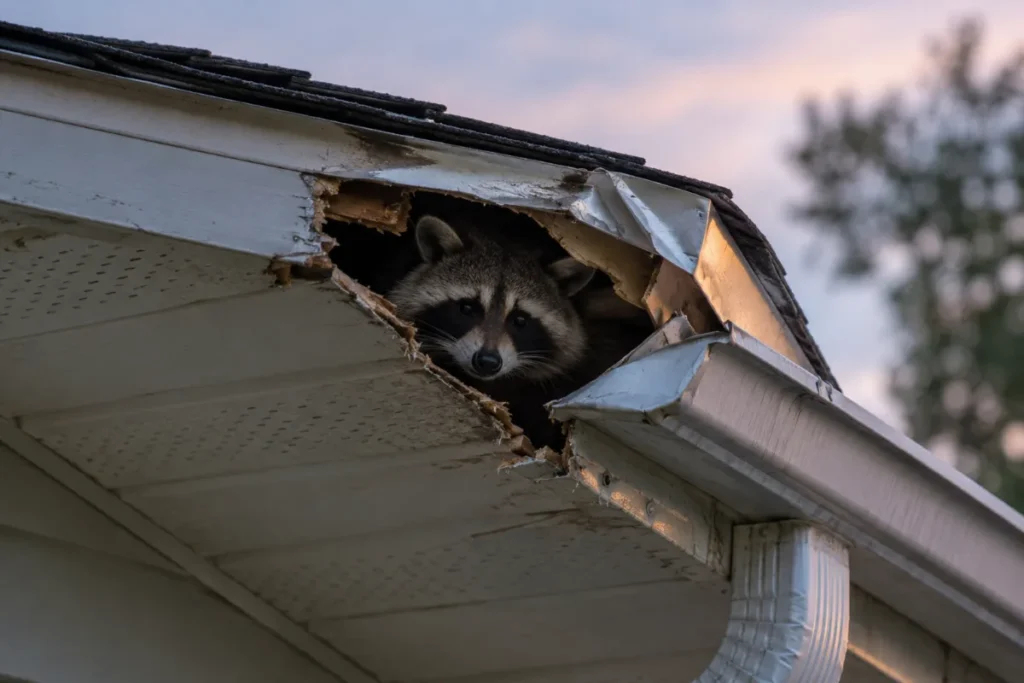
Location matters as much as the animal. Removing raccoons from an attic costs $1,000 to $3,500, which covers a week of trap monitoring, sealing every entry point and disinfecting the attic; a single raccoon that has not done much damage costs $350 to $500 to trap, and manually removing a mother and her nest costs $300 to $750 (HomeGuide). For squirrels, the guides disagree most on chimneys:
| Squirrel location | HomeGuide | Today’s Homeowner (average) | Fixr (per visit) |
|---|---|---|---|
| Yard | — | $200 | $200 – $275 |
| Basement | $300 – $600+ | $300 | $200 – $300 |
| Chimney | $600 – $950 | $450 | $200 – $300 |
| Attic | $500 – $1,500 | $500 | $300 – $600 |
| Ceiling | $750 – $1,500 | $750 | $750 – $1,500 |
HomeGuide’s chimney price is higher because it includes a chimney sweep cleaning, since debris left by squirrels raises the fire risk; its attic price covers trapping, cleanup, minor repairs and sealing, and typically comes with a guarantee of at least one year (HomeGuide). Our chimney sweep cost guide covers that cleaning on its own. Whatever the quote, ask whether cleanup and sealing are in the price. Squirrels breed from March to October, and HomeGuide recommends calling a professional before that season starts (HomeGuide).
Opossums, skunks, snakes and birds
Opossums cost less outside than inside. HomeGuide lists $200 to $350 for trapping outdoors, $250 to $500 indoors and $150 to $300 for catching one by hand or with a snare pole (HomeGuide). Fixr’s top figure, $500, is for a mother and three young in an attic with the entry sealed and droppings cleaned (Fixr).
Skunks usually live under decks, porches, sheds or in crawl spaces, and those spots cost more than an open yard (Today’s Homeowner). Fixr’s typical job, $450, is one skunk under a porch; several skunks in a large den can reach $600 (Fixr). HomeGuide adds that disinfecting the area afterwards is an extra fee (HomeGuide).
Snakes cost more when they are venomous or hard to reach. Fixr lists about $300 for a garter or rat snake and about $500 for a copperhead or rattlesnake (Fixr); Today’s Homeowner says most companies charge around 20% more per venomous snake and that county animal control typically does not handle them (Today’s Homeowner).
Birds in vents or the attic cost the most. HomeGuide puts nest removal from a vent or the eaves at $1,000 to $2,000 or more, including a day of cleanup and sealing, and charges $1,200 to $1,600 a day for more than 25 birds inside the attic, ducts or crawl space (HomeGuide). The species matters legally. New York’s Department of Environmental Conservation says hazing a nesting migratory bird violates the Migratory Bird Treaty Act and that woodpeckers need a federal permit, while European starlings, house sparrows and pigeons without leg bands can be taken without one (NYSDEC). Confirm which bird you have before any nest is touched.
Rabies, disease and relocation laws
The animals that most often end up in a house are also the ones that carry rabies. The CDC lists raccoons, skunks, bats and foxes as common rabid animals in the United States and says there are more than 100,000 potential exposures each year (CDC). Bats are the most reported rabid animal, and most Americans who die of rabies were exposed to a bat. If you find a bat in your home, the CDC says to call animal control or your health department to capture it for testing and not to release it until you have spoken with public health; bat bites can be so small you do not notice them (CDC). Anyone bitten or scratched by a wild animal should wash the wound with soap and water and get medical care right away (CDC). HomeGuide lists rabies testing for anyone bats have bitten as an extra expense on top of the removal (HomeGuide).
Droppings carry their own risks, which is why cleanup is priced separately. The CDC’s raccoon roundworm page (November 2024) says the eggs in raccoon feces become infectious after two to four weeks, so latrines should be removed promptly and carefully, and that most human infections are in children (CDC). Its histoplasmosis page (April 2024) says the fungus spreads in bird and bat droppings that mix into soil, mainly in the central and eastern states (CDC).
Moving an animal is not always legal. Rules are set by each state, and they differ:
- In New York, it is illegal for a homeowner to move an animal off the property where it was caught; you cannot release it in a park or on state land, and removal off the property must be handled by a licensed Nuisance Wildlife Control Operator. Taking a raccoon, opossum or gray squirrel that is only a nuisance requires a DEC permit (NYSDEC).
- In Virginia, it is illegal to trap an animal and relocate it to another area, and local ordinances are usually stricter than state law (Virginia DWR).
Because of rules like these, a trapped animal is not always released far away; Today’s Homeowner notes that raccoons are either relocated or humanely euthanized depending on local law (Today’s Homeowner). Check your state wildlife agency’s page before you set a trap yourself, and ask the company what it will do with the animal.
Attic cleanup and damage repair
| Work after removal | Cost | Source |
|---|---|---|
| Raccoon cleanup (about 100 sq ft) | $300 – $500 | HomeGuide |
| Raccoon attic cleanup and decontamination | $100 – $300, plus $200 – $500 for basic repairs | Today’s Homeowner |
| Squirrel droppings removal | about $250 per visit | Fixr |
| Dead animal removal | $100 – $250 | HomeGuide |
| Attic insulation removal and replacement | $2 – $6 per sq ft | HomeGuide |
| Drywall repair | $300 – $1,500+ | HomeGuide |
| Soffit and fascia repair | $9 – $34 per linear foot | HomeGuide |
| Minor roof repair | $150 – $1,000 | HomeGuide |
| Ductwork replacement | $25 – $55 per linear foot | HomeGuide |
| New chimney cap | $200 – $850 | HomeGuide |
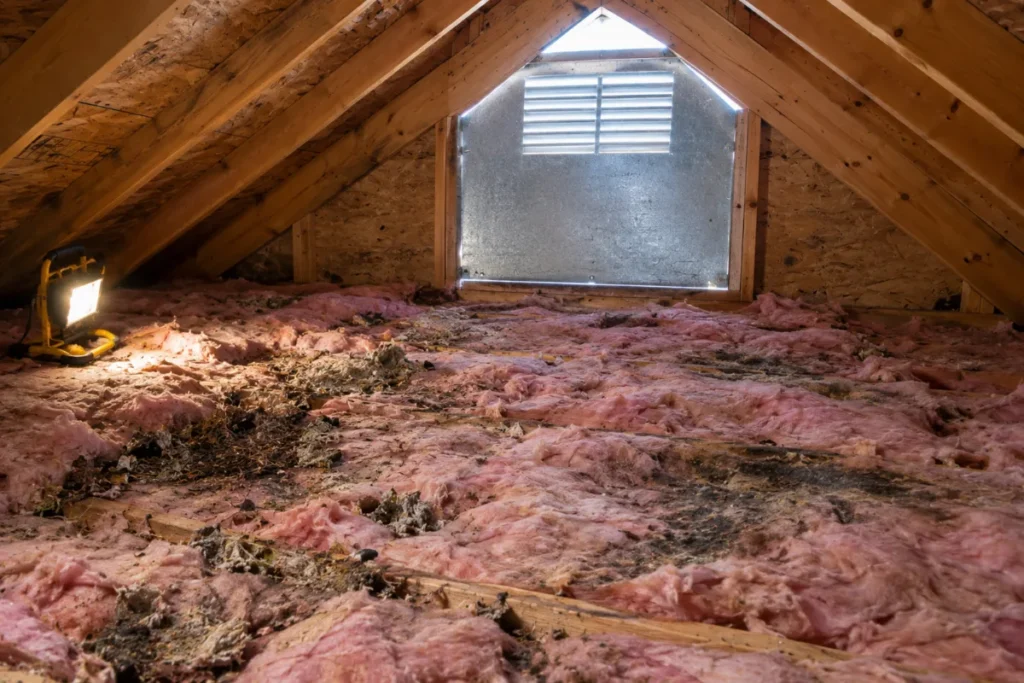
Animals in an attic tear up insulation, break electrical lines, chew through PVC pipes and leave droppings behind (HomeGuide), so the repair bill grows the longer they stay. Rewiring is the line where the numbers vary most: HomeGuide’s wildlife guide lists $5 to $17 per square foot, while its raccoon guide lists $4 to $9, so get an electrician’s quote rather than relying on either. If the insulation has to go, our attic insulation cost guide covers the replacement, and animals living under the house can lead to crawl space work.
On insurance, HomeGuide says homeowners policies typically do not pay for wildlife removal, which insurers treat as preventable, though some cover cleanup and repairs depending on the policy (HomeGuide). Read your own policy or ask your insurer before the work starts.
Our estimate: squirrels in the attic with an inspection, one extra exclusion door and droppings cleanup of about 100 square feet would cost roughly $1,125 to $2,700: $500 to $1,500 for the attic removal, $100 to $300 for the inspection, $225 to $400 for the door and $300 to $500 for cleanup at HomeGuide’s rate for 100 square feet, all from HomeGuide’s 2026 guides. This is our own sum, not a measured figure, and it leaves out insulation or wiring repairs.
Emergency and after-hours fees
| Source | Extra charge for nights, weekends or holidays |
|---|---|
| HomeGuide | $100 – $300, or double the standard minimum fee |
| Today’s Homeowner | $100 or more |
| Fixr | $75 – $100 (skunk); at least $100 (squirrel, opossum); $100 – $300 (snake) |
An animal loose in the living area, a snake in the house or a skunk that may be rabid is worth the premium. A raccoon in the attic at midnight usually is not, as long as it cannot reach the rooms. Fixr notes that many specialists will come out right away at no extra charge if the call is during regular business hours (Fixr).
How to keep the bill down
- Act at the first sign. Damage, cleanup and the number of animals all grow with time.
- Ask whether the inspection fee is credited toward the job; HomeGuide says it usually is.
- Compare quotes on the same scope: the same animals, the same number of trap checks or visits, and the same entry points sealed.
- Pay for exclusion. A cheaper quote that only removes the animal leaves the door open for the next one.
- If you have bats, book the exclusion for outside your state’s maternity season instead of paying for a rushed summer job.
- Remove what draws animals in. New York’s DEC recommends securing garbage, feeding pets indoors, clearing brush and log piles, and using chimney covers and soffit vents (NYSDEC).
- Avoid after-hours calls unless the animal is in the living space or someone may have been bitten.
Questions to ask before you sign
- Are you licensed for wildlife control in this state, and are you insured?
- Is the price per animal, per visit or for the whole job, and how many trap checks are included?
- Which entry points will you seal, and is exclusion included or extra?
- What will you do with the animal once it is caught, and is that legal here?
- For bats: when is the maternity season in this state, and how will you protect the living space until then?
- Are cleanup, insulation removal and repairs in this quote, or will they be quoted separately?
- What does your guarantee cover if an animal gets back in, and for how long?
Sources
- Centers for Disease Control and Prevention, Rabies Prevention and Control and Preventing Rabies from Bats, July 1, 2025; About Raccoon Roundworm, November 5, 2024; About Histoplasmosis, April 24, 2024.
- Wisconsin Department of Natural Resources, Wisconsin Bat Program.
- Michigan Department of Natural Resources, Bat roost monitoring effort returns for second summer, June 16, 2026.
- Pennsylvania Game Commission, Bats in Buildings: A Guide to Safe & Humane Exclusions (PDF).
- White-nose Syndrome Conservation and Recovery Working Group, Acceptable Management Practices for Bat Control Activities in Structures, U.S. Fish and Wildlife Service, April 1, 2015 (copy hosted by the Oregon Department of Fish and Wildlife).
- New York State Department of Environmental Conservation, Remove or “Take” Nuisance Animals Legally and Tips to Eliminate Wildlife Conflicts.
- Virginia Department of Wildlife Resources, Problems with Raccoons.
- HomeGuide, Animal & Wildlife Removal Costs, February 13, 2026; Raccoon Removal Cost, February 9, 2026; Squirrel Removal Cost, February 9, 2026; Possum Removal Cost, January 16, 2026; Bat Removal Cost, September 2, 2025.
- Today’s Homeowner, removal cost guides for raccoons (March 19, 2025), skunks (March 20, 2025), squirrels (March 26, 2025), snakes (April 30, 2025), bats (May 29, 2025) and birds (May 29, 2025).
- Fixr, How Much Does It Cost to Hire an Exterminator?, Squirrel Removal Cost, Possum Removal Cost, Skunk Removal Cost and Snake Removal Cost, all updated January 31, 2025.
- This Old House, How Much Does Bat Removal Cost?, updated June 5, 2026.
- Bob Vila, How Much Does Wildlife Removal Cost?, older guide, March 22, 2023.