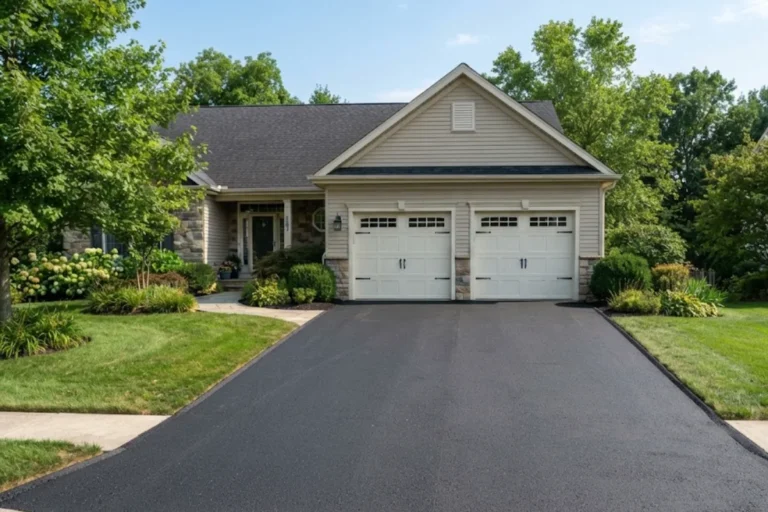
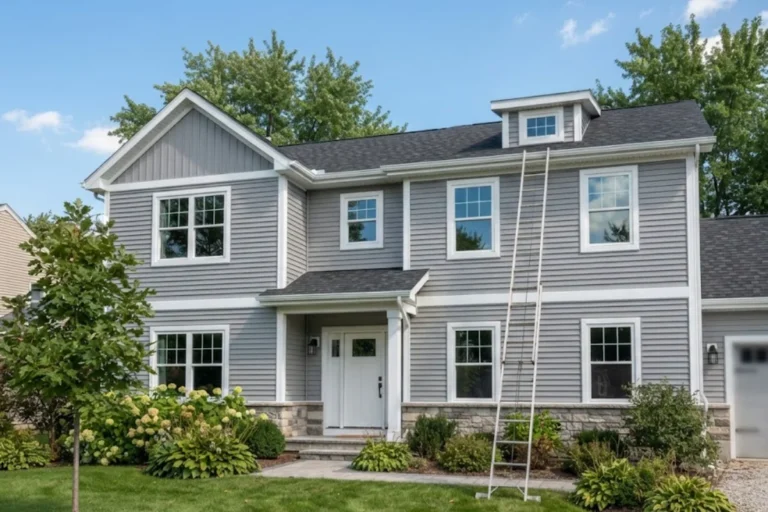
$316 – $941That is the typical window tinting cost in 2026 for a home, with an average near $611, according to This Old House. Priced by area, residential window film runs about $5 to $20 per square foot installed (Fixr). The guides disagree on the totals: Fixr puts five standard windows at $150 to $600, and Homeyou gives $189 to $736. This guide covers home window film only. Car tint is priced differently, and a short section near the end covers it.
Film type sets most of the price. A basic solar or dyed film costs a fraction of security film, and smart film that switches from clear to dark costs several times more again. Window size, shape and how hard the glass is to reach add to the labor. The tables below set the published guides side by side.
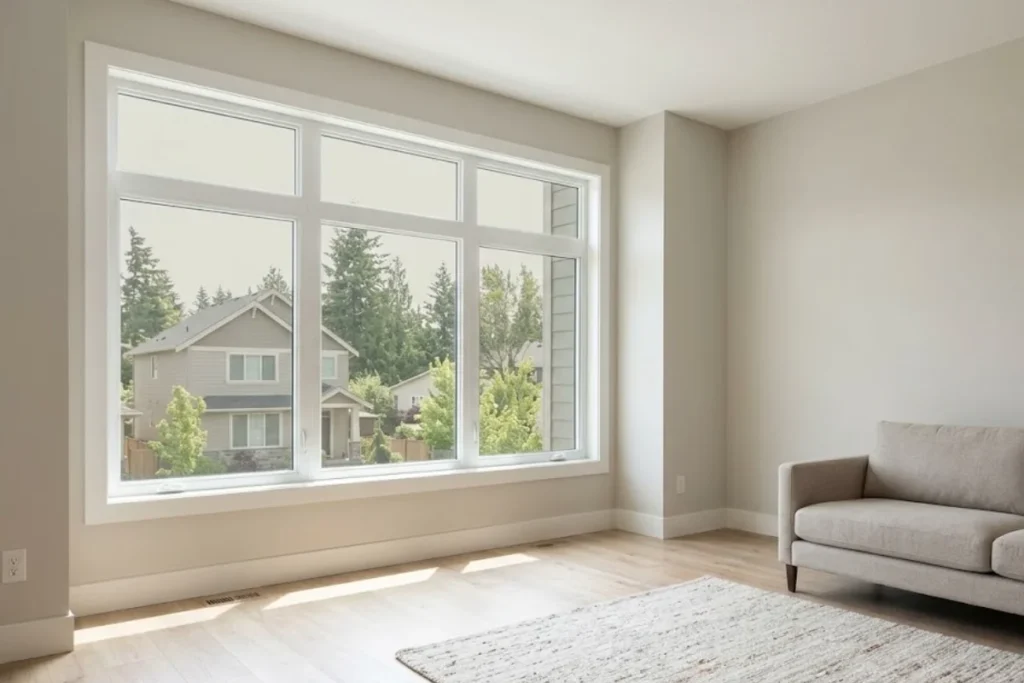
Window tinting cost per square foot by film type
| Film type | This Old House | Fixr | Summit Window Tinting |
|---|---|---|---|
| Solar (heat control) | $5 – $14 | — | $5 – $12 (standard solar or dyed) |
| Ceramic | $5 – $10 | — | $10 – $18+ |
| Decorative or frosted | $6 – $13 | $9 – $20 | $8 – $12 |
| Security | $8 – $20 | up to $26 | $10 – $14 |
| Insulating | $10 – $20 | — | — |
| Smart or switchable | $30 – $45 | $4,200 for five windows | $30 – $100+ |
| All residential film | $5 – $45 | $5 – $20 | $5 – $20 |
Security film has the widest spread. This Old House lists it at $8 to $20 and Fixr says it can reach $26. This Old House does not price low-e film by name; the nearest line is insulating film at $10 to $20. We found no first-hand published price for low-e film, so ask installers to quote it.
One installer, Sea-Cool, quotes much higher planning prices of $10 to $30 per square foot including installation, with premium solar control at $15 to $20 and clear security film at $15 to $23 (Sea-Cool, August 2026). Window type moves the price too. This Old House gives an average of $12 per square foot for a picture window or patio door, and $19 for a French door or skylight.
How much does it cost to tint a house?
| Source | Scope | Cost |
|---|---|---|
| This Old House | Typical home project | $316 – $941 (average $611) |
| Summit Window Tinting | Typical residential project | $316 – $941 (average $613) |
| Fixr | Five double-hung windows, 24 by 36 inches | $150 – $600 (average $375) |
| Homeyou | Typical project | $189 – $736 (average about $644) |
| Cost Insight Hub | Whole house | $600 – $1,500 |
| TintFinder | Ten standard windows | $500 – $2,000 |
This Old House and Summit Window Tinting print the same $316 to $941 range, so we count them as one data point rather than two. The other guides sit lower at the bottom and higher at the top, which fits their different scopes: five small windows at one end, a whole house at the other. Homeyou also prices a single window by film type.
| Film type | Cost per window |
|---|---|
| Standard dyed | $27 – $54 |
| Metalized (reflective) | $62 – $118 |
| Ceramic | $84 – $165 |
| Dual-reflective | $80 – $165 |
| Spectrally selective | $139 – $286 |
| Decorative or frosted | $74 – $189 |
Estimate your window tinting cost
Our estimate: the published ranges above multiplied out for your inputs. Not a quote. Per-square-foot ranges combine This Old House (April 2026), Fixr (January 2025) and Summit Window Tinting (August 2026), using the lower low and the higher high. Film removal is from Fixr. Many installers charge a minimum job fee. State adjustment: BLS construction wages (May 2025), applied to an assumed 50% labor share. How we calculate
DIY film or a professional installer
| Item | Cost | Source |
|---|---|---|
| DIY film on a roll | About $1 per sq ft | Fixr |
| DIY kit with tools | $15 – $45 | Fixr |
| Professional install, film included | $5 – $20 per sq ft | Fixr |
| Professional labor alone | $5 – $10 per sq ft | This Old House, Summit |
| Professional minimum job charge | About $392 | Fixr |
| Old film removal | $3 – $5 per sq ft | Fixr |
| 3M film only, no labor | $2 – $14 per sq ft | Bob Vila (older, 2022) |
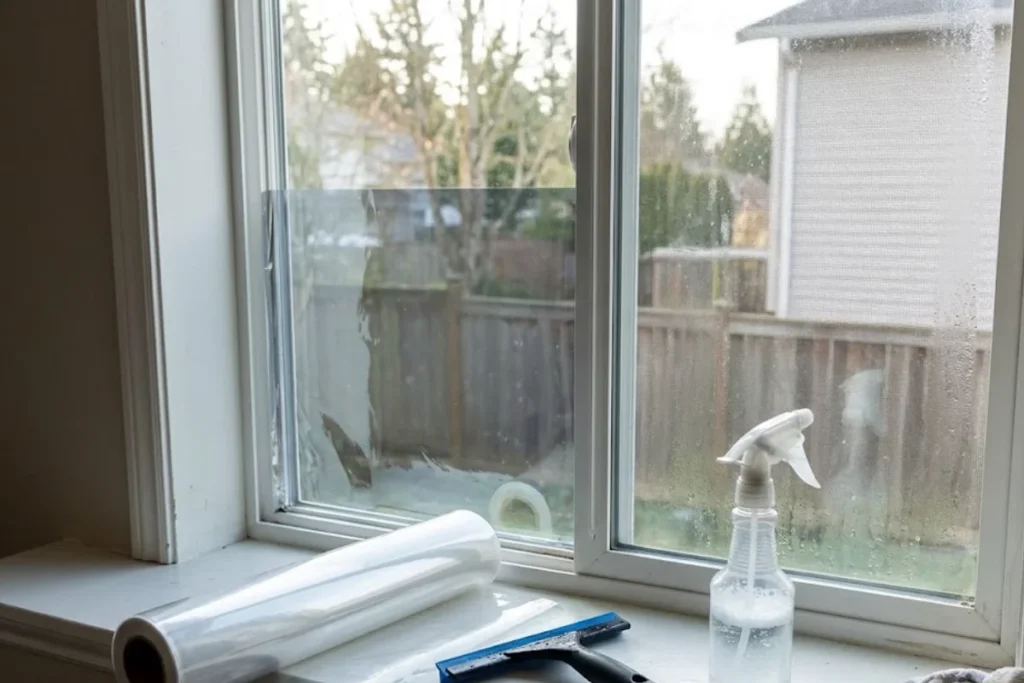
Our estimate: for 100 square feet of glass, Fixr’s DIY figures work out to about $115 to $145 ($100 of roll film plus a $15 to $45 kit). A professional job at This Old House’s solar film range of $5 to $14 per square foot would be $500 to $1,400. If you buy 3M film at Bob Vila’s older $2 to $14 per square foot, the DIY materials alone run $200 to $1,400, so the saving depends on the film you choose. This is arithmetic on published figures, not a measured price.
Doing it yourself saves the $5 to $10 per square foot labor charge, but Homeyou lists the risks: imperfect application, wasted material, time, and possible damage to the window. The Windows Tinting, a film installer, quotes 3M guidance that film warranties often depend on using an authorized dealer and following the care instructions. For a large picture window, a skylight or an upper floor, a professional is the safer choice.
Does window film lower energy bills?
It depends on where you live. In a 2013 study for the U.S. Department of Energy, Lawrence Berkeley National Laboratory found that in cooling-dominated climates all the window attachments it modeled save energy. In northern and many central zones, they can add heating cost, and the report names exterior films among the attachments that give little to no benefit or use more energy than bare windows in heating-dominated climates (DOE and LBNL, October 2013, older). A later brief from the energy-efficiency group ACEEE (undated, citing sources up to 2019, so older) says the same: films have the greatest savings potential in cooling climates and can hurt performance in heating-dominated ones.
The U.S. General Services Administration tested a film at a federal building in St. Louis. It saved 8% of cooling energy, but that saving was offset by higher heating use in winter. In warmer climates, modeled reflective film cut HVAC energy by 29% on single-pane clear windows (GSA, January 2015, older). Those are commercial-building results, not a promise for a house. Low-e film is sold as a year-round product: The Windows Tinting, a film installer, says it slows radiant heat loss in winter, which ordinary solar tints do not (The Windows Tinting, August 15, 2026).
Film does not replace new windows. A film installer quoted by This Old House puts window replacement at $12,000 to $50,000, and the guide gives film a life of 10 to 15 years for most professional installs. See our guides to window replacement cost and energy-efficient windows cost if your glass is old or failing. For cheaper energy savings in the attic, see attic insulation cost, and for other exterior work, siding replacement cost.
Car window tint costs are different
Car tint is priced per vehicle or per window, not per square foot, and the market is separate. Yelp (October 2026) reports a nationwide average of $195 including old tint removal, prep, film and labor, with a typical range of $85 to $335. Per window, it gives about $50 for basic dyed tint and about $100 for ceramic or carbon. TintFinder (2026) prices a full sedan at $150 to $250 for dyed film, $250 to $450 for carbon and $400 to $700 for ceramic. SUVs, vans and trucks cost more. Do not use these numbers for your house; the film, the glass and the labor are different.
How to keep the bill down
- Tint several windows in one visit. This Old House says a single window or a few can cost more per square foot than a bulk project.
- Match the film to the problem. Heat and glare on sunny windows call for solar film; privacy alone is cheaper with frosted or decorative film.
- Ask for labor and material on separate lines. This Old House recommends it so you can compare quotes.
- Tint when you replace windows. This Old House cites a 2025 survey in which over 21% of homeowners added tint during a window project.
Questions to ask before you sign
- Is the price per square foot or per window, and does it include film removal?
- Which film exactly, and what are its solar heat gain and visible light ratings?
- Is there a minimum job charge?
- What does the written warranty cover, and does it apply to my type of glass?
- Are you licensed and insured, and can I see local references?
For more on vetting an installer, read how to find a contractor.
Common questions
How much does it cost to tint one window?
Homeyou gives $35 to $114 for a standard residential window, with an average of $69. Fixr says many companies set a minimum charge, about $392, so a single window often costs more than the area suggests.
How long does window film last?
This Old House says 10 to 15 years for most professionally installed films. The GSA (2015, older) says other commercially available applied films last 6 to 15 years.
Sources
- This Old House, How Much Does Tinting Home Windows Cost?, updated April 6, 2026.
- Fixr, Cost of Window Tinting, updated January 31, 2025.
- Summit Window Tinting (an installer), Residential Window Tinting Cost, August 5, 2026.
- Sea-Cool (an installer), Home Window Tint Cost Calculator & Guide, updated August 2026.
- Homeyou, How Much Does Window Tinting Cost?, updated July 23, 2026.
- Cost Insight Hub (a cost-estimate site), How Much Does a Window Tint Cost?, April 27, 2026.
- The Windows Tinting (a film installer), Low-E Window Film, August 15, 2026.
- TintFinder (an installer directory), Window Tinting Cost Calculator, 2026 (no exact date).
- Yelp, Cost of Car Window Tinting, updated October 2026.
- Bob Vila, How Much Does Window Tinting Cost?, last updated July 29, 2022 (older).
- U.S. Department of Energy and Lawrence Berkeley National Laboratory, Energy Savings from Window Attachments, October 2013 (older).
- U.S. General Services Administration, Solar-Control Films (GPG-017), January 2015 (older).
- ACEEE, Residential Window Attachments, Emerging Opportunities series, undated, cites sources up to 2019 (older).