$270 – $2,000That is the typical gas line installation cost in 2026 for a job that extends an existing line or runs a new line to an appliance, with materials and labor, across three published cost guides. HomeGuide puts it at $350 to $2,000, Thumbtack at $268 to $841 and Fixr at $500 to $2,000. Per foot, HomeGuide gives $15 to $25 for a simple run and $35 to $50 or more for a complex one. A new service line from the street is a different, much larger job at $2,000 to $10,000 or more (HomeGuide).
Three things set the price of a gas line: how many feet of pipe it takes, whether the pipe goes through walls or underground, and what it connects to. A stove and a dryer are usually short, simple runs. A generator, fire pit or outdoor grill usually means digging. Gas work is also one of the few home jobs where the safe option and the legal option are the same: a licensed pro, a permit and a pressure test. This guide breaks down each cost line, compares black iron with flexible CSST tubing, prices each appliance hookup, and explains what the safety steps are so you can read a quote with confidence.
Gas line installation cost by project
| Project | HomeGuide | Thumbtack | Fixr |
|---|---|---|---|
| Typical range, whole job | $350 – $2,000 | $268 – $841 (most people pay about $470) | $500 – $2,000 (average $800) |
| Lowest and highest reported | Not given | $119 – $1,964 | $200 – $5,000 |
| Extending or connecting to an existing line | $350 – $800 (10 – 30 feet) | $243 – $823 | From $200 for a 10-foot extension |
| New line to one appliance | $500 – $2,000 (from the meter) | $431 – $1,609 | Not given |
| Lines to several appliances | $1,200 – $3,000 (2 – 3 appliances) | Not given | $1,500 – $2,500 (3 appliances plus a water heater) |
| Whole-house lines | $2,200 – $7,500 (4 or more appliances) | Not given | $1,650 – $3,500 (5 appliances plus a water heater) |
| New service line from the street | $2,000 – $10,000+ | $382 – $1,298 | $0 – $1,100 for an extra 50 feet from the main |
The guides agree on the order of magnitude but not on the details. Thumbtack, which tracks estimates homeowners receive from local pros, has the lowest typical range. HomeGuide and Fixr both top out at $2,000 for a typical job, and Fixr adds that prices can reach $5,000 when a service line must be extended by several hundred feet and a new interior line is needed (Fixr). The biggest disagreement is the line from the street. HomeGuide says some utilities cover the cost of a new line up to a specified number of feet when you open service with them (HomeGuide), while Thumbtack’s figure for the same job is far lower than HomeGuide’s. Ask the gas utility what it covers before you budget for that line.
Our estimate: the $270 – $2,000 headline range runs from the lowest typical low in the table above ($268 from Thumbtack, rounded to the nearest $10) to the highest typical high ($2,000 from HomeGuide and Fixr). It is the span of three published ranges, not a measured price, and it leaves out new service lines from the street.
Estimate your gas line installation cost
Our estimate: the published ranges above multiplied out for your inputs. Not a quote. Per-foot ranges from Fixr (August 2025) and HomeGuide (January 2026); the complex-run rate is the $35 to $50 per foot from HomeGuide, which says it can go higher. Permit from Fixr and HomeGuide, pressure test from HomeGuide, valves from Fixr, lawn repair and meter move from HomeGuide. Some quotes already include permits and testing, so check before ticking them. State adjustment: BLS construction wages (May 2025), applied to an assumed 50% labor share. How we calculate
The calculator multiplies your pipe length by the per-foot rate for the type of run, then adds the optional items you tick. Leave a box unticked if your quote already covers it. It does not include a new service line from the street, a propane tank or the cost of the appliance itself.
Gas line cost per foot
| Work | HomeGuide | Fixr |
|---|---|---|
| Extending an existing line | Not given | $10 – $20 |
| New line, simple access | $15 – $25 | $15 – $25 |
| Complex run (underground, extra fittings, many turns, hard access) | $35 – $50+ | Not given |
| Moving an existing line | Not given | $15 – $25 |
| Replacing an old line | Not given | $23 – $35 |
| Trenching, extra | $5 – $15+ | $4 – $12 |
| Directional drilling (boring under a driveway or walk), extra | $10 – $30 | Not given |
HomeGuide turns its per-foot rates into totals by length, which is the quickest way to sanity-check a quote:
| Pipe length | Simple installation | Complex installation |
|---|---|---|
| 10 feet | $150 – $250 | $350 – $500+ |
| 20 feet | $300 – $500 | $700 – $1,000+ |
| 30 feet | $450 – $750 | $1,100 – $1,500+ |
| 50 feet | $750 – $1,300 | $1,800 – $2,500+ |
| 75 feet | $1,100 – $1,900 | $2,600 – $3,800+ |
| 100 feet | $1,500 – $2,500 | $3,500 – $5,000+ |
Labor is a large part of these totals. Licensed plumbers and gas fitters charge $50 to $200 per hour, and a simple line extension can take 2 to 4 hours while a complex job with several appliances or hard access can take 8 to 16 hours or more over several days (HomeGuide). Fixr lists $75 to $130 an hour for plumbers and notes that small extension jobs may carry a minimum charge of at least one hour (Fixr).
Black iron vs. CSST pipe
| Pipe material | Material only (HomeGuide) | Material only (Fixr) | Installed (Fixr) |
|---|---|---|---|
| Black iron | $5 – $10 | $5 – $10 | $15 – $30 |
| Corrugated stainless steel tubing (CSST) | $2 – $10 | $2 – $4 | $11 – $20 |
| Copper | $2 – $6 | $2 – $6 | $11 – $21 |
| Galvanized steel | $3 – $9 | $2 – $9 | $11 – $24 |
| High-density polyethylene (HDPE) | $1 – $3 | $1 – $3 | $10 – $15 |
Black iron is the traditional choice for interior gas lines in homes. CSST is flexible and easy to install but requires special bonding and grounding to prevent lightning damage (HomeGuide). Fixr calls CSST faster to install than traditional pipe and suited to tight spaces, which is why its installed price runs lower than black iron (Fixr). A master plumber quoted by Bob Vila said his company now uses CSST more than black steel for interior and above-ground work because it can be installed more quickly and less expensively (Bob Vila, older guide, February 2024).
Both materials are approved for residential gas piping in King County, Washington, but CSST requires certification from the manufacturer for anyone who buys and installs it (King County). The lightning concern is real enough that a state plumbing board addressed it: the Massachusetts Board of State Examiners of Plumbers and Gas Fitters wrote that CSST is subject to nearby lightning strikes that cause electrical arcing, which can rupture the tubing and lead to property damage and potential injuries or death. It accepted manufacturers’ evidence that an added bonding jumper helps limit that damage, and ruled that in Massachusetts the bonding is work for a licensed electrician with an electrical permit (Mass.gov, policy statement dated December 7, 2017). Rules differ by state, so ask your installer whether the manufacturer and your local code require bonding for the CSST you are quoted, and who will do it.
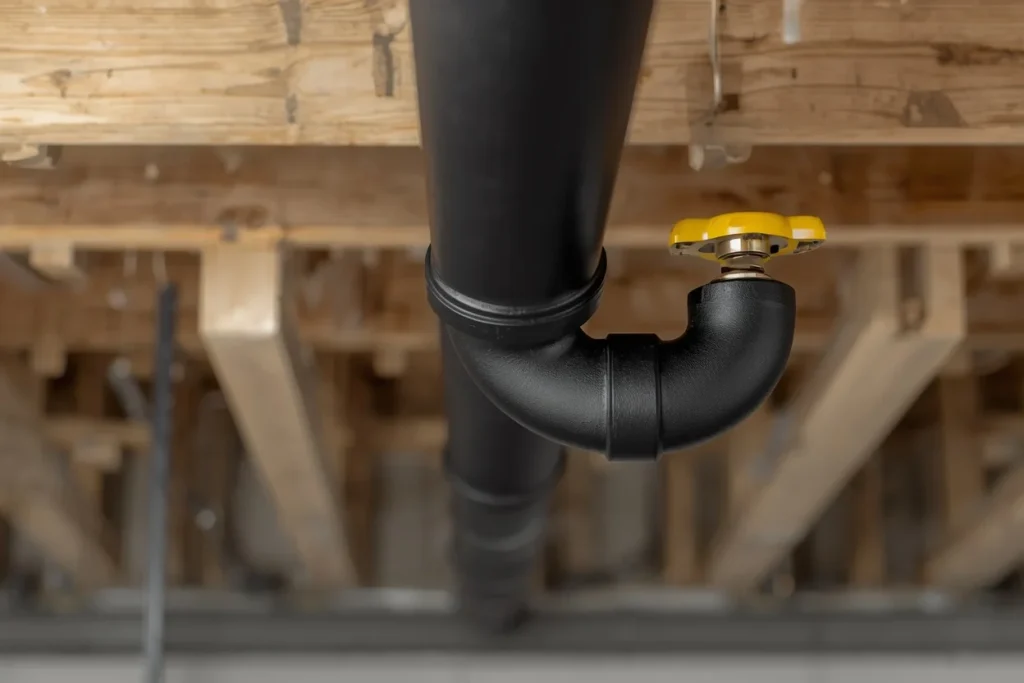
Black iron is not recommended outdoors because it corrodes over time and its sealant wears down underground, and Fixr says its rigidity can crack it in areas with heavy earthquake activity (Fixr). For underground runs, HDPE is often preferred for its corrosion resistance (HomeGuide). Copper is less common for gas lines today because of regulatory changes in some areas (HomeGuide), and Fixr says it is illegal in many areas, so check with your municipality before agreeing to it (Fixr).
Gas line cost by appliance: stove, dryer, water heater, generator, fire pit
| Appliance | HomeGuide | Thumbtack | Fixr, per foot |
|---|---|---|---|
| Stove or range | $500 – $1,200 | $376 – $1,278 | $10 – $15 |
| Dryer | $400 – $900 | $318 – $1,081 | $10 – $20 |
| Water heater | $500 – $1,000 | $357 – $1,215 (water heater or boiler) | $10 – $15 |
| Furnace | $600 – $1,500 | $349 – $1,188 | $20 – $25 |
| Fireplace | $500 – $1,000+ | $357 – $1,215 | $10 – $20 |
| Outdoor grill | $600 – $1,300 (grill or fire pit) | $303 – $1,030 | $15 – $20 |
| Fire pit | $600 – $1,300 (grill or fire pit) | $382 – $1,299 | $15 – $25 |
| Generator | $400 – $1,500+ | Not given | $20 – $25 |
| Pool heater | $500 – $1,500+ | Not given | $20 – $25 |
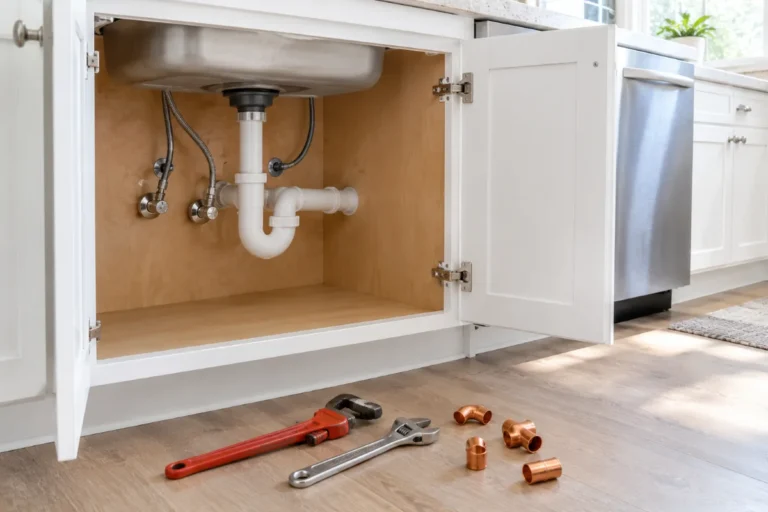
Gas stove or range. HomeGuide says kitchen installations typically need 20 to 30 feet of 1/2-inch or 3/4-inch pipe from the nearest gas source, and that running lines through finished walls raises the cost (HomeGuide). Fixr adds that a stove line is one of the easiest and cheapest to run because it is easy to reach and uses a thin pipe. You cannot convert an electric stove to gas: Fixr says you need a new gas stove, at $600 to $1,000 to install, plus the pipe (Fixr).
Our estimate: a 25-foot stove run at Fixr’s $10 – $15 per foot comes to $250 – $375, well under the $500 – $1,200 HomeGuide gives for a stove line. Fixr prices appliance hookups ($220 – $350 for three or four appliances) and shut-off valves ($210 – $500) as separate lines in its job breakdown, so the per-foot rate alone is not the whole bill. This is a calculation from published figures, not a measured price; ask each contractor what the quote includes.
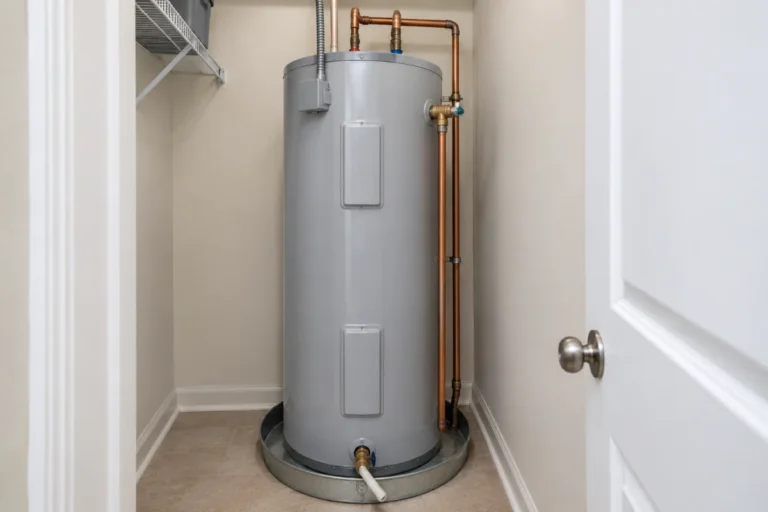
Gas dryer and water heater. Laundry-room lines tend to be simpler because they use smaller lines and moderate gas flow (HomeGuide). Water heaters use a small but steady amount of gas, so they may need a slightly bigger line than a dryer (Fixr). Tankless units may need larger pipes because of higher BTU demand, which can raise the price (HomeGuide). If you are replacing a water heater and the pipe is too small, see our water heater replacement cost and tankless water heater installation cost guides, which price a larger gas line at $350 to $2,000.
Furnace. Furnaces typically need the largest gas lines and the most extensive work, especially in homes without existing gas service (HomeGuide). If the line is part of a heating upgrade, compare it with the unit prices in our furnace replacement cost guide.
Generator. HomeGuide puts the gas line for a generator at $400 to $1,500 or more and says generators need professional installation, with adequate distance from the home and proper ventilation. The complete job for a whole-house natural gas generator runs $6,000 to $11,000 or more (HomeGuide). Our generator installation cost guide covers the unit, transfer switch and carbon monoxide rules.
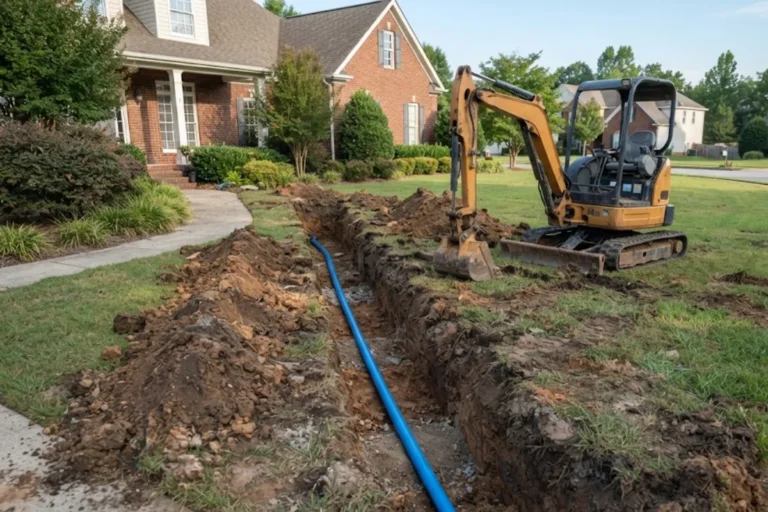
Fire pit, grill and fireplace. Outdoor runs usually cost more because of underground trenching, but a permanent line removes the need to refill propane tanks (HomeGuide). Fireplace cost depends heavily on how close the nearest existing line is: a basement or a room with a line already nearby costs less than running pipe to a second-floor bedroom (HomeGuide). Thumbtack notes that you cannot use just any grill on a natural gas line, so a grill that cannot run on natural gas means buying one that can (Thumbtack).
Pipe size depends on how much gas each appliance burns. King County, Washington, lists minimum demand for typical appliances, which shows why a range or a gas log set is harder on the system than a dryer:
| Appliance | Minimum demand (BTU per hour) |
|---|---|
| Residential barbecue | 40,000 |
| Domestic clothes dryer | 35,000 |
| Domestic gas range | 65,000 |
| Fireplace gas log | 80,000 |
| Storage water heater, 30 – 40 gallon | 35,000 |
| Storage water heater, 50 gallon | 50,000 |
The same county page’s sizing chart (natural gas, inlet pressure of 0.5 psi or less) shows a 1/2-inch pipe carrying 50 cubic feet per hour over 100 feet, while a 3/4-inch pipe carries 104, so adding a fire pit or grill to an existing line can require upsizing it (King County). A licensed installer does that sizing calculation.
Underground lines, meters and the line from the street
Several line items sit outside the per-foot price. HomeGuide lists moving a gas meter at $1,000 to $4,500, adding that most utilities own the meter, so you should coordinate with them before changing anything. Restoration is extra too: patching a driveway costs $100 to $400, major concrete repair $600 to $3,000 or more, and simple lawn repair $300 to $1,000 (HomeGuide).
| Line item in a whole-house job | Average range |
|---|---|
| Run line from main to house (extra 50 feet) | $0 – $1,100 |
| Hook up to the main | $0 – $300 |
| Install meter | $0 – $425 |
| Run lines in the house (3 rooms, 3 to 4 appliances) | $1,250 – $1,600 |
| Hook up appliances | $220 – $350 |
| Shut-off valves | $210 – $500 |
Our estimate: adding the six rows above gives $1,680 – $4,275 for the whole job. That is a sum of Fixr’s published ranges, not a measured price, and it is lower than HomeGuide’s $2,200 – $7,500 for a whole-house conversion with four or more appliances.
On the service line from the street, Fixr says most utilities run a pipe from the main for free for up to 100 feet and charge per foot after that, though it quotes $35 to $60 a foot in one place and $17 to $22 in another, so ask your utility for its actual rate (Fixr). Propane is different: you need a tank. HomeGuide prices an above-ground tank at $300 to $3,000 or more installed and a below-ground tank at $1,500 to $5,000 or more, and says many propane companies install the tank and basic line connection at no charge when you sign up for service (HomeGuide). Fixr says a propane line costs the same $15 to $25 per foot as any other outdoor gas line (Fixr).
Safety: licensed installer, permit and pressure test
Do not install or repair gas lines yourself. HomeGuide warns that improper installation can cause gas leaks, fires or explosions, and that the safety risks far outweigh any savings (HomeGuide). Most states require plumbers to be licensed (U.S. Bureau of Labor Statistics), and some states also license gas fitters, who size the pipe, apply the code, handle permit applications and coordinate inspections (HomeGuide). Local rules vary, so ask your building department what it requires.
- Permit and inspection. HomeGuide says nearly all gas line installations require permits, at $100 to $300 or more, and Fixr gives $50 to $300 (HomeGuide, Fixr). King County, Washington, states that all gas piping installations require a permit and inspection (King County).
- Pressure test. King County requires an air pressure test at no less than 1 1/2 times the working pressure and at least 3 psi for no less than 10 minutes, with no sign of leakage, and the gauge must be visible at inspection. It also says leak checks must not use an open flame. That is one county’s rule; other jurisdictions set their own test pressure and duration (King County). HomeGuide lists standard pressure tests at $75 to $150 and extended 12- or 24-hour tests at up to $500 (HomeGuide).
- Shut-off valve at every appliance. King County requires a gas shut-off valve at each place where a gas appliance will be, and says to leave all the piping exposed so the inspector can see the whole system (King County).
- Call 811 before any digging. The national 811 service says anyone digging, even for a small project, must contact 811 a few days in advance (811 Before You Dig). Fixr says the plumber or utility is responsible for the call (Fixr).
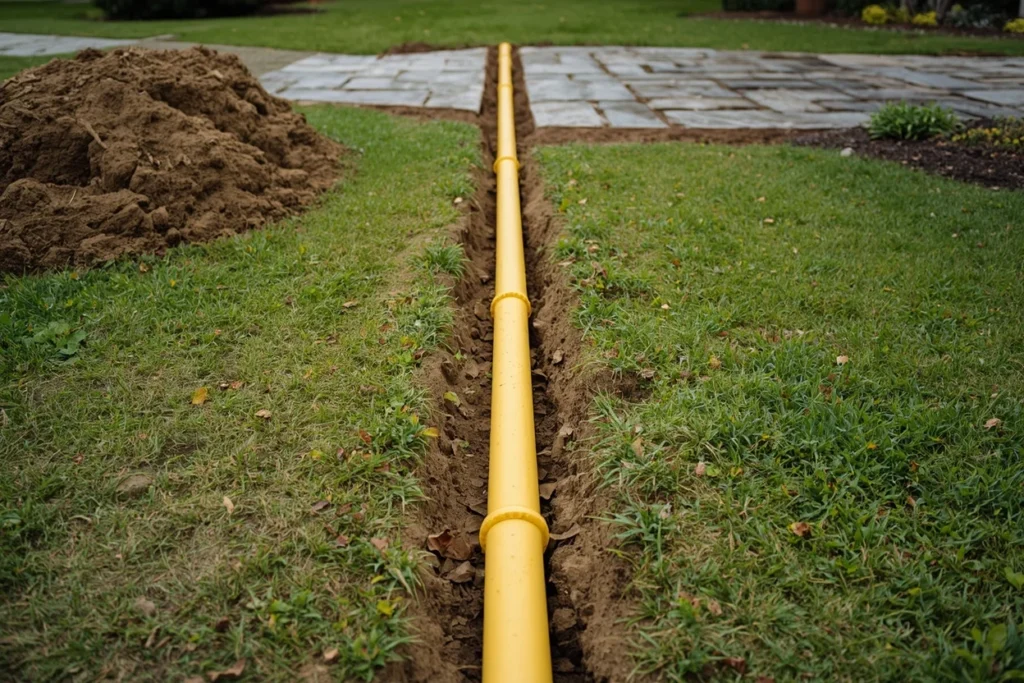
- Burial depth. Many local codes require underground gas lines to be buried 18 to 24 inches deep, and some cold-climate areas require up to 36 inches (HomeGuide).
If you smell the rotten-egg odor of natural gas, the U.S. Pipeline and Hazardous Materials Safety Administration says not to start an engine, strike a match, use a phone or operate light switches or garage door openers, because they can ignite airborne gas. Make sure gas appliances are turned all the way off, leave the area, call 911 from a neighbor’s house or another spot well away from the leak, and warn others against entering (PHMSA).
How to keep the bill down
- Extend an existing line where you can. HomeGuide prices extending a line at $350 to $800, against $2,000 to $10,000 or more for a new service line from the street.
- Keep the run short and above ground. The price is per foot, and HomeGuide says above-ground installation is typically less expensive and simpler than underground runs that need trenching or directional drilling.
- Ask the gas utility how many feet of new service line it covers, as some utilities cover the cost up to a set length (HomeGuide).
- Plan every gas appliance before the work starts. HomeGuide says to discuss planned conversions with your plumber up front for an accurate estimate, and the older Bob Vila guide suggests scheduling several appliances together, since contractors may offer discounts on larger projects.
- Get at least three quotes from licensed, insured plumbers or gas specialists, itemized by materials, labor, permits and extras, and remember the lowest bid is not always the best choice (HomeGuide).
Questions to ask before you sign
- Are you licensed and insured for gas work in this state?
- Will you pull the permit and schedule the inspection, and does the price include the pressure test?
- What pipe will you use, black iron, CSST or HDPE, and if CSST, how will it be bonded and by whom?
- Is the existing pipe big enough for the new appliance, and what size are you installing?
- Does the quote include shut-off valves, appliance connections and repair of walls, flooring, lawn or driveway?
- Who calls 811, and what does the utility cover if a new service line or meter is involved?
- What warranty covers the work, and when does it start and finish?
Sources
- HomeGuide, How Much Does Gas Line Installation Cost? (2026), January 6, 2026.
- Thumbtack, 2026 Gas Line Installation Cost, last updated July 1, 2026.
- Fixr, Gas Line Installation Cost, updated August 29, 2025.
- Bob Vila, How Much Does Gas Line Installation Cost?, updated February 29, 2024 (older guide, used only as a cross-check).
- King County, Washington, Installing gas piping.
- Massachusetts Division of Occupational Licensure, Board of State Examiners of Plumbers and Gas Fitters, Policy Statement: Corrugated Stainless Steel Tubing, December 7, 2017.
- U.S. Pipeline and Hazardous Materials Safety Administration, Recognizing and Responding to Pipeline Emergencies.
- U.S. Bureau of Labor Statistics, Occupational Outlook Handbook: Plumbers, Pipefitters, and Steamfitters, pay data for May 2025.
- 811 Before You Dig, Before Every Dig, Every Time.