$200 – $800That is the installed whole house surge protector cost in 2026, including the device and an electrician’s labor (Martin’s Electrical, November 2025). Cost to Renovate puts a typical job at $200 to $500, with a national average of $350, and ServiceOne Electric quotes $250 to $450 for a basic panel-mounted unit. Higher-end and two-stage setups run well above that, so the type you choose moves the price more than anything else.
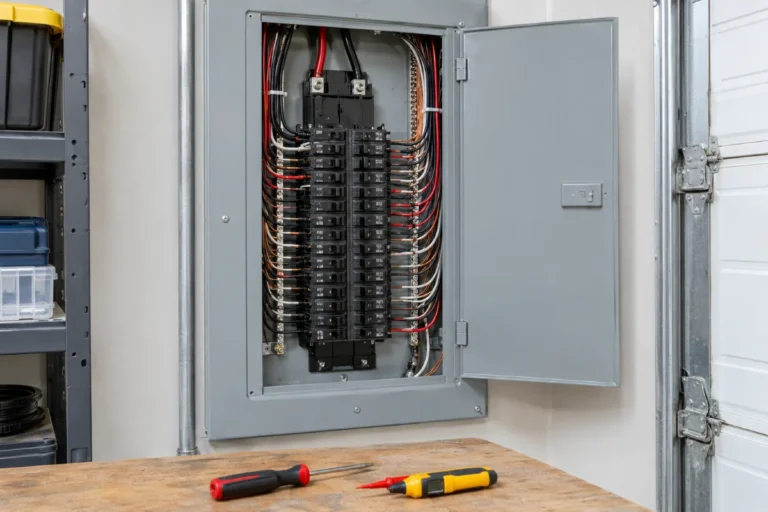
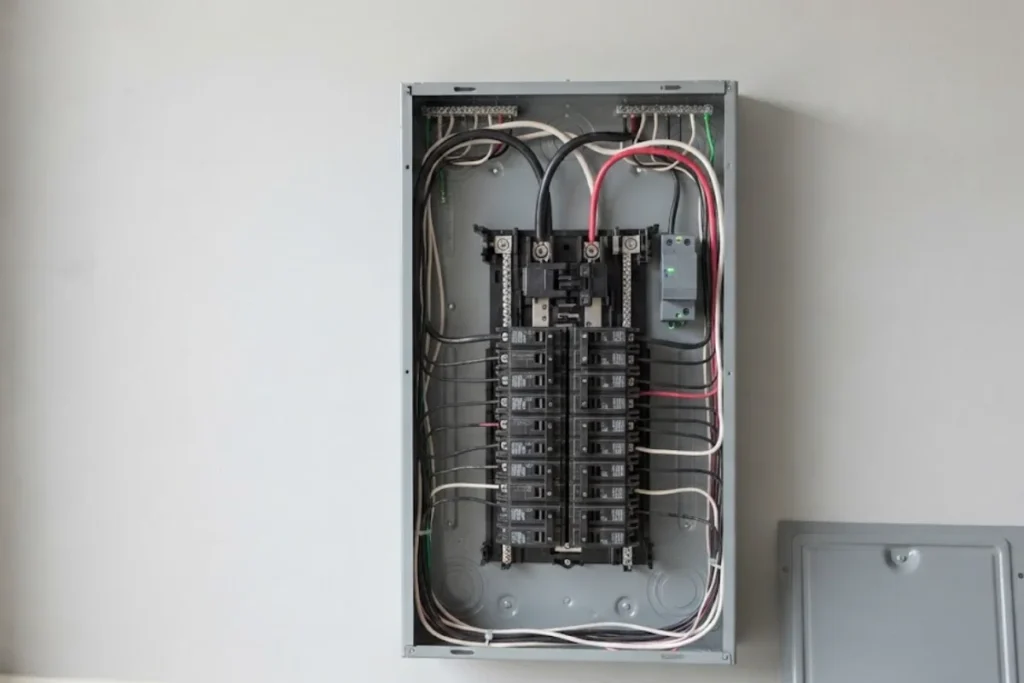
A whole house surge protector is a device wired into your main electrical panel that limits voltage spikes before they travel through the house wiring. This guide covers the device and its installation. If the electrician finds that the panel itself needs replacing, that is a separate and much larger bill, covered in our electrical panel upgrade cost guide. All of the 2025 and 2026 pricing below comes from commercial sources: electrical contractors that sell this work and a cost calculator site. We could not find a current independent cost guide we were able to read, so treat the figures as a range rather than a quote. Where sources disagree, both figures are shown.
Whole house surge protector cost by source
| Source | Installed total | Device | Installation |
|---|---|---|---|
| Cost to Renovate (April 2026) | $200 – $500, average $350 | $30 – $300 by type | Plug-on $50 – $100 |
| ServiceOne Electric (July 2026) | $250 – $450 basic | — | — |
| My Electrician FL (August 2026) | $300 – $800 | — | — |
| Martin’s Electrical (November 2025) | $200 – $800 | $60 – $500+, most about $300 | $140 – $300 |
| Today’s Homeowner (April 2025) | — | $300 – $600 | $100 – $300 |
| Bob Vila (January 2023, older) | $70 – $700, average $300 | — | $50 – $100 per hour |
| Family Handyman (April 2024, older) | — | $70 – $700, average about $300 | $150 – $200 (about two hours) |
The sources do not even agree on what the $70 to $700 range means. Bob Vila treats it as the typical installed cost, while Family Handyman says it is the device alone, not including installation. Today’s Homeowner prices a high-quality device at $300 to $600 before labor, which is above the device ranges in the 2026 sources. The installed totals in the 2025 and 2026 sources fall between $200 and $800, so that is the range to plan around. Martin’s Electrical and My Electrician FL are electrical contractors, and Martin’s page closes by offering its own estimates.
Cost by type and quality
| Tier | Cost to Renovate (total) | ServiceOne Electric (installed) |
|---|---|---|
| Basic | $150 (Type 2 plug-on unit) | $250 – $450 (panel-mounted) |
| Mid-range | $345 (higher joule rating, hardwired with its own breaker) | $450 – $700 (higher joule rating) |
| Premium | $575 (Type 1+2 combined unit) | $700 – $1,200+ (dual-stage, for homes with solar, EV chargers or costly electronics) |
Cost to Renovate breaks the device price down by joule rating: $30 to $80 for a basic 1,000 to 2,000 joule unit, $80 to $150 for 2,000 to 4,000 joules, and $150 to $300 for 4,000 joules or more (Type 1+2). Plug-on units cost $50 to $100 in labor, and hardwired ones add $50 to $150. An optional Type 1 layer at the meter adds $100 to $300. Type 1 devices go on the line side of the service and Type 2 devices on the load side of the main breaker, while plug-in Type 3 strips are a different product (NEC Mastery).
| Example product | Estimated price (device only) |
|---|---|
| Eaton CHSPT2ULTRA | $160 – $185 |
| Square D HEPD80 | $136 |
| Siemens FS140 | $70 |
| Leviton Type 1 (36 kA) | $50 |
The same page says the Eaton and Square D units each include $75,000 in connected-equipment coverage, with a lifetime warranty on the Eaton and five years on the Square D. Check the manufacturer’s own terms before buying, since coverage conditions vary.
Estimate your whole house surge protector cost
Our estimate: the published ranges above multiplied out for your inputs. Not a quote. Unit prices from ServiceOne Electric (July 2026); the high-end tier is listed as $700 to $1,200+. Extras from Martin’s Electrical (November 2025) and Cost to Renovate (April 2026). Every extra unit is priced at the full amount, so a subpanel unit will usually come out lower. ServiceOne says permit costs are part of its project price, so the permit line may double count. State adjustment: BLS construction wages (May 2025), applied to an assumed 50% labor share. How we calculate
What adds to the price
| Item | Cost to Renovate | Martin’s Electrical |
|---|---|---|
| Grounding inspection and repair | $200 | $100 – $700 |
| Surge device for a subpanel | $200 | $40 – $270 |
| Data, cable or phone line protector | $100 | — |
| Electrical service call | $75 – $150 | $100 – $200 (may cover the first hour) |
| Basic electrical permit | — | $40 – $150 |
| Panel replacement | — | $500 – $4,000 |
Martin’s adds that permit fees can double if work starts before the permit is pulled, and that a main panel permit runs about $100. The panel is the item that can change the whole budget. Bob Vila (January 2023, older) lists panel replacement at $526 to $2,010, against $500 to $4,000 at Martin’s. Bob Vila’s table runs from $500 to $1,500 for a 100-amp panel up to $1,500 to $4,000 for 400 amps. If you are replacing a panel anyway, see our electrical panel upgrade cost guide, because the surge device can usually go in during the same visit.
Our estimate: across the four newest sources in the first table (Cost to Renovate, ServiceOne, My Electrician FL and Martin’s), the lowest figure is $200 and the highest is $800 for a standard installed unit, so a basic job on a modern panel is likely to land in the lower half of that range. This is a range we combined from published figures, not a measured price.
Does the electrical code require one?
For new work, often yes. The 2020 National Electrical Code (NFPA 70) added Section 230.67, which reads: “All services supplying dwelling units shall be provided with a surge-protective device (SPD).” The device must be part of the service equipment or immediately next to it, and the rule also applies when service equipment such as the meter, a meter-disconnect combination or the first-disconnect panel is replaced. The 2023 edition keeps the rule, extends it to more building types, and sets a minimum nominal discharge rating of 10 kA (NEC Mastery, April 2, 2026; code wording as reproduced by Leviton, a surge-device maker). We could not reach the official NFPA text, so confirm with your electrician or local building department which edition your area has adopted. Going by that summary, an older house that is not being re-serviced does not trigger the rule on its own, but a new panel or meter does.
Labor, lifespan and warranty
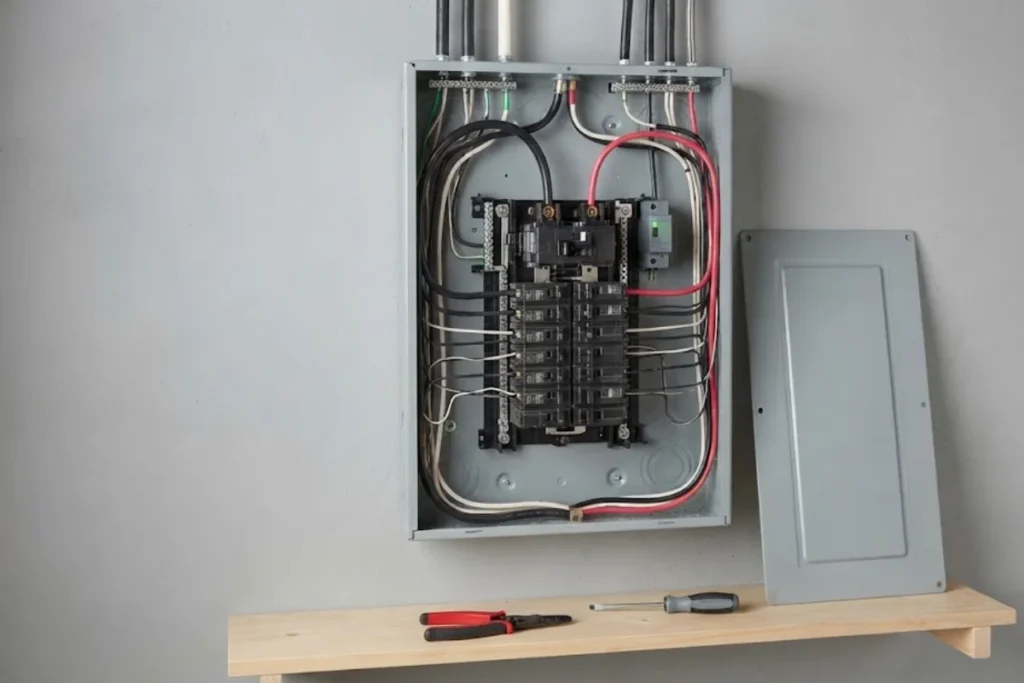
Martin’s Electrical gives electrician rates of $50 to $130 per hour and about two hours for the job, and elsewhere on the same page one to two hours. Cost to Renovate says the installation takes about 30 to 60 minutes. Bob Vila (older) gives $50 to $100 per hour and says labor makes up more than half the cost. Because the work is short, many electricians quote a flat price, so ask whether the quote is flat or hourly.
Lifespan is another place the guides disagree. ServiceOne Electric says 7 to 10 years, My Electrician FL says about 5 to 10, and Bob Vila (older) says 2 to 3 years. ServiceOne adds that a single large surge can use up the protection sooner. Martin’s notes that most warranties cover only defects in materials and workmanship. Today’s Homeowner adds that most homeowners insurance policies do not cover power-surge damage, so read your own policy.
Related electrical costs
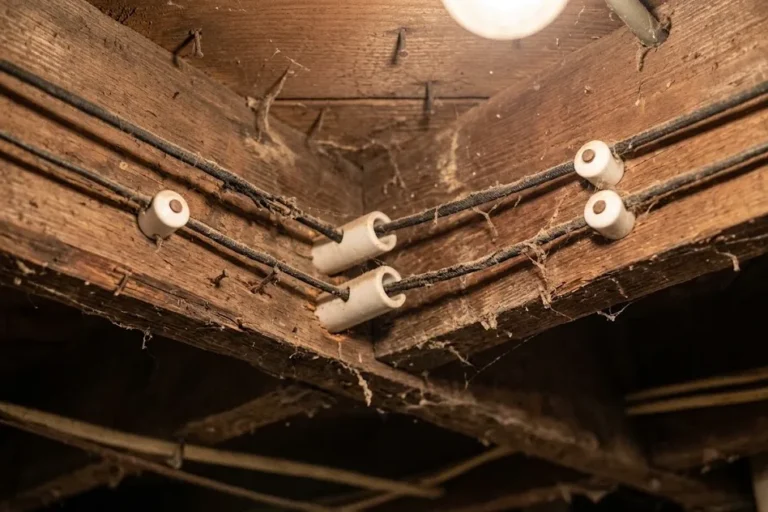
Surge protection often comes up alongside other electrical work. If you are adding a charger, see EV charger installation cost. If you are connecting backup power, see generator installation cost. For old wiring, our guide to knob and tube replacement cost explains that job.
How to keep the bill down
- Ask for it when other panel or electrical work is already planned. Cost to Renovate notes that a service call is often bundled with other electrical work.
- Get an itemized quote. My Electrician FL suggests asking for equipment, labor, panel evaluation and subpanel work to be priced separately.
- Get at least three bids from licensed, insured electricians, as Cost to Renovate recommends.
- Do not pay for more than you need. Martin’s says residential use needs at least 40 kA, so a far higher rating is not automatically better value.
- Do not skip the licensed installer. Family Handyman advises against doing this job yourself, and its experts warn that DIY work can void warranties or insurance.
Questions to ask before you sign
- Is the quote for a Type 1 or Type 2 device, and what is its kA rating?
- Does the price include the permit, inspection and any grounding check?
- Is my panel in good enough shape, or will it need replacing first?
- Do I need protection at subpanels, and what does each one add?
- What does the manufacturer warranty cover, and does it depend on your installation?
For more on vetting an electrician, read how to find a contractor.
Sources
- Cost to Renovate, Whole-House Surge Protector Cost Calculator, last updated April 4, 2026.
- ServiceOne Electric, Whole-House Surge Protector Cost 2026, July 26, 2026.
- My Electrician FL, How Much Does It Cost to Install a Whole House Surge Protector, August 18, 2026.
- Martin’s Electrical & Lighting, Whole House Surge Protector Cost: What Installers Don’t Tell You, November 25, 2025.
- Today’s Homeowner, Pros and Cons of Whole House Surge Protectors, updated April 9, 2025.
- Crosswyre Electric, Best Whole House Surge Protectors of 2026, 2026, no exact date shown.
- Leviton, NEC Code Requirements for Surge, reproduces NEC 230.67 (2020 and 2023), manufacturer page, no date shown.
- NEC Mastery, Surge Protection Code Changes: What Changed From NEC 2017 to 2023, April 2, 2026.
- Bob Vila, How Much Does a Whole-House Surge Protector Cost to Install?, updated January 25, 2023 (older).
- Family Handyman, How Much Does a Whole House Surge Protector Cost?, updated April 11, 2024 (older).