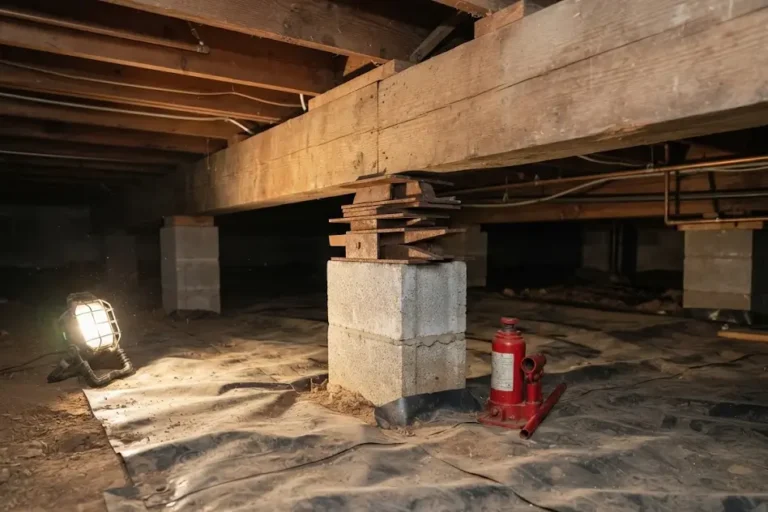
$0 – $250That is the typical termite inspection cost in 2026 for a routine check of a single-family home. Many pest control companies inspect for free when they hope to sell you treatment or a service plan; a formal report for a home sale usually costs $100 to $325 (HomeGuide). Other 2025–2026 guides land close: LawnStarter puts preventive inspections at $0 to $208, and HomeLight says most homeowners spend $75 to $325.
The price depends less on the termites than on the paperwork. A quick walk-around for your own peace of mind is often free. A signed wood-destroying insect report that a lender or buyer will rely on is a paid job, and a bundled home inspection costs more again. Below are the ranges by inspection type, what the inspector actually looks at, when a loan requires one, and how to avoid paying for treatment you do not need.
Termite inspection cost by type
| Inspection type | HomeGuide | LawnStarter | HomeLight |
|---|---|---|---|
| Standard preventative | $0 – $250 | $0 – $208 | — |
| Loan-required inspection | $50 – $200 | — | — |
| Real estate (with sale report) | $100 – $325 | $62 – $277 | — |
| WDO (all wood-destroying organisms) | $150 – $300 | — | — |
| Bundled with a home inspection | $300 – $600 | $250 – $433 | — |
| Commercial property | $200 – $500+ | — | — |
| Follow-up inspection | $75 – $150 | — | $50 – $325 |
| Typical inspection, any type | — | $0 – $277 | $75 – $325 |
A paid preventative inspection typically runs $100 to $250, but many companies waive the fee if you become a regular customer or sign up for an annual treatment plan (HomeGuide). Real estate inspections cost more because they come with the formal documentation needed to close a sale. A WDO (wood-destroying organism) inspection covers carpenter ants, carpenter bees and wood-boring beetles as well as termites, and is the report many lenders and states ask for.
The three guides broadly agree on routine and sale inspections. They disagree most on follow-up visits: HomeGuide puts them at $75 to $150, while HomeLight says each can cost $50 to $325 depending on the infestation and treatment.
Estimate your termite inspection cost
Use the tables above to estimate your cost. The interactive calculator needs JavaScript.
Our estimate: for each inspection type the calculator takes the lowest low and the highest high among the guides in the table above (HomeGuide, LawnStarter, HomeLight), so its ranges are wider than any single guide. The thermal imaging add-on ($50 to $100) comes from HomeGuide. This is a combination of published ranges, not a measured figure.
When a termite inspection is free, and when it is not
A free inspection is usually a sales visit. The company looks at the house, and if it finds termites or conditions that attract them, it quotes treatment or a protection plan. That is not dishonest in itself, but the person inspecting is also the person selling the cure. You will generally pay for an inspection when:
- You need a written report for a home sale, a refinance or a government-backed loan.
- You want a WDO inspection that covers more than termites.
- You want an independent second opinion from a company that is not quoting the treatment.
- You are asking for a follow-up visit after treatment, which runs $75 to $150 (HomeGuide).
The University of Kentucky’s entomology extension advises calling at least a few companies, because inspections and estimates from more than one help verify that an infestation really exists and let you compare services. It also tells homeowners to take their time: termites damage wood slowly, so waiting an extra day, week or month to decide generally costs little, and you should avoid firms that push you to sign right away with specials or scare tactics (University of Kentucky Entomology).
What drives the price
- Home size. A 1,000 sq ft home might cost $75 to inspect, while a 3,000 sq ft home can run $200 or more; inspectors often price by square footage or by size tiers (HomeGuide).
- Inspection method. Thermal imaging cameras or moisture meters can add $50 to $100 to a standard visual inspection (HomeGuide).
- Suspected infestation. If you have already seen signs, expect a higher fee, because the inspector spends longer assessing and documenting the damage (HomeGuide).
- Region. Prices vary by market, as the table below shows. LawnStarter found city ranges from $0 to $221 in Charlotte, NC to $0 to $326 in Newark, NJ, and HomeLight reports state ranges as far apart as $50 to $150 in Texas and Arizona and $230 to $950 in New York.
| Region | Typical inspection cost | Termite activity |
|---|---|---|
| Southeast | $75 – $250 | Very high |
| Southwest | $75 – $250 | High |
| West Coast | $100 – $300 | Moderate to high |
| Midwest | $75 – $225 | Moderate |
| Northeast | $100 – $275 | Low to moderate |
| Mountain West | $100 – $250 | Low |
Labor is a small part of the bill. The U.S. Bureau of Labor Statistics puts the median pay of pest control workers at $21.75 per hour, or $45,250 a year, in May 2025, and notes that state laws require pest control workers to be licensed (BLS).
Our estimate: a residential inspection of 30 minutes to 2 hours (HomeGuide) at the BLS median wage of $21.75 an hour works out to roughly $11 to $44 of technician pay. The rest of a $100 to $325 fee covers travel, the written report, licensing, insurance and overhead. This is our own arithmetic, not a measured figure.
WDI and WDO reports for home sales and VA loans
For a home purchase, the inspection is often not optional. University of Kentucky entomologists note that a termite inspection or infestation report “is normally a condition of sale” (University of Kentucky Entomology). Who pays depends on your local market and the purchase contract.
VA-backed loans have a written rule. The Department of Veterans Affairs lists the places where wood-destroying insect information must be considered before it issues the VA Notice of Value. The page states: “If a state is not listed below, then a wood-destroying insect inspection is not required unless specific issues are noted in the VA appraisal report” (VA Home Loans, Local Requirements). States where it is required statewide include Alabama, Arizona, California, Florida, Georgia, Illinois, Maryland, North Carolina, Ohio, Tennessee, Texas and Virginia, among others; in Colorado, Iowa and Nebraska it applies only in listed counties. The VA points lenders to Chapter 12, Section 33 of its Lenders Handbook for the details.
FHA loans can also call for an inspection depending on where the home is; your lender will tell you whether one is required for your loan and location. Reports are commonly accepted for 30 to 90 days, and in South Carolina the CL-100 report is valid for only 30 days, so do not book the inspection too early in the sale (HomeGuide).
What a termite inspector checks
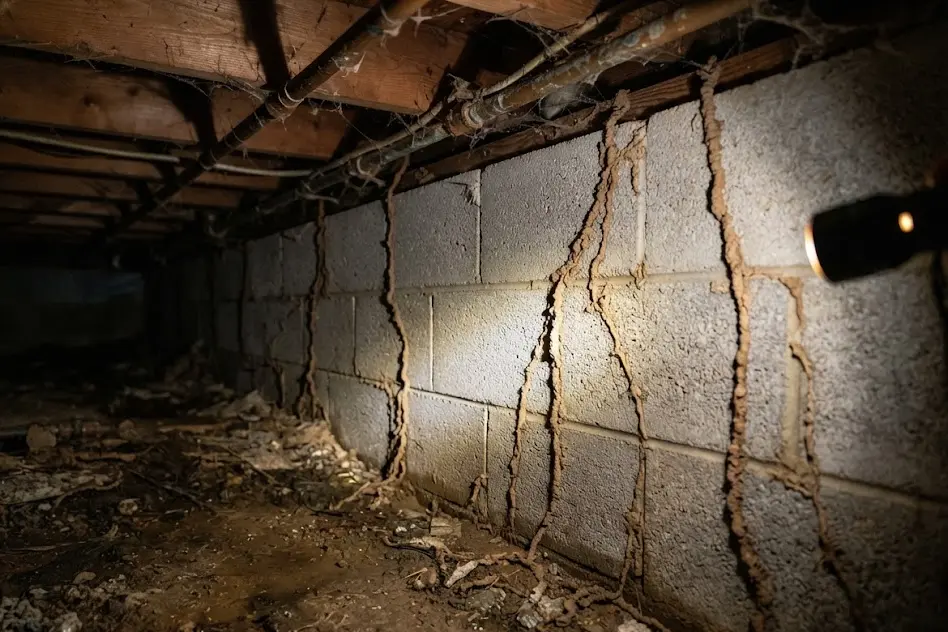
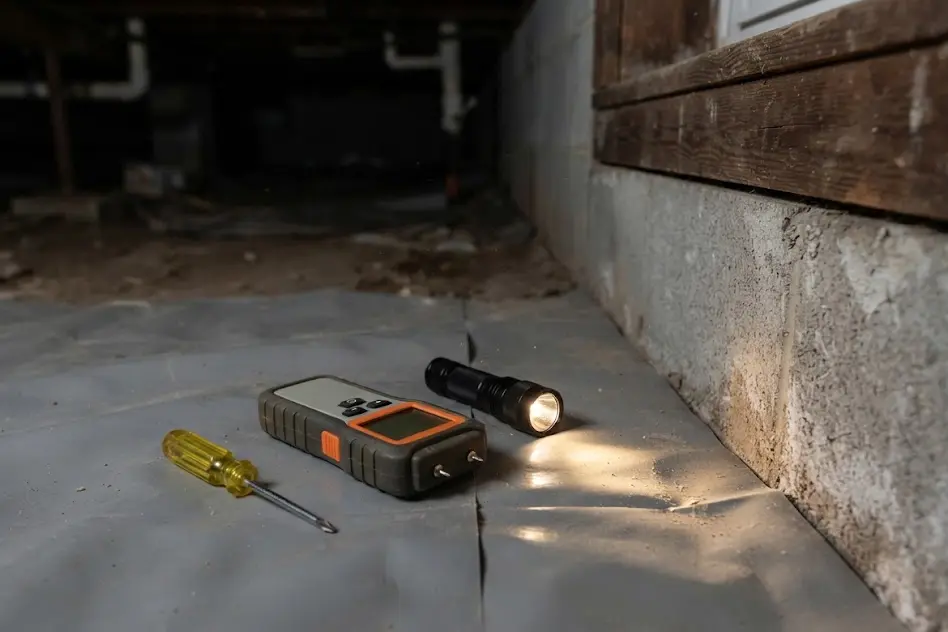
A thorough inspection covers every accessible part of the house: foundation, basement, crawl space, attic, garage and the exterior perimeter. The inspector looks for mud tubes, damaged wood, live termites and droppings, and for conditions that attract them, such as moisture problems or wood touching soil. Most residential inspections take 30 minutes to 2 hours, depending on size and access (HomeGuide).
Hidden damage is the hard part. The EPA notes that termites rarely come out of the soil, mud tubes or wood they tunnel through, and most people do not know they have termites until they see a swarm or find damage during construction (U.S. EPA). Clear the path to the crawl space hatch, the attic access and the garage walls before the visit; an area the inspector cannot reach cannot be checked.
How often to get a termite inspection
NC State Extension says there is no accurate way to date recently discovered termite damage without a reference point, a time when the wood was known to be undamaged. That, it says, is one reason annual inspections, and keeping records of them, are important (NC State Extension, January 22, 2025). Keep every report: if you later sell, it documents the history of the house.
If you already have a termite service agreement, check what it includes. A termite contract typically costs $500 to $2,500 to start plus $150 to $500 a year to renew, and often includes annual inspections (HomeGuide). In that case you are already paying for the yearly visit.
Signs of termites to look for yourself
- Damaged wood. NC State Extension lists wood that sounds hollow when tapped with a screwdriver handle, soft wood that a knife or screwdriver probes easily, and a thin gritty gray-brown film on damaged material (NC State Extension).
- Swarmers indoors. Winged termites swarming inside usually mean an infestation somewhere in the house (NC State Extension).
- Termite or ant? The EPA’s rule of thumb: termite wings are roughly equal in length and their antennae are straight, while ants have front wings longer than the hind wings and antennae bent at a right angle (U.S. EPA).
- Mud tubes on foundation walls, discarded wings near windows, small piles of pellets like sawdust, and buckling paint are other common signs (HomeGuide).
If you find any of these, book an inspection before anyone treats. The EPA warns that products that only claim to kill termites are meant for termites that directly contact the pesticide, not the whole infestation (U.S. EPA).
How to keep the bill down
- For a routine check with no sale involved, a free inspection is fine, but treat any treatment quote that follows as one bid, not a diagnosis.
- If an inspection finds termites, get inspections and estimates from more than one company before you sign (University of Kentucky Entomology).
- Ask whether the inspection fee is credited toward treatment if termites are found (HomeGuide).
- Buying a home? Compare a stand-alone WDO report with a home inspection bundle; bundles cost $300 to $600 (HomeGuide) or $250 to $433 (LawnStarter) and are often cheaper than hiring separate inspectors (HomeGuide).
- Time a sale inspection so the report is still valid at closing, to avoid paying for a second one.
Questions to ask before you sign
- Can I see your license? Firms offering termite services must be licensed by the state, and the EPA suggests calling your state pesticide regulatory agency if you have concerns (U.S. EPA).
- Is this a termite-only inspection or a full WDO inspection, and will the report satisfy my lender?
- Which areas will you inspect, and which will you mark as inaccessible?
- Will I get a written report with photos, and how long is it valid?
- If you find termites, is the fee credited toward treatment, and can I get the report without committing to treatment?
Sources
- U.S. Department of Veterans Affairs, VA Home Loans: Local Requirements (wood-destroying insect information).
- U.S. Bureau of Labor Statistics, Occupational Outlook Handbook: Pest Control Workers, pay data for May 2025.
- U.S. Environmental Protection Agency, Termites: How to Identify and Control Them, last updated October 21, 2025.
- NC State Extension, Monitoring and Management of Eastern Subterranean Termites, January 22, 2025.
- University of Kentucky Entomology, Termite Control: Answers for Homeowners, revised March 2026.
- HomeGuide, Termite Inspection Cost, November 22, 2025.
- LawnStarter, How Much Does a Termite Inspection Cost in 2026?, updated December 27, 2025.
- HomeLight, How Much Is a Termite Inspection? Complete Cost Overview, April 24, 2026.