$100 – $1,000That is the typical ceiling fan installation cost in 2026 for one fan, fan and labor included, across three published cost guides. Swapping a fan onto existing wiring sits at the low end; putting a fan where no wiring exists sits at the high end, and a full new wiring run with a new box can pass $2,500 in one guide.
The figures come from HomeGuide (January 25, 2026), ThePricer (September 12, 2025) and Fixr (updated January 31, 2025). HomeGuide puts a replacement at $150 to $500 and a new fan with new wiring at $400 to $1,000. ThePricer gives $100 to $400 for a straight swap and $500 to $2,500 or more for full new wiring and a box. Fixr gives a national average range of $337 to $613. Below: what each kind of job costs, what the fan itself costs, what pushes the bill up, who should do the work, and how to keep it down.
Ceiling fan installation cost at a glance
| Job (fan and labor) | HomeGuide (Jan 2026) | ThePricer (Sep 2025) | Fixr (Jan 2025) |
|---|---|---|---|
| Replace an existing fan | $150 – $500 | $100 – $400 | $337 – $613 (one mid-grade fan) |
| New fan where wiring already exists (for example, a light fixture) | — | $250 – $700 | — |
| New fan with new wiring | $400 – $1,000 | $500 – $2,500+ (wiring and new box) | — |
| Labor only, replacing a fan | $100 – $300 | $50 – $200 | $228 – $415 (electrician); $111 – $204 (handyperson) |
The three guides broadly agree on a simple replacement, but they split on new wiring: HomeGuide tops out at $1,000, while ThePricer says the electrical part alone can run $400 to $2,000 in one room when walls must be opened, cable run, a fan-rated box installed and drywall patched. Fixr is the most expensive for a plain swap; its $337 to $613 assumes a licensed electrician and a mid-grade fan with a light kit.
Our estimate: the $100 to $1,000 headline runs from the lowest replacement figure (ThePricer’s $100) to the top of HomeGuide’s new-fan-and-wiring range ($1,000). It leaves out ThePricer’s $2,500+ full-rewire case, which we show separately. This is our own combination of the guides, not a measured figure.
Estimate your ceiling fan installation cost
Our estimate: the published ranges above multiplied out for your inputs. Not a quote. Ranges from HomeGuide (Jan 2026), ThePricer (Sep 2025) and Fixr (Jan 2025), as shown in the tables in this article. A local quote can differ. State adjustment: BLS construction wages (May 2025), applied to an assumed 50% labor share. How we calculate
Our estimate: the calculator multiplies the number of fans by the per-fan range of the job you pick, exactly as each guide publishes it, and adds the extras. The wall-switch line runs from HomeGuide’s $50 to the top of Fixr’s $288 to $524; the new circuit is HomeGuide’s $150 to $300; the downrod is HomeGuide’s $10 to $75; the angled mount and remote control are Fixr’s prices. This is our own combination, not a measured figure.
Replacing an existing fan vs. a new install
The biggest single driver is whether wiring is already in the ceiling. When you replace a fan, the wiring, hardware and switches are already in place, so the job is shorter and cheaper (Fixr). HomeGuide says a replacement on existing wiring takes about one hour, while installs that need new wiring or switches take two to three hours on average (HomeGuide).
Where no fixture existed, the electrician must run wiring from the panel or the nearest junction box, which means opening walls or ceilings. HomeGuide prices that wiring run at $200 to $400 or more. ThePricer’s middle case, a fan going where a light already hangs and using the same switch, runs $200 to $400 in labor and $250 to $700 in total, depending on the fan and whether a brace or new box is needed (ThePricer).
Fan-rated box, new circuit and wall switch
A ceiling fan is a moving, vibrating load, so it cannot hang from just any light box. ThePricer notes that the National Electrical Code (section 314.27(C)) requires a box listed to support a ceiling-suspended paddle fan, or an equivalent support tied to the framing; a light-only box must be replaced, which adds a materials line and 30 to 60 minutes of labor (ThePricer). None of the three guides publishes a stand-alone price for the box itself, so ask for it as a separate line on your quote.
| Add-on | HomeGuide (Jan 2026) | Fixr (Jan 2025) | ThePricer (Sep 2025) |
|---|---|---|---|
| New wiring run | $200 – $400+ | — | $400 – $2,000 (labor, incl. box and patching) |
| New circuit | $150 – $300 | — | — |
| Wall switch | $50 – $200 | $288 – $524 | — |
| Extended downrod | $10 – $75 | — | — |
| Angled mount (sloped ceiling) | — | $48 – $83 | — |
| Remote control | — | $28 – $192 | — |
| After-hours call | — | — | +$50 – $150 |
If the existing circuit has no room for the fan, HomeGuide says a new circuit is needed. Whether your panel has space for one is a separate question: if it is full or outdated, see our electrical panel upgrade cost guide. The wall switch figures differ widely: HomeGuide’s $50 to $200 is an add-on during the job, while Fixr’s $288 to $524 is for a separate switch so fan and light can be run independently, and varies by location.

High and vaulted ceilings
HomeGuide says labor goes up on high, vaulted or angled ceilings because they need extra time, special mounts or safety equipment, and a tall ceiling may need an extended downrod at $10 to $75. Fixr adds that a sloped ceiling may need an angled mounting kit at $48 to $83 if one is not in the box, and that vaulted ceilings needing scaffolding or extension ladders are a job for an electrician rather than a DIY project. HomeGuide recommends downrods on ceilings over 9 feet to bring the blades to 8 to 9 feet above the floor.
Ceiling fan prices by type
| Fan type (fan only) | HomeGuide (Jan 2026) | Fixr (Jan 2025) | Best for |
|---|---|---|---|
| Standard | $50 – $300 | $64 – $1,354 | Most rooms, with or without a light |
| Low-profile (flush mount) | $50 – $350 | $45 – $2,000 | Low ceilings |
| Hanging propeller | $100 – $700 | $64 – $1,245 | High ceilings, uses a downrod |
| Directional | $150 – $800 | $97 – $463 | Pointing airflow in one direction |
| Rotational / dual motor | $200 – $1,500 | $219 – $1,102 | Large rooms |
| Smart fan | — | $115 – $2,700 | App or voice control |
Fixr’s ranges are much wider at the top because they include designer models. For an outdoor porch or patio, Fixr warns that the fan must be rated for outdoor use, since moisture damages indoor fans. HomeGuide sizes fans by room: 36 to 42 inches for 76 to 144 sq ft, 44 to 50 inches for 144 to 225 sq ft, and 50 to 54 inches for 225 to 400 sq ft.
Handyman or licensed electrician?
HomeGuide puts handyperson rates at $50 to $80 or more per hour and electricians at $60 to $130 or more, with minimum job fees of $100 to $200 for both. It notes that handypersons may not be licensed for installs that need new wiring. ThePricer gives electrician rates of $50 to $130 an hour, often with a $100 to $200 service call covering the first hour, and Fixr gives $101 to $183 an hour depending on location. Fixr also points out that some states do not require a license for handypersons, so check qualifications before hiring for electrical work.
For context, the U.S. Bureau of Labor Statistics reports a median wage for electricians of $63,190 a year, or $30.38 an hour, in May 2025 (BLS Occupational Outlook Handbook). That is what the electrician earns, not what you are billed. The BLS also notes that most states require electricians to be licensed and that requirements vary by state.
Permits depend on your locality. HomeGuide says a straight replacement on existing wiring typically does not need one, while new installations may, and licensed electricians usually handle the permit application. Fixr says a permit is needed when wiring a new fan or replacing wiring that was not up to code, and advises checking with local officials.
Older homes
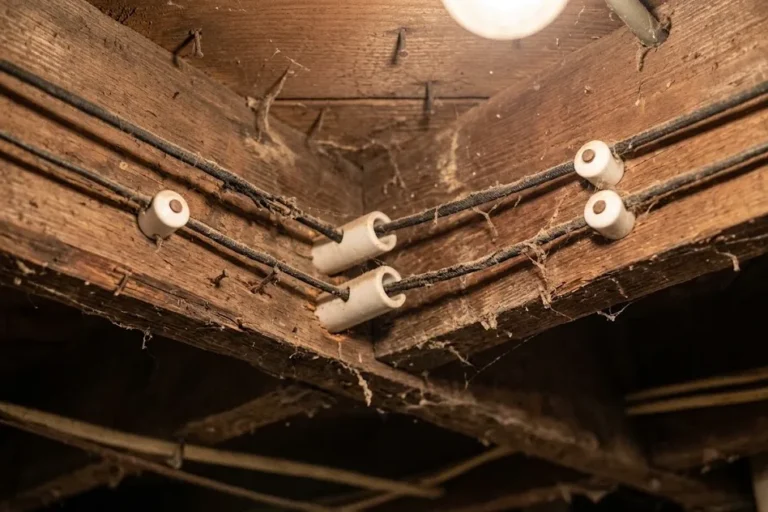
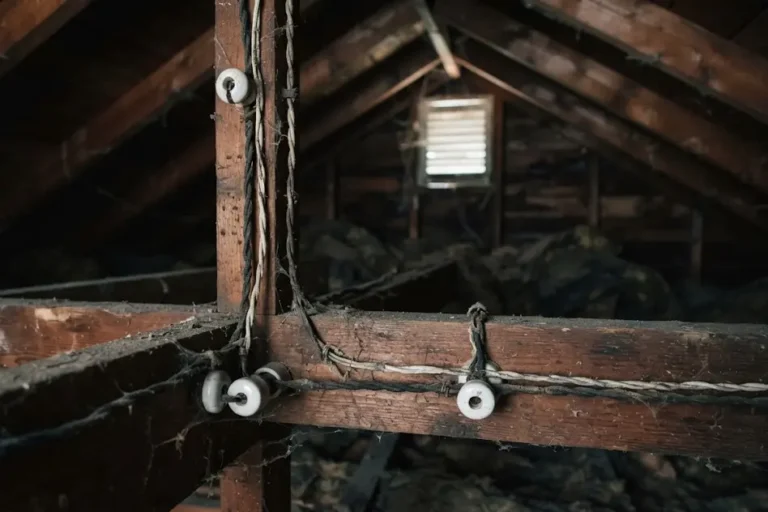
Fixr warns that taking things apart can expose hidden damage, including faulty wiring, which adds to the bill, and ThePricer says new wiring runs cost more in older homes. If the electrician finds cloth-insulated wiring on porcelain knobs, read our knob and tube replacement cost guide; if the wiring is worn throughout, our house rewiring cost guide covers a whole-home job.
ENERGY STAR ceiling fans and running costs
According to ENERGY STAR, certified ceiling fans are up to 44% more efficient than conventional fans, thanks to improved motors and blade designs. HomeGuide estimates that running a ceiling fan costs $2 to $5 a month at eight to twelve hours a day, and Fixr recommends a reversible fan, since reversing the blades in winter pushes warm air down from the ceiling.
Safety
- Turn off power at the breaker before any work. Fixr names forgetting this, along with falling from the ladder, as the main dangers of a DIY install.
- Confirm the box is rated for a fan. ThePricer says skipping a listed box and bracket can lead to wobble, noise or failure of the box under vibration.
- Hire an electrician when there is no existing fixture, when the ceiling is vaulted and needs scaffolding, or when the fan needs specialized installation (Fixr).
- Keep blades at least 18 inches from walls so air circulates properly (Fixr).
How to keep the bill down
- Book several fans in one visit. ThePricer says the minimum service charge and travel are then spread over more fixtures, often with a per-fan discount.
- Put the fan where a light already is, if the room allows: reusing existing wiring is the cheapest case in all three guides.
- Buy the fan during sales or the off-season (Fixr), and supply the correct downrod for a tall ceiling in advance to avoid a return trip (ThePricer).
- Assemble the fan and clear the room before the electrician arrives (ThePricer).
- Ask for an itemized written estimate showing labor, box replacement and controls separately (ThePricer).
- Get in-person estimates from three installers (HomeGuide).
Our guide on how to find a contractor walks through checking licenses, insurance and quotes.
Questions to ask before you sign
- Are you licensed and insured for electrical work in this area?
- Does the estimate include the fan, or only labor?
- Is my existing box rated for a ceiling fan, and if not, what will replacing it cost?
- Do I need new wiring, a new circuit or a new switch?
- Does this job need a permit, and will you pull it?
- Is there a minimum charge or service-call fee?
- Is drywall patching and painting included?
- What warranty do you give on the labor?
Sources
- HomeGuide, How much does ceiling fan installation cost? January 25, 2026.
- ThePricer, How much does ceiling fan installation cost? September 12, 2025.
- Fixr, How much does it cost to install a ceiling fan? Updated January 31, 2025.
- ENERGY STAR, Ceiling fans, accessed October 14, 2026.
- U.S. Bureau of Labor Statistics, Occupational Outlook Handbook: Electricians, May 2025 wage data, accessed October 14, 2026.