$7,300 – $30,000That is the typical house rewiring cost in 2026 for a whole home across the three national cost guides we checked, or $3 to $17 per square foot. Fixr and Homewyse put an average home at roughly $7,300 to $13,300; HomeGuide gives $10,000 to $30,000, with jobs that require opening walls and replacing drywall at the top of that range.
Rewiring is one of the few home projects where the price depends less on what you buy and more on how hard it is to reach the old wire. The tables below show what homeowners pay by house size and by room, how the bill splits between labor and materials, and which extra lines, from permits to wall repair, tend to appear on the final invoice. Where the cost guides disagree, we show each one side by side.
House rewiring cost by square footage
| Source | Whole house | Per sq ft | What the figure assumes |
|---|---|---|---|
| HomeGuide | $10,000 – $30,000 | $5 – $17 | Rewire of an existing home; low end when wire can be run from the attic, basement or crawl space, high end when walls are opened |
| Fixr | $7,286 – $13,257 | $3 – $6 | 2,200 sq ft home, new outlets and light fixtures included |
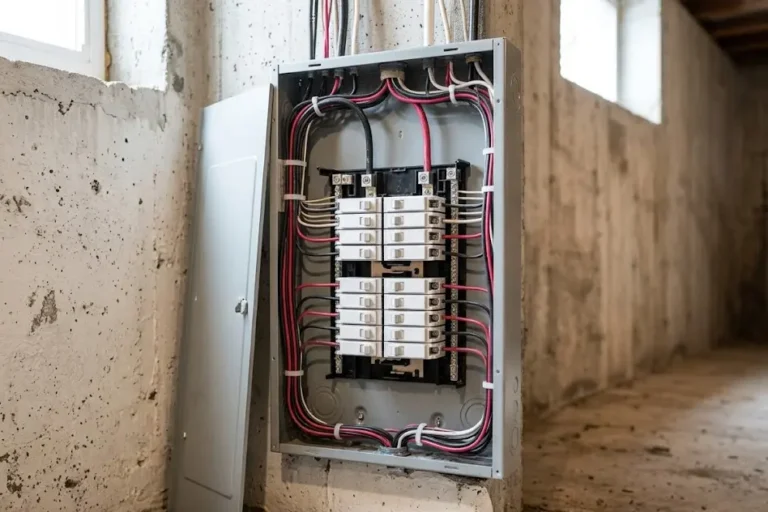
| Homewyse | $9,751 – $11,628 | not given | Basic rewire of a 3-bedroom, 2-bath home: 12 new circuits, new panel and breakers, existing outlets, switches and fixtures reconnected; no permits or wall repair |
The guides disagree a lot. HomeGuide’s top figure is more than twice the top figure from Fixr or Homewyse, and its per-square-foot range starts where Fixr’s nearly ends. Part of the gap is scope: Homewyse prices a basic job in favorable conditions and leaves out permits and any wall repair, while HomeGuide’s range includes homes where walls have to be opened and refinished (Homewyse, HomeGuide). Treat the lower figures as a best case for an accessible home and the HomeGuide range as what a harder job can reach.
| Home size | HomeGuide | Fixr |
|---|---|---|
| 500 sq ft | $2,500 – $8,500 | not listed |
| 700 sq ft | not listed | $2,318 – $4,218 |
| 800 sq ft | $4,000 – $13,600 | not listed |
| 1,000 sq ft | $5,000 – $17,000 | $3,312 – $6,026 |
| 1,200 sq ft | $6,000 – $20,400 | not listed |
| 1,500 sq ft | $7,500 – $25,500 | not listed |
| 1,700 sq ft | not listed | $5,630 – $10,244 |
| 2,000 sq ft | $10,000 – $34,000 | not listed |
| 2,200 sq ft | not listed | $7,286 – $13,257 |
| 2,500 sq ft | $12,500 – $42,500 | not listed |
| 3,000 sq ft | $15,000 – $51,000 | $9,936 – $18,078 |
| 4,000 sq ft | $20,000 – $68,000 | not listed |
The per-square-foot figure is a starting point, not a quote. Size, layout, the number of rooms and circuits, material choices, and how easily the crew can reach the wiring all move the price (HomeGuide). Homes that have been added onto over the years, with more than one attic or crawl space, take longer to wire. Fixr’s figures include new outlets and light fixtures, so keeping working ones lowers the bill (Fixr).
Our estimate: the headline range runs from the lowest whole-house figure in the three guides (Fixr’s $7,286, rounded to $7,300) to the highest (HomeGuide’s $30,000), and the $3 to $17 per square foot runs from Fixr’s low end to HomeGuide’s high end. For a 1,800-square-foot home, multiplying by each guide’s per-square-foot range gives roughly $5,400 to $10,800 with Fixr’s and $9,000 to $30,600 with HomeGuide’s. These are simple calculations from the published ranges, not measured prices.
Small houses and mobile homes cost $2,000 to $17,000 to rewire, depending on the number of circuits and whether there is a crawl space or attic to work from (HomeGuide).
Estimate your house rewiring cost
Use the tables above to estimate your cost. The interactive calculator needs JavaScript.
Cost to rewire by room
| Room | Typical size | Average cost |
|---|---|---|
| Bathroom | 40 – 150 sq ft | $200 – $2,600 |
| Kitchen | 100 – 200 sq ft | $500 – $3,400 |
| Bedroom | 130 – 230 sq ft | $650 – $3,900 |
| Garage | 240 – 700 sq ft | $1,200 – $11,900 |
| Basement | 500 – 1,500 sq ft | $2,500 – $25,500 |
Kitchens and bathrooms cost more for their size than bedrooms because wet locations need dedicated circuits and GFCI-protected outlets (HomeGuide). Rewiring only the rooms with problems, instead of the whole house, can save thousands of dollars, but an electrician has to decide how much of the system needs the work (Fixr).
Through the attic or through open walls
| Cost line | HomeGuide: access from attic, basement or joists | HomeGuide: walls opened and drywall replaced | Homewyse: basic job, favorable access |
|---|---|---|---|
| Materials | $4,000 – $8,000 | $8,000 – $12,000 | $2,560 – $2,912 |
| Labor | $6,000 – $12,000 | $12,000 – $18,000 | $7,190 – $8,716 |
| Total | $10,000 – $20,000 | $20,000 – $30,000+ | $9,751 – $11,628 |
Our estimate: labor is about 60% of the total in both of HomeGuide’s columns ($6,000 of $10,000 and $12,000 of $20,000 at the low end) and about 74% to 75% in Homewyse’s ($7,190 of $9,751 and $8,716 of $11,628). This is our arithmetic on the published figures, not a measured share. The calculator above uses 60%.
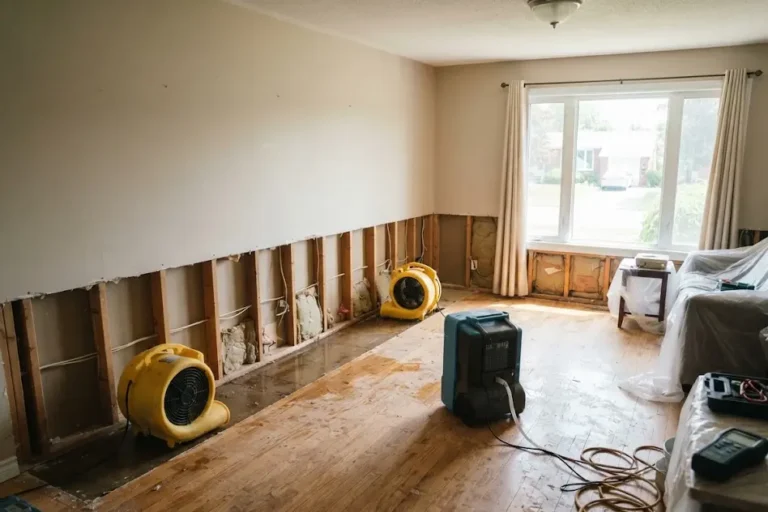
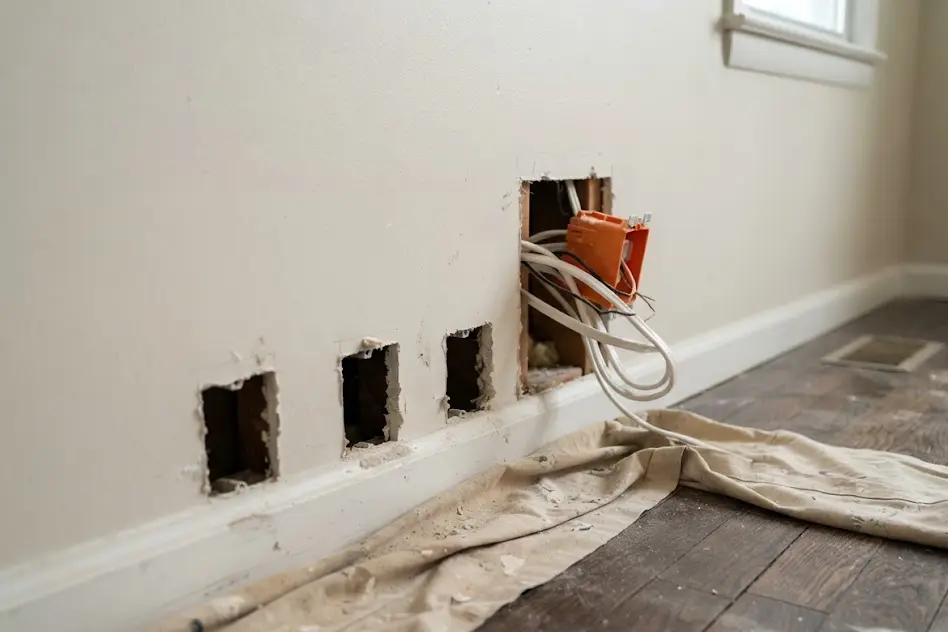
In most homes the electrician can pull new cable from above or below and cut only small holes in the walls to fish it through. That takes longer than working with open walls, but leaving the walls mostly intact lowers the total. Opening walls completely adds 25% to 30% to the project, and in older homes with no attic or crawl space access it may be the only option (HomeGuide). Fixr also says most homes can be rewired without removing walls, with a few cuts in the drywall that are patched afterward (Fixr).
Old wiring: knob-and-tube and aluminum
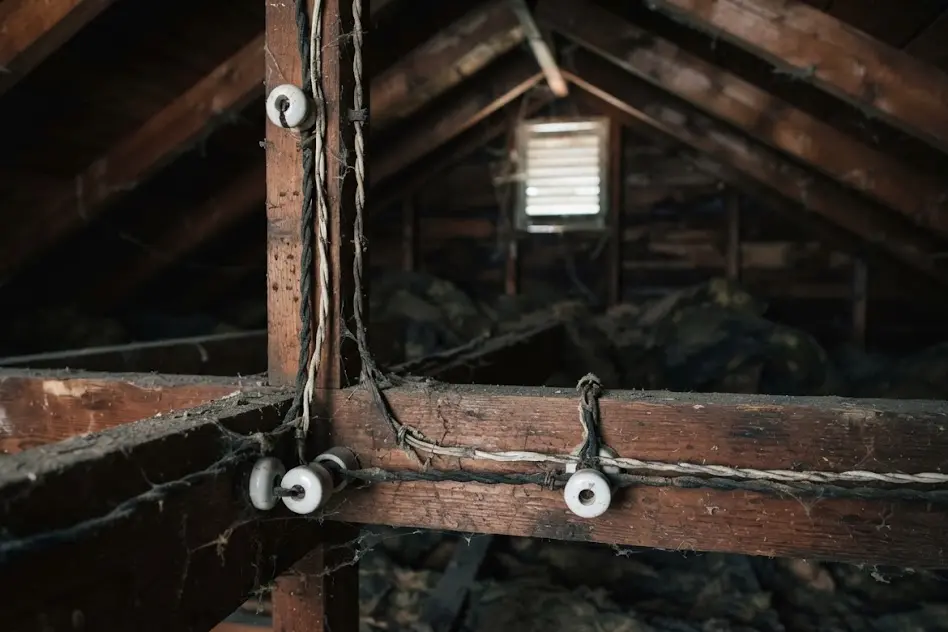
Homes built before 1950 typically have knob-and-tube wiring, which does not meet current safety standards. Replacing it costs $12,000 to $35,000, more than a standard rewire, and the job usually also means upgrading the service panel and adding outlets and fixtures for today’s electrical loads (HomeGuide).
| Project | HomeGuide | Fixr |
|---|---|---|
| Rewire an existing house | $10,000 – $30,000 | $7,286 – $13,257 |
| Replace knob-and-tube wiring | $12,000 – $35,000 | not priced separately |
| Wire a new house | $6,000 – $22,500 (1,500 – 2,500 sq ft) | usually cheaper than a rewire; not priced separately |
Wiring a house under construction costs less, $4 to $9 per square foot, because the walls are open and nothing old has to come out (HomeGuide). Fixr gives the same reason: a rewire adds opening drywall, working from crawl spaces, removing the old wire and patching afterward (Fixr). Aluminum branch wiring is the other type that often leads to a rewire; it is on the list of warning signs below. If an inspector finds it, ask whether full replacement is needed or whether the existing circuits can be repaired, and get the answer in writing.
Signs your house needs rewiring
- The home is more than 30 years old.
- It has aluminum wiring.
- It has knob-and-tube wiring.
- Fuses blow or breakers trip often.
- An electrical inspection finds the wiring outdated or unsafe.
These signs come from HomeGuide, which also notes that well-installed wiring can last 50 to 70 years and that some older homes need only partial work. Fixr puts typical wiring life at around 50 years and lists flickering lights and breakers that trip easily among the reasons people rewire (Fixr). An inspection by a licensed electrician is the way to find out which case you are in before paying for a full rewire.
Labor and electrician rates
Electricians charge $50 to $130 an hour to rewire a house, and most estimate at least one hour per 100 square feet. Fishing wire through closed walls usually needs a crew of at least two. Some bill a flat $100 to $300 or more per opening (each outlet, switch or fixture), materials included (HomeGuide). Homewyse’s basic estimate for a 3-bedroom, 2-bath home assumes 58.6 hours of labor, priced at $7,190 to $8,716 (Homewyse).
For comparison, the median electrician in the United States earned $30.38 an hour, or $63,190 a year, in May 2025, according to the Bureau of Labor Statistics. The billed rate is higher than the wage because it also covers the contractor’s license, insurance, vehicle, tools and overhead.
Materials are a smaller share of the bill. Wire costs $0.10 to $4.00 per linear foot depending on type, and conduit, used where wiring is exposed or in unfinished spaces, costs $0.70 to $8.00 or more per linear foot before labor (HomeGuide). Homewyse puts connectors, fittings, junction boxes and fasteners for a basic whole-house job at $2,560 to $2,912 (Homewyse).
Permits, inspection and wall repair
| Extra | HomeGuide | Fixr |
|---|---|---|
| Electrical rewiring permit | $250 – $900 | up to a few hundred dollars |
| Electrical inspection | $100 – $200 | a few hundred dollars |
| Panel replacement | $850 – $2,500 | $950 – $1,728 (100 amp); $1,231 – $2,239 (150 amp); $1,760 – $3,202 (200 amp) |
| Drywall patch | $300 – $1,500+ per patch | not listed |
| Replacing whole walls or ceilings with drywall | $2 – $6 per sq ft | not listed |
| Wall plastering | $2 – $10 per sq ft | not listed |
| Replacing all outlets in a house | $1,200 – $2,600 | not listed |
| Asbestos removal (interior) | $5 – $15 per sq ft | not listed |
| Lead paint removal | $8 – $15 per sq ft | not listed |
Check whether the quote includes the permit and who pays for patching. Plaster walls cost more to repair than drywall, which makes rewiring an older plaster house more expensive. Many older homes also have a fuse box or a 60-amp panel that is too small for modern appliances; a 150- or 200-amp panel suits most homes (HomeGuide). If your current panel is big enough, keeping it saves money (Fixr). If contractors find asbestos or lead paint while opening walls, removal is a separate cost.
How long it takes and whether to do it in stages
A whole-house rewire takes 3 to 10 or more days, depending on the size and age of the home, the crew, and how much wall opening is involved. Staying in the house during the work makes it take longer and cost more, because of daily cleanup and restoring power to circuits each day. Rewiring room by room spreads the cost but usually costs more in total and per square foot than doing the whole house at once (HomeGuide). Fixr’s estimate is about a week for an average home, up to three weeks for larger or more complex jobs, and in extreme cases more than a month (Fixr).
Many states require a licensed, insured electrician for rewiring, and improper wiring can cause fires, injury and electrocution. Check with your local building department before any work starts (HomeGuide).
Help paying for a rewire
In eligible rural areas, the USDA Section 504 Home Repair program lends up to $40,000 at a fixed 1% rate over 20 years to low and very-low-income homeowners who live in the home and cannot get affordable credit elsewhere. Homeowners aged 62 or older with very low incomes can get grants of up to $10,000 to remove health and safety hazards, and loans and grants can be combined up to $50,000. A grant must be repaid if the home is sold within 3 years (USDA Rural Development). Outdated or unsafe wiring is the kind of hazard the grants are meant for, but eligibility is decided by your local USDA office.
How to keep the bill down
- Get an inspection first. Some older homes need only part of the wiring replaced.
- Ask whether the job can be done from the attic, basement or crawl space instead of opening walls.
- Rewire the whole house at once if you can; staged work costs more in total.
- Plan to be out of the house during the work, which shortens the job.
- Keep outlets, light fixtures and the panel if they still work and are big enough; replacing them adds to the bill.
- Choose standard outlets and switches; high-end finishes raise the total.
- If you live in a rural area and your income is low, check the USDA Section 504 Home Repair program described above.
Questions to ask before you sign
- Does the price cover the whole house, including the panel, outlets and switches?
- Will you work through the attic and crawl space, or open walls, and who patches the holes?
- Are the permit and the final inspection included in the quote?
- How many days will the job take, and will we have power at night?
- What happens to the price if you find asbestos, lead paint or damaged framing?
- Are you licensed and insured in this state, and what warranty do you give on the work?
Sources
- U.S. Bureau of Labor Statistics, Occupational Outlook Handbook: Electricians, pay data for May 2025.
- USDA Rural Development, Single Family Housing Repair Loans & Grants (Section 504).
- HomeGuide, How Much Does It Cost to Rewire a House?, August 29, 2025.
- Fixr, How Much Does it Cost to Wire a House?, updated January 31, 2025.
- Homewyse, Cost to Re-Wire a Home, national average, September 2026.