$1,200 – $6,000That is the typical water damage restoration cost in 2026 across three published cost guides. HomeGuide puts most jobs at $2,000 to $6,000, Fixr at $1,200 to $5,000 with an average of $3,000, and Thumbtack‘s own data lower still, at $721 to $3,526. A small clean-water leak confined to one spot can cost as little as $150, while whole-house flooding can reach $100,000. Removing the water and drying the area alone runs about $3.75 to $12 per square foot, depending on how dirty the water is.
Two things drive the price more than anything else: how far the water spread and what kind of water it was. A burst supply line that soaks one room is a very different job from a sewer backup in a finished basement. The figures below show what each level of damage costs, what the per-square-foot repairs add, and how insurance fits in.
Cost by class of damage
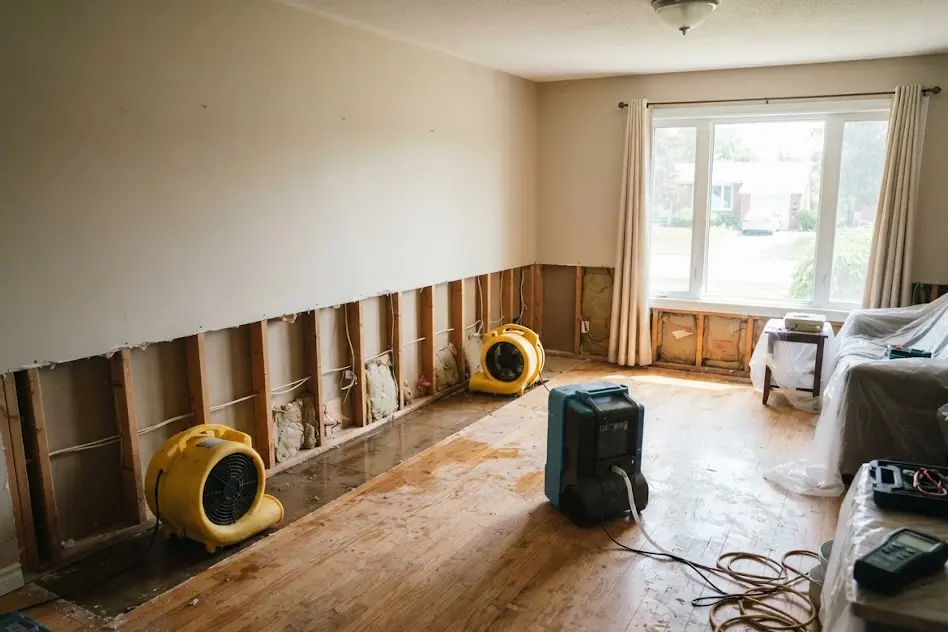
Restoration companies grade the extent of water damage in four classes, from Class 1 (the easiest to fix) to Class 4 (the most severe and most expensive).
| Class | What it looks like | HomeGuide | Fixr |
|---|---|---|---|
| Class 1 (minimal) | A small leak in one area of a room, limited damage | $150 – $500 | $150 – $400 |
| Class 2 (significant) | Up to 12 inches of standing water in at least one room | $1,500 – $5,000 | $500 – $1,000 |
| Class 3 (extensive) | Water through every part of one or more rooms: ceiling, walls, flooring and subfloor | $5,000 – $15,000 | $1,000 – $3,000 |
| Class 4 (disaster) | Severe damage throughout the home from prolonged flooding | $15,000 – $100,000 | $20,000 – $100,000 |
The two guides agree on the smallest and the largest jobs but disagree sharply in the middle: for Class 2 and Class 3 damage, HomeGuide’s ranges are three to five times Fixr’s. Fixr notes that most homes only deal with Class 1 to 3 damage, and that Class 4 usually means complete replacement (Fixr). Treat a Class 2 or 3 quote anywhere between the two columns as normal, and ask the contractor to explain what is included.
Our estimate: the headline range of $1,200 to $6,000 runs from the lowest to the highest “typical job” figure in the two guides that publish one (Fixr’s $1,200 low, HomeGuide’s $6,000 high). Thumbtack’s range from its own customer quotes, $721 to $3,526, sits below both. We did not average anything; it is a span of published figures, not a measured price.
Where the water lands also matters. Fixr’s ranges by room run from $500 to $4,500 for a bathroom up to $2,000 to $85,000 for a basement.
| Room | Typical cost |
|---|---|
| Bathroom | $500 – $4,500 |
| Laundry room | $1,000 – $5,500 |
| Living room | $1,500 – $6,000 |
| Kitchen | $1,750 – $8,000 |
| Basement | $2,000 – $85,000 |
Cost by water category: clean, gray and black
Separately from the class, the water itself is sorted into three categories by how contaminated it is. The dirtier the water, the more protective equipment, disinfection and material removal the job needs. The definitions below are as published by HomeGuide. HomeGuide’s prices cover extraction and drying, Fixr’s cover water extraction, and Thumbtack quotes per-square-foot cleanup prices from National Flood Services.
| Category | Typical source | HomeGuide, per sq ft | Fixr, per sq ft | Thumbtack, per sq ft |
|---|---|---|---|---|
| Category 1: clean water (minimal health risk) | Broken water line, faucet, rainwater leak | $4 – $6 | $3.75 – $4.25 | $3.75 |
| Category 2: gray water (mild health risk) | Overflowing dishwasher or washing machine | $6 – $9 | $4.10 – $6.50 | $4.50 |
| Category 3: black water (serious health risk) | Toilets, sewer backups, rising seawater, groundwater intrusion | $9 – $12 | $7 – $7.50 | $7 |
Fixr and Thumbtack are close to each other; HomeGuide’s rates are higher across all three categories, by about half again for black water. The ranking is the same in every guide: clean water is cheapest and black water costs roughly double.
The category also decides what can be saved. With Category 1 or 2 water, carpets can often be cleaned, wood trim reused and drywall repaired. With Category 3, everything the water touched below the flood line, including drywall, flooring, furniture and clothing, has to be removed and replaced (HomeGuide). That is why a sewer backup costs so much more than a clean leak of the same size.
Our estimate: for a 500-square-foot basement, extraction and drying alone would come to about $1,875 – $3,000 with clean water ($3.75 – $6 × 500) and about $3,500 – $6,000 with black water ($7 – $12 × 500), using the lowest and highest per-square-foot figures in the table above. This is simple multiplication of the published rates, not a measured figure, and it excludes rebuilding.
Estimate your water damage restoration cost
Use the tables above to estimate your cost. The interactive calculator needs JavaScript.
Our estimate: the calculator multiplies your area by the lowest and highest per-square-foot rate for each water category among the three guides, and adds the extras you tick using the widest range the guides give (carpet, for example, runs from HomeGuide’s $2 low to Fixr’s $10.50 high). It is a rough check against a written quote, not a measured price.
What the restoration company does
Most of the bill for the restoration itself is labor and equipment time. HomeGuide describes the usual sequence:
- Assessment: finding the water source and grading the category and class.
- Extraction: pumps and extractors remove standing water, then wet/dry vacuums take up what remains.
- Moisture mapping: an infrared camera or moisture meter finds hidden wet pockets in walls and floors.
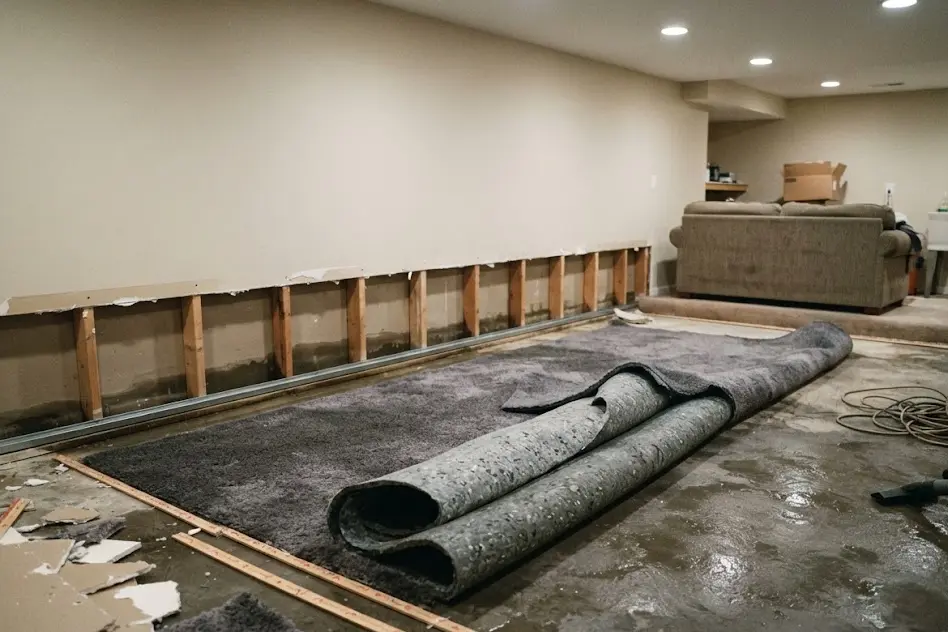
- Removing wet materials: carpet, pad and trim come out so the structure can dry.
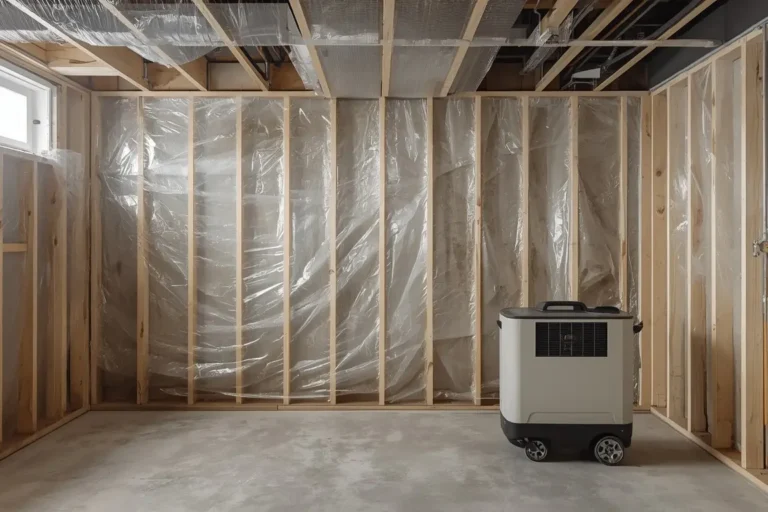
- Drying and dehumidification: air movers and industrial dehumidifiers run until materials are dry. This takes longer when parts of walls or floors must be opened.
- Cleaning and sanitizing: HEPA vacuums and air scrubbers; with black water, crews wear protective gear and treat surfaces with an antimicrobial solution.
- Repairs: replacing whatever could not be saved.
Small clean- or gray-water jobs are usually finished in a few days; major black-water or disaster jobs can take weeks or months, depending on how busy contractors are. After-hours emergency calls cost extra, but waiting to start usually makes the repairs bigger (HomeGuide). Fixr puts restoration company labor at $70 to $200 per hour and the extra fee for getting a crew out quickly at $100 to $200, with at least $200 more if safety equipment has to be rented for hard-to-reach areas (Fixr).
Drywall, flooring and other repair costs
Once the space is dry, the damaged materials have to be rebuilt, often by other trades such as painters, plumbers, electricians or carpenters. These costs come on top of the extraction and drying.
| Repair | HomeGuide, per sq ft | Fixr, per sq ft |
|---|---|---|
| Drywall | $1.50 – $3.50 | $1.50 – $3 |
| Plaster walls | $2 – $10 | $6.25 – $18.75 |
| Carpet replacement | $2 – $8 | $4.75 – $10.50 |
| Hardwood flooring | $7 – $25 | $10 – $15 |
| Mold remediation | $15 – $30 | $4.75 – $5.50 |
The guides are close on drywall and broadly overlap on flooring, but they disagree on plaster and, above all, on mold: HomeGuide’s per-square-foot mold rate is about three to six times Fixr’s. Fixr’s per-job figure for mold remediation after water damage is $1,500 to $4,000 (Fixr), against HomeGuide’s $1,500 to $15,000 and more (HomeGuide). If mold is part of your quote, ask how the area was measured.
Fixr also prices repairs by part of the house, for an average project:
| Area repaired | Average project |
|---|---|
| Floor | $200 – $2,000 |
| Subfloor | $250 – $750 |
| Wall | $275 – $2,200 |
| Ceiling | $325 – $1,100 |
| Roof | $350 – $1,400 |
| Foundation | $2,000 – $10,000 |
For structural repair, the Homewyse calculator (September 2026) gives a national average of $20.85 to $38.25 per square foot for basic work: cutting out and disposing of damaged material, repairing framing and patching the surface. Its 120-square-foot example comes to $2,504 to $4,592, and it excludes work on surface finishes, HVAC, electrical and plumbing systems, and hazardous-material testing.
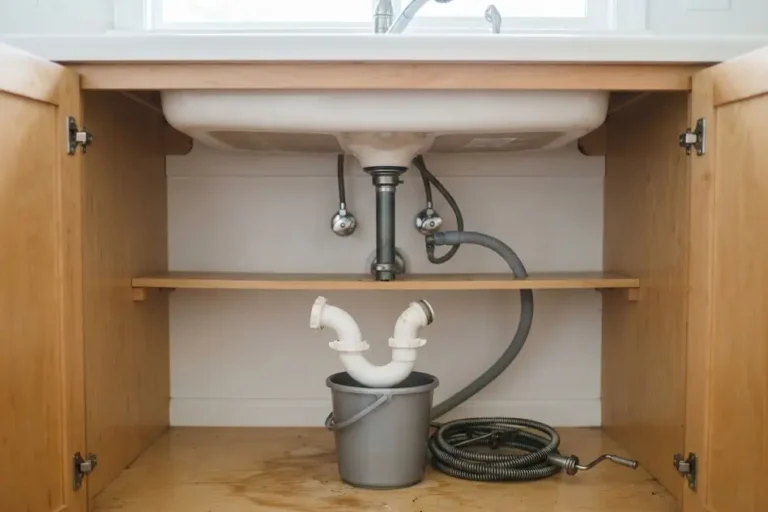
If the water came from a burst pipe, fixing the pipe itself costs $150 to $250 per linear foot (HomeGuide). Fix the source first; drying a space that is still getting wet wastes money.
Why the first 48 hours decide the bill
The U.S. Environmental Protection Agency advises drying water-damaged areas and items within 24 to 48 hours to prevent mold growth, and notes that when wet materials are dried in that window, in most cases mold will not grow (EPA). FEMA’s flood insurance program gives the same window: mold can start forming within 24 to 48 hours of flooding (FEMA, FloodSmart).
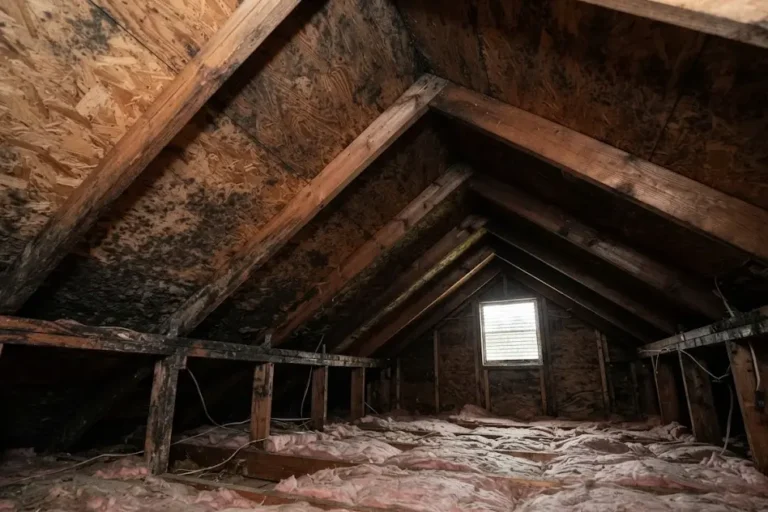
Missing that window adds a second job. HomeGuide puts mold remediation at $15 to $30 per square foot, or $1,500 to $15,000 and more in total, and a mold inspection at $300 to $650 (HomeGuide); Fixr’s range for mold remediation after water damage is $1,500 to $4,000 (Fixr). The EPA says that when mold covers more than about 10 square feet, or there has been a lot of water damage, you should consult its more detailed professional remediation guidance (EPA).
Does insurance cover water damage?
It depends on where the water came from. Home insurance generally covers water damage that is sudden or accidental, but not damage that results from neglect (HomeGuide). Read your own policy and its exclusions, because wording differs between insurers.
Flooding is a separate matter. Most homeowners and renters insurance does not cover flood damage. The National Flood Insurance Program, run by FEMA, sells separate policies: building coverage up to $250,000 and contents coverage up to $100,000. A new flood policy normally takes effect 30 days after purchase, with a few exceptions such as buying it while getting or renewing a mortgage (FEMA, FloodSmart). FEMA also notes that mold damage is not covered under standard NFIP flood policies, which is one more reason to dry quickly (FEMA, FloodSmart).
How to document the damage for a claim
FEMA’s advice for flood claims (FEMA, FloodSmart) is a sound checklist for any water damage claim:
- Take clear photos and video before you clean, fix or throw anything out, with wide shots and close-ups of walls, floors and furniture.
- Record serial numbers of damaged electronics and appliances.
- Keep small samples of damaged materials for the adjuster.
- If you start repairs before the claim is settled, keep every receipt for repairs and replacement items.
- Check a repair company’s qualifications and references before hiring, to avoid scams.
How to keep the bill down
- Stop the source and start drying at once. Staying inside the EPA’s 24–48 hour window is the best protection against a mold bill on top of the water bill.
- Get more than one written estimate that lists scope, materials and labor, and compare what each includes, not just the total. With published ranges this far apart, a second quote is the only way to know where yours sits.
- Call your insurer early and ask what documentation it needs before work starts.
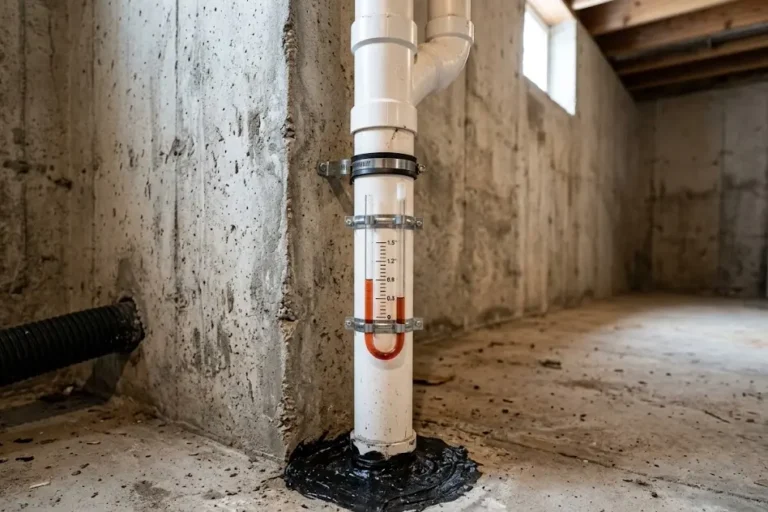
- If you live in a flood-prone area, consider prevention: HomeGuide puts a sump pump at $600 to $2,500 and full basement waterproofing at $6,000 to $18,000 (HomeGuide); see our guide to sump pump installation cost. A sealed crawl space also keeps moisture out; see our guide to crawl space encapsulation cost.
- Replace an aging water heater on your schedule rather than after it leaks; our water heater replacement cost guide covers the prices.
Questions to ask before you sign
- What category and class have you assigned to this damage, and why?
- Which materials will you remove, and which can be dried and kept?
- How will you measure moisture, and how will you show me the area is dry before rebuilding?
- Does the price include drywall, flooring and paint, or only extraction and drying?
- Are you licensed and insured, and do you work directly with my insurance company?
- What happens to the price if mold is found once walls are opened?
Sources
- U.S. Environmental Protection Agency, A Brief Guide to Mold, Moisture and Your Home.
- FEMA, National Flood Insurance Program, Buy a Flood Insurance Policy and How to Document Flood Damage.
- HomeGuide, Water Damage Restoration Cost, February 6, 2026.
- Fixr, Water Damage Restoration Cost, updated January 31, 2025.
- Thumbtack, How Much Does Water Damage Restoration Cost?, updated July 2025.
- Homewyse, Cost to Repair Water Damage, September 2026.