$1,200 – $9,000That is the typical mold remediation cost in 2026 across three published cost guides, or about $10 to $30 per square foot of affected area. HomeGuide puts most jobs at $1,500 to $6,000, Fixr at $1,500 to $9,000 and This Old House at $1,200 to $3,750. A small patch runs about $500 to $1,500, while a whole house after a flood can reach $10,000 to $30,000. Size, location and how much damaged material has to come out decide where you land.
Mold does not grow without water or moisture (EPA), so every remediation bill is really two bills: removing the mold and fixing the moisture that fed it. The figures below show what each part costs, when a test is worth paying for, and where the EPA draws the line between a job you can do yourself and one for a professional.
Mold remediation cost per square foot
| Affected area | Size | Typical cost |
|---|---|---|
| Small: a section of drywall, a corner, one spot on a floor or ceiling | 10 – 100 sq ft | $500 – $1,500 |
| Medium: a large section of wall, several small areas, part of an attic or basement | 100 – 300 sq ft | $1,500 – $6,000 |
| Large: an entire room, attic or basement | 300 – 1,000 sq ft | $6,000 – $15,000 |
| Whole home: contamination in several rooms | Over 1,000 sq ft | $15,000 – $30,000 |
HomeGuide’s per-square-foot rate of $15 to $30 covers the remediation itself; Fixr gives $10 to $30 and This Old House $10 to $25 (Fixr, This Old House). Labor is billed at $75 to $120 per hour depending on the size and complexity of the job, and small to medium projects take 1 to 3 days, large or severe ones up to 7 days (HomeGuide). Rebuilding walls or floors afterwards is a separate line, covered further down.
Our estimate: at $15 to $30 per square foot, a 10-square-foot patch would work out to $150 to $300. HomeGuide’s smallest job band, however, starts at $500, so a very small professional job is likely to cost more than the per-foot rate suggests. This is our calculation from the figures above, not a measured price.
The three guides agree on the low end and on whole-house jobs, but not on mid-sized ones: This Old House’s typical range tops out at $3,750, while Fixr’s reaches $9,000. The next table sets their prices for the same affected area side by side.
| Affected area | Fixr | This Old House |
|---|---|---|
| 50 sq ft | $500 – $1,500 | $500 – $1,250 |
| 100 sq ft | $1,000 – $3,000 | $1,000 – $2,500 |
| 150 sq ft | $1,500 – $4,500 | $1,500 – $3,750 |
| 200 sq ft | $2,000 – $6,000 | $2,000 – $5,000 |
| 500 sq ft | $5,000 – $15,000 | $5,000 – $12,500 |
| 1,000 sq ft | $10,000 – $30,000 | $10,000 – $25,000 |
| Per sq ft | $10 – $30 | $10 – $25 |
| Typical job | $1,500 – $9,000 (average $3,500) | $1,200 – $3,750 (average $2,300) |
Our estimate: the headline range of $1,200 to $9,000 is the lowest and highest “typical job” figure among the three guides (This Old House’s $1,200 low, Fixr’s $9,000 high), and $10 to $30 per square foot is the widest per-foot range among them. We did not average anything; it is a span of published figures, not a measured price.
Estimate your mold remediation cost
Use the tables above to estimate your cost. The interactive calculator needs JavaScript.
Cost by location in the house
| Location | HomeGuide | Fixr | This Old House |
|---|---|---|---|
| Bathroom | $500 – $2,000 | $500 – $1,500 | $500 – $1,000 |
| Crawl space | $1,500 – $4,000 | $500 – $2,000 | $500 – $2,000 |
| Attic | $1,500 – $6,000 partial; $6,000 – $15,000 full | $1,500 – $9,000 | $1,000 – $4,000 |
| Basement | $1,500 – $6,000 partial; $6,000 – $15,000 full | $1,500 – $4,000 | $500 – $3,000 |
| Walls | — | $1,000 – $12,000 | — |
| HVAC system and ducts | $2,000 – $10,000 | $3,000 – $10,000 | $3,000 – $10,000 |
| Whole house | $15,000 – $30,000 | $10,000 – $30,000 | $10,000 – $30,000 |
The guides disagree most on crawl spaces and basements: HomeGuide’s crawl space range starts at $1,500 while Fixr and This Old House both start at $500, and HomeGuide’s partial basement range tops out at twice This Old House’s high figure. HVAC and whole-house jobs are priced almost the same by all three.
Bathroom. Visible surface mold in a bathroom is the easiest kind to remove, which is why it sits at the bottom of the table. The price rises when a broken pipe has soaked the wall, floor or subfloor and those materials have to be replaced (HomeGuide). For mold in the shower that keeps coming back, the EPA says more ventilation, from a fan or an open window, and more frequent cleaning will usually keep it to a minimum (EPA).
Basement. Treating a single corner costs at least $500; a partial job runs $1,500 to $6,000 and the whole basement up to $15,000 (HomeGuide).
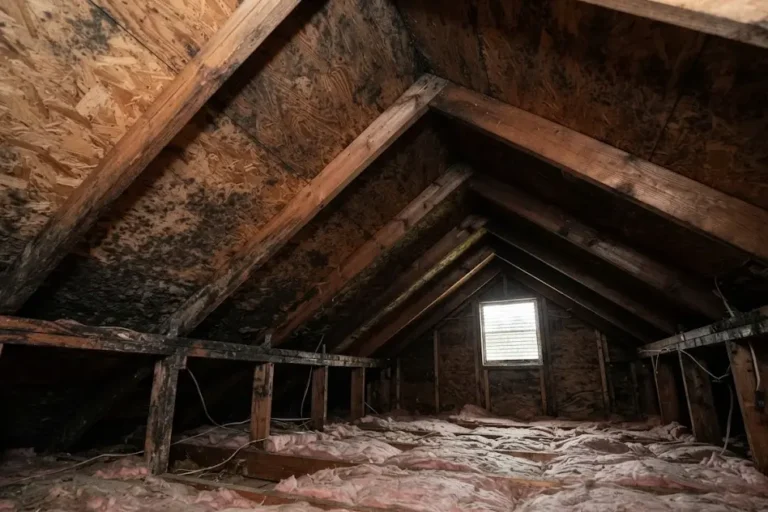
Attic. The usual range is $1,500 to $6,000. It climbs to $6,000 to $15,000 when the damage is extensive, access is tight or the insulation has to be replaced (HomeGuide).
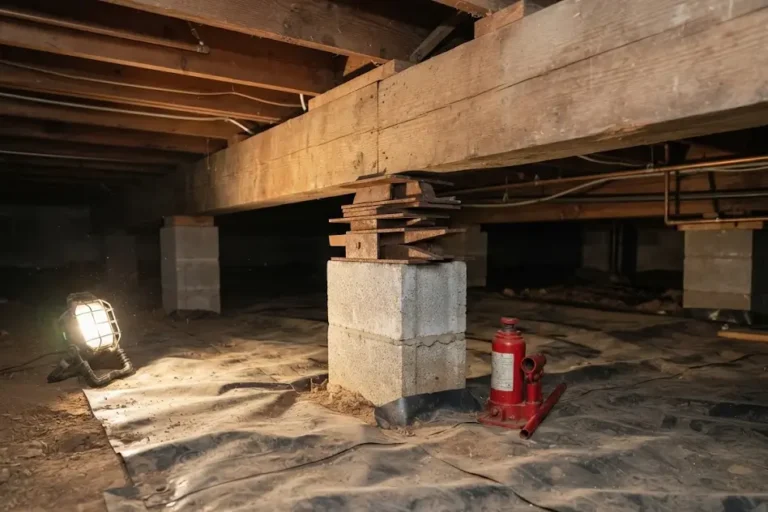
Crawl space. Expect $1,500 to $4,000 according to HomeGuide, or $500 to $2,000 according to Fixr and This Old House, depending on the size of the space and how hard it is to reach. If the ground under the house stays damp, the mold will return; our guide to crawl space encapsulation cost covers the moisture fix.
HVAC system and ducts. This ranges from $2,000 to $10,000, depending on the type of system and whether the mold has spread into the ductwork (HomeGuide). The EPA’s advice is direct: do not run the heating or cooling system if you know or suspect it is contaminated with mold, because it could spread mold throughout the building (EPA).
Behind walls and under floors. Hidden mold is the hardest to price because nobody knows its size until the wall is opened. The EPA lists the back of drywall, wallpaper or paneling, the top of ceiling tiles, the underside of carpet and pad, the inside of walls around leaking pipes and the inside of ductwork as common hiding places. It warns that disturbing these spots can release large amounts of spores (removing wallpaper with mold on its back is its example), and suggests hiring an experienced professional if you suspect hidden mold (EPA). A quote for hidden mold should say how the price changes if more damage turns up once the wall is open.
What a professional remediation involves
The EPA’s guidance for professional jobs, Mold Remediation in Schools and Commercial Buildings, is written for large buildings, but the agency says it applies to other building types too, and it is one of the guidelines the EPA suggests asking a contractor to follow. It explains most of what you are paying for:
- Fixing the water or moisture problem. The remediation plan should include it, or the problem may come back. The EPA does not consider a cleanup finished until the moisture source is completely fixed.
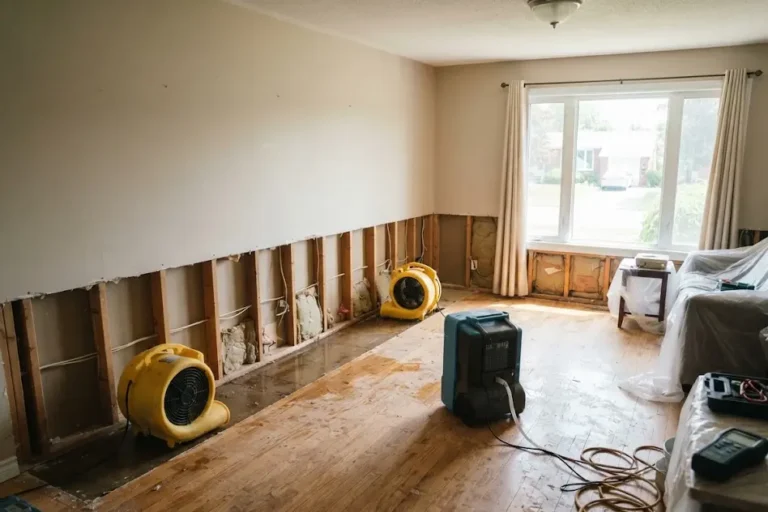
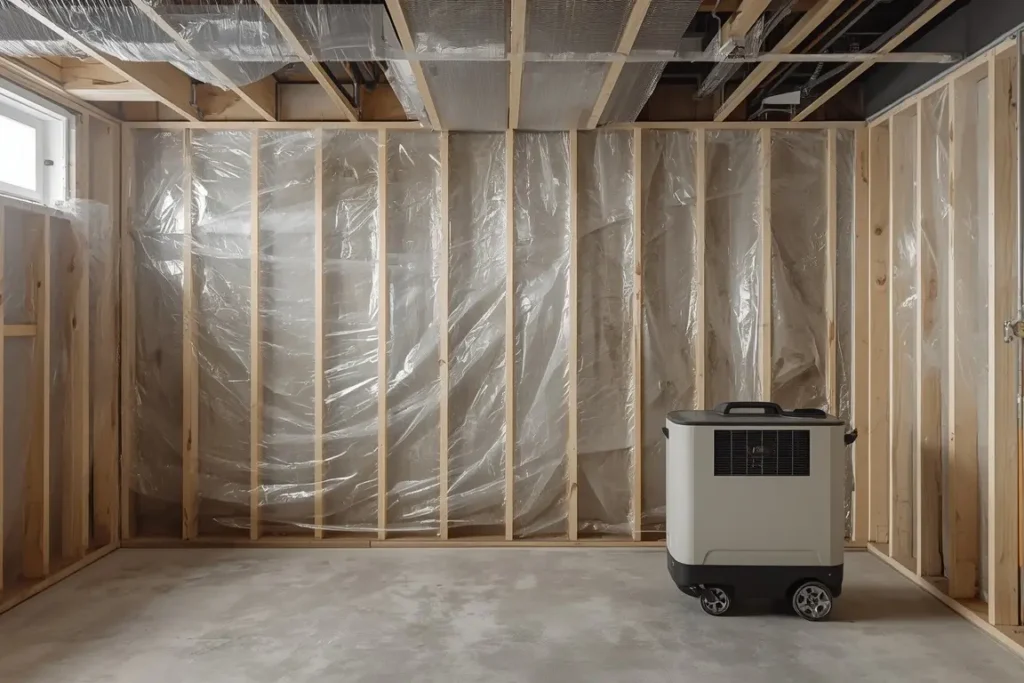
- Containment. For 10 to 100 square feet of mold, the EPA generally recommends limited containment: a single layer of 6-mil fire-retardant plastic sheeting around the area, with vents and doors sealed. Above 100 square feet it recommends full containment, with a double layer of plastic and an airlock for workers to enter and leave. Either way the work area is kept under negative pressure, for example with a HEPA-filtered fan unit exhausted outdoors, so contaminated air does not drift into the rest of the house.
- Removing porous materials. Hard surfaces can usually be wiped or scrubbed clean with water and detergent, but wet, moldy porous materials such as drywall, ceiling tiles or carpet may have to be discarded, because mold fills their crevices and can be impossible to remove completely. Discarded materials are double-bagged in 6-mil plastic before they leave the contained area.
- HEPA cleanup. Once materials are dry and the contaminated ones removed, the area gets a final pass with a HEPA vacuum, and settled dust outside the work area is vacuumed the same way.
- Protective equipment. From an N-95 respirator, gloves and goggles on small jobs up to powered air-purifying respirators and disposable suits on large ones.
Killing the mold is not enough; it has to be removed. The EPA notes that dead mold can still cause allergic reactions, and that using a biocide such as chlorine bleach is not recommended as a routine practice, although professional judgment may call for it in some cases (EPA). Air scrubbers, dehumidifiers, HEPA vacuums, protective gear and disposal fees for contaminated materials all show up in the price of larger jobs (HomeGuide).
Rebuilding after the mold is gone
| Repair | Typical cost |
|---|---|
| Drywall replacement | $1.50 – $3.50 per sq ft |
| Painting new drywall | $1 – $3 per sq ft |
| Insulation replacement | $1.00 – $4.50 per sq ft |
| Carpet replacement, including removal | $2 – $8 per sq ft |
| Water-damaged subfloor replacement | $2.20 – $4.75 per sq ft |
| Hardwood flooring replacement | $11 – $25 per sq ft |
| Fixing a leaking pipe | $150 – $850 |
| Fixing a small roof leak | $150 – $1,000 |
HomeGuide prices these repairs separately from the remediation itself, so ask whether a quote includes putting the room back together or stops once the mold is out.
Mold testing and inspection: cost and when it is worth it
A professional mold inspection costs $300 to $650 for an average-sized home and up to $1,000 for a large home with widespread mold, and takes 2 to 5 hours (HomeGuide). Lab tests are sometimes included in the fee and sometimes billed per sample:
| Test | Cost per test |
|---|---|
| Surface sample (swab or tape) | $50 – $200 |
| Air sample (spore trap) | $100 – $300 |
| Bulk sample (piece of drywall, carpet or other material) | $100 – $350 |
| DIY test kit | $10 – $100 |
Before paying for any of it, read what the federal agencies say. The EPA’s position is that in most cases, if visible mold growth is present, sampling is unnecessary, and since no EPA or other federal limits have been set for mold, a test cannot show whether a building meets a federal standard (EPA). The CDC goes further: it does not recommend mold testing, and says that no matter what type of mold is present, you need to remove it (CDC).
Testing does have uses. The EPA lists cases where litigation is involved, where the source of the mold is unclear, or where health concerns are a problem, and notes that surface sampling can help confirm that an area has been properly cleaned after remediation. It also warns that poorly planned sampling can produce misleading results and cost money for samples you did not need, and that sampling should be done by professionals with specific experience (EPA). In short: a test can help find hidden mold or prove a cleanup worked, but it is rarely worth paying for when you can already see the mold.
The same logic applies to the type of mold. HomeGuide prices black mold removal at $2,000 to $10,000, against $1,500 to $6,000 for most other common types, because some molds need extra treatment (HomeGuide). But the CDC says you do not need to know the type of mold to remove it (CDC), so naming the species is not a step the agency asks you to pay for.
Can you remove mold yourself?
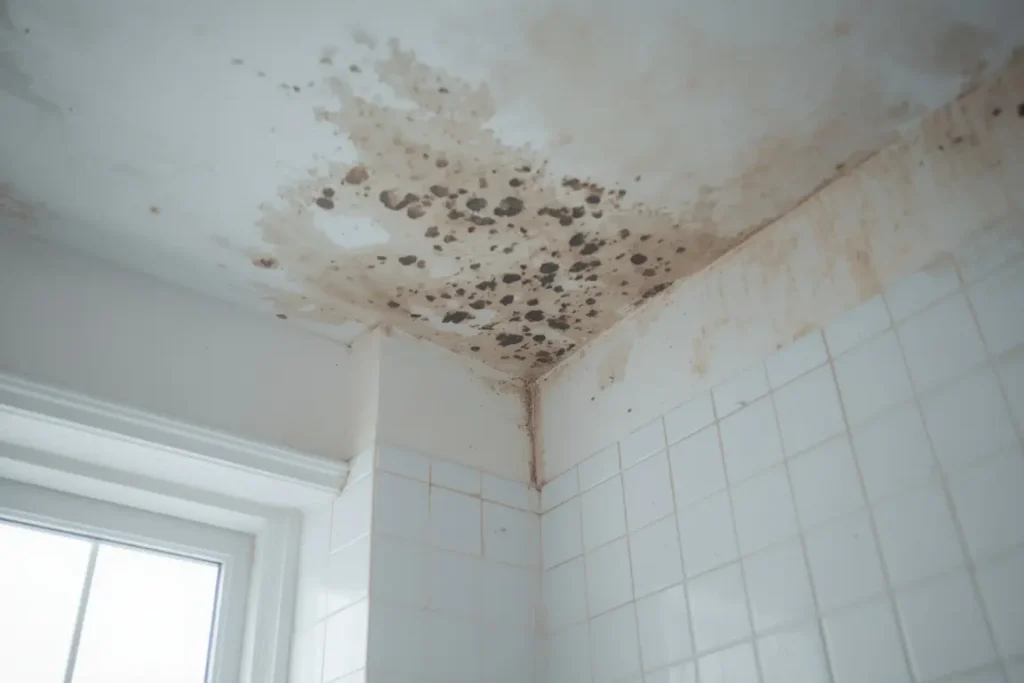
Size is the first test. In the EPA’s words: “If the moldy area is less than about 10 square feet (less than roughly a 3 ft. by 3 ft. patch), in most cases, you can handle the job yourself” (EPA). The same guide lists the situations where that rule does not apply:
- There has been a lot of water damage, or the mold covers more than 10 square feet. The EPA points to its professional remediation guidance for those jobs.
- You suspect the heating and cooling system is contaminated.
- The water damage came from sewage or other contaminated water. The EPA says to call a professional with experience in that kind of cleanup.
- You have health concerns. The EPA advises consulting a health professional before starting.
For a small job the method is simple: fix the leak, scrub mold off hard surfaces with detergent and water and dry them completely, and throw away absorbent materials such as ceiling tiles or carpet that have gone moldy. Do not paint or caulk over mold, because the paint is likely to peel. Wear long gloves, goggles without ventilation holes and an N-95 respirator, which the EPA says costs about $12 to $25 (EPA).
On bleach, the two agencies differ in emphasis. The CDC says mold can be removed from hard surfaces with household products, soap and water, or a solution of no more than 1 cup of household laundry bleach in 1 gallon of water (CDC). The EPA does not recommend biocides such as bleach as a routine practice (EPA). Both are clear on one point: never mix bleach with ammonia or cleaners that contain it, because the combination produces toxic fumes.
What the EPA and CDC say about health
According to the EPA, inhaling or touching mold or mold spores may cause allergic reactions in sensitive people, with hay fever-type symptoms such as sneezing, runny nose, red eyes and skin rash; molds can trigger asthma attacks in people with asthma who are allergic to mold; and mold exposure can irritate the eyes, skin, nose, throat and lungs of people who are not allergic (EPA). The CDC adds that exposure to damp and moldy environments may cause a variety of health effects or none at all, and that people with weakened immune systems or chronic lung disease may get lung infections from mold (CDC). This is general information from those agencies, not medical advice. If someone in the house has symptoms, talk to a health professional.
Does homeowners insurance cover mold remediation?
It depends on what caused the mold. The Texas Department of Insurance explains that most home and renters policies cover sudden and accidental water damage, such as a burst pipe, an overflowing toilet or a broken washer hose, and that mold that develops on an item damaged that way would be covered. Most policies do not cover damage from gradual leaks or seepage, including the mold that follows, and mold from a flood is not covered because home policies exclude floods; that takes a separate flood policy. Most home policies also do not include mold cleanup and testing after a damaged item is removed, though some insurers let you add that coverage (Texas Department of Insurance).
That guidance is written for Texas policies, and coverage varies by state and by policy, so read your own policy’s mold and water damage wording and ask your agent. In Texas specifically, the department notes that mold professionals must hold a state license and provide a certificate that the mold was removed.
Fix the moisture or pay twice
The EPA is blunt about it: if you clean up the mold but don’t fix the water problem, the mold will most likely come back. Its prevention advice is to dry water-damaged areas and items within 24 to 48 hours, keep indoor humidity below 60 percent (ideally 30 to 50 percent), keep gutters clean, and make sure the ground slopes away from the foundation (EPA). The CDC recommends keeping humidity no higher than 50 percent (CDC).
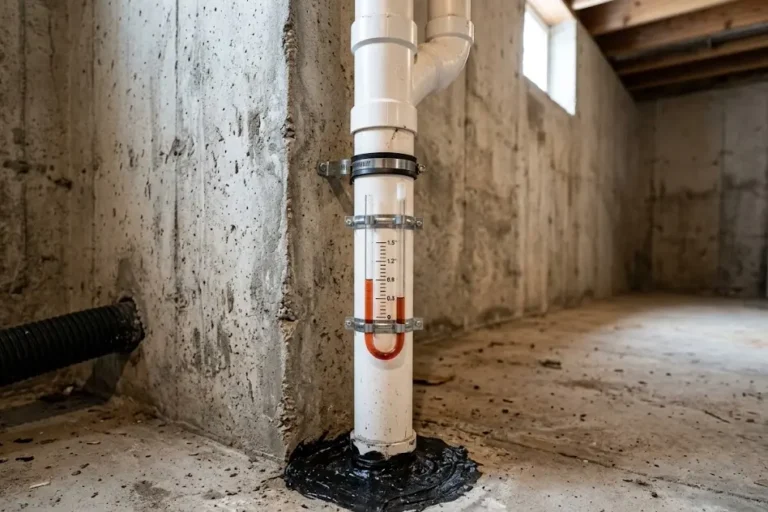
For basements and crawl spaces, price the moisture fix alongside the mold removal. A basement dehumidifier runs $1,100 to $2,800 installed, a sump pump $600 to $2,500, full basement waterproofing $6,000 to $18,000, and a crawl space vapor barrier $2 to $4 per square foot (HomeGuide). Budget for both lines together.
How to keep the bill down
- Act fast. The EPA notes that mold damages what it grows on, and the longer it grows, the more damage it can cause (EPA).
- Dry leaks and spills within 24 to 48 hours. In most cases, the EPA says, mold will not grow if you do (EPA).
- Handle patches under about 10 square feet yourself, following the EPA’s guidelines, unless one of its exceptions applies (EPA).
- Skip the test when the mold is visible. Both the EPA and the CDC say sampling is usually unnecessary in that case (CDC).
- Get estimates from at least three companies and check that each includes the same testing, cleanup and containment (HomeGuide).
- Never pay in full before the work is complete (HomeGuide).
Questions to ask before you sign
- Will you follow the EPA’s Mold Remediation in Schools and Commercial Buildings guidance, or the ACGIH guidelines? The EPA suggests asking for this and checking references (EPA).
- What caused the moisture, and does your quote include fixing it or only removing the mold?
- How will you contain the work area and protect the rest of the house?
- Does the estimate include disposal of contaminated materials, testing before and after, and rebuilding walls and floors?
- What other costs could come up if you find more mold once the walls are open?
- How long will the work take, and can we stay in the house during it?
- What certifications do you hold in mold remediation, and does my state require a license?
More remediation cost guides
Sources
- U.S. Environmental Protection Agency, A Brief Guide to Mold, Moisture and Your Home, last updated February 18, 2026.
- U.S. Environmental Protection Agency, Mold Remediation in Schools and Commercial Buildings Guide, Chapter 3, last updated April 29, 2026.
- Centers for Disease Control and Prevention, Mold, September 26, 2024.
- Texas Department of Insurance, When are water damage and mold covered by insurance?, last updated April 24, 2025.
- HomeGuide, How Much Does Mold Removal and Remediation Cost?, February 5, 2026.
- Fixr, Mold Remediation Cost, updated August 29, 2025.
- This Old House, How Much Does Mold Remediation Cost? (2026 Guide), updated March 11, 2026; cost data sourced from Angi.
- HomeGuide, How Much Does a Mold Inspection Cost?, September 15, 2023.