$600 – $3,000That is the full spread of AC compressor replacement cost in 2026 across four published guides, for the compressor in a home central air conditioner. This Old House puts the average at $1,550 for parts and installation. HomeGuide says $1,800 to $2,800 without a warranty, or $600 to $1,200 in labor when the compressor is still covered. Fixr lists $600 to $3,000. Warranty status, the age of the system and the refrigerant it uses move the bill more than anything else.
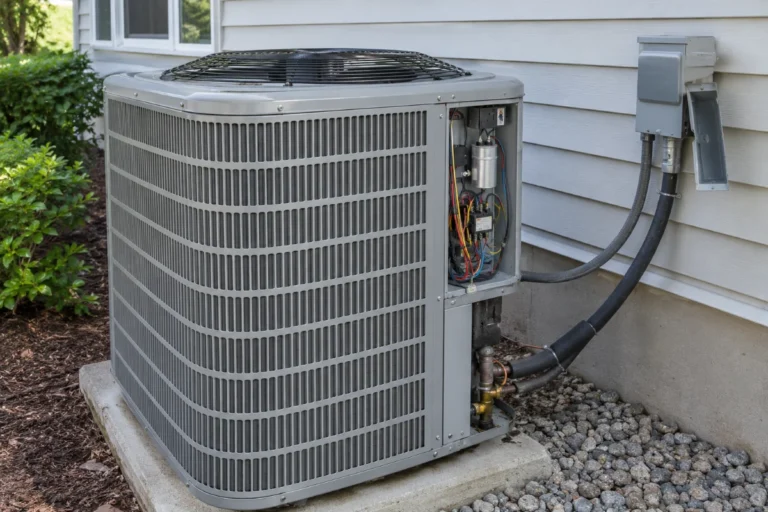
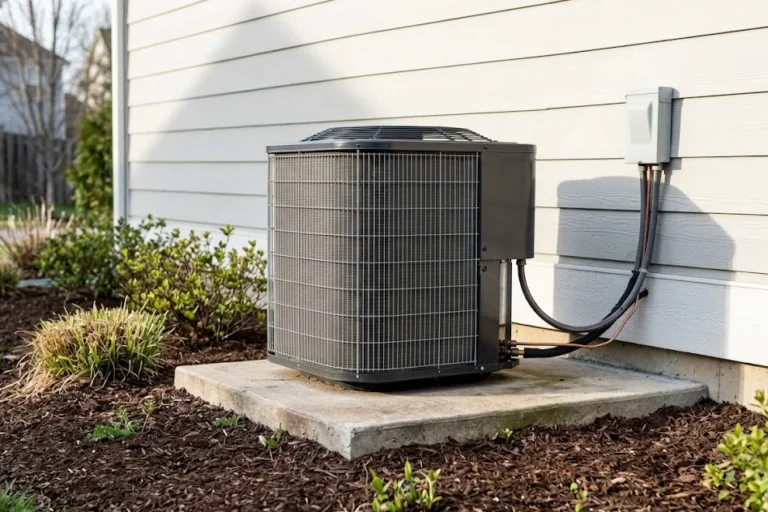
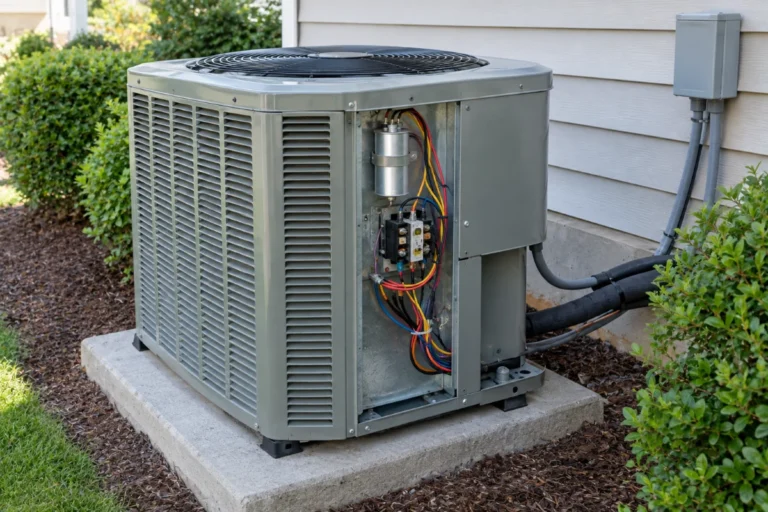
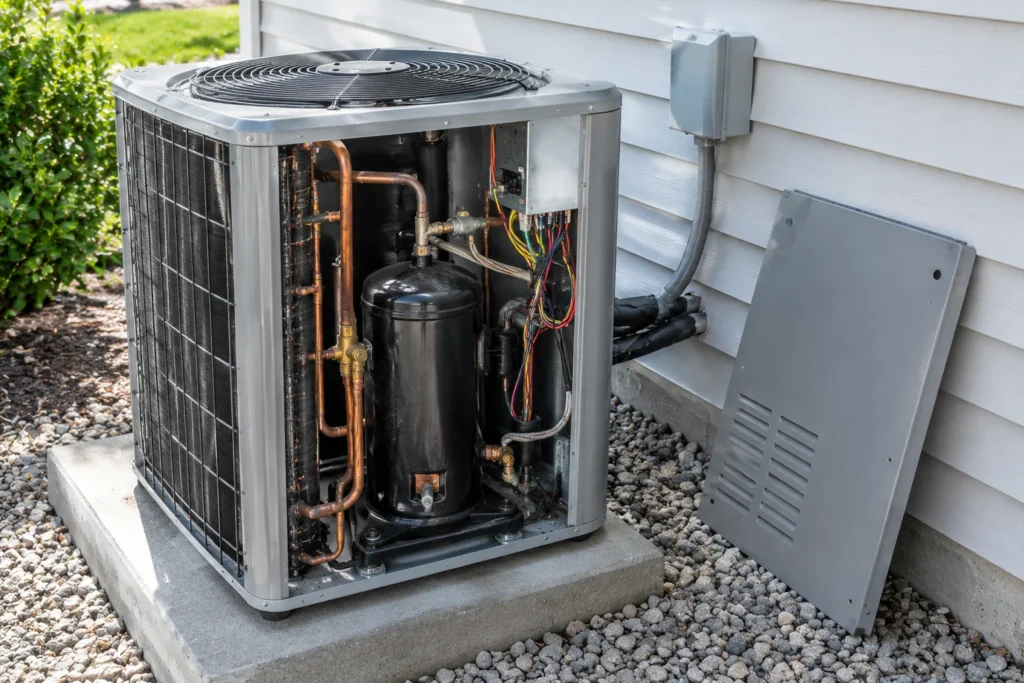
The compressor sits in the outdoor unit of a central air conditioner, where it pressurizes the refrigerant and keeps it circulating (HomeServe). HomeGuide says compressors cannot be repaired on site and must be replaced (HomeGuide), so the real question is whether to put a new one in an aging system or to replace the whole unit. This page covers home central air only, not car air conditioning. For smaller parts and service calls, see AC repair cost; for a new system, see AC unit replacement cost.
AC compressor replacement cost by source
| Source | Not under warranty | Under warranty | Note |
|---|---|---|---|
| HomeGuide | $1,800 – $2,800 | $600 – $1,200 (labor) | Its own repair table lists $600 – $2,500 for the same job |
| This Old House | $1,550 average; $700 – $2,100 by system size | — | Parts and installation; based on Angi estimates |
| Fixr | $600 – $3,000 | — | Does not say whether labor is included |
| HomeServe | $400 – $1,300 (compressor) plus $600 – $1,200 (labor) | — | Priced as two separate lines |
Our estimate: the headline $600 – $3,000 is the lowest low and the highest high among the four guides, and Fixr’s own range spans both. HomeServe’s two lines add up to $1,000 – $2,500 ($400 + $600 at the low end, $1,300 + $1,200 at the top). This is our own combination of published ranges, not a measured price.
The guides do not agree, and some disagree with themselves. HomeGuide’s text puts an out-of-warranty compressor at $1,800 to $2,800, while its repair table on the same page lists $600 to $2,500, so we show the text figure and flag the conflict. This Old House gives a $1,550 average, but also says a 1.5- to 4-ton compressor averages $1,383 and lists compressor types averaging $1,038, from $75 for a rotary to $2,000 for a centrifugal (This Old House). Those type averages do not square with its own size table, so we leave them out of the calculator. Treat every number here as a midpoint, not a quote.
AC compressor cost by system size
| System size | Low | Average | High |
|---|---|---|---|
| 1.5 – 2 tons | $700 | $1,050 | $1,400 |
| 2.5 – 3 tons | $900 | $1,500 | $2,100 |
| 3.5 – 4 tons | $1,100 | $1,600 | $2,100 |
One ton of cooling equals 12,000 BTU, and a bigger system needs a more powerful compressor (This Old House). Only one guide splits the price by size, so the bands above are the thinnest evidence on this page. The guide also says a new compressor must match your system’s voltage, refrigerant type and cooling capacity.
Estimate your AC compressor replacement cost
Our estimate: the published ranges above multiplied out for your inputs. Not a quote. Job ranges from HomeGuide (August 2025) and This Old House (August 2026); extras from HomeServe (June 2025), HomeGuide (August 2025) and This Old House (August 2026). The size bands may already include some of the extras, so adding every line can overstate the total. State adjustment: BLS construction wages (May 2025), applied to an assumed 50% labor share. How we calculate
The extras come from separate guides. HomeServe prices a refrigerant recharge at $200 to $800, a filter drier at $100 to $200, a capacitor at $150 to $400, electrical repairs at $100 to $300 and system testing at $100 to $200 (HomeServe). Fixr’s recharge range is lower, $100 to $600, and it notes that a recharge is only needed after a leak is fixed or when a major repair such as a compressor replacement opens the system (Fixr). A diagnostic visit costs $75 to $200 and some companies credit it toward the repair (HomeGuide).
Signs the compressor is failing
- Grinding, rattling or banging from the outdoor unit.
- The system runs but does not cool well.
- The unit struggles to start or keeps tripping the breaker.
- Heavy vibration, or ice on the compressor or the refrigerant lines.
These are HomeServe’s warning signs, and it adds that a sharp rise in electricity use or frequent electrical overloads can also point to a straining compressor (HomeServe). Have a technician confirm the cause before you approve a compressor. Fixr lists a failing compressor among the issues that usually need a professional (Fixr).
Warranty decides who pays
Under warranty, a compressor job is mostly labor, $600 to $1,200 according to HomeGuide; out of warranty it is $1,800 to $2,800 (HomeGuide). HomeServe says manufacturer warranties often cover the compressor for 5 to 10 years, and that some premium units carry a lifetime compressor warranty (HomeServe). Fixr gives 5 to 10 years for basic parts and up to 15 with an extended warranty, and says most manufacturers cover general parts and the compressor separately (Fixr).
The catch is labor. HomeGuide says manufacturer warranties typically cover the part but not the labor, and that some home warranties only require you to pay the service call fee. It also warns that replacing only the indoor or outdoor half of a split system may void the warranty (HomeGuide). This Old House says skipping maintenance or using unlicensed technicians can void a warranty, so keep records of annual service (This Old House).
Two add-ons are worth pricing. An extended warranty adds $200 to $400 up front (This Old House). A standard home warranty plan costs $420 to $720 a year plus $75 to $125 per service visit, and coverage varies by provider and plan (HomeGuide). Read what each excludes before you count on it to pay for a compressor.
Replace the compressor or the whole unit?
Every guide gives a different yardstick. HomeGuide says to replace the system when repairs cost at least 50% of a new AC, when the system is more than 10 to 12 years old, or when it still uses R-22 or R-410A refrigerant (HomeGuide). This Old House says a compressor swap is worth it when the system is under 10 years old and the repair costs under $1,000, and that a full replacement is often smarter beyond that (This Old House). Fixr uses the “$5,000 rule”: multiply the repair estimate by the system’s age in years, and if the result is above $5,000, replacement probably makes more sense. Fixr calls it a rule of thumb (Fixr).
| New central AC, installed | Price |
|---|---|
| HomeGuide, entry-level (single-stage) | $5,000 – $8,300 |
| HomeGuide, mid-range (two-stage) | $8,300 – $12,500 |
| HomeGuide, high-end (variable-speed) | $12,500 – $14,000+ |
| This Old House, central AC | $6,345 – $10,575 (average $8,460) |
Our estimate: half of HomeGuide’s entry-level price is $2,500 – $4,150, so a $2,800 compressor job passes the 50% line against a $5,000 system but not against an $8,300 one (56% against $5,000, 34% against $8,300). This Old House’s $1,550 compressor average is 18% of its $8,460 central AC average. Under the $5,000 rule, $1,550 flags any system older than about 3.2 years and $1,800 – $2,800 flags one older than about 1.8 – 2.8 years; at 10 years, the trigger is a repair of just $500. These are our own calculations from published figures, not measured prices.
Read together, the rules say the same thing: a compressor is a major repair, and on a system past 10 years it usually pushes you toward replacement. This Old House’s own $1,550 average for a compressor replacement is above its $1,000 cutoff, although its survey reports $931 as the average for compressor repairs. Its chart marks a burnt-out compressor, age, multiple failed components, repeated repairs and R-22 refrigerant as signs for replacement, and minor refrigerant leaks or electrical issues as signs for repair (This Old House).
If you do keep the system, its indoor coil matters. This Old House’s heating and cooling expert recommends replacing the evaporator at the same time as the compressor, because mixing a new compressor with an old evaporator can shorten the life of both. It also says other parts, such as the capacitor, contactor, filter drier and line set, are often replaced at the same time (This Old House). HomeGuide prices an out-of-warranty evaporator coil at $2,500 to $4,500 or more (HomeGuide), which can erase much of the saving. For the full-system numbers, see AC unit replacement cost and HVAC replacement cost. If the outdoor unit is a heat pump, our guide to heat pump installation cost covers that system; the prices on this page are for central air conditioners.
Age and efficiency count on the other side. The EPA recommends a professional evaluation if your HVAC equipment is more than 10 years old, and says replacing old equipment with an ENERGY STAR model can cut the annual energy bill by more than $160, depending on where you live (EPA). HomeGuide says new units run 20% to 40% more efficiently than 10-year-old models (HomeGuide). Lifespan figures vary: Fixr says compressors last 10 to 15 years, This Old House 12 to 15 (Fixr, This Old House).
Refrigerant: R-410A, R-22 and the newer R-454B
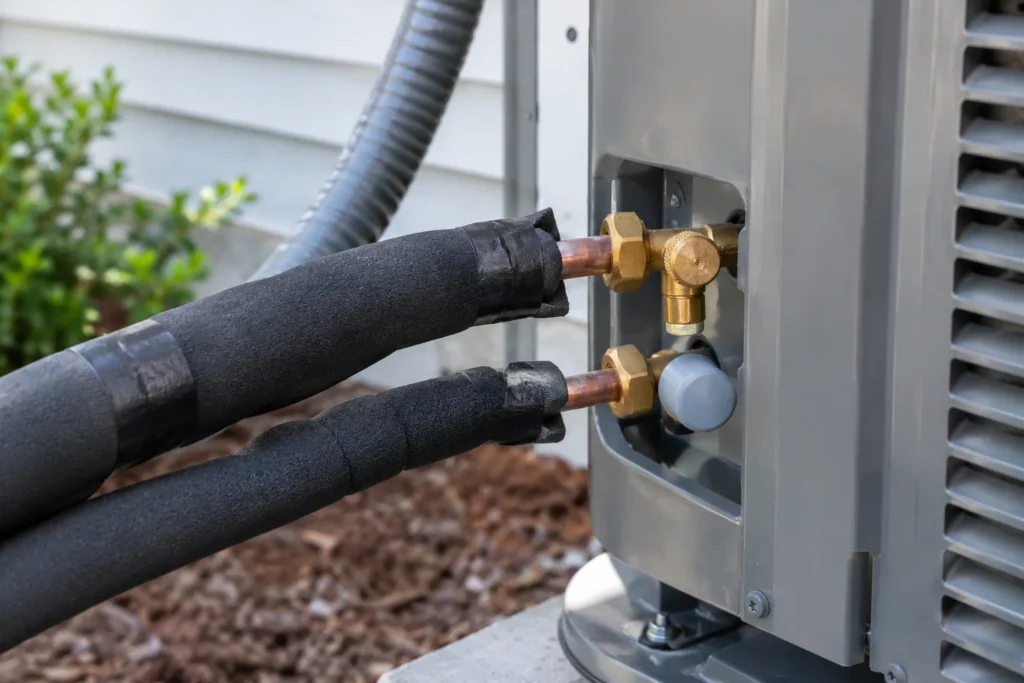
A compressor swap opens the refrigerant circuit, so the refrigerant in your system shapes the quote. The EPA says the refrigerant is typically listed on the nameplate, which on a central air conditioner is usually on the outdoor unit (EPA). Check it before you collect quotes.
R-410A systems. The American Innovation and Manufacturing Act directs the EPA to phase down U.S. production and consumption of hydrofluorocarbons by 85 percent by 2036 (EPA). R-410A is a blend of two hydrofluorocarbons (EPA). That does not force you to replace a working system. The EPA says you can keep repairing an existing system, including replacing a major component such as a condensing unit or a compressor, and that a homeowner can replace a faulty component with a similar R-410A component. It adds that new components can still be made so existing systems can be maintained, but that the availability of HFCs and components may lessen over time (EPA).
The condensing unit holds the condenser coil and the compressor; the indoor coil is the evaporator. The EPA treats a whole new system as one where the condensing unit and indoor coil are replaced together, and says a new system installed after January 1, 2026 must use a lower-global-warming-potential (GWP) refrigerant (EPA). A separate EPA table sets a GWP limit of 700 for new residential and light commercial air conditioning systems from January 1, 2025, with no installation compliance date for systems whose specified components were all made or imported before that date (EPA). The two pages describe the timing differently, so ask the installer which rule applies to your job.
R-22 systems. No new R-22 has been made or imported into the U.S. since January 1, 2020, though reclaimed R-22 is still available (EPA). The EPA says an R-22 outdoor unit cannot be replaced with an R-410A one, because the R-22 indoor coil is not compatible, so the whole system would have to be replaced (EPA). This Old House also marks R-22 as a sign to replace the unit rather than repair it (This Old House).
R-454B and R-32. The EPA’s list of acceptable substitutes for residential air conditioning shows R-410A with a GWP of 2,090, R-454B at 470 and HFC-32 at 675. R-454B and HFC-32 are rated A2L (mildly flammable) and acceptable with use conditions (EPA). The EPA says these refrigerants cannot be used in systems that were not designed for them, so a compressor built for one of them is not a simple swap into an R-410A system (EPA). None of the cost guides above prices a refrigerant premium, so ask every contractor which refrigerant the quote assumes.
Labor, time and why this is not a DIY job
This Old House puts compressor labor at about $600 and HomeServe at $600 to $1,200 (This Old House, HomeServe). Fixr says most HVAC professionals charge $75 to $175 an hour, up to $250 with several people on site, and 2 to 3 times the normal rate for emergency calls (Fixr). In This Old House’s homeowner survey, nearly everyone who had a compressor repaired said it took 8 hours or less, and 47% said 2 to 4 hours. For context, the median heating, air conditioning and refrigeration mechanic earned $29.33 an hour in May 2025, according to the Bureau of Labor Statistics; the billed rate also covers the van, tools, licensing and insurance.
Doing it yourself saves less than it seems. This Old House says the compressor alone costs $950 or more, so a DIY job still costs that much against $1,550 on average professionally installed (This Old House). More importantly, the EPA says Section 608 certification is required to recharge an appliance, that refrigerant for stationary equipment is sold only to certified technicians or their employers, and that activities such as removing components or cutting the refrigerant line need that certification. Intentionally venting refrigerant while servicing equipment is illegal (EPA).
How to keep the bill down
- Check the warranty first. A covered compressor cuts the job to labor, $600 to $1,200 (HomeGuide).
- Get at least three written quotes that break parts and labor out separately. This Old House has seen prices vary by as much as $800 for the same job in the same area (This Old House).
- Bundle other repairs into the same visit. This Old House says many HVAC companies offer 10% to 15% package discounts, and suggests scheduling in the off-season, late fall to early spring.
- Do not pay for a recharge by itself. Fixr says a system should not need a refill unless a leak was fixed or a major repair opened it (Fixr).
- Keep up with annual service to protect the warranty and the system; see how often to service HVAC.
Questions to ask before you sign
- Is the compressor under warranty, and does the warranty cover labor, refrigerant and the service call?
- Which refrigerant does my system use, and is the replacement compressor made for it?
- What caused the failure, and should the capacitor, contactor, filter drier or indoor coil be replaced too?
- What would a full-system replacement cost, so I can compare it with this repair?
- Are your technicians EPA Section 608 certified, and is the estimate in writing? For more on vetting a company, read how to find a contractor.
Sources
- HomeGuide, How Much Does an AC Condenser Cost to Replace?, August 18, 2025 (the source of its compressor figures), and How Much Does AC Replacement Cost?, July 25, 2025.
- This Old House, How Much Does an AC Compressor Cost?, updated August 31, 2026, and How Much Does an Air Conditioner Cost?, updated October 2, 2026.
- Fixr, How Much Does AC Repair Cost?, updated January 29, 2026.
- HomeServe, How Much Does It Cost to Replace an AC Compressor?, June 27, 2025.
- U.S. Environmental Protection Agency, Frequent Questions on the Phasedown of Hydrofluorocarbons, last updated September 14, 2026.
- U.S. Environmental Protection Agency, Technology Transitions HFC Restrictions by Sector, last updated August 28, 2026, and HFC Allowance Allocation and Reporting, last updated October 1, 2026.
- U.S. Environmental Protection Agency, Substitutes in Residential and Light Commercial Air Conditioning and Heat Pumps, last updated March 19, 2026.
- U.S. Environmental Protection Agency, Homeowners and Consumers: Frequently Asked Questions, last updated April 1, 2026.
- U.S. Bureau of Labor Statistics, Occupational Outlook Handbook: Heating, Air Conditioning, and Refrigeration Mechanics and Installers, pay data for May 2025.