$150 – $650That is the typical AC repair cost in 2026 for a home central air conditioner, parts and labor included, with a national average of about $360 (HomeGuide). Large repairs on an out-of-warranty system, such as a compressor or an evaporator coil, run $650 to $2,500 or more. Other guides agree: This Old House says most homeowners pay $150 to $650 for common fixes, and Today’s Homeowner puts the typical repair at $250 to $600.
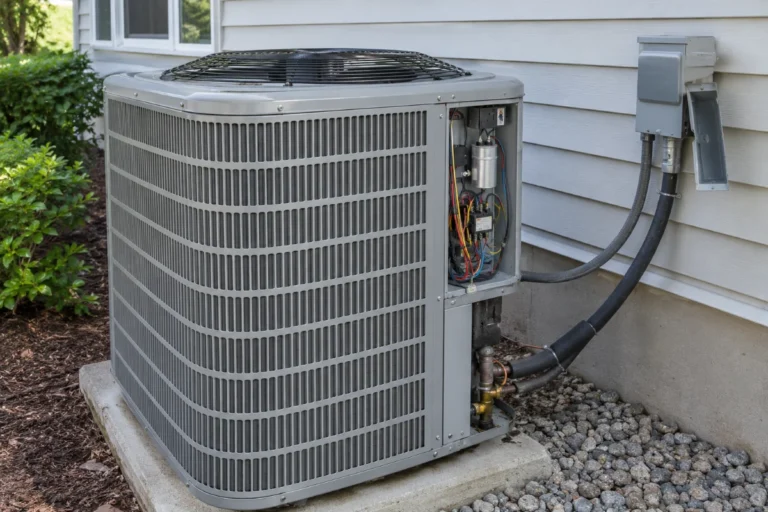
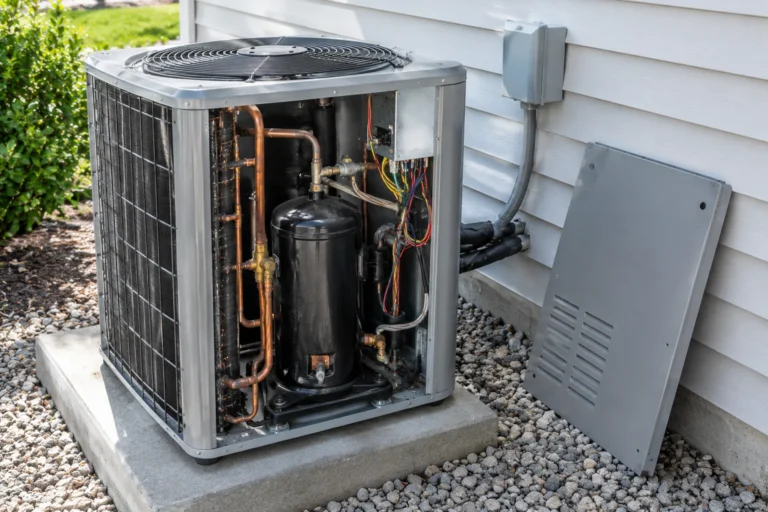
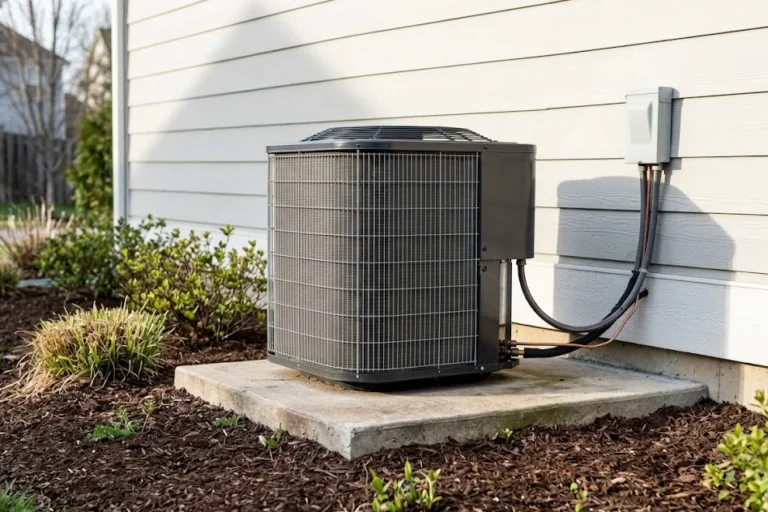
This guide is about home air conditioning: split central air systems with an outdoor condenser and an indoor coil, the kind that cools a house through ducts. It is not about car AC, which is a different machine with different parts and prices. If your home has a heat pump instead of a straight air conditioner, the outdoor parts are similar, but see our heat pump installation cost guide for replacement prices.

What you pay depends on which part failed, whether it is still under the manufacturer’s warranty, how hard it is to reach, and whether the job needs refrigerant (HomeGuide). The tables below compare three published cost guides, so you can check a quote line by line.
AC repair cost by part
| Repair | HomeGuide | This Old House | Today’s Homeowner |
|---|---|---|---|
| Capacitor | $100 – $250 | $150 – $400 | $100 – $400 |
| Contactor | $200 – $450 | $100 – $450 (relay or contactor) | — |
| Condenser fan motor | $200 – $700 | $300 – $800 (fan motor) | $300 – $700 |
| Blower motor (indoor) | $300 – $900 | — | — |
| Thermostat | $140 – $350 | $100 – $500 | $100 – $500 |
| Condensate drain line flush | $75 – $250 | $80 – $250 | $100 – $250 |
| Refrigerant leak repair | $200 – $1,500 | $200 – $1,500+ | $200 – $1,500 (recharge or leak) |
| Circuit board | $150 – $700 | $200 – $800 | — |
| Evaporator coil | $1,000 – $4,500 | $700 – $2,500+ | $500 – $2,650 |
| Condenser coil | — | $1,000 – $2,700+ | — |
| Compressor | $600 – $2,500 | $1,000 – $3,000+ | $1,200 – $2,800 |
The guides line up closely on small electrical parts and on drain work. They split on coils: HomeGuide’s evaporator coil range reaches $4,500 because it includes the part, labor and refrigerant on an out-of-warranty unit; under warranty it is $1,000 to $2,500 for labor and refrigerant (HomeGuide). The compressor is the most expensive single repair in all three guides.
Estimate your AC repair cost
Our estimate: the published ranges above multiplied out for your inputs. Not a quote. Ranges from HomeGuide (August 2025), parts and labor. This Old House (March 2026) and Today's Homeowner (May 2025) give similar ranges; see the table above. State adjustment: BLS construction wages (May 2025), applied to an assumed 50% labor share. How we calculate
Service call, labor and emergency rates
| Charge | HomeGuide | This Old House |
|---|---|---|
| Service call or diagnostic fee | $75 – $200 | $75 – $150 |
| Standard hourly rate | $75 – $150 | — |
| Emergency hourly rate (nights, weekends, holidays) | $160 – $250 | — |
Both guides say many companies apply the diagnostic fee toward the repair if you go ahead with it (HomeGuide; This Old House). Booking in advance is usually cheaper than emergency service on nights, weekends or holidays (This Old House), and repairs are often cheaper in spring or fall (HomeGuide).
For context on what the technician earns, the median wage for heating, air conditioning and refrigeration mechanics and installers was $29.33 an hour, or $61,010 a year, in May 2025 (U.S. Bureau of Labor Statistics). The hourly rate a company bills is not the same thing as that wage.
Our estimate: one emergency hour at $160 – $250 costs about as much as a whole daytime capacitor replacement ($100 – $250, parts and labor). We get this by setting HomeGuide’s emergency hourly rate next to its capacitor range; it is our own comparison, not a measured price.
Refrigerant leaks, recharges and the R-22 phaseout
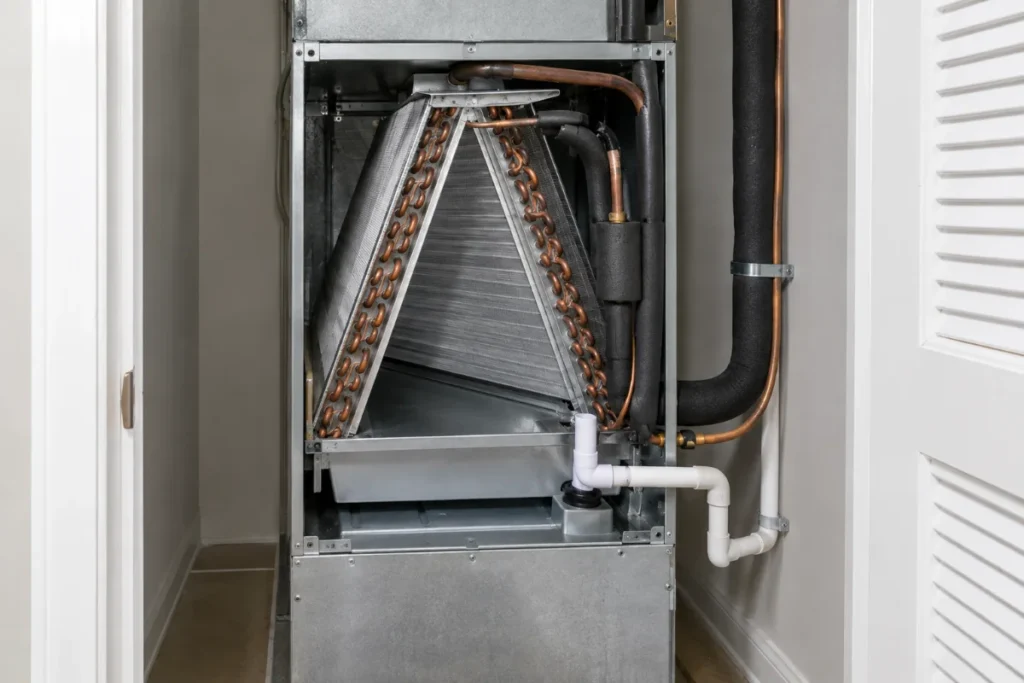
An air conditioner does not use up its refrigerant. It only needs more if there is a leak, or if adding it is part of a repair (HomeGuide). Finding and fixing a leak and refilling the system costs $200 to $1,500, and a leak detection test alone costs $100 to $330 (HomeGuide).
| Refrigerant | Price per pound, installed | Typical recharge |
|---|---|---|
| R-410A | $50 – $80 | $100 – $320 |
| R-22 (older systems) | $90 – $150 | $180 – $600 |
R-22, also called HCFC-22, is why older systems cost more to recharge. Under the Clean Air Act and the Montreal Protocol, U.S. production and import of HCFC-22 ended in 2020, and the complete HCFC phaseout comes in 2030 (EPA). The EPA notes that some uses continue, such as servicing existing refrigeration and air-conditioning equipment (EPA). So an R-22 system can still be serviced, but no new R-22 is being made or imported.
Newer rules cover R-410A’s successors. New residential air conditioning and heat pump systems are limited to refrigerants with a global warming potential of 700 or less from January 1, 2025, and the EPA states that components used to repair existing systems are not subject to these restrictions (EPA).
Only a certified technician may handle the refrigerant. EPA regulations under Section 608 of the Clean Air Act require technicians who maintain, service, repair or dispose of equipment that could release refrigerants into the atmosphere to be certified (EPA). The Department of Energy adds that a technician should check the refrigerant charge, test for leaks and capture any evacuated refrigerant to prevent illegal release (DOE).
Repair or replace?
Two of the guides state the same rule of thumb: multiply the repair cost by the system’s age in years, and if the result is more than $5,000, consider replacing (HomeGuide; This Old House). Both also name these signs:
- The repair would cost at least 50% of a new unit.
- The system breaks down often.
- It is old: more than 10 years in HomeGuide, more than 12 years in This Old House.
- It still uses R-22.
An air conditioner lasts 12 to 15 years on average if properly maintained, and replacement costs $5,000 to $8,300 depending on size, efficiency and brand (HomeGuide). Our AC unit replacement cost guide breaks that down by tonnage and efficiency, and the HVAC replacement cost guide covers replacing the furnace or air handler at the same time.
Our estimate: under the $5,000 rule, a $2,000 compressor job passes the line on any system older than 2.5 years, while a $175 capacitor would only pass it on a system about 29 years old. These are simple divisions ($5,000 ÷ repair cost) using the rule above, not measured figures, and the rule is a guide’s rule of thumb, not a standard.
If the problem is weak airflow to some rooms rather than the equipment, the ducts may be the cause; see our ductwork replacement cost guide. HomeGuide puts duct replacement at $1,400 to $5,600 (HomeGuide).
Warranty and maintenance
The manufacturer’s warranty may cover the replacement part, but most warranties do not cover labor (HomeGuide). That is why HomeGuide lists separate prices: a compressor costs $600 to $1,200 under warranty against $1,800 to $2,800 out of warranty, and a condenser fan motor $100 to $300 against $200 to $700. Generic parts cost less than brand-name ones but may void the manufacturer’s warranty, and most home warranty plans cover the HVAC system, though you may still pay the service call fee (HomeGuide).
An AC tune-up costs $70 to $200 (HomeGuide), and regular maintenance may be needed to keep home warranty coverage (This Old House). The Department of Energy explains the link to repairs: a dirty filter lets dirt build up on the evaporator coil, which can make the system fail early, and a clogged condensate drain can shut the equipment off or cause water damage where it overflows (DOE).
How to keep the bill down
- Check the easy things first: trim shrubs around the outdoor unit and clean the vents, as the HVAC expert in This Old House’s guide recommends before calling a technician (This Old House). The DOE says to keep plants at least two feet from the condenser (DOE).
- Clean or replace the filter every month or two during the cooling season if you are unsure of the schedule (DOE).
- Avoid emergency hours when you can wait: $160 – $250 an hour against $75 – $150 in normal hours (HomeGuide).
- Ask whether the diagnostic fee is credited to the repair.
- Check the warranty before paying for a part, and get quotes from at least three licensed technicians for big repairs (This Old House).
- Do not pay for repeated recharges: a system that keeps losing refrigerant has a leak (HomeGuide).
- Leave refrigerant and high-voltage work to a professional; DIY repairs can be dangerous and may void the equipment warranty (This Old House).
Questions to ask before you sign
- Is the technician EPA Section 608 certified to handle refrigerant?
- Do you charge a diagnostic fee, and is it applied to the repair?
- Is the part covered by the manufacturer’s warranty, and are you certified to do warranty repairs on my brand?
- If refrigerant is low, where is the leak and how will you fix it? Which refrigerant does my system use?
- Should I repair or replace, and why?
- What warranty do you give on your work? Are you licensed, insured and bonded?
These questions follow the hiring checklists in HomeGuide and This Old House. HomeGuide also advises getting the estimate, contract and warranty in writing before work begins, and avoiding companies that quote over the phone without diagnosing the problem in person.
Sources
- U.S. Environmental Protection Agency, Phaseout of Class II Ozone-Depleting Substances, updated April 1, 2026.
- U.S. Environmental Protection Agency, Technology Transitions HFC Restrictions by Sector, updated August 28, 2026.
- U.S. Environmental Protection Agency, Section 608 Technician Certification, updated March 3, 2026.
- U.S. Department of Energy, Energy Saver, Air Conditioner Maintenance. Archived copy of June 14, 2026.
- U.S. Bureau of Labor Statistics, Occupational Outlook Handbook: Heating, Air Conditioning, and Refrigeration Mechanics and Installers, pay data for May 2025.
- HomeGuide, AC Repair Cost, August 22, 2025.
- This Old House, Air Conditioner Repair Cost, updated March 16, 2026.
- Today’s Homeowner, AC Repair Cost, updated May 22, 2025.