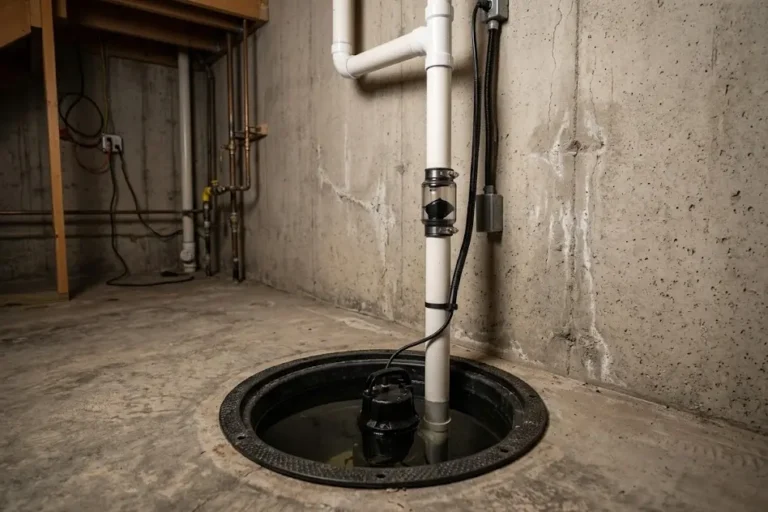
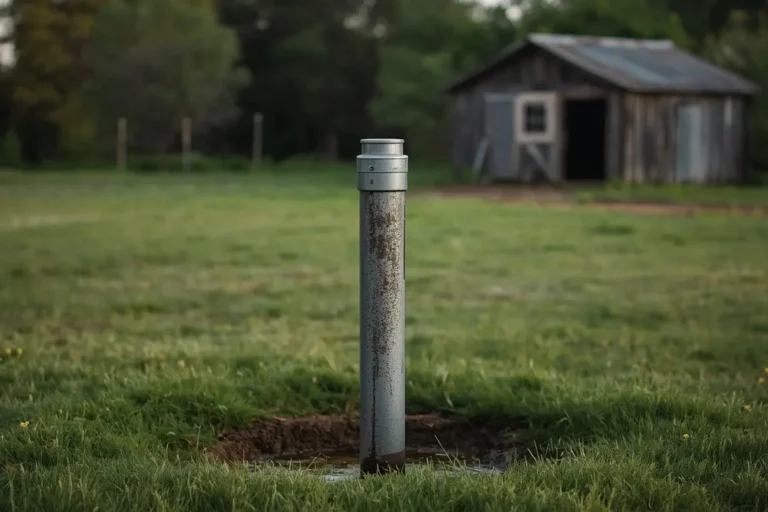
$225 – $700That is the septic tank pumping cost in 2026 for a standard 1,000-gallon household tank across four published cost guides: This Old House (May 2026), Today’s Homeowner (April 2025) and Fixr (January 2025) put it at $225 to $400, while an older HomeGuide guide (October 2023) puts it at $300 to $700. Across all tank sizes, the three newer guides put the typical bill between $255 and $600. Larger tanks, a tank that needs jet cleaning or lids that have to be dug up all push the bill higher; a smaller 750-gallon tank can come in lower.
Pumping is the one routine cost of owning a septic system, and it is small next to what a neglected system costs to fix. Below is what pumping costs by tank size, which extras show up on the invoice, how often the Environmental Protection Agency says a tank should be pumped and inspected, and what happens to the budget when pumping is skipped.
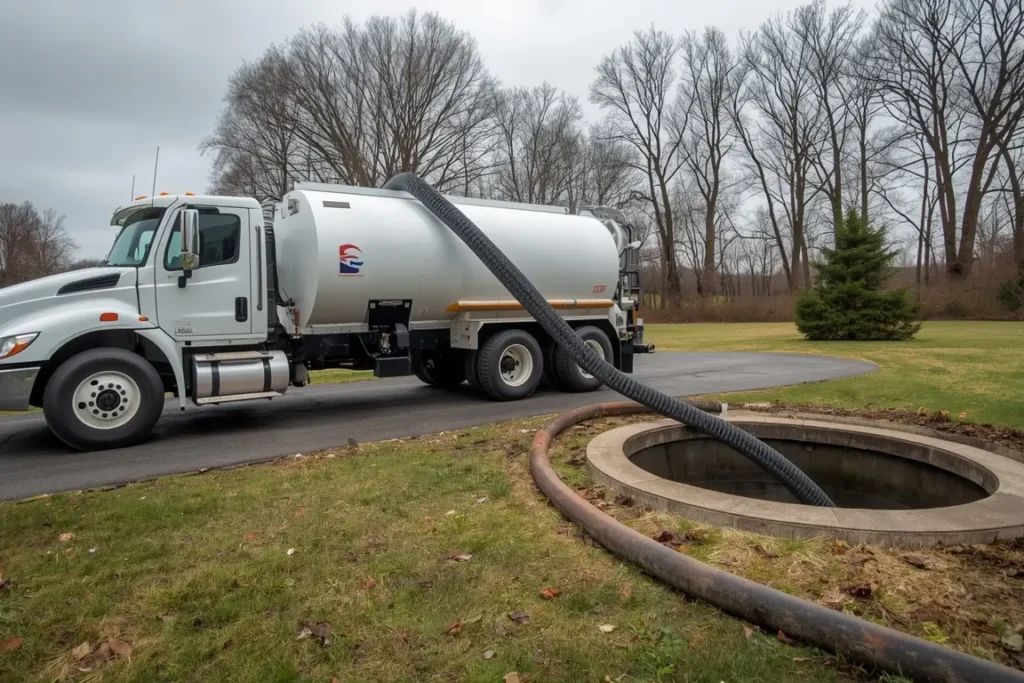
Septic tank pumping cost by tank size
The bill grows with the tank. This Old House puts the going rate at $0.23 to $0.40 per gallon (This Old House) and Fixr at $0.30 to $0.40 for the average tank, adding that most companies quote a flat price rather than a per-gallon one (Fixr). The older HomeGuide guide (October 2023) gives a wider $0.30 to $0.70 per gallon (HomeGuide).
| Tank size | This Old House (May 2026) / Today’s Homeowner (Apr 2025) | Fixr (Jan 2025) | HomeGuide (Oct 2023) |
|---|---|---|---|
| 750 gallons | $175 – $300 | $175 – $300 | $225 – $525 |
| 1,000 gallons | $225 – $400 | $225 – $400 | $300 – $700 |
| 1,250 gallons | $275 – $500 | $300 – $600 | $375 – $875 |
| 1,500 gallons | $345 – $600 | $345 – $600 | $450 – $1,050 |
| 1,750 gallons | $400 – $700 | $400 – $700 | $525 – $1,225 |
The sources do not agree. This Old House and Today’s Homeowner publish identical figures for every tank size, and Fixr’s match them except at 1,250 gallons, so they may share a common data set rather than being three independent measurements. HomeGuide’s older guide runs well above them, roughly 25% to 75% higher at every size.
Our estimate: the $225 to $700 headline range for a 1,000-gallon tank takes the lowest low ($225, This Old House, Today’s Homeowner and Fixr) and the highest high ($700, HomeGuide) of the guides above. It is a span of published ranges, not a measured average. The calculator below uses the same method for each tank size.
Estimate your septic tank pumping cost
Use the tables above to estimate your cost. The interactive calculator needs JavaScript.
HomeGuide describes a 1,000-gallon tank as the average for a single-family home, enough for three bedrooms (HomeGuide, older guide, October 2023), while Fixr says the most common size in the U.S. is 1,250 gallons and that many older homes still have 750- or 1,000-gallon tanks (Fixr). Local codes set the minimum. In Pennsylvania, for example, Penn State Extension lists a minimum of 900 gallons for a 3-bedroom home, 1,250 for 4 bedrooms, 1,400 for 5 and 1,550 for 6 (Penn State Extension). If you do not know your tank size, your county health department or the records from the last pump-out usually show it.
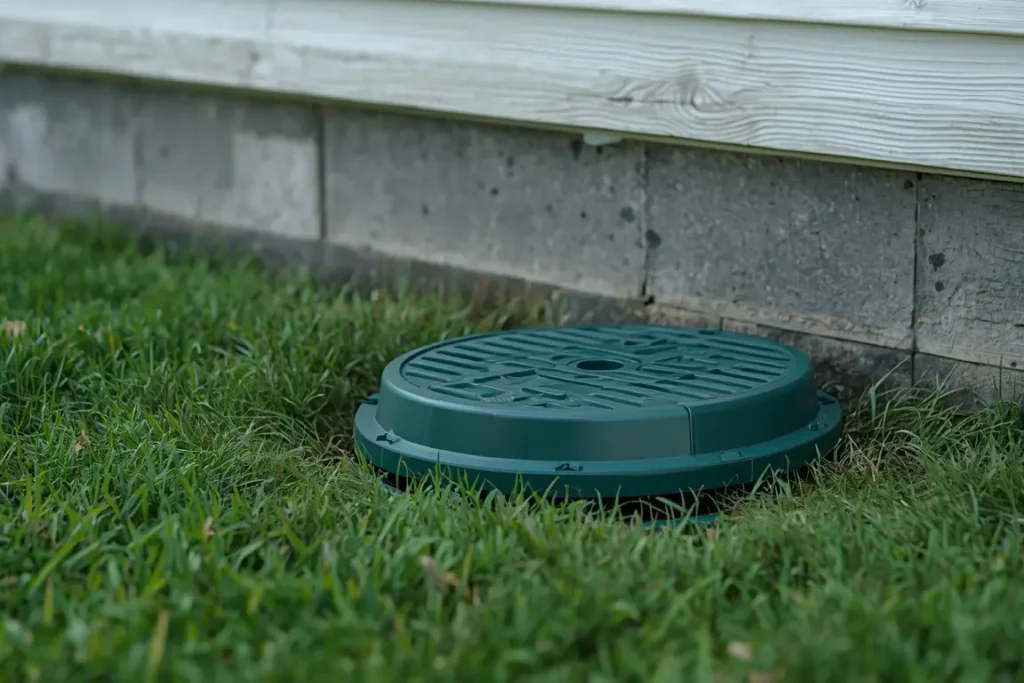
What affects the price
Tank size and use. The per-gallon rate means a bigger tank costs more per visit, and a household that uses more water fills the tank faster, so it pays more often (HomeGuide, older guide, October 2023; Fixr).
Where you live. This Old House lists city ranges from $180 to $280 in Minneapolis up to $440 to $750 in Portland, Oregon (This Old House).
Getting to the lids. Many tanks have lids buried under the lawn. HomeGuide lists “does your estimate include locating the tank lids or digging to gain access?” among the questions to ask a pumper, because that work is often billed separately (HomeGuide, older guide, October 2023). This Old House says buried access points, landscaping obstacles or frozen ground add $50 to $200 to the base rate, and Fixr notes that companies usually give a discount if you uncover the lid yourself (This Old House; Fixr). A riser, which brings the lid up to ground level, costs $200 to $400 to install, and replacing a damaged lid $150 to $600 (HomeGuide). Other guides disagree on the riser: $100 to $200 according to Fixr, $300 to $1,000 according to This Old House.
Disposal. The waste pumped out, called septage, has to be hauled to a disposal facility. Ask whether septage disposal is included in the quote (HomeGuide, older guide, October 2023).
Neglect. A tank that has gone years without service may need jet cleaning after it is emptied, to wash compacted sludge off the walls and floor. Fixr puts hydro jetting the walls at $250 to $300 (Fixr), This Old House says removing hardened sludge can add $100 to $300 (This Old House), and the older HomeGuide guide gives $200 to $300 (HomeGuide, October 2023). Fixr adds that a tank with a lot of dried sludge may need pumping again six months later.
| Service | This Old House (May 2026) | Fixr (Jan 2025) | HomeGuide (Oct 2023) |
|---|---|---|---|
| Pumping (1,000 gallons) | $225 – $400 | $225 – $400 | $300 – $700 |
| Jet cleaning or hardened sludge | $100 – $300 | $250 – $300 | $200 – $300 |
| Septic inspection | $250 – $1,180 | $100 – $300 | $150 – $450 |
| Effluent filter cleaning | $100 – $200 | $100 – $200 | $100 – $400 |
How often to pump a septic tank
The EPA’s guidance is direct: “Household septic tanks are typically pumped every three to five years,” and the average household system should be inspected at least every three years by a septic professional. Alternative systems with float switches, pumps or other mechanical parts should be inspected more often, generally once a year (EPA).
The EPA names four factors that set the interval: household size, total wastewater generated, the volume of solids in the wastewater and the tank size. It also gives a measurable trigger: pump when the bottom of the scum layer is within six inches of the bottom of the outlet, when the top of the sludge layer is within 12 inches of the outlet, or when sludge and scum make up more than 25 percent of the liquid depth (EPA).
Some experts are more cautious. Penn State Extension calculates that a family of four fills the storage space of a 1,000-gallon tank in about 1.5 years, and concludes that most homeowners are better off pumping every two or three years (Penn State Extension). Fixr puts regular pumping at every 2 to 5 years depending on tank and household size (Fixr), and the older HomeGuide guide (October 2023) gives a schedule by size: about every five years for a 750-gallon tank in a 1–2 bedroom home, three years for 1,000 to 1,250 gallons, and two years or less for 1,500 gallons and up (HomeGuide).
Our estimate: spread over time, pumping a 1,000-gallon tank costs roughly $45 to $235 a year. We divided the $225 low end (This Old House, Today’s Homeowner, Fixr) by a five-year interval and HomeGuide’s $700 high end by a three-year interval (the EPA range). This is our calculation, not a measured figure, and it excludes inspections and repairs.
Inspection vs pumping
They are not the same job. Pumping empties the tank. An inspection checks the whole system: when a septic professional services the tank, the EPA says they should inspect for leaks and examine the scum and sludge layers, then note repairs completed and the tank’s condition in a service report (EPA). Prices for a standalone inspection vary widely: $100 to $300 according to Fixr, $250 to $1,180 according to This Old House, and $685 according to Today’s Homeowner.
Keep those reports. The EPA recommends keeping maintenance records and writing down the sludge and scum levels at each visit, so you can see how fast your tank fills and time the next pump-out (EPA). How the job is done matters too: Penn State Extension says a tank must be pumped through the large central access ports, not the small inspection ports above the baffles, which can damage the baffles and leave sludge behind. It also warns never to enter a septic tank, because the gases inside can kill (Penn State Extension).
Signs your septic tank is full
- Toilets or drains that are slow or clog.
- A foul smell from the drains.
- Grass that is greener over the drain field than elsewhere.
- Sewage backing up in the lawn.
These are the common warning signs listed in HomeGuide’s older guide (HomeGuide, October 2023); Fixr also names sewage backups and clogged drains as problems to report to your pumper (Fixr). Do not wait for them: by the time sewage backs up into the house, Penn State Extension notes, the drain field is usually already clogged with a nearly impermeable biomat, and pumping the tank alone will not remove it (Penn State Extension).
What neglect costs
When a tank is not pumped, solids escape into the drain field and clog the soil (Penn State Extension). The EPA compares routine maintenance of $250 to $500 every three to five years with the $5,000 to $15,000 it can cost to repair or replace a malfunctioning conventional system, and says alternative systems can cost even more (EPA).
| Repair | Typical cost |
|---|---|
| Drain or leach field rejuvenation | $1,000 – $5,000 |
| Drain or leach field replacement | $3,000 – $15,000 |
| Outlet baffle repair | $250 – $900 |
| Septic line repair or replacement | $1,000 – $5,000 |
| New septic tank | $3,000 – $5,000 |
A sewage overflow in the yard adds cleanup on top: $7 to $15 per square foot, according to This Old House and Today’s Homeowner; the older HomeGuide guide gives the same range, including hauling the sewage to a disposal facility. Beyond the bill, the EPA warns that a system in disrepair lowers property value and that poorly treated sewage can contaminate groundwater and nearby surface water (EPA).
How to keep the bill down
- Pump on schedule. Jet cleaning and repairs are what make a neglected tank expensive.
- Install a riser if you pay for digging every visit; it removes that labor from every future pump-out.
- Use less water. The EPA notes that a single leaky or running toilet can add as much as 200 gallons a day, and it recommends spreading laundry through the week (EPA).
- Only flush human waste and toilet paper, and limit the garbage disposal, which sends fats, grease and solids into the tank (EPA).
- Skip additives. Penn State Extension says they are not needed and are not a substitute for pumping (Penn State Extension).
- Do not park or drive on the drain field (EPA).
Questions to ask before you sign
- Is your price per gallon or flat, and what size do your records show for my tank?
- Does the quote include locating and digging up the lids?
- Is septage disposal included?
- Will you pump through the main access ports and inspect the baffles, sludge and scum layers during the visit?
- Will I get a written service report with the tank condition and levels?
- Is your company licensed and insured for septic work in this county?
If pumping turns up a cracked tank or a failing drain field, see our septic tank replacement cost guide for what a new tank or full system runs.
Sources
- U.S. Environmental Protection Agency, How to Care for Your Septic System and Why Maintain Your Septic System.
- Penn State Extension, Septic Tank Pumping, updated July 21, 2023.
- This Old House, What Is the Cost to Pump a Septic Tank?, updated May 22, 2026.
- Today’s Homeowner, How Much Does Septic Tank Pumping Cost?, updated April 11, 2025.
- Fixr, Septic Tank Cleaning Cost, updated January 31, 2025.
- HomeGuide, Septic Tank Pumping Cost, October 2, 2023 (older guide).
- HomeGuide, Septic Tank Repair Cost, December 22, 2025.