$600 – $2,500That is what most homeowners pay for propane tank installation in 2026, with an average of about $1,400 (This Old House). A 500-gallon tank, the usual size for a whole house, runs $1,000 to $2,500 with the tank included (HomeGuide). The guides disagree at the edges: Fixr puts the typical range at $1,500 to $3,750 with an average of $2,500, and a buried tank can reach $5,000.
Three things move the price most: the tank size, whether it sits above or below ground, and whether you buy the tank or let the propane company own it. The gas line to the house, a concrete pad and a permit come on top in some quotes and not in others. The tables below set three published guides side by side so you can see where they agree.
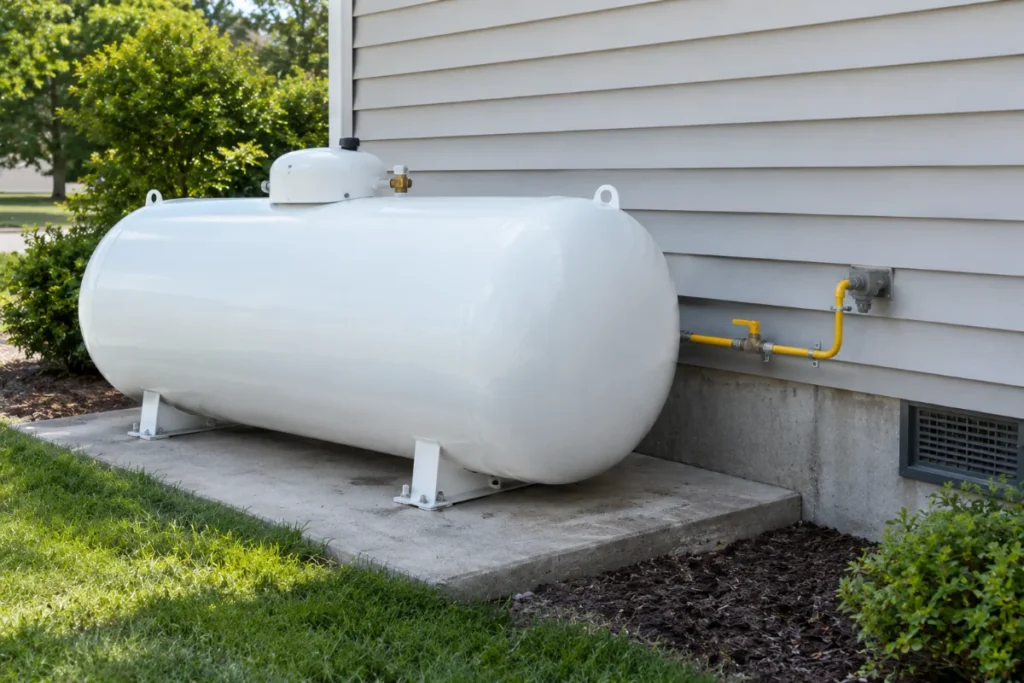
Propane tank installation cost by size
| Tank size | HomeGuide | Fixr | This Old House |
|---|---|---|---|
| 120 gallons | $400 – $900 | $350 – $600 | $700 – $900 |
| 250 gallons | $500 – $1,200 | $450 – $1,000 | $800 – $1,200 |
| 330 gallons | $700 – $1,500 | — | $900 – $1,500 |
| 500 gallons | $1,000 – $2,500 | $700 – $2,500 | $1,000 – $2,000 |
| 1,000 gallons | $2,000 – $5,000 | $1,500 – $3,000 | $1,500 – $2,500 |
Fixr is lowest for small tanks and This Old House is highest. The guides do not say clearly whether each figure includes the tank itself or only the work of setting it, so a quote that bundles the tank can look far higher than one that does not. HomeGuide labels its figures as tank plus installation; Fixr says that if you buy a 500-gallon tank and have the propane company install it, the installation is about $500.
Estimate your propane tank installation cost
Our estimate: the published ranges above multiplied out for your inputs. Not a quote. Tank prices and the three extras from This Old House (April 2026). HomeGuide (January 2026) is similar for a 500-gallon tank; Fixr (August 2025) is lower. The guides do not say whether the size prices already include the pad or the gas line, so the extras may overlap. State adjustment: BLS construction wages (May 2025), applied to an assumed 50% labor share. How we calculate
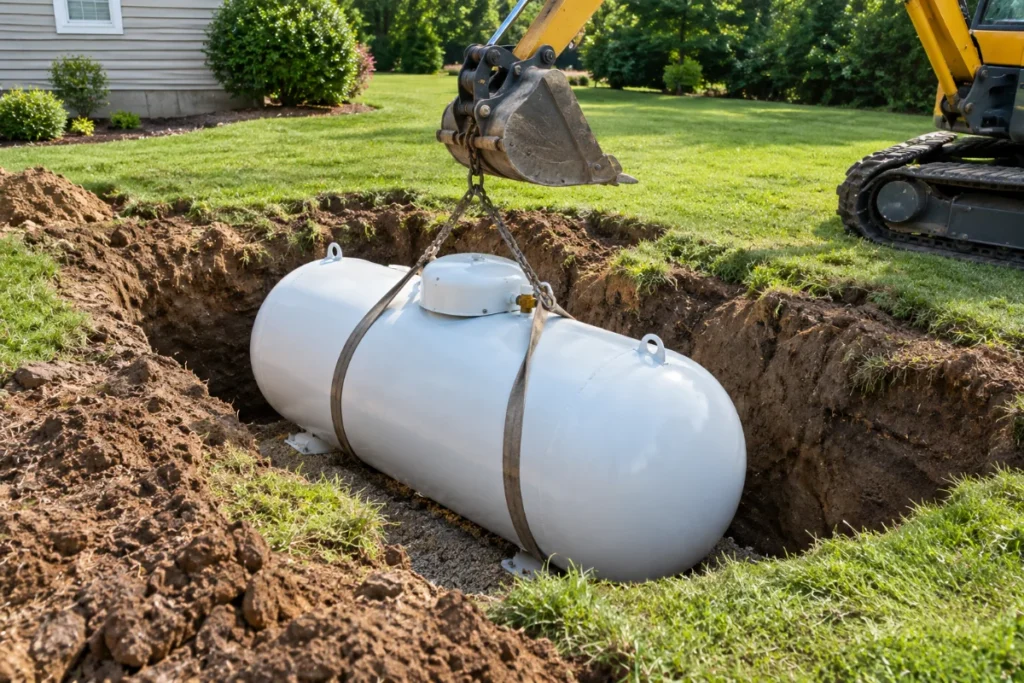
Above ground or underground
| Placement | HomeGuide | Fixr | This Old House |
|---|---|---|---|
| Above ground, any size | $300 – $3,000 | $300 – $3,000 | — |
| Underground, any size | $1,500 – $5,000 | $1,500 – $5,000 | — |
| 500 gallons, above ground | — | $700 – $2,500 | $1,000 – $2,000 |
| 500 gallons, underground | — | $1,500 – $3,000 | $1,500 – $2,500 |
| 1,000 gallons, above ground | — | $1,500 – $3,000 | $1,500 – $2,500 |
| 1,000 gallons, underground | — | $2,500 – $5,000 | $2,000 – $2,500 |
HomeGuide separates labor from the tank: $250 to $1,000 of labor for an above-ground tank and $1,000 to $2,500 for a buried one, which covers the excavation, gas line trenching and tank setting. It says an excavator and operator cost $100 to $300 an hour. This Old House lists underground installation only for 500-gallon and larger tanks. Buried tanks also need corrosion protection, typically sacrificial anodes that Fine Homebuilding says last about 50 years (Fine Homebuilding, older, issue dated November 2007).
Our estimate: for a 500-gallon tank above ground, the lowest low and highest high of the three guides run from $700 (Fixr) to $2,500 (HomeGuide and Fixr). Underground, the same comparison gives $1,500 to $3,000. These are ranges we combined from published figures, not measured prices.
Gas line, pad, permit and other add-ons
| Item | HomeGuide | Fixr | This Old House |
|---|---|---|---|
| Gas line connection | $75 – $300 above ground; $300 – $700 underground | About $150 – $300 for pad, trench and hookup on larger tanks; about $150 to connect an underground tank | About $540 on average, $250 – $800 depending on length |
| Concrete pad | $75 – $200 | — | $125 – $175 for a 500-gallon tank |
| Excavation and trenching (underground) | $500 – $1,000 | $75 – $800 for excavation | — |
| Permit | $25 – $50 | Required with a fire department inspection in most areas; no fee given | $25 – $150 |
| Yearly inspection of an owned tank | $50 – $75 | $50 – $75 | $50 – $75 |
| Removing an old tank | $50 – $200 above ground; about $500 buried | — | About $100 above ground; up to $1,500 buried |
For a long run to the house, price the pipe by the foot. HomeGuide puts gas line at $15 to $50 or more per linear foot with labor, and trenching at $5 to $12 per linear foot. This Old House says the gas line cost depends on its length, and placement is limited by safety distances, covered below.
Lease or buy a propane tank
| Option | HomeGuide | Fixr | This Old House |
|---|---|---|---|
| Leasing from the supplier, per year | $25 – $150 or more (January 2026); $60 – $180 for 500 gallons (older, April 2023) | Free from most suppliers; some charge $150 – $175 | $150 – $180 |
| Buying a 500-gallon tank | Tank alone $300 – $1,200 for AmeriGas and Ferrellgas tanks up to 500 gallons, before labor | About $500 for installation if you supply the tank | $1,000 – $2,000 upfront |
Leasing costs less upfront and puts repairs and maintenance on the propane company (HomeGuide), which Fixr says also covers inspection and recertification of a leased tank (Fixr). The catch is the fuel: This Old House says a renter pays for propane at the company’s prices, and HomeGuide says owning lets you pick your own supplier and negotiate. None of the guides puts a number on how much extra a leased tank’s fuel costs, so ask for the per-gallon price in writing before you sign a lease. Owning means paying for the yearly inspection yourself, and Fixr says recertification of an owned tank is about $100.
What a fill-up costs
| Tank size | Usable propane | HomeGuide ($3 – $5 per gallon) | This Old House ($2.59 per gallon) |
|---|---|---|---|
| 120 gallons | 96 gallons | $300 – $500 | $249 |
| 250 gallons | 200 gallons | $600 – $1,000 | $518 |
| 500 gallons | 400 gallons | $1,200 – $2,000 | $1,036 |
| 1,000 gallons | 800 gallons | $2,400 – $4,000 | $2,072 |
The two guides use different fuel prices, which explains the gap. Propane prices change with the season and the region, so the table shows how cost scales with tank size more than what you will pay. HomeGuide matches the sizes to use: a 120-gallon tank for a water heater or cooktop, 250 gallons for supplemental heating or two appliances, 500 gallons for home heating or two or three appliances, and 1,000 gallons for larger homes running everything on propane. It estimates about 800 gallons a year for a 2,000 sq ft home in a cold climate heating and cooking with propane. If the tank will also feed a standby unit, see our generator installation cost guide.
Permits and where the tank can go
Expect to need a permit. HomeGuide says a new tank will likely need one at $25 to $50, and Fixr says a permit and a fire department inspection are required in most areas. Rules vary by state and town. HomeGuide says that in most areas the tank must sit at least 10 feet from any building or ignition source such as a furnace, water heater or grill, and outdoors in a well-ventilated spot. This Old House quotes a propane supplier saying one code asks for 10 feet from any ignition source and 3 feet from any building opening, and advises checking property setbacks before committing. Larger tanks and buried tanks can face different distances, so ask your fire marshal or building department for the figure that applies to your lot. The tank also needs a spot a delivery truck can reach; Fine Homebuilding (older) suggests within 100 feet of a driveway or access road so the hose reaches.
Do not install it yourself. HomeGuide says that in most cases you should hire a trained professional because of the safety regulations. Suppliers, licensed gas fitters and plumbers with the right certifications all install tanks.
Related projects
Many homes put a tank in when they add a propane appliance. See what those cost in our guides to water heater replacement cost and furnace replacement cost.
How to keep the bill down
- Get quotes from several propane companies and compare the tank price or rental, the installation and the warranty in writing, as HomeGuide advises.
- Ask for estimates in summer. HomeGuide says the off-season can save money.
- Ask about an annual contract. HomeGuide says many companies add a delivery fee for will-call orders compared with scheduled fills.
- Right-size the tank. Bigger tanks cost more to install and to fill, as the tables above show.
Questions to ask before you sign
- Is the tank leased or sold to me, and what happens to the lease if I change suppliers?
- What is the price per gallon, and what delivery and service fees are included?
- Does the price cover the pad, gas line, regulator, permit and inspection?
- What size tank do you recommend for my appliances, and where can it go on my lot?
- Are you licensed and insured, and what is the warranty?
For more on vetting a company, read how to find a contractor.
Sources
- HomeGuide, How Much Does A Propane Tank Installation Cost?, January 5, 2026.
- Fixr, How much does it cost to install a propane tank?, updated August 29, 2025.
- This Old House, Propane Tank Installation Cost, updated April 7, 2026.
- HomeGuide, Propane Tank Cost, April 5, 2023 (older).
- Fine Homebuilding, Can a propane tank be buried?, issue dated November 2007 (older).