$4 – $12 per sq ftThat is the typical concrete slab cost in 2026 for a plain slab, poured and finished by a contractor. HomeGuide puts it at $6 to $12 per square foot ($5,400 – $10,800 for a 30×30 slab), This Old House at $4 to $8 ($3,600 – $7,200 for the same size) and Fixr at $4 to $12 for a slab-on-grade house foundation. Garage, shed and house slabs sit in different parts of that band, and the extras around the concrete decide where your quote lands.
Our estimate: the $4 – $12 headline is the lowest low and the highest high of the plain-slab ranges in the guides below ($4 at This Old House and Fixr, $12 at HomeGuide and Fixr; Homewyse tops out at $12.05 for a small pad). It is a span of published ranges, not a measured average, and decorative finishes or stem wall foundations can go above it.
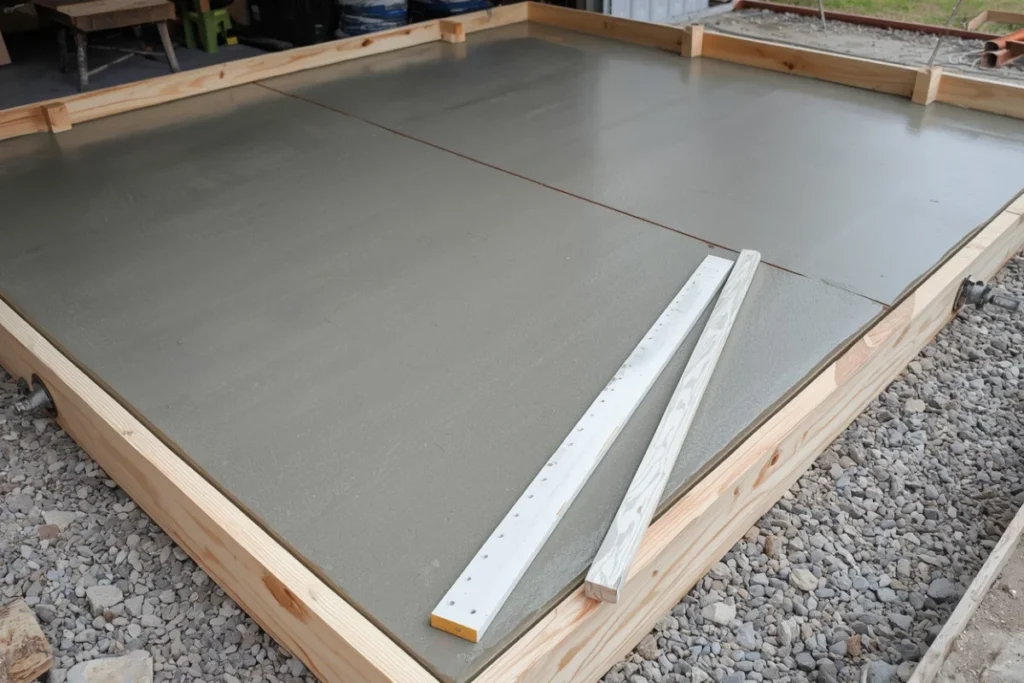
A slab is a flat, poured concrete base: the floor of a garage, the pad under a shed, an air conditioner or an RV, or the foundation of a whole house. This guide stays with those structural slabs. If you are pricing a driveway instead, see our driveway replacement cost guide. Below you will find the price per square foot, the total for common sizes and uses, what the building code asks for, and the extra lines that appear on quotes.
Concrete slab cost per square foot
| HomeGuide | This Old House | Fixr | Homewyse | |
|---|---|---|---|---|
| Installed, per square foot | $6 – $12 | $4 – $8 | $4 – $12 (slab-on-grade foundation) | $9.81 – $12.05 (120 sq ft pad) |
| Total for the size quoted | $5,400 – $10,800 (30×30 slab) | $3,600 – $7,200 (30×30 slab) | — | $1,178 – $1,448 (120 sq ft pad) |
| Materials only, per square foot | $3 – $7 | — | — | — |
| Labor only, per square foot | $3 – $5 | — | — | — |
The guides agree on the shape, not the exact numbers. HomeGuide’s range is the widest on the high side and says prices can run from $4 per square foot for the most basic projects up to $28 for decorative stamped or stained slabs. Homewyse prices a small 120-square-foot pad, which is why its per-square-foot figure is higher: its estimate covers 4-inch-plus, fiber-reinforced 3,500 psi concrete with a broom finish and basic labor, but leaves out excavation, a gravel base and demolition of anything already there (Homewyse). Fixr’s figure is for a house foundation slab, covered further down.
Estimate your concrete slab cost
Our estimate: the published ranges above multiplied out for your inputs. Not a quote. Slab prices by thickness and extras from HomeGuide (February 2026); foundation slab types from Fixr (February 2026); vapor barrier and pump truck from Forbes Home (October 2024). The 4-inch, 6-inch and 8-inch rows use HomeGuide thickness prices, and the slab type rows are all installed prices per square foot. Labor share of 40 percent is the low end of the 40 to 50 percent HomeGuide gives. State adjustment: BLS construction wages (May 2025), applied to an assumed 40% labor share. How we calculate
Concrete slab cost by size
| Slab size | Square feet | HomeGuide | This Old House | Forbes Home (older guide) |
|---|---|---|---|---|
| 10×10 | 100 | $600 – $1,200 | — | $600 |
| 12×12 | 144 | $860 – $1,700 | — | — |
| 20×20 | 400 | $2,400 – $4,800 | — | — |
| 24×24 | 576 | — | — | $3,460 |
| 20×30 | 600 | $3,600 – $7,200 | — | — |
| 30×30 | 900 | $5,400 – $10,800 | $3,600 – $7,200 | — |
| 40×40 | 1,600 | $9,600 – $19,200 | — | — |
Our estimate: a 24×24 slab is 576 square feet. At HomeGuide’s $6 to $12 per square foot that is about $3,460 to $6,910; at This Old House’s $4 to $8 it is about $2,300 to $4,610. These are our own multiplications of published per-square-foot ranges, not measured prices.
Garage, shed and house slabs: cost by use
| Use | HomeGuide | This Old House (average) | Fixr |
|---|---|---|---|
| Shed pad (10×10 to 20×20) | $600 – $4,800 | $480 | — |
| Two-car garage floor (400–576 sq ft) | $2,400 – $6,900 | $3,500 (garage) | — |
| House slab foundation | $12,000 – $28,000 typical | $12,300 (monolithic slab foundation) | $24,000 for a simple 40×60 slab |
| Car parking pad | — | $1,200 | — |
| RV pad (200–700 sq ft) | $1,200 – $8,400 | $3,840 | — |
| Mobile home slab (600–1,600 sq ft) | $3,600 – $19,200 | $9,720 | — |
Shed. Most shed slabs are about 4 inches thick and do not usually need reinforcement or decoration (HomeGuide). This Old House says experienced do-it-yourselfers may be able to pour a small pad for a shed, a fire pit or an air conditioner, but anything that carries a car or a house should be installed by a professional (This Old House).
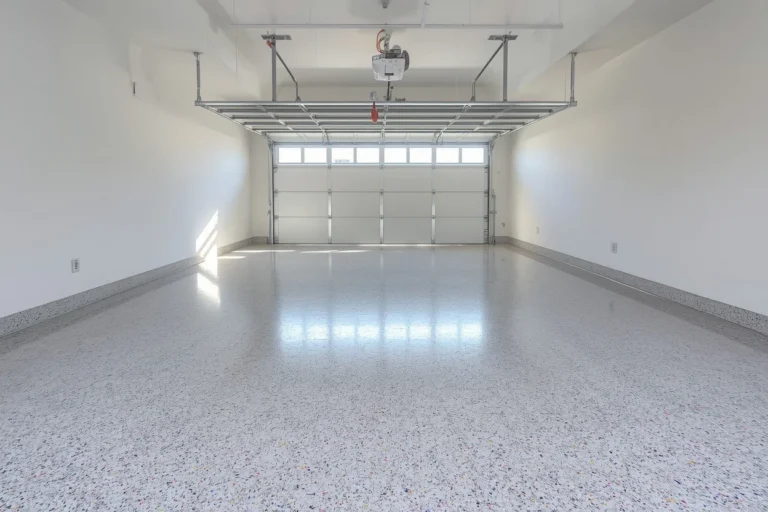
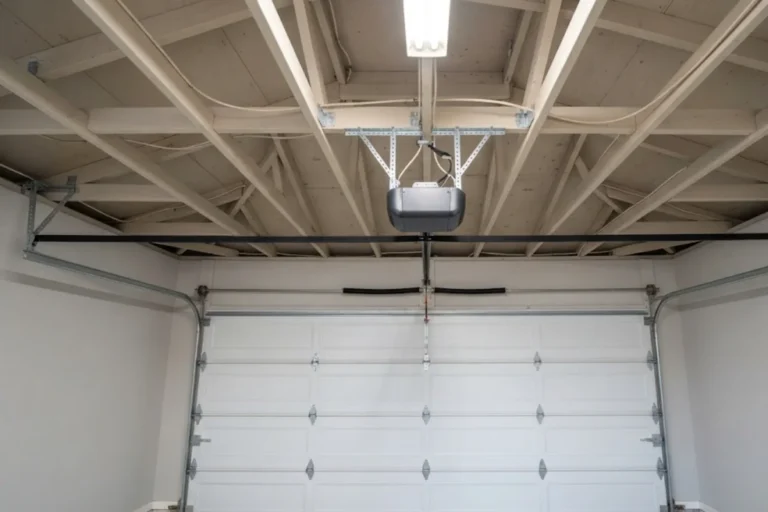
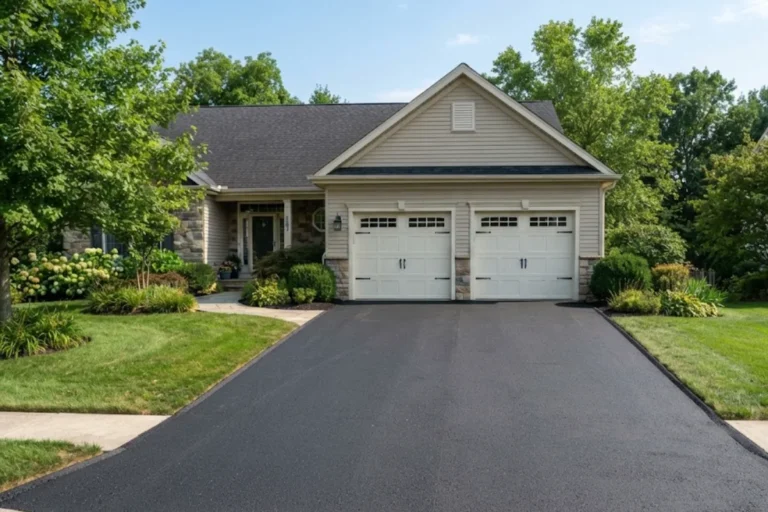
Garage. A two-car garage is typically 20×20 to 24×24 feet, reinforced and 4 to 6 inches thick, with a basic finish; adding an epoxy coating costs $4 to $10 per square foot (HomeGuide). A garage slab sets the floor for the door above it, so it is worth reading our garage door replacement cost guide if the opening is changing too.
House foundation. HomeGuide puts a slab foundation at $6 to $14 per square foot, typically 6 inches thick with steel rebar, vapor barriers and foam insulation. It calls this the cheapest type of home foundation, but one that tends to shift and crack in unstable soil or extremely cold conditions (HomeGuide). Building an addition means pouring one of these; our home addition cost guide shows what the rest of the structure adds.
Cost by slab thickness
| Thickness | HomeGuide, installed per sq ft | This Old House, average per sq ft |
|---|---|---|
| 2 inches | $4 – $6 | $5 |
| 4 inches | $6 – $8 | $5 |
| 6 inches | $8 – $10 | $6 |
| 8 inches | $10 – $12 | $8 |
Each extra 2 inches adds roughly $2 per square foot in HomeGuide’s table and $1 to $2 in This Old House’s. Most slabs are 4 to 6 inches thick, and many installers charge by the cubic yard, which covers 81 square feet at 4 inches (HomeGuide). This Old House prices that cubic yard of concrete at $113 to $126 (This Old House).
Our estimate: a 24×24 slab at 4 inches thick is 576 square feet × one third of a foot, or 192 cubic feet, about 7.1 cubic yards (27 cubic feet to the yard, the same 81 square feet per yard both guides use). At $113 to $126 a yard the ready-mix alone is roughly $800 to $900 — a small part of the $2,300 to $6,900 range above, because forms, base, labor and finishing come on top. This is our own arithmetic, not a measured price.
What the building code says about thickness, base and strength
The 2024 International Residential Code, the model code many US jurisdictions adopt in some edition, sets the floor for a slab-on-ground floor at not less than 3½ inches thick (IRC 2024, section R506.1). Other points in the same chapter that affect the price:
- Base: where the slab is below grade, a 4-inch base course of clean graded sand, gravel or crushed stone goes on the prepared subgrade. It is not required on well-drained or sand-gravel mixture soils classified as Group I (IRC 2024, R506.3.2).
- Vapor retarder: at least 6-mil polyethylene, with joints lapped not less than 6 inches, between the slab and the base. It is not required for garages, utility buildings and other unheated accessory structures, unheated storage rooms under 70 square feet, carports, or driveways, walks and patios (IRC 2024, R506.3.3).
- Concrete strength: basement and interior slabs on grade need a minimum specified strength of 2,500 psi at 28 days. Garage floor slabs, porches and carport slabs exposed to the weather need 2,500 psi where weathering is negligible, 3,000 psi where it is moderate and 3,500 psi where it is severe, and must be air-entrained in the moderate and severe cases (IRC 2024, Table R402.2).
This Old House’s general contractor gives similar advice: concrete in a moderate climate should reach at least 3,000 psi after 30 days, and slabs facing severe weathering at least 3,500 psi (This Old House). Local codes can amend the model code, so ask your building department which edition and rules apply before you order concrete.
House foundation slabs: slab-on-grade, monolithic and stem wall
| Foundation slab type | Fixr, per sq ft |
|---|---|
| Slab-on-grade | $4 – $12 |
| Monolithic slab (footings poured with the slab) | $4 – $16 |
| Stem wall slab (deeper footings with a block wall) | $6 – $18 |
| All concrete slab foundations | $4 – $14 |
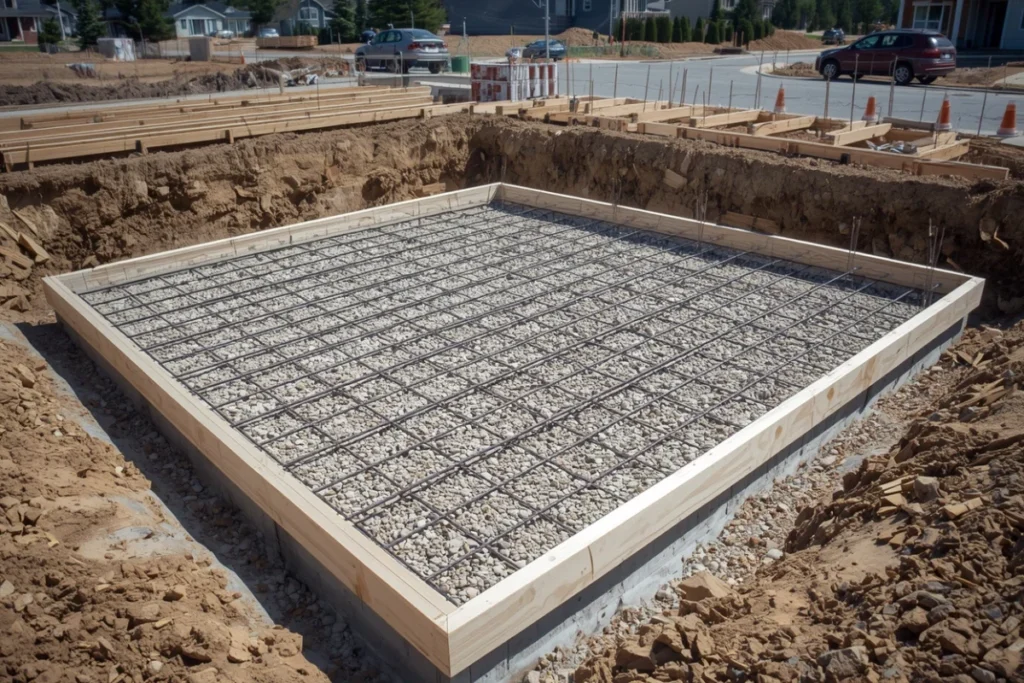
Fixr describes slab-on-grade as the most affordable type: the crew builds a form, lays gravel and pours directly on top, with no excavation. A monolithic slab needs some excavation to form footings that are poured in one piece with the slab, and a stem wall slab has deeper footings with a block wall. Average foundation slabs are 6 to 8 inches thick, and oversized or multi-story homes may need thicker ones (Fixr). Fixr also says most municipalities require a permit for foundation work, whether for a house, a shed or a deck, and that permit costs for home foundations can reach $2,300.
A slab foundation hides the plumbing beneath it, which is why leaks under it are priced differently; see our slab leak repair cost guide.
The extra lines that change the price
| Item | HomeGuide (February 2026) | Forbes Home (October 2024) |
|---|---|---|
| Gravel base | $1 – $3 per sq ft | — |
| Leveling or regrading | $0.40 – $2.00 per sq ft | — |
| Vapor barrier, foam layer or wire mesh | — | $0.30 – $2 per sq ft |
| Thicker slab edge | — | $1 – $2 per sq ft |
| Sealing | $1 – $3 per sq ft | — |
| Epoxy floor coating | $4 – $10 per sq ft | — |
| Stamped concrete, slab included | $8 – $19 per sq ft | — |
| Decorative finish (stencil, stain, engraving) | — | $8 – $18 per sq ft |
| Radiant floor heating | $11 – $25 per sq ft | — |
| Removing an old slab, with disposal | $3 – $8 per sq ft | — |
| Concrete pump truck | — | about $900 |
Gravel can also be priced by weight, at $10 to $50 a ton. Forbes says a pump truck is used when the build location is too difficult for a standard concrete truck, and HomeGuide says installers may charge more for hard-to-reach areas such as crawl spaces or basements. Two things are easy to miss on a quote: Homewyse’s slab estimate does not include permit or inspection fees or sales tax on materials, and it says to add 13% to 22% if a general contractor supervises the project (Homewyse).
What the labor line pays for
HomeGuide says labor is 40% to 50% of a slab’s cost and runs $3 to $5 per square foot, including building the forms that hold the concrete in place while it cures (HomeGuide). For house foundations, Fixr puts labor at 40% to 60% of the total, covering excavation, building the forms and delivering and pouring the concrete (Fixr). Homewyse’s basic labor line for its 120-square-foot pad is 7.5 hours at $699 to $847, with an equipment allowance of $145 to $218 for forms, a vibrator and a bull float (Homewyse).
For comparison, the median hourly wage for cement masons and concrete finishers in the United States was $27.41 in May 2025, according to the Bureau of Labor Statistics. That is what the worker earns, not what you are billed: the equipment allowance and the supervision markup above are priced separately.
Repair, resurface or replace
Resurfacing a worn slab costs $3 to $7 per square foot, or $6 to $20 for a stamped or decorative overlay, against $3 to $8 per square foot to remove a slab and haul it away. HomeGuide suggests considering replacement if the concrete is over 40 years old or shows large cracks, significant crumbling, sinking edges, warping, holes or pooling water (HomeGuide). It says concrete slabs last 30 to 50 years on average, or more than 100 if properly sealed and maintained; This Old House says 30 to 40 years, and up to 100 with proper installation and sealing. Both note that concrete tends to crack in climates where the ground regularly freezes.
If the problem is a cracked or sinking foundation slab rather than a worn surface, replacing the slab is rarely the first step. Compare the options in our guides to foundation crack repair cost, foundation repair cost and house leveling cost.
Timing also matters once the slab is in. HomeGuide says a slab is dry enough to walk on after 1 to 2 days and advises waiting 1 to 2 weeks before driving on it; This Old House says it can support weight after 48 hours but will not fully cure for up to 28 days. The two guides differ, so ask your contractor when the slab can take your vehicle or shed.
How to keep the bill down
- Keep the shape simple. HomeGuide notes that curved edges and multiple colors cost extra, and This Old House recommends straight lines because they are less labor-intensive to pour than curves.
- Do not buy more slab than you need. This Old House advises against using more concrete or higher-performance concrete than the job requires, and Forbes says a 4-inch slab is typically sufficient for most residential projects unless the load calls for more.
- Choose a basic finish. Staining or stamping increases the cost (This Old House).
- Put pads for an air conditioner or a propane tank on ground that is already level, so no regrading is needed (This Old House).
- Do the prep you can. This Old House suggests moving turf and plants or breaking up and removing the old slab yourself.
- Get at least three quotes, and avoid the lowest one, which HomeGuide says usually indicates low-quality work.
Questions to ask before you sign
- Is the quote line by line, and does it include site preparation such as grading and a gravel base?
- How thick will the slab be, and will it be reinforced?
- How much concrete will I need, and what strength and air content do you recommend for my climate?
- Does the price include the permit, inspections and removal of any existing slab?
- Should the slab be sealed, and what will that cost?
- What warranty do you offer, and what does it cover?
Planning other exterior work around the new slab? Our siding replacement cost guide is the place to start for the walls above it.
Sources
- International Code Council, 2024 International Residential Code, Chapter 5: Floors (sections R506.1, R506.3.2 and R506.3.3) and Chapter 4: Foundations (Table R402.2).
- U.S. Bureau of Labor Statistics, Occupational Employment and Wage Statistics, median hourly wage for cement masons and concrete finishers (SOC 47-2051), May 2025.
- HomeGuide, How Much Does a Concrete Slab Cost?, February 3, 2026.
- This Old House, How Much Does a Concrete Slab Cost?, updated March 17, 2026.
- Fixr, Cost to Build Concrete Foundation, updated February 13, 2026.
- Homewyse, Cost to Install a Concrete Pad, May 2026.
- Forbes Home, How Much Does a Concrete Slab Cost?, audited and verified October 9, 2024 (older guide, used only as a cross-check for extras and one size).